Coming of age is less a genre than a break in continuity. The identity you put together as a child no longer fits, so you have to make a new one while other people watch the mistakes. Anime handles that rupture unusually well. It can give an interior struggle a physical form, turning anxiety into something literal or placing a memory inside a room. It is also willing to stay with adolescent discomfort instead of tidying it up before the credits. Every selection here follows someone who truly changes; the passage of another school year is not enough. Some characters are repairing damage, while others are meeting first love or discovering how to feel in the first place. The order loosely follows that progression. The difficult acts of reconstruction come first, gentler forms of growth fill the middle, and the most unusual transformation closes the list. We left out romances whose characters remain unchanged and nostalgic portraits of youth that take no risks. In every anime that made the cut, growing up asks something real of the lead.
- 01
This is the hardest recommendation here and the most necessary. A boy who bullied a deaf classmate grows into someone forced to live with what he did. The film offers no convenient absolution; atonement proceeds slowly, feels awkward and is never granted in full. It draws social terror as a visible condition, with faces crossed out and eyes fixed on shoes. The result is beautiful but genuinely uncomfortable to watch. Anyone carrying a personal history of bullying should choose the evening with care.
Where to Watch → - 02
Grief has silenced a boy, then a loud girl pulls him back toward the piano. The series jumps hard from broad comedy to emotional demolition, which explains why it divides a room. Either the melodrama takes hold, or the slapstick keeps breaking the spell. At its best, the effect is overwhelming, especially during performances when sound design takes over the work of an interior monologue. One change earns its place here: he learns to play for another person instead of playing for approval.
Where to Watch → - 03
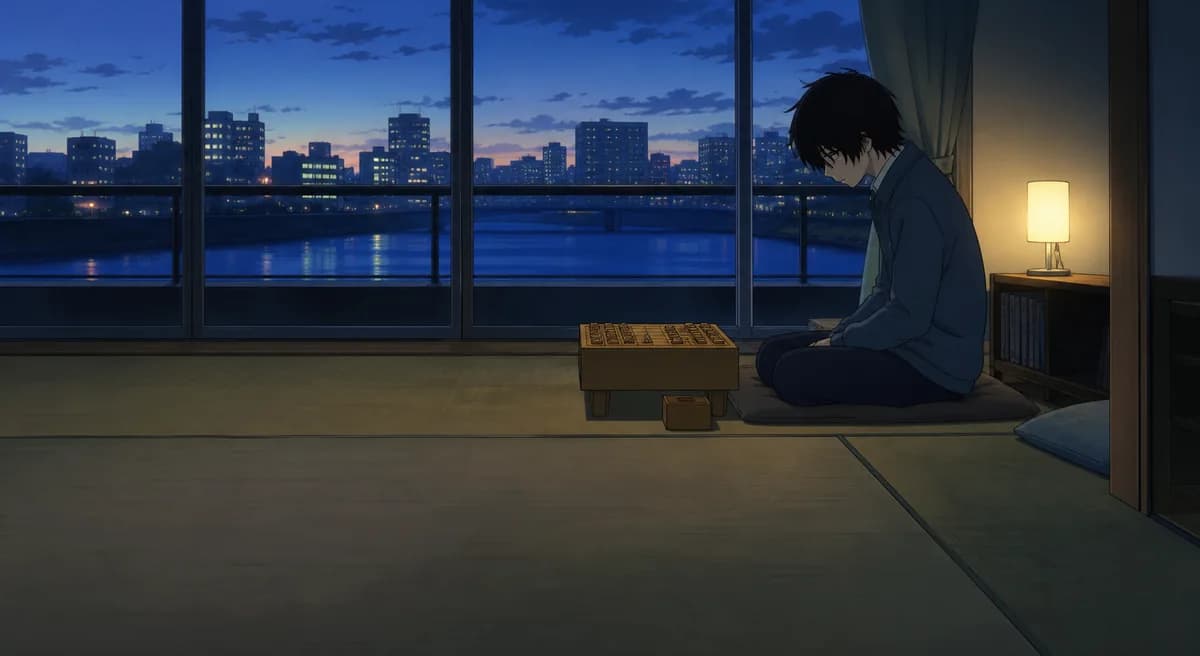
Here, growing up looks like recovery. A young professional shogi player lives alone, depressed yet outwardly functional, and gradually allows three sisters and a bowl of hot food to become a life. Shaft turns his state of mind into weather through cold blues and rooms that fill with water, then cuts to everyday warmth that aches by comparison. This is the slowest and most textured show on the list. Viewers who need momentum may struggle, but no other pick captures how much effort it can take to accept kindness.
Where to Watch → - 04
Toradora!
7.8Toradora! is the romantic comedy that grows teeth. It begins as a farce about scheming teenagers, then quietly becomes a story about failing to understand your own desires and hurting people while you work them out. The genre furniture is familiar, but the emotional bookkeeping is unusually exact. Every character has mistaken something about their own identity, and the story eventually makes them face it. The shouting in the early episodes drives some viewers away. Push through it, because the second half earns the show's reputation.
Where to Watch → - 05
Clannad
7.7Clannad plays a long game. Its high school portion is a warm, wandering ensemble piece that can be easy to underestimate. The real subject emerges later, after adolescence ends and adult life begins charging rent. That structure puts it on this list, since very few stories stay with their leads beyond the last school bell. The series shows its age, takes its time and reaches for tears without embarrassment. If you accept melodrama performed with complete sincerity, the eventual payoff is enormous.
Where to Watch → - 06
The sunniest choice is also the smartest recent one. A relentlessly capable girl from a small town reaches a Tokyo prep school with her life planned out, only to learn that people cannot be treated like a curriculum. Its eye for social hierarchy, quiet snobbery and the fatigue of being liked is razor sharp. Even so, nobody is reduced to a cruel caricature, so the kindness never feels softheaded. Choose this when you want growth without grief. Viewers who require high stakes to stay interested may find it too mild.
Where to Watch → - 07
Teenage psychology arrives disguised as a physics problem. The supernatural cases give physical form to familiar fears: going unseen, being copied and living the same day again. Each construction has enough substance to reveal something about adolescence instead of functioning as decoration. The dialogue moves quickly, stays dry and is genuinely funny. The tradeoff is a fair amount of light novel banter, a lead who is slightly too effortless about being right, and framing that occasionally depends on fanservice.
Where to Watch → - 08
Patience is the governing idea of Kimi ni Todoke. The entire school reads one girl as frightening, although she is painfully sincere, and the story requires her to learn friendship before romance becomes possible. Most shows rush past that order. This one moves at the honest speed of a shy person's courage, which is glacial. Prolonged misunderstandings will have some viewers climbing the walls. For anyone who remembers the hurt of being misread, the same slow pace becomes quietly devastating.
Where to Watch → - 09
Kindness is treated as work here, rather than a trait someone simply possesses. Tohru's cheerfulness is a survival strategy shaped by grief. The household that takes her in is full of damaged people, and the story respects that damage well before agreeing to explain it. This opening season is the tender stretch, told through episodes that are funny and warm while quietly planting everything the later story will gather. Know what you are beginning: the series has set the table, but it has not sat down yet. The pain comes later.
Where to Watch → - 10
The list ends with its strangest form of growth. Violet is a child soldier learning what human feeling means through one commissioned letter after another. Her story is built from vignettes about other people's grief, while her own arc appears in the extra measure of understanding she carries away each time. Kyoto Animation's command of light, hands and weather is almost intimidating. Critics call the series emotionally engineered, and the charge is not entirely wrong because it aims straight at the viewer. It belongs here because that aim is true.
Where to Watch →










FAQ
The difference is change, along with the cost of reaching it. A school can be nothing beyond a setting. In a coming-of-age story, a character's idea of who they are breaks apart and returns in a different form. Many beloved school anime never attempt that, and they can still be excellent. They simply belong on another list.