
KonoSuba Review: The Isekai Parody That Outlived the Joke
 By Mika Tanabe · Editor
Most isekai give the hero a cheat skill, an adoring harem, and an easy path to sainthood. KonoSuba gives Kazuma Satou what amounts to a refund. He dies in the single most humiliating way imaginable, then gets the offer of a fresh life in a sword-and-sorcery world. When he is allowed one divine bonus, he spitefully chooses the goddess who mocked him and drags her along. His new life does not resemble much of a quest. It plays like a survival sitcom about rent, debt, day labor, and specialists so thoroughly broken that any normal adventurer would die in their company. Studio Deen's comedy is loud and lowbrow, with timing sharp enough to make every collapse count. The slapstick also carries a pointed joke about wish-fulfillment fantasy. Somehow, this parody grew into the genre's most beloved hangout.
Story and Premise
KonoSuba opens with an expertly cruel bait-and-switch. Kazuma Satou is a gaming shut-in who dies a death so pathetic that it feels like a personal insult. During his afterlife interview, Aqua laughs at him and offers reincarnation. Kazuma responds by selecting her as the lone carry-on 'cheat' he can take into his next life. This would be a triumphant bit of revenge if Aqua were useful. She is a liability who happens to wear a halo. The two land in a starter town without any cash, and Kazuma's stats are thoroughly forgettable. They have to register as adventurers, then grind through the least glamorous work available from the guild so they can pay for food and a roof. Somewhere far away, the Devil King waits as the story's nominal endgame. The show has little interest in hurrying toward him. It would rather stay with the minor catastrophes that erupt between quests. A negotiation goes wrong. A monster hunt tips into farce. Debts accumulate much faster than victories ever do. The arcs remain loosely episodic, although they build toward a couple of confrontations that feel genuinely climactic. None of those battles is the real engine of the series. That job belongs to the party and its dreadful group dynamic. Adventuring causes most of the trouble in this adventure, and that reversal keeps producing jokes long after the setup is clear.
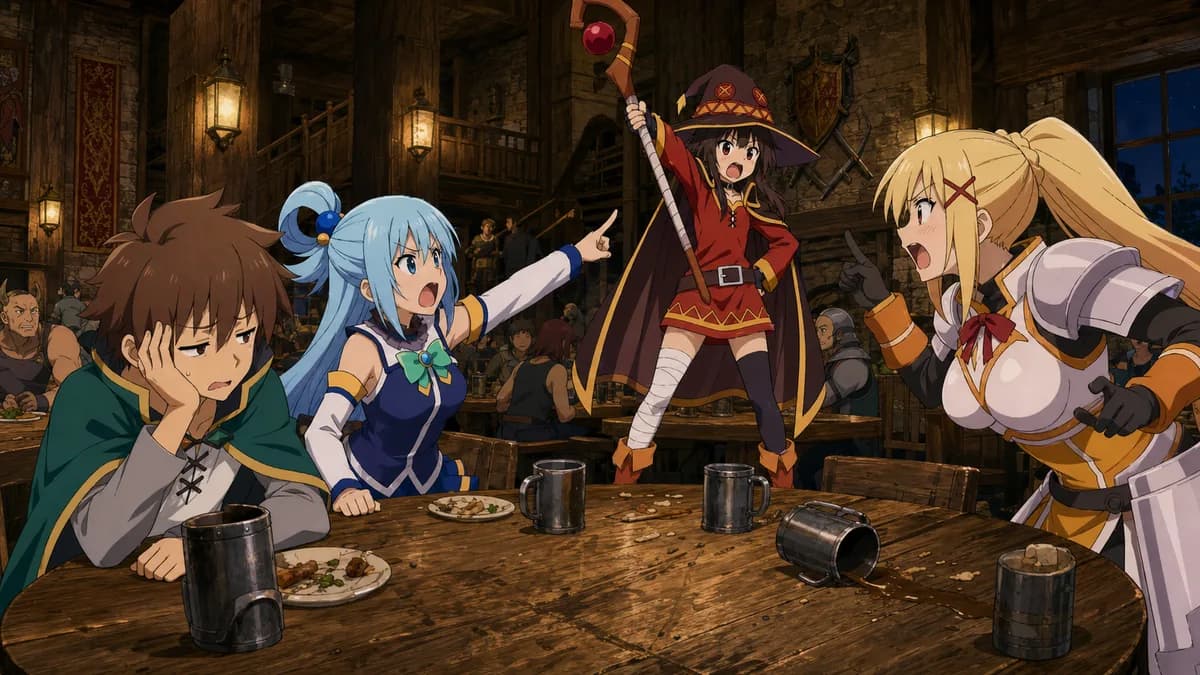
A Party Built to Fail
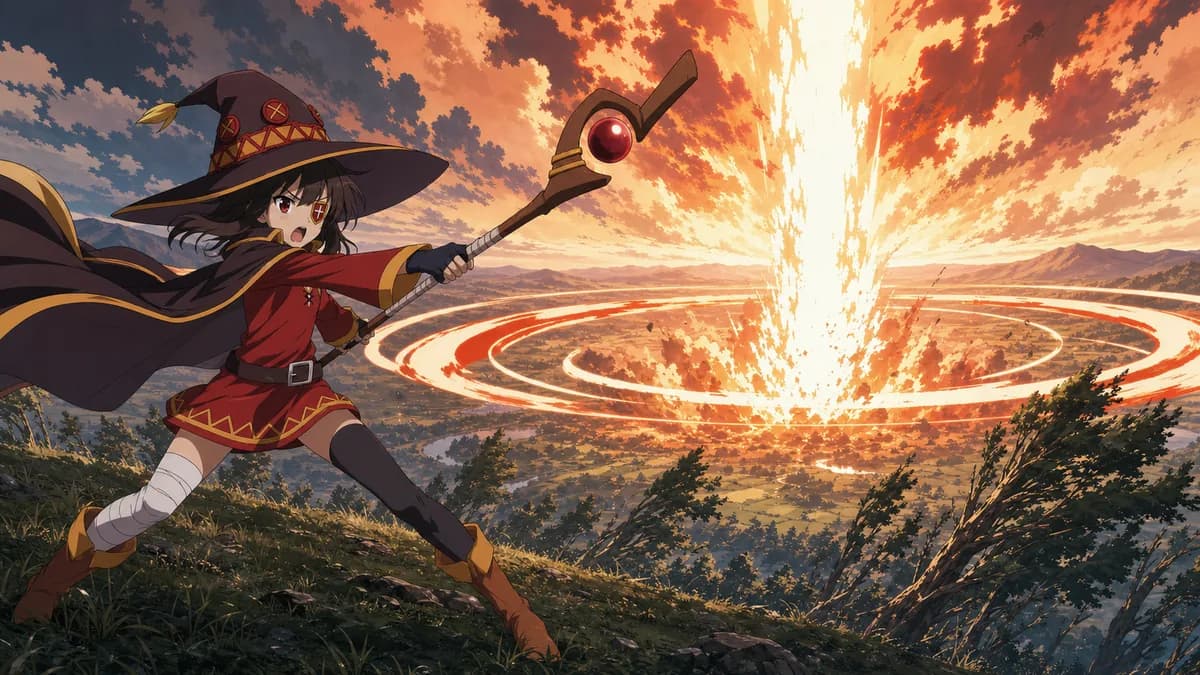
The cast carries KonoSuba. Every party member works as a walking punchline, but each one also has enough heart to be good company. Kazuma is a rare isekai lead whose unpleasant qualities make him funnier. He is petty, lecherous, cowardly, and ruthlessly practical when a mess demands it. He also serves as the snarky straight man, forever cleaning up disasters that he often helped create. Aqua calls herself a goddess and looks the part, but she is a gorgeous ditz. Her miracles amount to party tricks in the hands of somebody who cannot handle money, monsters, or her own dignity. Put her near the undead, however, and her purification magic makes her terrifying. Megumin is the crimson-eyed arch-wizard who has devoted her whole existence to one overpowering Explosion spell. She refuses to learn anything else. Once she casts it, she immediately collapses and becomes useless, a commitment that makes her chuunibyou perfection and the internet's forever crush. Darkness is a noble crusader and an unstoppable tank who cannot land a hit. Even worse for her companions, she has no desire to fix that problem. She is a masochist, so her idea of battlefield 'suffering' pushes each scene toward maximum discomfort. All four are broken in their own particular fashion. Put them together and their bickering chemistry turns a deliberately thin premise into a group you can happily spend hours watching.
Animation and Sound
Nobody comes to KonoSuba expecting a sakuga showcase. Studio Deen gives the series a loose, rubbery production that is often and proudly off-model. Faces melt into grotesque expressions, body proportions wander, and an occasional background looks like a rough draft that somehow made it to air. Some viewers will see that approach as an immediate red flag. For everyone who clicks with the show, it becomes one of its best comic tools. The looseness lets bodies and faces stretch with the elastic physicality of a cartoon. A glossier production might polish away exactly what makes Aqua's ugly crying or Megumin's Explosion expressions work. Much of the comic timing comes from the cuts, and the direction knows precisely when to drop a beat or hold on a reaction. Sound contributes just as much. The voice cast supplies the production value that the drawings sometimes lack. A well-judged deadpan can carry one gag, while the delivery and screaming sell another without smothering it. The score enthusiastically treats each impending anticlimax as a grand event, which makes the collapse funnier. Both theme songs suit the same balance. The bright opening is an earworm, and so is the heroine-sung ending, which brings out the show's warmth. The animation may look 'cheap,' but its roughness has a comic purpose and repeatedly proves effective.
Why the Parody Still Works
KonoSuba has lasted because its parody makes an actual argument about isekai. The boom in the genre often promises an escape without friction. A hero dies, respawns with greater power, receives instant worship, and wins. KonoSuba happily blows up that fantasy. Kazuma's supposed blessing turns out to be a useless goddess. The special abilities carried by his party behave like curses. His promised hero's journey becomes a repetitive struggle with rent, lawsuits, and public humiliation. Plenty of isekai flatter the lonely gamer by handing him immediate mastery. This series imagines that a shut-in transported to a fantasy world would probably remain broke, petty, and badly out of his depth. It treats that result as both funnier and more honest than the standard power trip. The satire never becomes sour, because the show plainly likes the people it keeps humiliating. Its affection for these misfits is real. Even the recurring joke that death is cheap covers a surprisingly warm idea about friendship. The quest may supply the monsters and the guild jobs, but the messy, unheroic people beside you are what matter. KonoSuba can mock the conventions of its genre without sneering at the desire to escape into it. That combination of pointed criticism and sincere fondness separates the series from the many straight isekai it quietly sends up.
What Works and What Wears Thin
KonoSuba's strengths have held up well. Its comic timing is excellent, and the cast shares the kind of chemistry most anime would envy. The premise still feels subversive, and the short season has the good sense to finish before the routine overstays its welcome. It is easy to rewatch because the strongest jokes hit just as hard on a third viewing as they did on the first. The limitations are equally clear. Its plot is intentionally thin. The Devil King barely registers as a rumor, and arcs tend to resolve according to comic logic. Viewers looking for serious stakes or steady forward movement are unlikely to find enough of either. The humor is also openly crude. Darkness's masochism supplies a steady run of uncomfortable bits, while Kazuma brings low-grade lechery and the show maintains a fondness for panty gags. Toilet comedy and fanservice appear often enough to be part of its identity. Depending on the viewer's tolerance, those jokes can feel inspired in one scene and juvenile in the next. When the writing is working, the ecchi adds seasoning without taking over. When another scene leans on the same lewd beat for a second time, the pace droops. Enjoyment will depend heavily on whether character-driven chaos matters more to you than plot. Anyone happy to watch this group make fresh problems for itself will find plenty to love. Anyone waiting for the grand adventure to take charge may keep waiting.
The Verdict
KonoSuba shows how completely a ridiculous idea can beat a hundred earnest imitators when the comedy commits to it. The series looks rough, and its plot often amounts to a shrug. Some of its humor will make plenty of viewers wince. Those flaws do not sink it, because the writing and timing are so good, and the four disasters at the center are far too funny and lovable to resist. The isekai parody outlived its original punchline and became a beloved comfort watch by refusing to treat either the genre or itself with much seriousness. Its send-up of power-fantasy conventions gets you through the door. The broke shut-in, crying goddess, Explosion-obsessed mage, and knight who enjoys losing far too much give you a reason to stay. Viewers who want a plot-driven fantasy epic should look elsewhere. Anyone who wants a comedy capable of making laughter hurt will have a much better time. Few anime comedies do that job this well. KonoSuba is essential despite its faults, and sometimes because of them.
FAQ
Yes, especially if character comedy is your thing. It is one of modern anime's most beloved comedies because the timing is razor sharp and the cast is so easy to adore. Expect a hilarious hangout with a dysfunctional adventuring party instead of a fantasy epic driven by plot. With those expectations, it delivers completely.