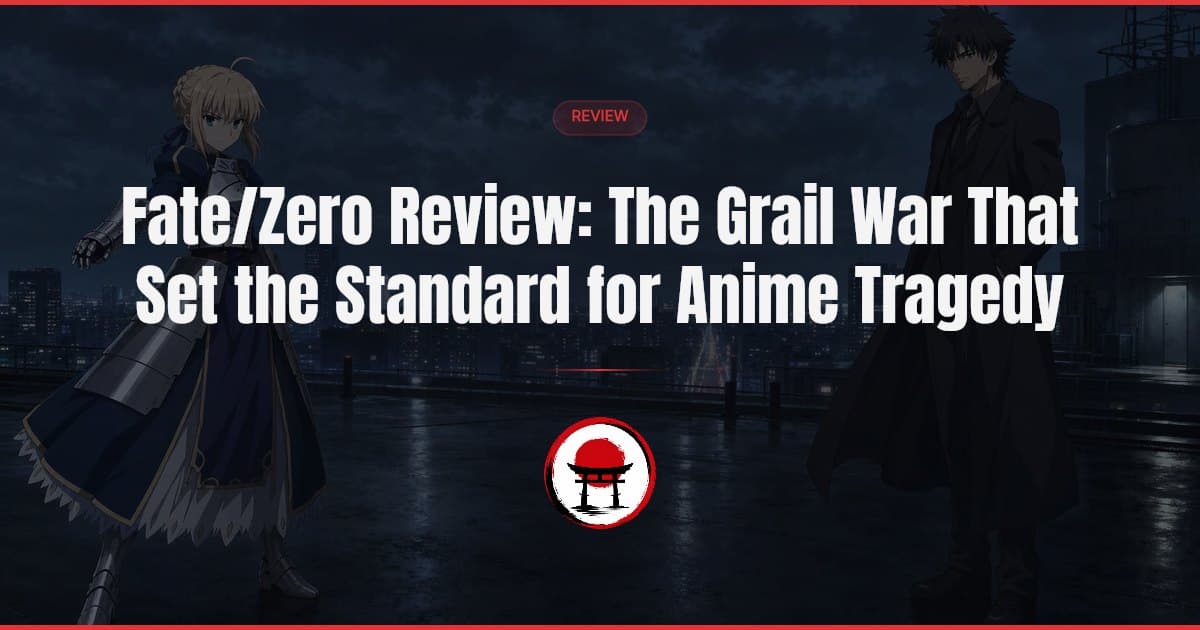
Fate/Zero Review: The Grail War That Set the Standard for Anime Tragedy
 By Mika Tanabe · Editor
Most entry points into the sprawling Fate franchise ask you to already love it. Fate/Zero does not. It hands you a seven-way battle royale between mages and summoned heroes, then spends its runtime asking whether any wish is worth the bodies it costs. Adapted from Gen Urobuchi's light novels and animated by ufotable at the height of its powers, this is the Fourth Holy Grail War told as tragedy first and spectacle second. My thesis is simple: Fate/Zero is the best on-ramp the franchise has, not because it is the friendliest, but because it is the most honest about what the Grail actually does to the people who chase it.
Story & Premise
The Holy Grail supposedly grants any wish, and three earlier wars ended without a victor ruthless enough to claim it. Enter Kiritsugu Emiya, the mercenary known as the Magus Killer, hired by the wealthy Einzbern family and bound to their bloodline through a marriage to Irisviel. Seven mages each summon a legendary hero as their Servant; the last pair standing wins. What Urobuchi does with this premise is the whole point. This is not a tournament that exists to stage flashy duels. It is a pressure chamber where seven incompatible philosophies of victory, sacrifice, and rule get pushed until they crack. The pacing is patient and adult, all negotiations, feints, and moral standoffs punctuated by violence that arrives without ceremony. Because the story is a prequel set a decade before Fate/stay night, its ending is already written, which quietly turns every noble speech and grand plan into dramatic irony you can feel closing in.
Characters
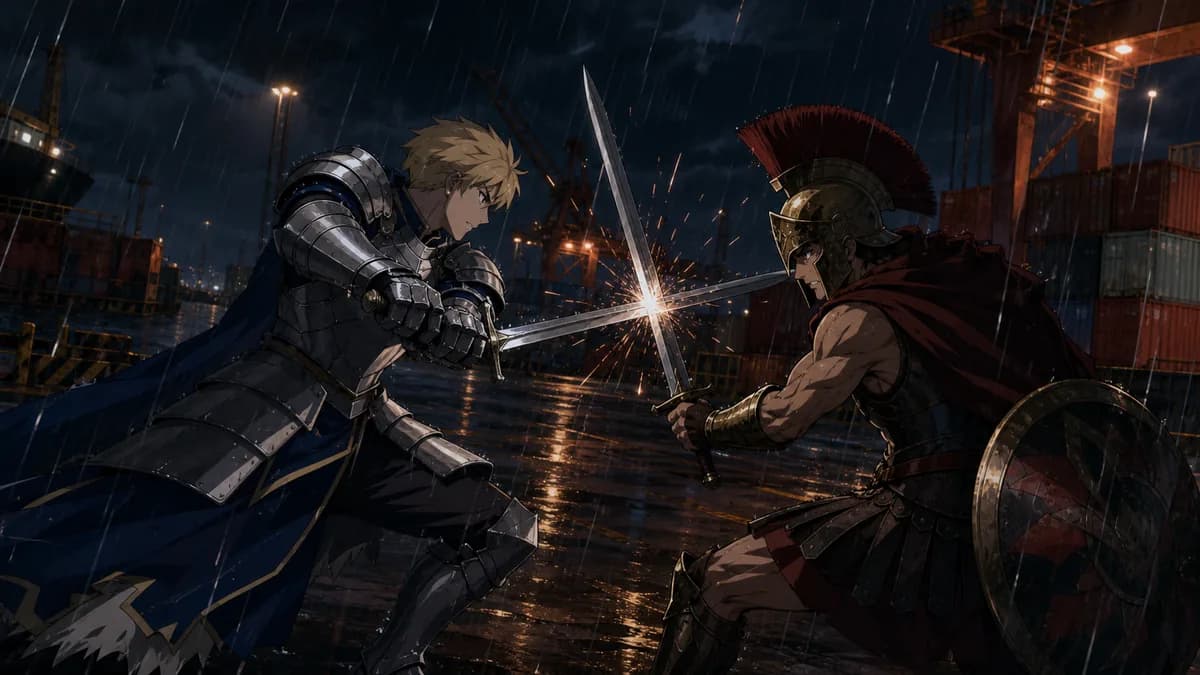
For an ensemble this large, Fate/Zero keeps its cast startlingly legible. Kiritsugu is a utilitarian who will sacrifice a few to spare many and despises himself for the arithmetic; his own Servant, the idealistic King Arthur reimagined as Artoria Pendragon, can barely stand to share a battlefield with him. Opposite them stands Kirei Kotomine, a priest so hollow he has to hunt for something, anything, that makes him feel alive, and finds it in his fixation on Kiritsugu. The show's soul, though, belongs to Rider. Iskandar, the conqueror-king, and Waver Velvet, the insecure young mage who summoned him, share the warmest and funniest arc in a story otherwise built from grief. Around them orbit the golden arrogance of Gilgamesh, the doomed honor of the knight Diarmuid, and the desperate agony of Kariya Matou. Nearly everyone here is an adult with a fully formed worldview, and the drama comes from watching those worldviews grind against one another.
Animation & Sound
This is ufotable before the studio became a household name, and the fundamentals that later made its reputation are already here. Fights unfold across rain-slicked cityscapes and firelit ruins, with the studio's trademark fusion of hand-drawn character work and digital effects giving the magecraft real weight and glow. The feature-length opening episode is essentially a short film, and it sets a bar for atmosphere the series never drops. Yuki Kajiura's score does enormous heavy lifting; her mournful choral swells make even a quiet strategy scene feel operatic and turn the tragedies into gut-punches. Sound direction is meticulous, from the crack of gunfire to the hum of a Servant's power to the silence before a killing blow. Crucially, the standout sequences often trade spectacle for tension. Some of the most gripping moments are simply two rivals talking, the threat of violence humming underneath every measured word, and the craft makes that stillness electric.
Themes & What Sets It Apart
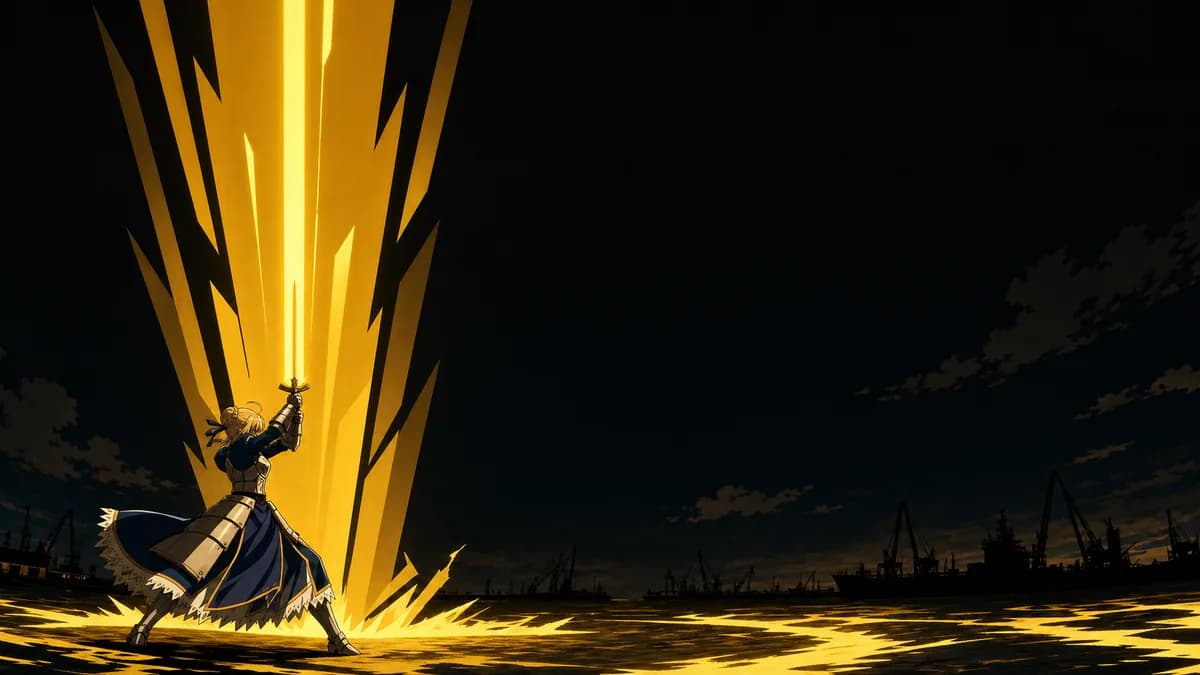
Strip away the Servants and Fate/Zero is an argument about ideals, specifically what happens when incompatible visions of a better world are forced to fight to the death. Kiritsugu wants to save the greatest number and will damn his soul to do it; Artoria believes a ruler must embody virtue; Iskandar embodies the conqueror who thinks a king should be a dream others choose to follow. The Grail sits at the center promising to resolve all of it, and the show's darkest idea is that a wish powerful enough to grant anything is corrupt enough to ruin everyone who reaches for it. This is Urobuchi's specialty, taking the comforting logic of a wish-fulfillment fantasy and running it until it breaks. What sets it apart from the wider franchise is discipline. Where later Fate entries lean on spectacle and fan-service callbacks, Fate/Zero stays a tight, thematically unified seinen tragedy in which the philosophy is the plot rather than the garnish.
Strengths & Shortcomings
What soars is everything tonal: the writing, the dread, the way a single conversation can carry more tension than a duel. The Rider and Waver relationship alone is worth the price of admission, and Kajiura's music elevates the entire production. But this is not a show for every mood. It is grim, it is talky, and it luxuriates in long philosophical monologues that can stall momentum for viewers who came for the swordfights. The magic system is largely assumed rather than explained, so total newcomers may feel dropped into the deep end. A subplot involving a cheerful murderer and his summoned Servant is genuinely upsetting and will lose some people. And because it is a prequel, it deliberately withholds catharsis; several arcs only pay off if you continue into Fate/stay night: Unlimited Blade Works. Anyone needing a clean, self-contained happy ending should know going in that tragedy is the design, not a defect.
The Verdict
Fate/Zero is the rare franchise prequel that outclasses most of what it precedes. It takes a convoluted mythos and distills it into a lean, devastating war of ideals, animated with a craft that still holds up and scored by one of the medium's finest composers. It is not flawless. It is punishingly bleak, it leans on lore it will not fully explain, and it hands part of its emotional payoff to a later series. But as a standalone piece of dark fantasy, and as the smartest possible door into the Fate world, it is close to essential. If you want spectacle with a brain and a broken heart, start here. That earns a 9.0, a modern classic held back from perfection only by how much it asks of a newcomer, never by any failure of ambition or execution.
FAQ
Absolutely. It is one of the finest dark-fantasy anime ever made, especially if you enjoy morally complex, adult ensemble tragedy where ideas matter as much as action. The writing and atmosphere hold up beautifully.