Guilty Crown Review: A Gorgeous, Glorious Mess
 By Mika Tanabe · Editor
Guilty Crown wants to be the next great sci-fi epic, and for stretches it genuinely looks the part. Production I.G pours a blockbuster budget into a drowned, quarantined Japan, hands teenage everyman Shu Ouma a power that lets him draw weapons straight out of people's hearts, and scores the whole thing like the end of the world. It is, frankly, one of the most beautiful television anime of its era. It is also a glorious mess: a show whose ambitions wildly outrun its writing, whose protagonist swings from timid to tyrant with little to earn it, and whose plot buckles under its own melodrama. This is a 7.0 in the most literal sense, a breathtaking surface stretched over a wobbly core. Come for the spectacle, and forgive the rest.
Story & Premise
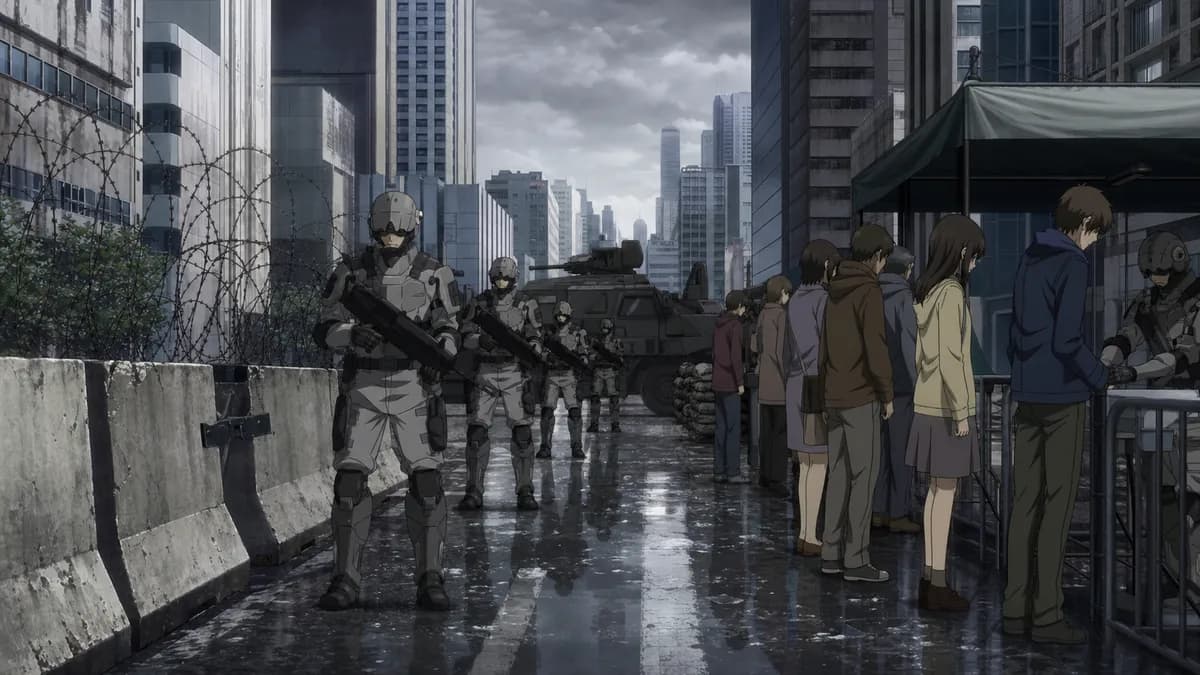
The hook is strong. A meteor scatters the lethal Apocalypse Virus across Japan on a night the country never recovers from, and years later the nation limps along under the boot of a foreign paramilitary occupation. Into this walks Shu Ouma, a passive, withdrawn loner who bumps into the ethereal pop star Inori, secretly an operative of the resistance cell Funeral Parlor. An accident grants Shu the Void Genome, the so-called King's Right Hand: reach into a person's chest and you draw out a Void, a weapon shaped by their soul. It is a fantastic premise, equal parts sci-fi, superpower, and adolescent power fantasy, and the early stretch delivers slick, high-stakes resistance drama. Then the show can't decide what it is. It swerves from war thriller to a claustrophobic school-survival arc, detours into romance and idol drama, and stacks revelation on revelation toward a finale that resolves less by logic than by sheer emotional force. The bones of a classic are here. The execution keeps tripping over them.
Characters
Shu Ouma is one of the most argued-over protagonists of his generation, and not in a flattering way. He begins as a wet, indecisive crybaby, understandable given the trauma, but hard to root for. Then the writers gamble everything on a hard heel turn, morphing him into a cold, power-drunk authoritarian, before breaking him down again. It is a bold arc on paper; on screen it lurches, and plenty of viewers bounce off him entirely. The women around him fare better as presences than as people. Inori, the kuudere idol at the story's heart, is magnetic and quietly tragic, yet the script treats her more as a symbol than a character. Gai, the resistance's cool, competent leader, supplies the charisma Shu lacks, and Segai makes a slippery, genuinely unsettling antagonist. The wider cast, from gentle classmate Hare to the wary Tsugumi, is large and mostly underserved, sketched in just enough to be sacrificed for shock. Strong ingredients, uneven cooking.
Animation & Sound
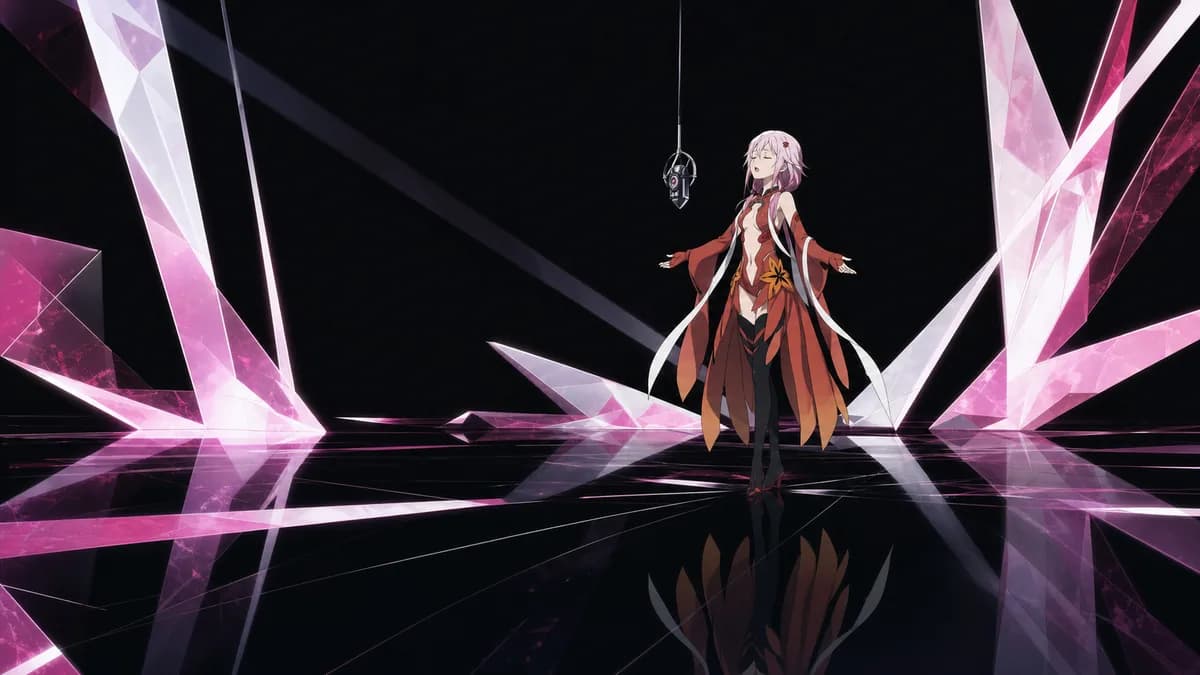
This is where Guilty Crown earns its score and then some. Production I.G animates it like a feature film that forgot to stop, lavishing detail on a drowned, overgrown Tokyo and staging Shu's Void-draws as swooning, balletic set pieces, a sword or a giant scissor-blade blooming out of a character's chest in a swirl of light. Director Tetsuro Araki brings his signature kinetic flourish, and the opening sequences are showstoppers, the kind of thing that sold the show to a generation on style alone. Then there's the music. Hiroyuki Sawano's score is a monster, all thundering percussion, soaring strings, and operatic choral wails, the work that turned him into anime's go-to composer for scale and emotion. Fold in the aching, electronic-tinged idol songs performed in-universe by Inori, and you get a soundtrack that routinely makes middling scenes feel momentous. If Guilty Crown had writing to match its craft, it would be a masterpiece. It sounds and looks like one already.
Themes & What Sets It Apart
Underneath the chaos, Guilty Crown is reaching for something. Its real subject is power and worth: the Void mechanic literally externalizes a person's inner self as a weapon, so every fight doubles as a referendum on who these people are, and Shu's descent asks what an ordinary, frightened kid does when handed the ability to command others. There are threads here about isolation, trust, the seductions of authority, and the cruelty of adolescent hierarchy that a tighter show could have made profound. What sets it apart, for better and worse, is its maximalism. Few series commit this hard to spectacle, and the Void-as-soul concept is a genuinely elegant metaphor buried in the noise. It also wears its influences openly; fans of the big, tragic-hero mecha dramas of the prior decade will spot the DNA. The tragedy is that Guilty Crown keeps sprinting past its own best ideas. It gestures at depth constantly, then reaches for another twist before any of it can land.
Strengths & Shortcomings
Let's be honest about both columns. The strengths are loud and real: reference-grade animation, a career-making score, a killer premise, and a handful of individual moments, and needle-drops, that genuinely soar. It is endlessly watchable, and it binges beautifully. The shortcomings are just as real. The plot is incoherent in stretches, resolving conflicts by fiat and leaning on convenient revelations rather than earned turns. The tone lurches from war drama to school politics to doomed romance with little connective tissue, and the whiplash can be exhausting. Shu's arc, the spine of the whole thing, will lose a chunk of the audience outright. Characters exist to be endangered and mourned rather than developed, and the back half in particular squanders the goodwill the gorgeous opening built. This is the definition of wasted potential: every department fires except the writers' room, and in a story-driven drama that's the department that matters most. What could have been a classic settles for being a spectacle.
The Verdict
So why a 7.0? Because Guilty Crown is proof that craft can carry a show a remarkably long way, and that it can only carry it so far. On pure sensory pleasure, the gorgeous art, the operatic Sawano score, the sheer audacity of it, this is an easy recommendation, and its highlights rival anything in its genre. But a drama lives and dies on its story and its lead, and here both wobble badly: an incoherent plot, tonal whiplash, and a protagonist as many will loathe as love. It is style triumphing over substance, spectacular surface over a hollow center. And yet it remains genuinely watchable, even lovable in its overreaching way, the rare mess you don't regret. Go in for the visuals and the music, keep your expectations for the plot modest, and you'll have a blast. Score: 70/100, a gorgeous, glorious mess that comes so near to greatness it almost hurts.
FAQ
Yes, with an asterisk. If you come for a visual and musical spectacle and can forgive a messy, uneven story, it's a genuinely fun, gorgeous ride with real highs. If you need airtight plotting and a lead you can consistently root for, it may frustrate you. For most fans, its craft alone justifies the watch.