From the New World Review: Slow-Burn Science Fiction at Its Best
 By Mika Tanabe · Editor
From the New World asks for patience from its first episode, and the reward is enormous. This A-1 Pictures adaptation of Yusuke Kishi's speculative-fiction novel opens in a calm, pastoral Japan a thousand years in the future. Children possess godlike psychic power, yet something about their peaceful home feels wrong long before anyone explains why. The story stays with Saki Watanabe from her curious childhood into adulthood as she learns what her village has hidden and why. Each discovery strips another layer from the beautiful lie around her. The series moves slowly on purpose. It can be cryptic and frustrating, and it refuses to hurry toward an answer just because the viewer wants one. All of that patience feeds revelations that rank among the medium's most disturbing. The animation sometimes falters and the pacing can be demanding, but those problems fade beside what the story leaves behind. Its dread sticks with you because the show has done the work to earn it.
A Peaceful Future with Something to Hide
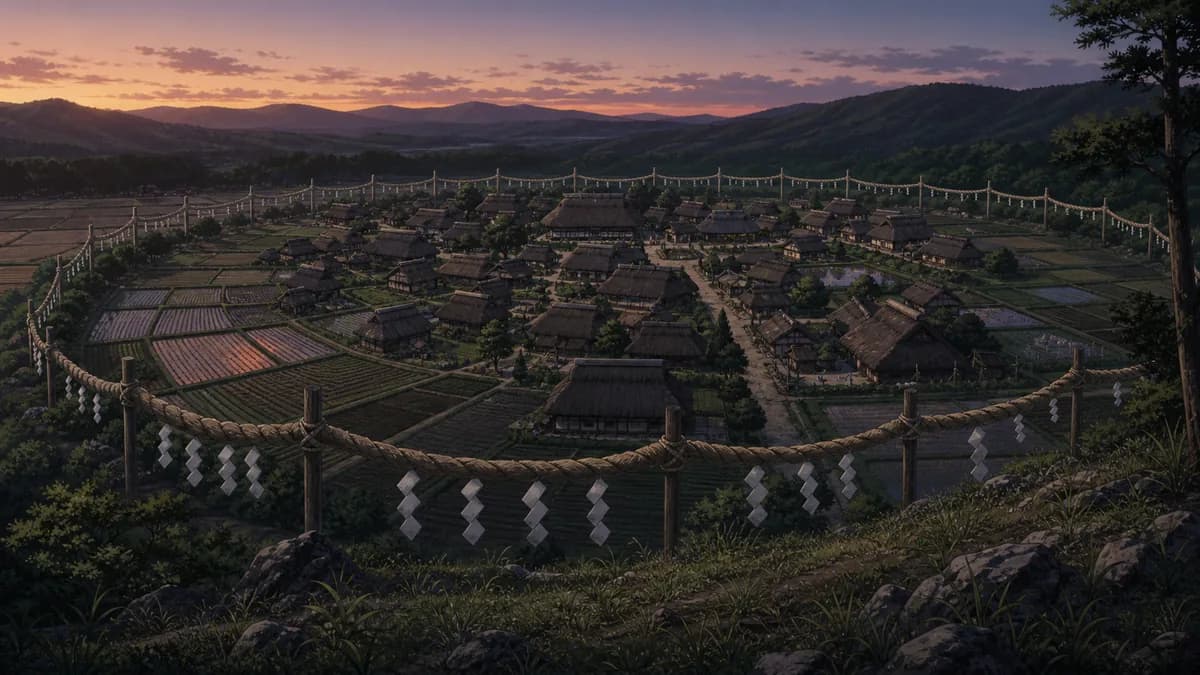
The beginning looks almost gentle. A millennium from now, a fraction of humanity has developed Cantus, the power to move and reshape matter through thought. The survivors live behind walls in a quiet agrarian community centered on the town of Kamisu 66. Twelve-year-old Saki has recently awakened her own ability, which allows her to rejoin her friends at Sage Academy, a school for young espers. Their world appears safe and orderly. The show immediately starts placing small signs that it is neither. Children whisper about a rumored creature that steals other children. Classmates quietly stop existing. Adults meet reasonable questions with silence instead of reassurance. None of these details is pushed too hard, so the discomfort gathers in the background while ordinary school life continues. Then Saki and her friends travel beyond the village boundary and encounter knowledge they were never meant to find. The pretty surface splits, exposing the system underneath it. There are strict rules, deliberate sacrifices, and a horrifying logic designed to stop a society of humans with godlike power from destroying itself. Going further would spoil discoveries the series reveals with great care. Its premise works because every answer that seems comforting creates another question, and the next question is usually worse.
Growing Up with Saki and Her Friends
Few anime follow the same group of friends across roughly a decade and a half in the way From the New World does. We first know them as inquisitive children, meet them again as teenagers, and eventually see them as adults forced to carry everything they have learned. Saki remains the steady center throughout those changes. She is not the strongest member of the group, nor is she the cleverest. She pays attention, remembers what others would rather forget, and keeps going. That apparent ordinariness makes her the right perspective for a world that grows stranger and more dangerous with every stage of her life. Her friends are distinct without feeling arranged around a set of character types. Satoru is brash and loyal. Shun is brilliant and gentle, and Saki quietly adores him. Maria brings warmth to the group, while Mamoru is timid. Their closeness feels like something built over years. The tender queer relationships among them are presented in the same matter-of-fact way as everything else in their lives, with no suggestion that they are unusual. Because these bonds feel real, every separation or loss carries weight. Squealer, the leader of the servile Monster Rats, becomes one of anime's most quietly unforgettable figures. The broad time-skip structure does have a cost. Some characters disappear between arcs, and a few never receive the attention they deserve. Saki's passage into adulthood inside a nightmare that reveals itself piece by piece still gives this sprawling story a firm line from beginning to end.
Uneven Animation, Exceptional Atmosphere
The animation is not consistently attractive, and pretending otherwise would do the series no favors. Director Masashi Ishihama and A-1 Pictures seem to have distributed their resources unevenly. The middle of the run shows the strain most clearly, with faces slipping off-model and movement becoming stiff. Some stretches simply look rushed. Viewers who need the same level of visual polish from the opening episode to the last are likely to find those dips distracting. The production makes up some of that ground through sheer visual nerve. Its art direction is genuinely experimental when the material calls for it. Certain scenes leave conventional anime styling behind in favor of ink-wash textures or shadow-play. Others turn abstract and nightmarish, producing images that linger far longer than smoother animation often does. Ishihama puts atmosphere ahead of surface consistency, and he sustains the feeling of approaching wrongness with remarkable control. The sound work is even better. An eerie minimalist score gives scenes room to breathe, while carefully placed silence can feel threatening on its own. Dvořák's 'New World' Symphony returns throughout the series, providing both its name and a melancholy pulse. Kana Hanazawa also performs the haunting ending theme. The show gives up visual consistency in pursuit of ambition. It is a real gamble, visible in every rough episode, but the strange beauty of its strongest sequences means the choice mostly works.
The Ideas Beneath the Horror
From the New World uses horror to pursue one of anime's most serious exercises in speculative philosophy. Its central problem is terrifyingly practical. If part of the human species could kill with a single thought, what changes would a stable society need to survive? The answer built by the series involves engineered instincts and ruthless controls, all supported by quiet sacrifices. Its worldbuilding follows those choices to their cruelest consequences with unusual rigor. The show then asks whether the bargain can ever be ethical. A peace maintained through horror may protect lives, but defending it still demands an awful price. The people in power also decide who qualifies as human and who can be pushed outside that category so the system keeps functioning. Xenophobia and dehumanization are built into this order rather than treated as isolated personal failings. Those with authority rewrite reality to preserve what they have made, and even memory can be altered when the official version of events needs protection. The story never offers the comfort of an obvious villain who can absorb all the blame. Each new piece of information makes it harder to decide who deserves to be called monstrous and who has been reduced to survival. This is science fiction interested in the moral consequences of its premise, not in using psychic ability as a power fantasy. It takes that premise seriously to the very end, even when its own answers become unbearable.
Where the Series Struggles and Why It Still Works
The first act is a genuine obstacle. It moves slowly, keeps its explanations close, and expects the viewer to remain confused while it lays foundations that will matter later. Many people stop watching during this stretch, and the reaction is understandable. The eventual payoff is substantial, but the series makes everyone wait for it. Its inconsistent animation is another real problem, especially when an off-model face or a stiff piece of movement pulls attention away from a serious scene. The large time skips can be equally abrupt despite their thematic purpose. Relationships that seemed central may have changed between arcs, while characters the audience has invested in can be swept offscreen. The show also delivers a fair amount of its lore through dense exposition. None of these complaints is minor, and they should not be brushed aside as impatience on the viewer's part. They have to be weighed against what From the New World actually accomplishes. It creates a fully realized future and builds a level of accumulating dread that few series can match. Its final act changes the meaning of much that came before without cheapening the earlier story. In that context, the flaws feel tied to a production and structure reaching for an unusually large idea, rather than a lack of care. The series does not land every attempt, but it reaches most of what it aims for. Give it the patience it requests, and very little else offers the same return.
The Verdict
From the New World is a demanding recommendation. Its pace is slow, its animation is patchy, and its structure requires the viewer to trust it through long periods of uncertainty. Stay with it and the series delivers something genuinely rare: intelligent, uncompromising science fiction that turns horror into a way of examining power and society. It also asks what people will agree to bury when safety becomes the highest value. My score is 88, which places it just below my top tier. The uneven production and punishing first act are what keep it from reaching perfection. Even so, its ambition and oppressive atmosphere put it among the boldest science-fiction anime ever made, while the depth of its ideas gives the horror lasting force. Anyone looking for immediate spectacle or quick gratification should choose another show. Viewers who want a patient story that can haunt them for weeks will find plenty of dread and meaning here. Go in knowing as little as possible, allow the series to set its own pace, and give its unease time to settle in.
FAQ
Yes, provided you are willing to be patient. It is one of the most ambitious and unsettling science-fiction stories anime has produced, and both its worldbuilding and ideas reward the effort it demands. The series has clear flaws. Its opening is slow, and the animation varies noticeably in quality. Fans of dark, cerebral science fiction that takes its own questions seriously should still consider it close to essential viewing. The story stays in the mind well after the final credits because its most disturbing conclusions are so carefully prepared.