Tsuki ga Kirei Review: Anime's Most Honest Story of First Love
 By Mika Tanabe · Editor
The novelist Natsume Soseki once told his students, according to a well-known story, that Japanese people would never bluntly say, 'I love you.' They would murmur, 'The moon is beautiful, isn't it?' and trust the other person to understand. Tsuki ga Kirei turns that shy, indirect idea of confession into an entire romance. There are no dramatic declarations on rooftops and no fated soulmates. Instead, two ordinary middle schoolers, a bookish would-be novelist and a track runner, inch closer through nervous LINE messages. Studio feel. and director Seiji Kishi remove nearly every familiar anime-romance cliche. What remains is painfully recognizable. Palms sweat and draft messages get deleted. Simply standing beside someone you like demands real nerve. The story stays modest in scale, yet its feelings hit with uncommon force.
Story and Premise
During their third year of middle school in Kawagoe, two classmates who have barely spoken are assigned to manage equipment for the school's sports festival. Kotaro Azumi is quiet and introspective. He wants to write novels, and when his shyness gets the better of him, he shields himself with quotations from Osamu Dazai. Akane Mizuno is a dedicated track runner who seems warmer and more approachable, though she is every bit as anxious underneath. They meet by chance, exchange LINE contact details, and soon start texting late into the night. Neither knows what to make of the feelings that follow. That simple situation supplies nearly the whole plot. There are no villains or tournaments. No supernatural surprise waits around the corner either. All the tension comes from the ordinary terror of liking somebody while having no idea whether the feeling is returned. Takumi complicates matters because he has quietly carried a torch for Akane for years. Chinatsu, who belongs to Akane's circle, develops feelings for Kotaro. Tsuki ga Kirei never treats either crush as cheap romantic interference. Their disappointments matter because, at that age, a small heartbreak can feel like everything. The restraint also lets every step between Kotaro and Akane register. A new message or a slightly longer conversation becomes an event because the series has shown how much effort it costs them. Their romance grows out of repeated, tentative contact rather than some grand plot device, which makes the progress feel earned.
Characters Who Feel Their Age
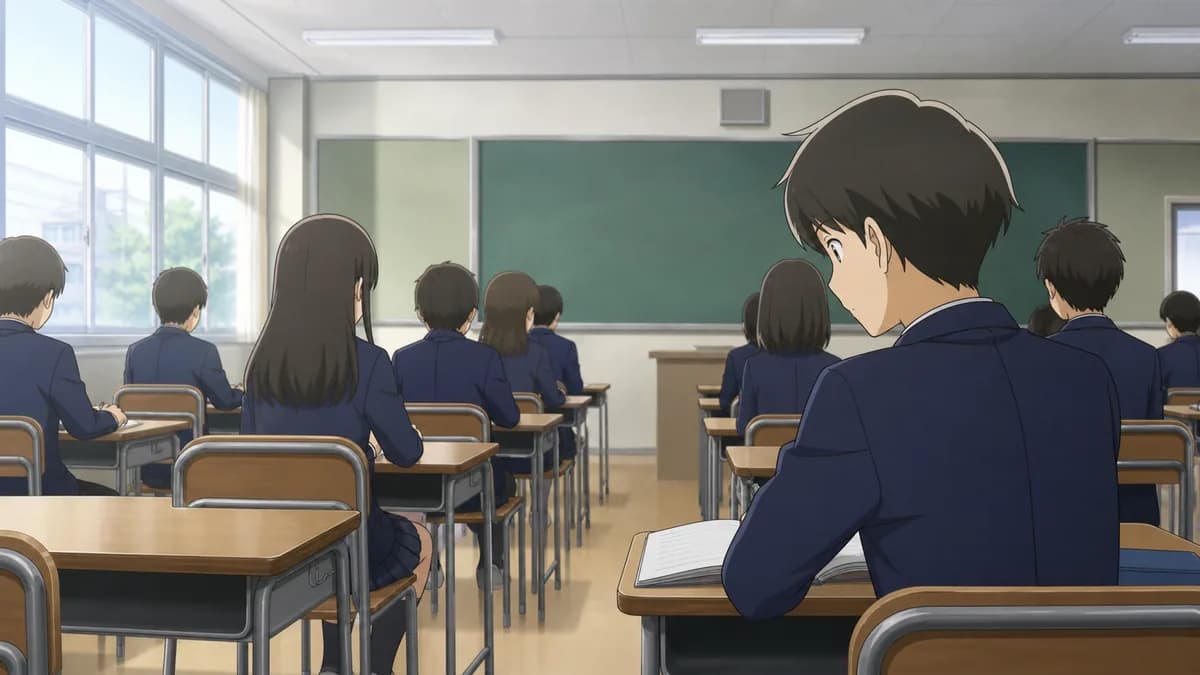
Tsuki ga Kirei works because it understands Kotaro and Akane so well. Neither is a quirky archetype or a blank wish-fulfillment stand-in. They feel recognizably and sometimes painfully young. Kotaro thinks through every possibility, practices conversations that fall apart once he has to say them aloud, and retreats into literature because books are safer than exposing a real feeling. Akane fidgets and chews her lip, then channels her nerves into running. She also squeezes a small stress-relief toy when the pressure rises. That habit tells us more about her state of mind than a long speech would. After the pair begin dating, the writing does not treat getting together as the finish line. It pays attention to the less romantic labor of being a couple when neither person knows what to do. Jealousy and miscommunication creep in. So does the awkward question of how they should behave around one another when their friends are watching. The supporting cast has an inner life as well. Takumi's unrequited love receives real tenderness rather than contempt, and Chinatsu's crush hurts because she is a kind person caught at a cruel time. The leads' parents also feel lived-in, with concerns and reactions that belong to people instead of convenient plot machinery. Nobody exists only to push Kotaro and Akane toward the next scene. That care keeps the romance grounded even when the characters frustrate each other or retreat into silence.
Animation and Sound
Studio feel. gives Tsuki ga Kirei a soft look that often resembles watercolor. The lighting is gentle and the colors are muted. Kawagoe's old-town streets are drawn with clear affection. Much of the character acting happens through small physical choices. A hand begins to reach out, then stops. Someone's eyes slip away at precisely the wrong moment. Kazuaki Morita's understated, expressive designs suit a series interested in such tiny emotional shifts. The visual presentation has one obvious weakness: its 3DCG background characters. When a festival, busy classroom, or train platform fills the frame, the extras appear as stiff and conspicuous CGI figures. They move like mannequins and sit badly beside the warm hand-drawn leads. This is the show's most-criticized flaw, and the criticism is fair. A particularly awkward crowd can break the spell of a scene that otherwise feels intimate and convincing. The sound fares much better. Its score remains restrained and wistful without telling the audience what to feel at every turn. Each chapter closes with a cover of a classic Japanese pop standard, a choice that gives the endings a nostalgic ache. Those songs fit the series because they leave emotion hanging in the air after the episode has stopped speaking. The uneven crowd animation is hard to ignore, but the careful character gestures and sound direction preserve the show's delicate mood where it matters most.
Why Its First Love Feels Real
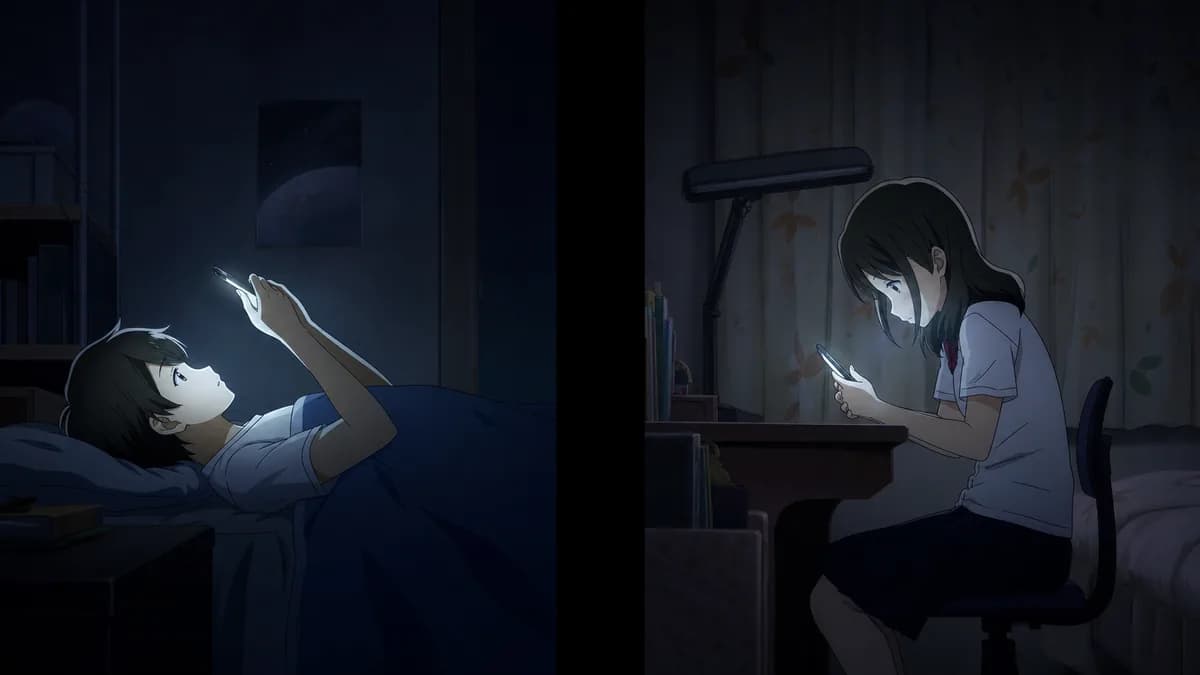
Many anime take place at school, but very few remember what it actually felt like to be that age. Tsuki ga Kirei gets there partly by making technology the emotional battleground of modern young love. Its LINE scenes are among the best uses of messaging in anime. We see a text bubble being written, reconsidered, deleted, typed again, and finally sent. Then the read receipt sits on the screen while no answer comes. Anyone who has agonized over a message will recognize the drop in the stomach. The series finds the same truth in other ordinary embarrassments. A character says something foolish and replays it for hours afterward. Hands suddenly seem impossible to place. A first walk home together carries an almost electric fear because neither person has experience to fall back on. Tsuki ga Kirei does not reach for melodrama when those moments already feel enormous to the people living through them. First love can turn a delayed reply into a crisis, and the show trusts that fact. It refuses to make its teenagers implausibly cool or unusually witty. Nor does it grant them courage whenever the plot would find it convenient. Kotaro and Akane stumble through conversations and sometimes withdraw. They also fail to say the obvious thing. Their hesitation can be maddening, but it belongs to them. By paying such close attention to the pace of a real teenage courtship, the series separates itself from school romances that use adolescence as a setting while giving their characters the confidence of adults.
What Works and What Does Not
The show's strengths are substantial. Its emotional honesty reaches places most anime romances miss, and Kotaro and Akane are easy to support without turning either one into an idealized fantasy. The pacing is mature and unhurried. Its ending arrives with unusual grace. Taken together, those qualities make Tsuki ga Kirei comforting to revisit without turning it into empty comfort viewing. The flaws still deserve attention. The stiff 3DCG crowds remain a persistent eyesore, especially when a busy setting should make a scene feel alive. Its quiet pace will also seem slow or uneventful to viewers who prefer more plot and broader comedy. Others may miss a sharper romantic spark. This is a series in which holding hands can serve as the climax of a scene, and some viewers will want more incident than that. Kotaro sometimes crosses the line between endearing shyness and frustrating passivity. A couple of late obstacles feel slightly contrived beside the otherwise effortless naturalism. The supporting love-triangle stories are drawn with sensitivity, but they receive less attention once the central couple takes over. These problems do not undo the relationship at the center. They do explain why an unusually lovely romance stops one rung below perfection. Its patience is both its greatest asset and the reason it will not suit every romance fan.
The Verdict
Tsuki ga Kirei is one of anime's most honest depictions of first love, and I give it 84. The score accounts for its rare emotional truth as well as the blemishes that hold it back, chiefly the distracting CGI. The series has no cynicism and no need to show off. It follows two shy kids whose phones fill with unsent messages. Gradually, they discover the small miracle of being understood by another person. Watch it if you want a love story that recalls the embarrassment and intensity of your own adolescence, especially if you value tenderness over spectacle. Viewers who need large dramatic turns or brisk pacing may have to meet it halfway, since this show speaks quietly where others raise their voices. For anyone who remembers loving someone and feeling too frightened to say it plainly, the result is essential viewing. The moon really is beautiful.
FAQ
Absolutely. It is one of anime's most authentic stories about first love, told with unusual tenderness and honesty. The rough 3DCG background animation can be distracting, but viewers who can get past it will find a quiet romance that stays with them long after the ending.