Tokyo Ghoul Review: The Body-Horror Tragedy That Defined an Era
 By Mika Tanabe · Editor
For a generation of viewers, Tokyo Ghoul was the door into darker, bloodier, more grown-up anime. Its premise is a nightmare with a beating heart: mild-mannered college student Ken Kaneki survives a catastrophic first date only to wake up transformed into a half-ghoul, one of the flesh-eating creatures that secretly stalk Tokyo. Trapped between the humans he still loves and the monsters he now resembles, he has to learn how to keep his humanity while his body demands he lose it. It is body horror fused with an identity tragedy, wrapped in one of the most iconic openings the medium has produced. My honest take: this first season is a genuinely gripping, hugely influential gateway that its own adaptation, and its divisive continuation, keep from being the classic the setup deserves.
Story & Premise
Tokyo Ghoul imagines a city where ghouls, predators who can only survive by eating human flesh, live hidden in plain sight among their prey. Kaneki is an ordinary bookish student until a date with the alluring Rize ends in disaster and an emergency surgery leaves him neither fully human nor fully ghoul. Suddenly he cannot eat normal food, he craves the one thing that horrifies him, and he has nowhere to belong. Taken in by the ghouls who run the quiet café Anteiku, he tries to survive without becoming a killer, all while the CCG, the human investigators who hunt his new kind, close in. It is a tight, tense premise and the season moves fast, using Kaneki's forced transformation as an engine for pure existential dread. The tradeoff is compression: this is a single dense cour adapting a much larger manga, and you can feel it rushing past material that deserved more room to breathe.
Characters
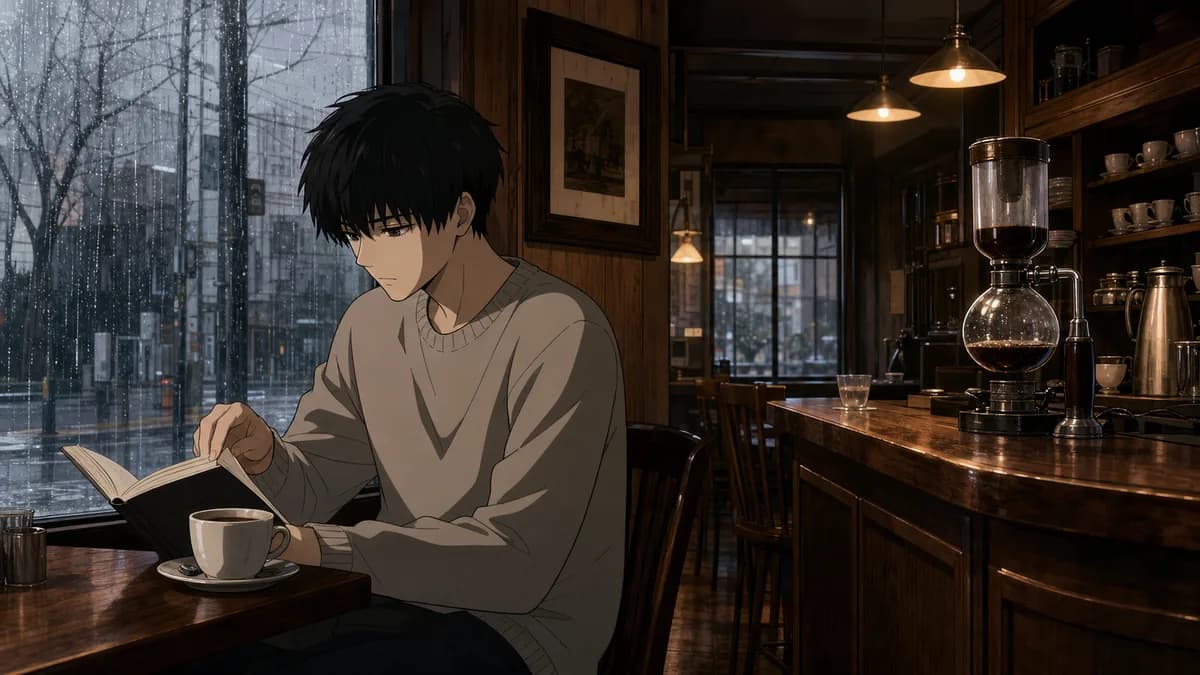
The cast is Tokyo Ghoul's quiet strength. Kaneki is a perfect everyman lead precisely because he is soft, frightened, and desperate to stay kind while the world hardens him, and watching that resolve crack is the whole point. Touka Kirishima, prickly and fierce, is the co-lead who refuses to coddle him, and their friction gives the human moments their charge. Around them the show builds real texture: the loyal best friend Hide, the gloriously theatrical gourmet Shuu Tsukiyama, the unsettling investigator Juuzou Suzuya, and the gentle café owner Yoshimura. The smartest move is on the other side of the war. The ghoul hunters Amon and Mado are not faceless villains but people with grief and conviction of their own, and the season keeps insisting that the line between monster and human is a matter of perspective. The roster is large for a single cour, so a few faces stay thin, but the ones that matter land hard.
Animation & Sound
Studio Pierrot gives the series a moody, shadow-drenched look that suits its horror, and director Shuuhei Morita stages the ghouls' predatory kagune, the tentacle-like organs that erupt from their bodies in combat, as genuine body-horror spectacle. When the animation is on, it is unnerving and kinetic. The persistent frustration is the broadcast censorship: heavy black-out and inversion effects smother much of the on-screen violence, which is a real problem for a show whose whole appeal is visceral dread. Sound, though, is where Tokyo Ghoul becomes unforgettable. The opening theme "unravel" by TK is one of the greatest anime openings ever made, a haunted, screaming ballad that captures Kaneki's fracturing mind better than any dialogue could, and it alone has pulled countless people into the series. The score leans into melancholy and menace in equal measure, and the show's most harrowing set-pieces are scored with a restraint that makes them hit even harder.
Themes & What Sets It Apart
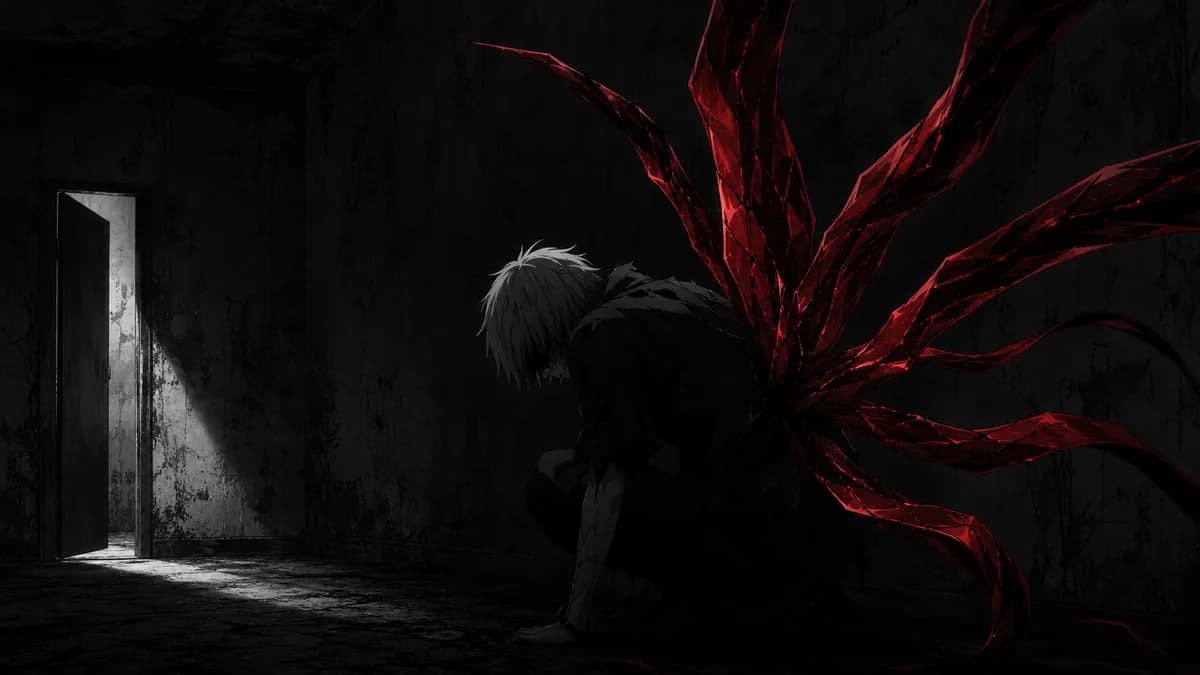
What separates Tokyo Ghoul from edgier peers is that its darkness is tragic rather than cool. The ghouls are not a faceless menace; they love, grieve, and raise children, and are cursed to kill in order to live. The humans hunting them are often just as cruel. That mirror, monster and man reflecting each other, is the real subject, and it turns the show into a meditation on belonging, identity, and the violence of simply existing. It also works as a deliberate inversion of the usual power fantasy. Kaneki does not gain his abilities and feel liberated; his new power is a curse that isolates him and threatens to erase who he was. That refusal to make transformation triumphant is what gave the series its emotional weight and its influence, sitting comfortably alongside other tragedies of the strange and inhuman like Parasyte and later Chainsaw Man. It treats horror as heartbreak, not spectacle for its own sake.
Strengths & Shortcomings
The strengths are atmosphere, premise, Kaneki's descent, and an all-time opening that does half the emotional work by itself. As a mood piece and a gateway, the first season is hard to beat. But the shortcomings are exactly why longtime fans keep pointing newcomers to the manga. The pacing compresses a rich source into too little space, so character beats and world-building that should devastate instead flash by. The broadcast censorship blunts the horror it is built on. Worst of all, the season ends on a cliffhanger whose true payoff lives in the follow-up, and that continuation, Tokyo Ghoul Root A, took an anime-original direction that split the fanbase and left many feeling the adaptation lost the plot. The result is a first season that is genuinely excellent at what it does, but one whose ceiling is capped by the very adaptation carrying it, a frustrating gap between what is on screen and what the story could have been.
The Verdict
Tokyo Ghoul earns its 77 as a first season that punches far above its runtime. The premise is razor-sharp, Kaneki's slow unraveling is genuinely affecting, the humanized conflict gives it real thematic weight, and "unravel" is one of the finest openings anime has ever produced. It remains one of the best on-ramps into dark, psychological horror the medium offers. The score reflects honest limits, though: a compressed adaptation that rushes its best material, TV censorship that mutes its central appeal, and a story that hands its biggest emotional payoffs to a continuation many fans found divisive. Watch this season for its atmosphere and its tragedy, go in knowing the manga tells the fuller story, and brace for a franchise whose adaptation gets rockier from here. As a gateway drug into darker anime, though, few titles have opened the door for more people.
FAQ
Yes, especially the first season, which is a gripping and influential entry into dark, psychological anime. Just know going in that its adaptation compresses a much deeper manga, so many fans treat the anime as a gateway and the source as the definitive version.