The Idol Anime Boom: From Macross to Oshi no Ko
 By Mika Tanabe · Editor
Idol anime is the genre everyone loves to dismiss and nobody can kill. For decades it has been written off as a merchandising scheme with a plot bolted on, a factory for cute character goods and catchy singles. And yet it keeps producing some of the medium's most durable franchises and, lately, some of its most acclaimed dramas. My argument is that this durability is not an accident of marketing. Idol anime survives because it stacks three engines that no other genre combines at once: a spectacle you can stage every single episode, a real-world industry that turns fictional groups into touring acts, and an underdog story so sturdy it works in any setting. Understand those three, and the run from Macross to Oshi no Ko stops looking like a fad and starts looking like a machine.
The Minmay Lineage: Where the Format Was Born
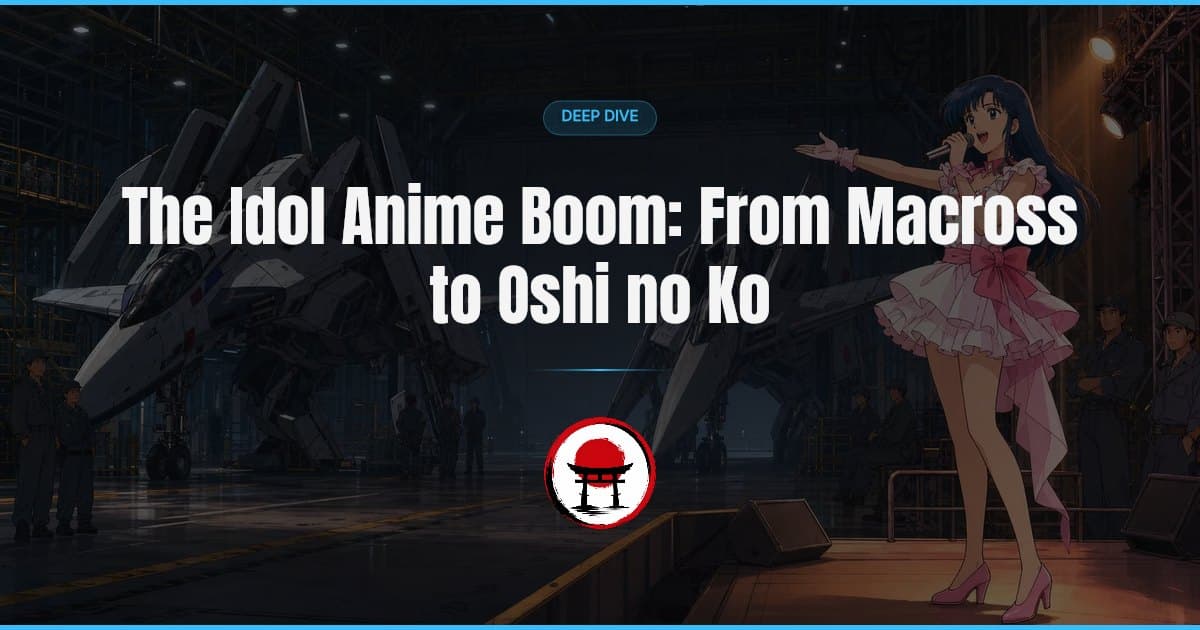
The format was born in the early 1980s, and it was born inside a mecha show. Super Dimension Fortress Macross introduced Lynn Minmay, a pop idol whose songs become a literal weapon in an interstellar war, the first time an anime made a singer's performance the thing that decides the plot. That single idea, that a concert can carry narrative stakes, is the seed of everything after it. You can trace the lineage straight down the Macross bloodline to Macross Frontier, where two rival divas, the established superstar Sheryl Nome and the rising Ranka Lee, turn the stage into a battlefield and their duet into a climax. Macross treats idol music as a force with the power to move armies and hearts at once. It matters that the genre started here, welded to spectacle and stakes, rather than as a standalone cash-in. The notion that a performance could be the emotional and literal engine of a story was baked in from the very beginning, long before anyone spoke of an idol boom as a category.
The Concert Is the Setpiece
Here is the structural reason the genre is a production engine. In a shonen, the climax is a fight. In idol anime, the climax is a performance, and a performance is infinitely renewable. A tournament arc ends; a group can hold a new concert every episode, with a new song, a new costume, and a new routine, forever. That gives the format something no drama genre has: a built-in reason to generate fresh, sellable content on a schedule. The wave that industrialized this insight was led by The iDOLM@STER and Love Live, franchises built around producing a group and following it from empty rehearsal rooms to sold-out stages. Every arc is an excuse for another number, and every number is another single. The dance sequences also became the genre's technical showcase, the place studios pour their CG budgets to render choreography a purely hand-drawn approach could never sustain week after week. The setpiece is not incidental to idol anime. It is the entire machine, and it is engineered to keep running indefinitely.
The Media-Mix: Fiction That Tours
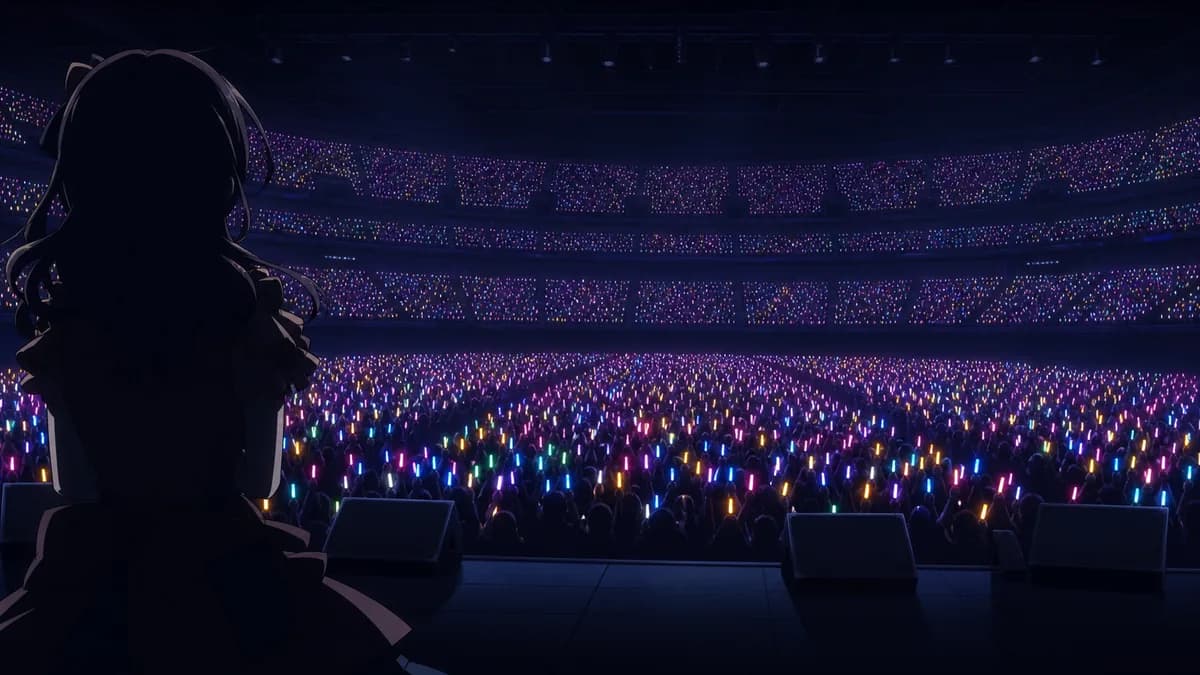
The second engine lives outside the screen. An idol anime is rarely just an anime; it is one node in a media-mix, and the most valuable node is real. The voice actresses who play the characters perform the songs live, in costume, filling actual arenas with fans who came to see a fictional group made flesh. Love Live and The iDOLM@STER did not merely sell discs; they turned their casts into touring acts, complete with concerts, fan-voted popularity polls that decide characters' fates, and mobile games where players spend real money pulling for a favorite. This 2.5D loop, fiction on screen, living performers on stage, spending in an app, is why idol franchises keep printing money long after the anime ends. No other genre binds its audience to the product this tightly. The show advertises the concert, the concert advertises the game, and the whole circuit feeds itself. Whatever you make of that machine, it explains the genre's durability better than any story beat could. The industry behind idol anime is the real headliner.
The Underdog Engine
Strip out the merchandise and a bulletproof story remains. At its core, idol anime is a sports narrative wearing sequins: a group of nobodies chasing an impossible dream, bound together by relentless practice, facing rivals, slumps, and the constant threat of disbandment. Swap the tournament for the concert and the beats are identical, the training montage, the crushing loss, the comeback, the final stage where everything is on the line. That structure is why the format outlives trend cycles that kill other genres. You can drop it into any setting and it still works: schoolgirls forming a club to save their academy, provincial hopefuls trying to put their hometown on the map, veterans clawing for one last shot at the spotlight. The dream is generic in the best way, a frame you can fill with any faces. Combined with the friendship core that makes viewers adopt these characters as their own, it produces the fierce, personal devotion the whole business depends on. The story is simple on purpose, because simple stories are the ones that scale.
The Genre Eats Its Own Myth
By the late 2010s the format was entrenched enough to start turning on itself, and that is where it produced its most interesting work. Zombie Land Saga took the standard rise-of-a-group premise and made the group a squad of reanimated corpses, dead girls revived into idols by a screaming, delusional manager. It is a parody that plainly adores the thing it mocks, using the genre's own cliches as punchlines while still delivering the earned, goosebump concert highs. Then Oshi no Ko turned satire into a scalpel. It opens on the murder of a beloved idol and uses that shock to pull the audience behind the industry's curtain, the manufactured smiles, the parasocial obsession, the exploitation of very young performers, and it became one of the most talked-about anime of its era doing exactly that. A genre that can both celebrate its fantasy and perform an autopsy on it within the same decade is not running out of ideas. It is proof the format has grown rich enough to critique from the inside.
The Counter-Case: A Merchandising Machine in Disguise
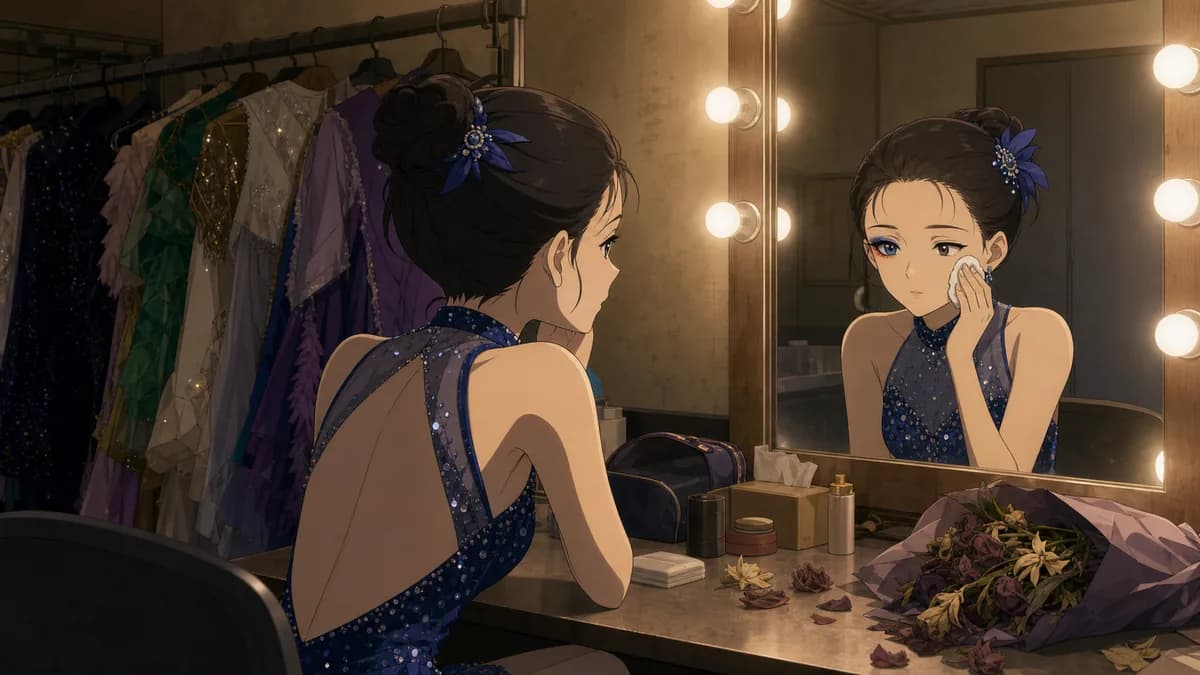
The strongest objection is the honest one: idol anime is a merchandising machine that happens to tell stories. The shows exist to sell CDs, gacha pulls, and shelves of character goods, the argument runs, and the idols are products first and characters second, the plots commercials with an emotional soundtrack. Worse, the real industry these shows glamorize carries genuine rot: punishing schedules, controlling contracts, dating bans, and performers signed absurdly young. That critique is not paranoid; it is largely correct about the economics, and anyone selling idol anime as pure art is kidding themselves. But commercial function has never canceled artistic worth, and plenty of enduring work funds itself on merchandise without being hollow. The more damning point is that the best idol anime already agrees with the critics. Oshi no Ko's entire thesis is that exploitation, and Zombie Land Saga jokes openly about idols as manufactured products. A genre this willing to indict its own business is not hiding the machine; it is putting the machine on stage. The durability comes from fusing the dream and the industry honestly, not from pretending the second one does not exist.
FAQ
The Macross lineage is the usual answer. Lynn Minmay in the early-'80s original made a pop idol's songs central to the plot, establishing the template that later idol shows built on. Dedicated idol franchises came afterward, but Macross is where the DNA starts.