Psycho-Pass Review: The Thriller That Puts Justice on Trial
 By Mika Tanabe · Editor
Imagine a Japan where a machine reads your mind before you have done anything wrong, tallies your capacity for violence into a single number, and dispatches police to detain, treat, or execute you based on that score. That is the premise of Psycho-Pass, and Gen Urobuchi builds a near-perfect thriller engine on top of it. Production I.G renders a glossy 22nd-century Tokyo where the Sibyl System quietly runs everyone's life, and a rookie inspector's first case drags her into the rot beneath the calm. This is cyberpunk with a philosophy degree: a police procedural, a cat-and-mouse chase, and a sustained interrogation of free will, all fused into one sleek, unnerving whole. It grabbed me fast and refused to let go.
Story & Premise
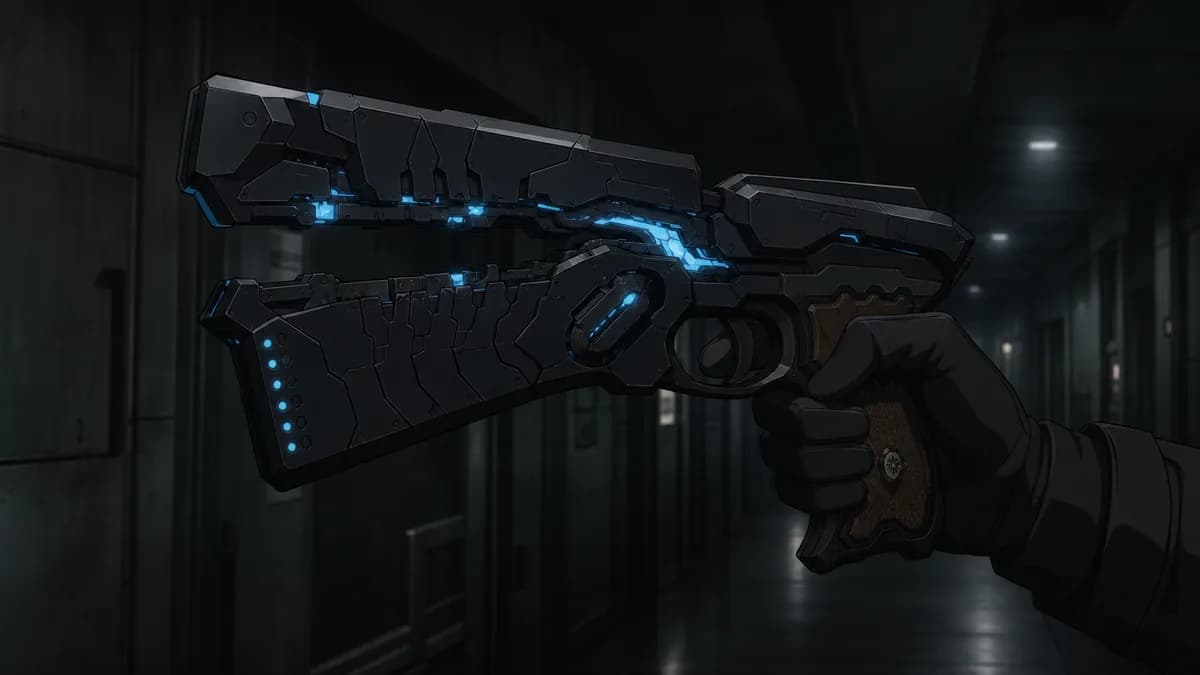
The setup is the star. In this future, the Sibyl System continuously scans the population's mental state and distills each person into a Psycho-Pass, with a Crime Coefficient that measures how likely you are to offend. Cross a threshold and you become a latent criminal, hunted before any crime occurs. Enforcement falls to the Public Safety Bureau, where clean-hued Inspectors supervise Enforcers, latent criminals themselves, kept on a leash because it takes a darkened mind to track one. Their weapon is the Dominator, a biometric handgun that reads a target's coefficient in real time and only unlocks lethal force when Sibyl grants permission; point it at someone the system deems innocent and it simply will not fire. It is one of the sharpest sci-fi devices anime has produced, because it externalizes judgment entirely, turning the officer into a trigger finger for a verdict already rendered. The early cases play as procedural, but each one quietly stress-tests the system, until a single antagonist exposes the crack running through the whole edifice.
Characters
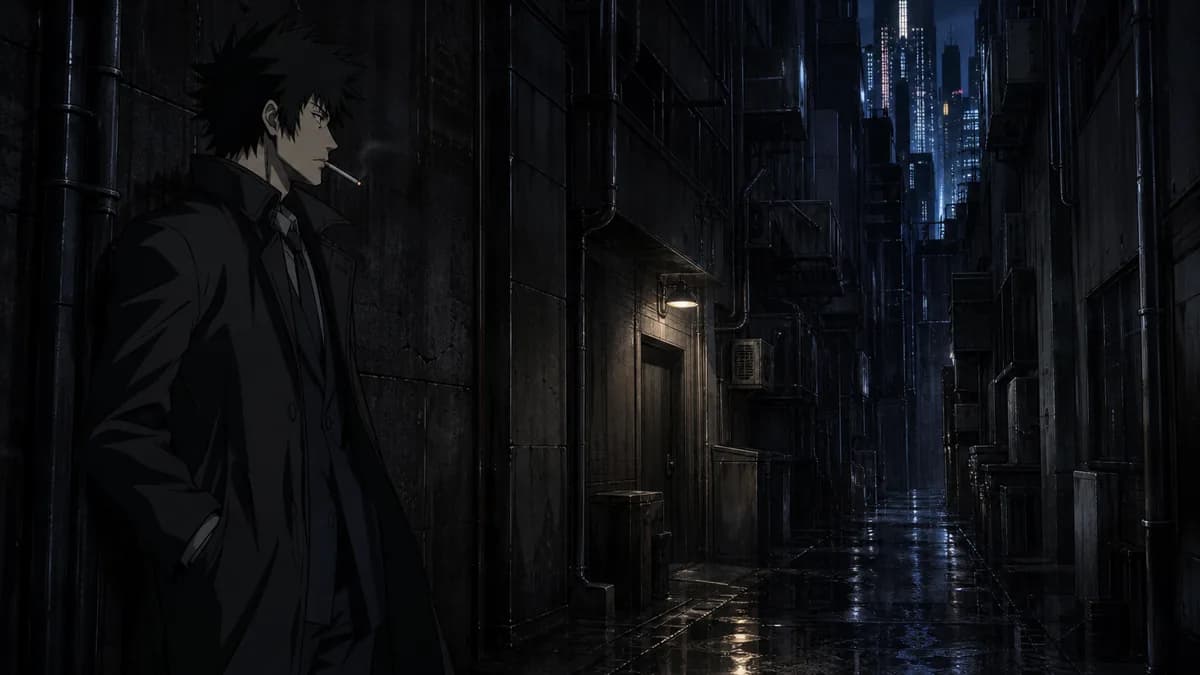
Akane Tsunemori enters as a fresh inspector who aced every ministry exam and chose this one, and she is quietly the show's masterstroke. She is idealistic but preternaturally stable; horrors that cloud everyone else leave her hue clear, which the system prizes and which slowly makes her its sharpest critic. Her arc from believer to something far more complicated is understated and deeply satisfying. Opposite her is Shinya Kogami, a former inspector demoted to enforcer after a case clouded his own record, now a coiled, methodical hunter whose fixation on one suspect threatens to consume him. He is the noir muscle to Akane's conscience. And then there is Shogo Makishima, the antagonist, an erudite, book-quoting nihilist the Sibyl System cannot read, whose coefficient stays serene no matter what he orchestrates. Without spoiling where his story goes, he is one of anime's great villains precisely because he is a philosophical argument with a face, a living proof that the machine's judgment has a blind spot. The three-way tension between them powers everything.
Animation & Sound
Production I.G gives the show a cold, glassy sheen that suits its themes perfectly. This is a Tokyo of holographic overlays, where citizens reskin their apartments and even their clothes with augmented-reality projections, a brilliant visual motif for a society papering over its emptiness. Akira Amano's original character designs are sharp and distinctive, and the animation shines brightest in two registers: the queasy, unforgettable transformation of the Dominator as it charges to eliminate a target, and Kogami's grounded, mixed-martial-arts fistfights, which land with real weight and impact. The direction favors dread over spectacle, letting long conversations simmer with menace. Sound direction from Yoshikazu Iwanami is immaculate, all cold ambience, industrial hum, and sudden bursts of violence. The score broods in electronic and orchestral textures, and the opening and closing themes are stylish, jagged, and moody, setting the tone before a single line is spoken. It is not the flashiest-looking anime of its moment, but few match its atmosphere; every frame feels engineered to make you uneasy.
Themes & What Sets It Apart
Beneath the gunfights, Psycho-Pass is a sustained argument about free will. In a world that has outsourced ethics, careers, and even romance to an algorithm, the deepest comfort on offer is never having to choose, and the show asks what that comfort costs. If a machine decides who is dangerous, who bears responsibility when it is wrong? If justice is automated, is it still justice, or merely enforcement? Makishima's whole project is to prove that people can still act by their own will, and the disturbing genius of the writing is that his monstrous methods keep landing uncomfortably close to a real point. This is where it separates itself from most cyberpunk: it cares less about flashy hardware than about the ethics of judgment itself. It sits comfortably beside Ghost in the Shell as thinking-person's sci-fi, yet its cat-and-mouse morality plays more like Death Note with a badge and a philosophy syllabus. What it is really about, surveillance, agency, and the seduction of a system that promises to think so you do not have to, feels more relevant every year.
Strengths & Shortcomings
The strengths are considerable: an airtight premise, genuine intellectual ambition, a first-rate villain, and a chilly world you sink into completely. When the central chase locks in, it is as gripping as anime thrillers get. The honest caveats are real, though. Psycho-Pass wears its erudition on its sleeve; characters quote philosophers and novelists aloud, and viewers allergic to that will find it pretentious rather than profound. The early procedural cases, while clever, can feel like table-setting before the main throughline seizes control, and the show occasionally states its themes in dialogue instead of dramatizing them. It is also genuinely bleak and often brutal, trading in body horror, torture, and sexual violence, so it is not a casual watch and not for the squeamish. And a warning for the invested: the ideas are sometimes sharper than the emotional payoff, and later installments in the franchise do not all sustain this first run's precision. Meet it as a cold, cerebral thriller rather than a warm character piece, and its flaws shrink beside how much it gets right.
The Verdict
Psycho-Pass is one of the smartest science-fiction thrillers anime has produced, a show that turns a police procedural into a courtroom for the concept of justice itself. It earns a 91 because the premise is razor-sharp, the villain is unforgettable, and the world-building is airtight, even as it occasionally lectures where it should simply show, and occasionally values its ideas over its feelings. This is not comfort viewing; it is demanding, violent, and morally unsettled, and that is precisely the point. Come for the cyberpunk chase and you will stay for the questions it refuses to answer for you, the ones about surveillance, free will, and who gets to decide what a good person is. If you like your sci-fi with teeth and a conscience, this belongs near the top of your list. A cold, brilliant, essential thriller.
FAQ
Yes, emphatically, if you enjoy intelligent sci-fi or crime thrillers. It pairs a gripping cat-and-mouse chase with real philosophical weight, and it holds up as one of the best original anime thrillers of the modern era. Just know going in that it is dark and often violent rather than easygoing.