Noragami Review: A Five-Yen God Worth Much More
 By Mika Tanabe · Editor
Plenty of gods have temples, festivals, and millions of people offering prayers. Yato has his phone number scribbled on a wall and collects one five-yen coin for each job. Noragami, Studio Bones' adaptation of the manga by Adachitoka, gets plenty of comedy from that wonderfully shabby setup. Its minor deity scrapes together spare change while hoping that one day he can afford a shrine. Then the series gradually turns his struggle into one of the most affecting supernatural action-comedies of its era. What begins as an easygoing comedy about an exorcist for hire keeps finding room for real pain between the jokes, especially when it deals with loneliness, personal worth, and the fear of being forgotten. The verdict is straightforward: Noragami is a criminally underrated gem, and its nearly perfect central trio gives it both warmth and bite. Its biggest failure is equally clear. The show understands exactly how to begin this story, yet it stops before it can finish it.
Story and Premise
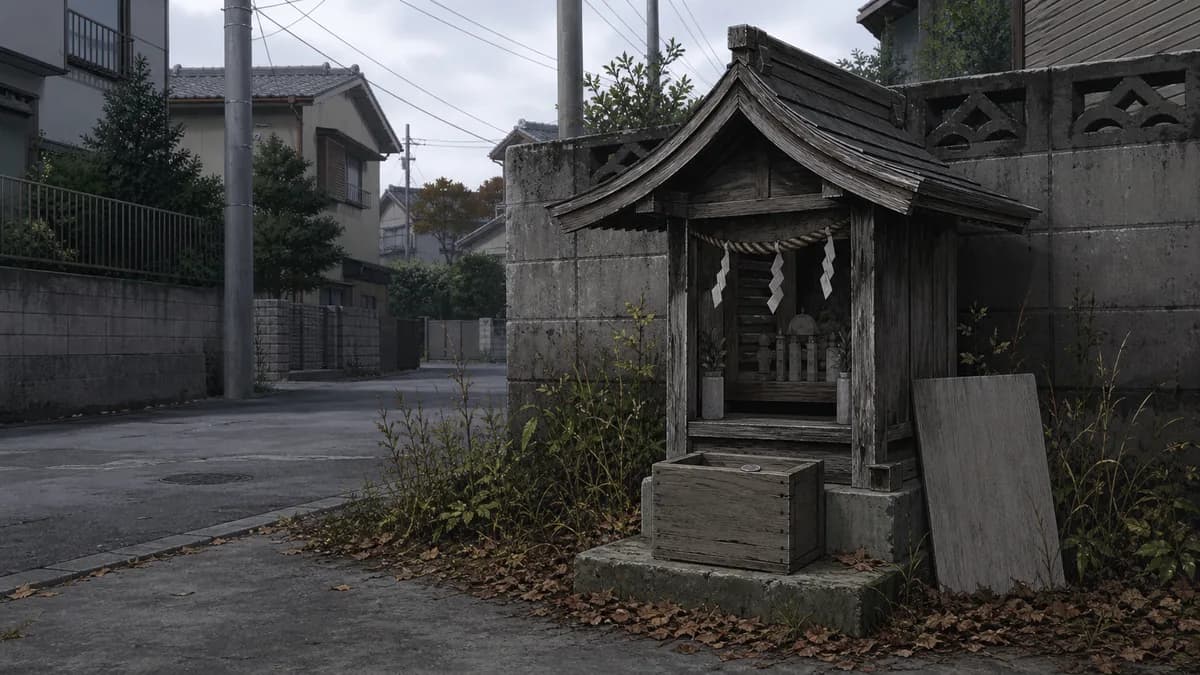
The premise works because Yato's situation is so thoroughly pathetic. Nobody worships him. He has no shrine, no dependable weapon-partner, and barely enough money for bus fare. His solution is to promote himself as a five-yen god for hire, accepting odd jobs while praying that he will someday attract enough believers to earn a temple of his own. His fortunes change when Hiyori Iki, a high schooler, pushes him away from an oncoming bus and gets hit in his place. Hiyori survives the collision, but it leaves her in a strange condition. Her soul can now slide out of her body at the least convenient moments, so she remains partly tethered to the spirit world. She wants her ordinary life back and clings to Yato in the hope that he can cure her. Instead, she is drawn deeper into a concealed version of Tokyo populated by gods, restless dead people, and ravenous phantoms that consume human despair. The series moves between individual exorcism assignments and a serialized plot that steadily tightens its grip. Eventually, someone tied to Yato's hidden past returns, and a warm reunion is the last thing this figure wants. That structure gives the season plenty of forward motion. It also lets the story move from broad slapstick to sincere darkness without making either side feel like it wandered in from a different show. The changes in tone work because each job reveals a little more about this world and about the people caught inside it. Even the early comic material is quietly laying track for the trouble ahead, so the darker turns feel earned when they arrive.
The Characters
Noragami lives or dies on its central trio, and the three of them are superb together. Yato is one of the uncommon protagonists who is genuinely funny. He is boastful, stingy, and often ridiculous, but the series gradually exposes the loneliness and guilt behind that act. It releases pieces of his history with care. The distance between the clown people see and the ancient, dangerous god underneath gives him a pull that never wears off. Hiyori could easily have ended up as a helpless audience surrogate. Instead, she is loyal, stubborn, and brave in a quiet, convincing way. She is also a wrestling-obsessed teenager who repeatedly chooses to stay involved with this unruly supernatural world, even while it wrecks the rhythm of her normal life. Yukine is the character who makes the season hit hardest. He is a dead boy whom Yato accepts as his regalia, a spirit capable of becoming a living weapon. His story provides the season's emotional backbone. Yukine is angry and grieving because he died before he could grow up, and every time he lashes out, the harm appears as literal wounds on the god he serves. Their relationship breaks under that pressure, and watching the two of them struggle to rebuild it is painful in a way the show's light opening does not prepare you for. This is where Noragami changes from an enjoyable diversion into something that lingers. The surrounding cast also suggests how much larger the divine world really is. Bishamon, a warrior goddess, and the severe Tenjin are among the gods who offer an early glimpse of a much broader pantheon still waiting beyond this first season.
Animation and Sound
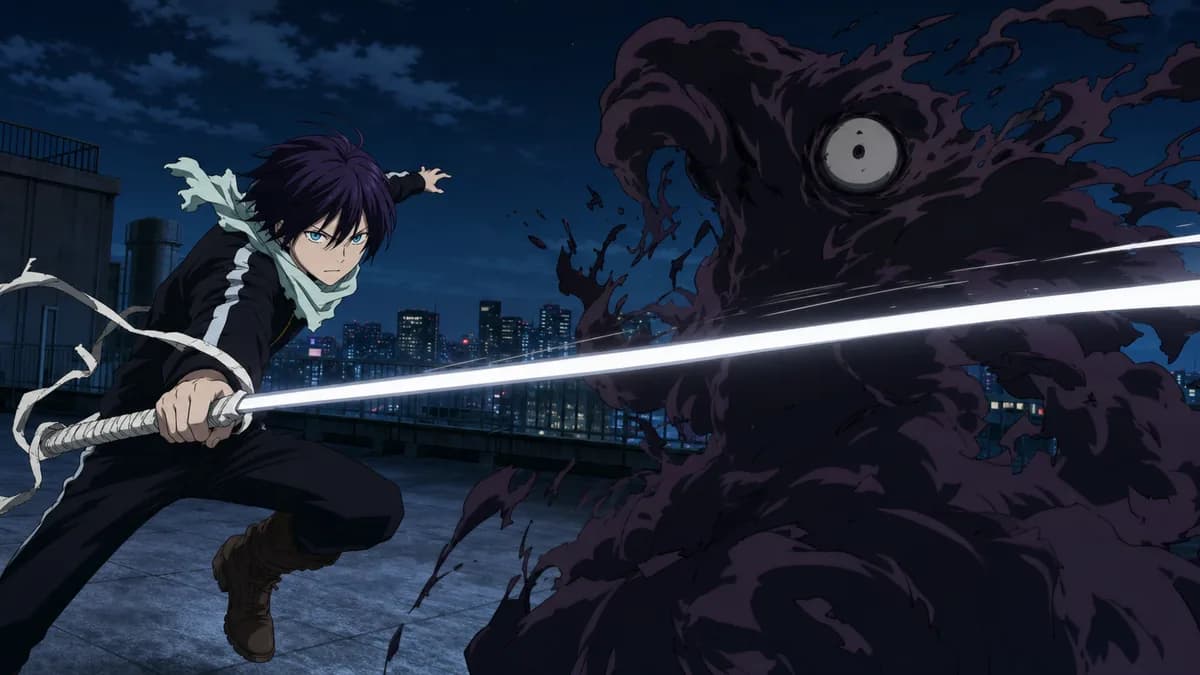
Bones gives the production its familiar level of finish, particularly whenever bodies are in motion. Yato's action scenes feel light and quick. He turns and dives through the air with his recognizable scarf and tracksuit trailing behind him, while the blade work remains clean enough to follow even when enormous, ink-black phantoms fill the frame. Veteran character designer Toshihiro Kawamoto draws the cast with crisp, expressive lines that suit a pratfall as well as an abrupt emotional blow. The phantoms follow a different visual logic, and their forms can be properly disturbing. Composer Taku Iwasaki may be the production's strongest asset. His music is playful and jazzy during the comedy, then rises into sweeping choral passages when the drama reaches its peaks. That score holds the competing moods together. Without it, the jumps between absurd jokes and bruising emotion could have felt awkward; with it, they sound like parts of the same story. Both the opening and closing songs are memorable enough that skipping them feels like a loss. Noragami is not presenting itself as a spectacle funded by an unlimited budget, and nothing about it requires one. The staff uses assured direction and strong designs, saving its most ambitious movement for the scenes that need it. Flash never takes priority over the characters. The craft supports every emotional shift, which is why a small comic reaction can land as neatly as a large supernatural fight. It is stylish work, but the style always has a purpose beyond showing off.
Gods, Memory, and Despair
Noragami rises above the usual action-comedy because of what divinity means in this setting. A god exists only for as long as people remember them. Belief functions like oxygen, and a deity without followers may eventually fade from existence altogether. Yato's frantic campaign to acquire a shrine gains real sadness from that rule. His desire for worshippers is also a need to know that he matters, and that he will not disappear forgotten and alone. Shinto ideas run throughout the series. Tenjin appears as the god of learning, while dead souls can become regalia whose fate is intimately tied to the god they serve. The mythology gives the show a concrete way to examine difficult questions about how much a person means to the world and who has the power to judge that value. Phantoms are born from despair and self-loathing, which turns depression and suicidal feeling into actual monsters. The subject receives unusual tenderness for this genre. The series understands that pain can isolate people and distort their actions without treating the sufferers as disposable plot devices. Those ideas also sharpen the bond between Yato and Yukine, since their supernatural connection makes one person's private misery physically impossible for the other to ignore. Viewers who enjoyed the bond between god and mortal in Kamisama Kiss will recognize some of the appeal. Anyone drawn to the cool, found-family energy and Bones sensibility of Bungo Stray Dogs may feel at home too. Noragami occupies a nearby space, but it pushes that mixture toward something darker. The comedy and mythology remain inviting, while the fear of oblivion gives their adventures an unsettling weight.
Where It Excels and Where It Stops
The appeal is immediate. Noragami has a terrific central trio, well-considered mythology, jokes that consistently work, and the nerve to deliver a painful emotional hit in the middle of all that laughter. Its limit comes from the shape of the adaptation. This is a single cour, and it feels like the opening section of a much longer composition. The anime covers only the earliest part of a long-running manga, then ends far short of a complete resolution. It does conclude the immediate stories involving Yukine and the vengeful god, so the season has a climax rather than an arbitrary cutoff. After paying off those arcs, however, it effectively pauses. Major figures such as Bishamon have received little beyond an introduction, and the broader conflict remains entirely open. A newcomer expecting the season to stand alone will probably feel the story pulled out from under them. A few moments from the manga are compressed as well, and some of the isolated exorcism assignments feel noticeably slighter beside the more serious episodes. Those weaknesses do not undo what the show does well. They do change the terms on which it should be watched. This season is a beginning that directs the viewer toward its sequel. It is not an ending designed to provide satisfaction by itself. Knowing that in advance makes the lack of closure easier to accept, though it cannot erase it. Noragami builds compelling relationships and opens the door to a fascinating divine society; its first run simply leaves too much of both on the other side of that door.
The Verdict
Noragami earns its 8.4 because it is smarter and funnier than its modest reputation might suggest, with far more emotional force too. This supernatural action-comedy has genuine hurt beneath its jokes, and its central trio is good enough to follow almost anywhere. The score stops at 8.4 for a simple reason: taken as a self-contained watch, the season fails to finish the story it begins. It is a beautiful first act that assumes the audience will return. That bet works if you continue, but it still deprives this season of a clean ending on its own terms. The label 'underrated' should not put anyone off, though viewers should also leave behind any expectation of a neat conclusion. Watch for Yato's disreputable charm and the pain in Yukine's story. The show's treatment of gods and faith is unusually thoughtful, and its ideas about the need to be remembered stay with you. Keep the sequel ready. By the time the finale reaches its credits, starting the next season will feel less like an optional extra and more like the natural next step.
FAQ
Yes. It deserves much more attention than it receives. The show is very funny, but it also carries unexpected emotional weight. One of the finest central trios from its era holds everything together. Its one serious qualification is the incomplete shape of the story. Treat this season as the first chapter, not the entire book, and expect to want the continuation as soon as it ends.