Hunter x Hunter Review: The Shonen Gold Standard
 By Mika Tanabe · Editor
Some shows announce their brilliance in the first act. Hunter x Hunter does the opposite. It strolls in wearing the costume of a sunny boys' adventure, all bright colors and a wide-eyed kid chasing the father who abandoned him, and quietly dares you to underestimate it. Then, arc by arc, it sheds that skin. What starts as a likable optimist surviving a lethal entrance exam becomes a rigorous meditation on power, obsession, and the true cost of getting what you want. Madhouse's modern remake is the definitive take on Yoshihiro Togashi's manga, and it earns its reputation as the series other shonen are quietly measured against. It is patient, funny, startlingly cruel, and smarter than it has any right to be.
Story & Premise
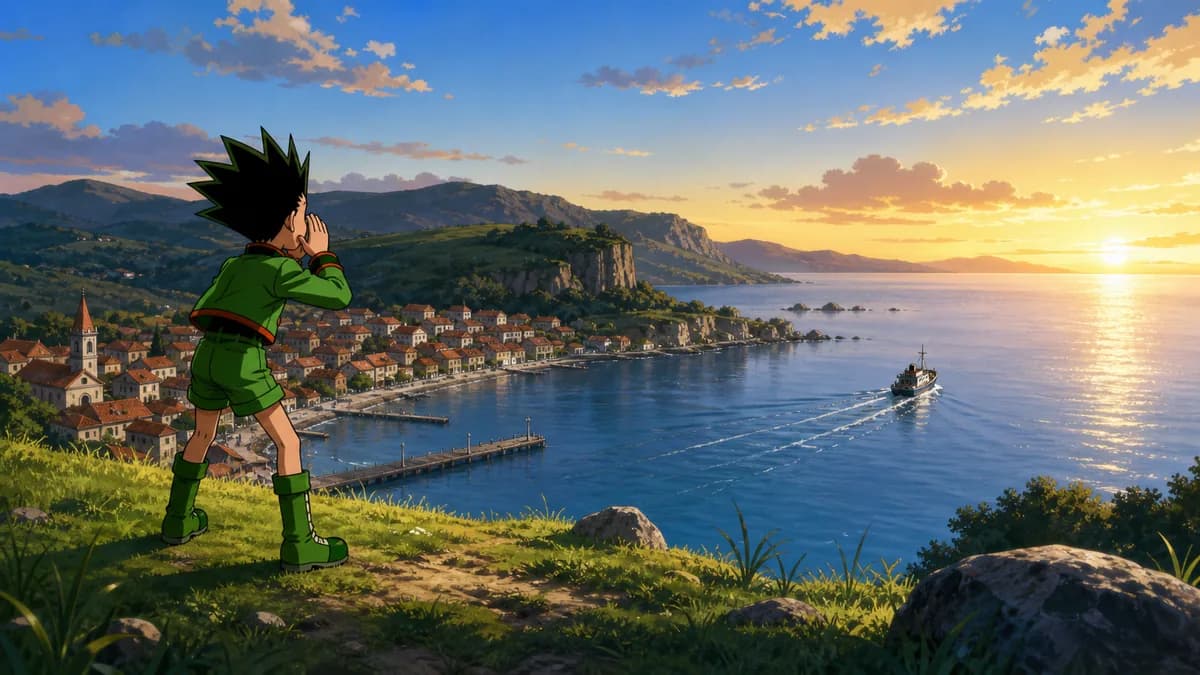
Gon Freecss is a bright island kid who learns the father he never knew, Ging, is a legendary Hunter, a licensed adventurer who chases treasure, beasts, and forbidden places. To find him, Gon sets out to earn the same title, starting with the notorious Hunter Exam, a gauntlet with a real body count. That premise sounds like standard shonen, and for a while it plays like one: a plucky hero, colorful rivals, escalating tests. The genius is in how the show keeps raising its own ceiling. Each arc, from the exam to a family of assassins, a martial-arts tower, a crime-soaked auction city, a video-game world, and finally a war against a new species, rewrites the stakes and the tone. Togashi treats his world as a real, dangerous place with economies, politics, and consequences that stick. Victories are provisional; some cost everything. By the midpoint you realize the breezy adventure was a Trojan horse for something far darker and more ambitious.
Characters
This is where the show separates itself. Gon is deceptively simple, relentlessly kind and relentlessly stubborn, and the series slowly reveals how frightening that single-mindedness can become. His counterweight is Killua Zoldyck, a boy raised as an assassin who learns, painfully, that he is allowed to choose his own bonds. Killua's arc is the emotional spine of the whole thing and one of the best-written in the medium. Around them orbit Kurapika, whose ice-cold quest to avenge his slaughtered clan curdles into something self-destructive, and Leorio, the loud, warm audience surrogate who wants to become a doctor for people who cannot afford one. Then there is Hisoka Morow, a magnetic, deeply unsettling wild card who craves nothing but the thrill of a worthy fight. What elevates the cast is that the villains get real interiority too; the antagonists have philosophies, loyalties, and grief. Nobody here is a cardboard obstacle. Everyone wants something, and those wants collide in ways that genuinely hurt.
Animation & Sound
Madhouse handles the adaptation, and the studio's approach is smart rather than flashy. Takahiro Yoshimatsu's character designs are clean and expressive, built to snap between wide-eyed comedy, full super-deformed silliness, and sudden, unblinking horror. Be honest with yourself early: the bright palette and simple linework of the opening arcs can read as childish, and that is partly the point, because the visual restraint makes the later brutality land like a gut punch. As the story darkens, so does the direction; the Chimera Ant arc in particular swings for genuine cinematic ambition, with fluid, unnerving action and long stretches of pure dread. Yoshihisa Hirano's score is a real weapon, jazzy and playful when the show is having fun, then swelling into something operatic and tragic when it counts. The bright, brassy first opening theme is deceptively cheerful. Both the dub and the sub are strong, so newcomers can pick whichever gets them through the door.
Themes & What Sets It Apart
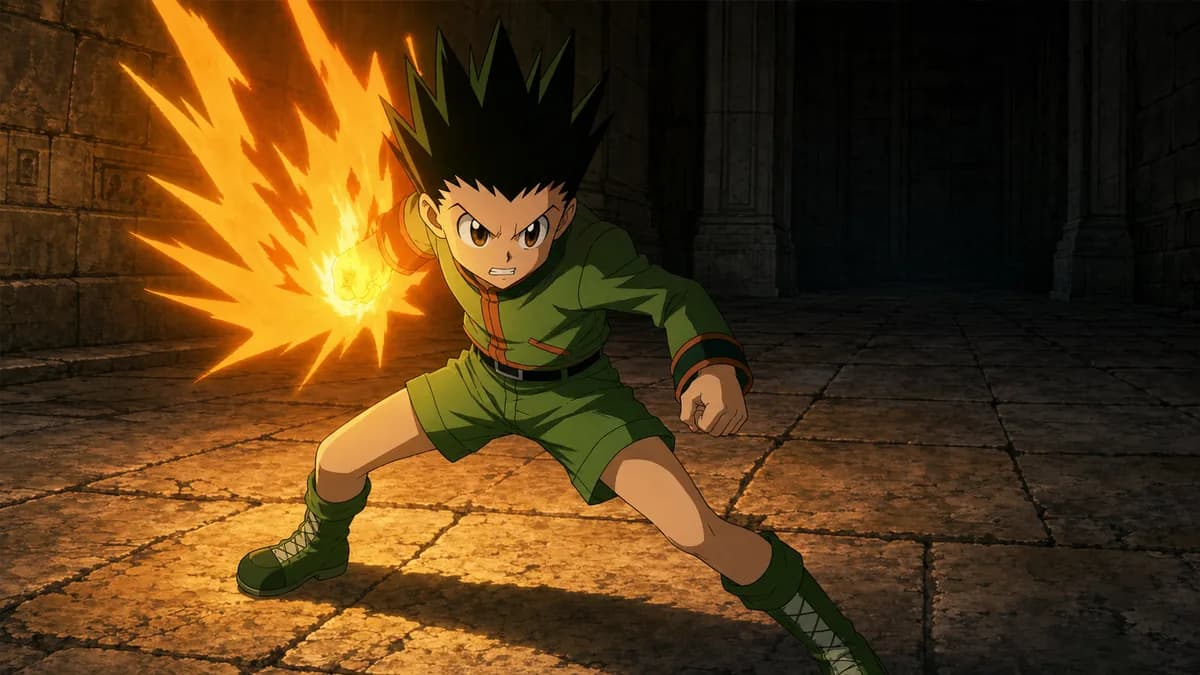
Two things push Hunter x Hunter past its peers. First, Nen, its power system, is the gold standard. It is a strict, rule-bound framework where fights are won by preparation, deception, and clever exploitation of limits, not by screaming until a new power conveniently appears. Watching characters out-think each other is far more thrilling than watching them out-punch each other, and the show trusts you to keep up. Second, its moral seriousness. This is a story willing to argue that its hero's virtue has a shadow, that revenge hollows you out, and, in the towering Chimera Ant arc, that a monster can become more humane than the humans hunting it. The bond between the Ant King and a frail human girl over a quiet board game is one of the most devastating things anime has produced. Togashi keeps asking what actually separates a person from a beast, and refuses to hand you a comfortable answer. Few shonen even dare to ask the question.
Strengths & Shortcomings
The strengths are obvious by now: airtight power mechanics, a cast that deepens the longer you sit with it, villains with souls, and a willingness to let good things end badly. Now the honest part. The opening arc, fun as it is, is the most conventional stretch, and some viewers bounce off before the show reveals its real ambitions; it genuinely asks for patience. The much-loved Chimera Ant arc, for all its brilliance, leans hard on narration in its back half, and the deliberate pacing can test you. The tonal whiplash between slapstick and atrocity will not be for everyone. And the biggest caveat by far: because the manga has spent years on indefinite hiatus, the anime adapts to a strong stopping point and simply stops. You get a satisfying arc-ending, but not a true finale; the larger story is left open, perhaps forever. Go in knowing that, and it stings far less.
The Verdict
Hunter x Hunter is the rare long-haul series that repays every hour you give it, and then asks for your patience precisely because it respects your intelligence. It is a masterclass in world-building, character growth, and fight design, wrapped around a moral seriousness most action anime never even attempt. Yes, it starts conventional. Yes, it can be slow. Yes, it stops rather than ends. None of that dents the achievement. When it is firing, and it fires for long, sustained stretches, nothing else in the genre quite touches it. If you want to understand why so many fans call this the shonen gold standard, this is the version to watch, start to finish. Just make peace with the open ending before you begin, and let the journey itself be the reward. It very nearly is enough.
FAQ
Absolutely. It is widely considered one of the greatest action-adventure anime ever made. Just know that it rewards patience: the early arcs are fun but fairly conventional, and the show's real depth arrives once you are properly invested.