
Fruits Basket Review: Shoujo's Gentlest Masterpiece
 By Mika Tanabe · Editor
Some anime demand your attention from the first frame. Fruits Basket takes a quieter approach, sitting beside you and asking how your day went. TMS Entertainment's 2019 adaptation of Natsuki Takaya's beloved shoujo manga offers comfort with an ache underneath. A newly orphaned girl finds herself living with a family whose members turn into zodiac animals when they are hugged. The premise invites whimsy, and the show gets plenty of comedy from it. Yet every fluffy transformation points back to grief, abandonment, and the difficult process of accepting love when you have learned to fear it. Longtime fans waited the better part of two decades for this retelling, which was supervised by the mangaka herself. That care shows in the way the series gives each character's pain room to matter. Its gentleness never comes at the expense of emotional weight.
The Story and Its Zodiac Curse
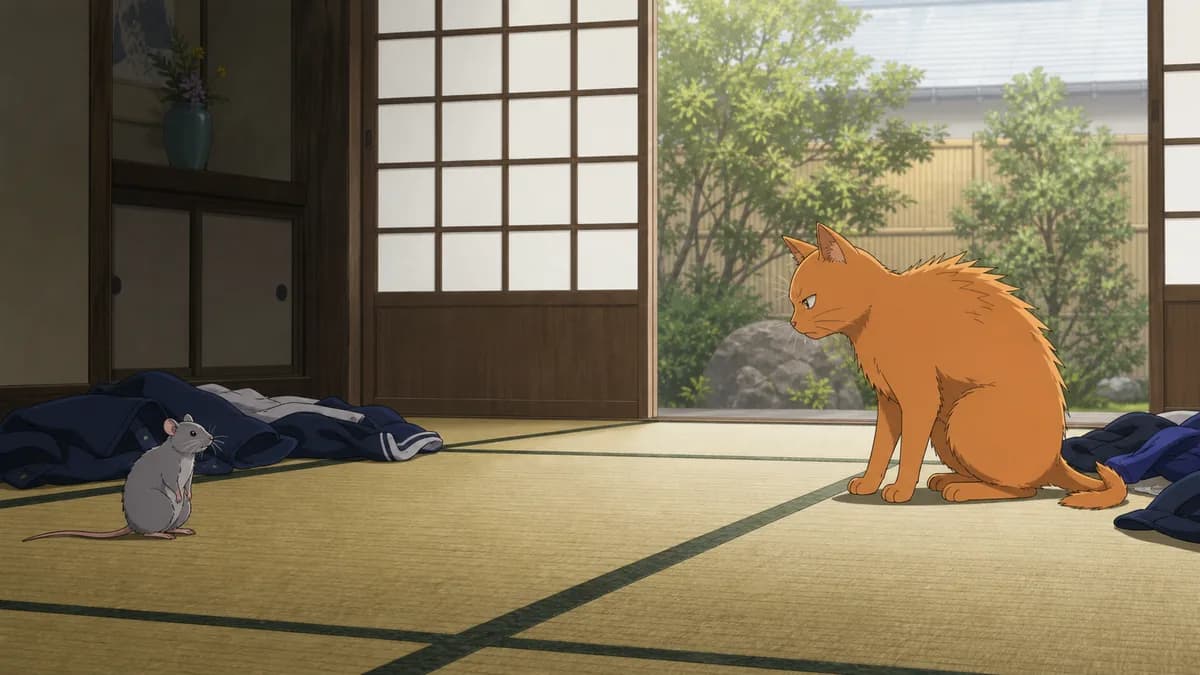
Tohru Honda is remarkably good at finding a bright side, even when her own life offers very little material. After losing her mother, she quietly moves into a tent in the woods. The patch of land turns out to belong to the reclusive Soma family. Novelist Shigure discovers her situation, and Tohru is soon taken in by him and his younger relatives, Yuki and Kyo. She agrees to handle the housekeeping in exchange for a roof. Then she learns why the household keeps its distance from outsiders. Members of the Soma clan transform into animals of the Chinese zodiac when someone of the opposite sex embraces them, or when their bodies give out. Yuki is the rat and the school's untouchable prince. Kyo is the cat, an outcast omitted from the zodiac. A lesser series could have wrung a few jokes from that setup and stopped there. Fruits Basket uses it to introduce the Somas one wounded person at a time. Each animal form belongs to someone who has been taught, directly or otherwise, that they cannot be loved. The transformations remain funny, especially when they wreck an ordinary social encounter, but the joke always has a bruise behind it. Akito, the head of the family, hangs over every new connection Tohru makes. Akito's control has shaped the Somas' lives, and the chill of that influence reaches them even in moments that appear safe. The premise begins as a charming secret and gradually reveals the system of fear holding this family together.

People, Not Character Types
Tohru could easily have become exhausting. Relentless kindness often turns a heroine into a passive doormat, but this writing keeps catching the strain beneath her smile. A flinch can expose what her sunny manner usually keeps covered. Over time, her optimism reads as armor fitted over grief rather than simple innocence. The same honesty shapes the people around her. Yuki looks poised and enjoys the admiration of nearly everyone at school, while privately suffocating under their expectations. Kyo converts a lifetime of rejection into anger and hopes the noise will hide how badly he wants to belong. Their arguments are genuinely funny, then painful, and sometimes both feelings occupy the same scene. The supporting cast gives the series much of its depth. Momiji keeps smiling through a heartbreak that most stories would never place on a child. Mute little Kisa bears the scars of bullying. Arisa and Saki, Tohru's fiercely protective friends, would happily take apart anyone who caused her harm. Even Somas with little screen time can leave a sharp emotional impression because the show pays attention to the specific ways people conceal hurt. That messiness saves them from becoming tidy lessons about trauma. The Japanese cast handles these shifts with restraint. The Funimation English dub, guided by Caitlin Glass, meets the same standard without sanding away the awkward pauses or sudden cracks in a voice. No one is reduced to a role in Tohru's journey. Every person arrives with a burden that existed before she met them and will not disappear simply because she cares.
A Soft Visual and Musical Touch
TMS Entertainment rebuilt the setting from the ground up, choosing warmth as the show's visual baseline. Pastel skies and soft backgrounds with a watercolor influence make the Soma home feel inviting, while the character designs use large, glassy eyes to show every tremor of emotion. This is not a technical showreel. The animation tends to be understated and can look flat, and the comedy regularly switches to chibi deformation when a tense scene needs to breathe. Those choices suit material that depends on tiny reactions. The direction will hold on a silence or move close to a trembling face instead of trying to animate feeling through constant motion. Most of the time, that confidence pays off. A character's pause before answering can say as much as the following line. The soundtrack works in a similarly gentle register, built mostly from piano and strings. It swells when the scene has earned the lift, which keeps the sad moments from feeling forced. Beverly's opening theme, 'Again,' is an all-timer. Its wistful hook establishes the show's emotional temperature before anyone speaks. The vocal performances carry much of the production in either language. Small, ordinary lines pick up genuine ache through careful delivery, and the actors understand when restraint is stronger than sobbing. The result feels intimate without being slight. This is a small-scale production that understands exactly where to place its resources, so it sounds and feels larger than its budget. A held expression and the right musical phrase often do more work here than a busier production could manage with a grand display.
Inherited Pain and the Work of Healing
Take away the zodiac conceit and Fruits Basket becomes a close study of inherited pain and the effort required to heal from it. Nearly everyone in the story has been failed by a parent. The curse gives that damage a physical form: it passes through blood, separates its bearers from other people, and teaches them that intimacy is dangerous. It also encourages them to believe their loneliness is deserved. The series stands out because it treats kindness as a choice that takes work. For Tohru, kindness is something she continues to do even when another person's fear makes the effort uncomfortable. She does not repair anyone by hugging them. She stays present and refuses to turn away, giving frightened people enough safety to consider changing at their own speed. The distinction matters. Their recovery remains their own, and the show never suggests that one sufficiently loving person can erase years of damage. Fruits Basket is also willing to leave sorrow unresolved. Real wounds take time to close, so a conversation may offer relief without providing a cure. Childhood abuse, abandonment, and self-loathing are all treated seriously, but the story does not wallow in misery. It usually leaves some light in the frame, even if a character cannot reach it yet. That balance gives the hopeful moments their credibility. Anime has no shortage of fantasies about becoming physically powerful. Here, emotional generosity changes lives, and the series shows how much courage it can demand from both the person offering it and the person trying to accept it. The effect lands with a force that a conventional battle could not reproduce.
Where the First Season Falters
Fruits Basket has real weaknesses, even if its emotional accuracy carries it through most of them. The openness that gives the series its strength sometimes tips into melodrama. A few scenes underline their feelings so heavily that the strings seem to cry on the audience's behalf. The enormous cast creates another problem. Cursed Somas are introduced at a rate of almost one per stretch, so a few characters arrive with a tearful history and then retreat before their presence has fully settled. This single-season stretch also sags in the middle. Patience is part of the show's identity, but there are points where it becomes slow to a fault. Anyone waiting for stronger momentum or a resolved romance will watch both remain deferred. The premise has a dated seam as well. Tying the curse to hugs 'from the opposite sex' builds a rigid, heteronormative rule into the story, and the series never examines that rule in much depth. Viewers should also know what kind of ending this season offers. This is setup for a much larger story, covering its opening third, and it closes on quiet promise instead of a major payoff. That can be frustrating if you want arcs to finish within the season that begins them. Approached on its own unhurried terms, these shortcomings feel manageable rather than fatal. The scattered character introductions still add texture, and the slower passages let relationships develop without rushing to an obvious romantic checkpoint. The season asks for patience and does not pretend otherwise. Whether that feels generous or demanding will depend on how much momentum you need from a drama.
The Verdict
Fruits Basket deserves its reputation as one of the gentlest and most emotionally intelligent shoujo series ever animated. TMS Entertainment's 2019 version is unquestionably the definitive introduction. A ninety-two is a high score, with one important qualification: this opening season spends much of its time setting the table. The larger rewards arrive later, when the work done here begins to pay off across the trilogy. Viewers who come looking for comfort will find it, but the warmth leads into a quietly devastating account of how people learn to accept love. The show will not suit everyone. It offers little spectacle, moves at a deliberate pace, and saves tidy resolution for later. What it does offer is a sincere argument that kindness can require greater bravery than strength. Bring tissues and some patience, then allow the characters to reach you in their own time. Few series this soft leave such a lasting mark. Fewer still make their slow pace feel so necessary.
FAQ
Absolutely, especially if character and emotion matter more to you than action or intricate plot mechanics. It is among the most rewarding shoujo dramas, as long as you are happy to let the story develop at a calm, patient pace. Anyone drawn to grounded stories about grief, healing, and found family should find plenty here to love.