Chainsaw Man Review: Blood, Guts, and a Beating Heart
 By Mika Tanabe · Editor
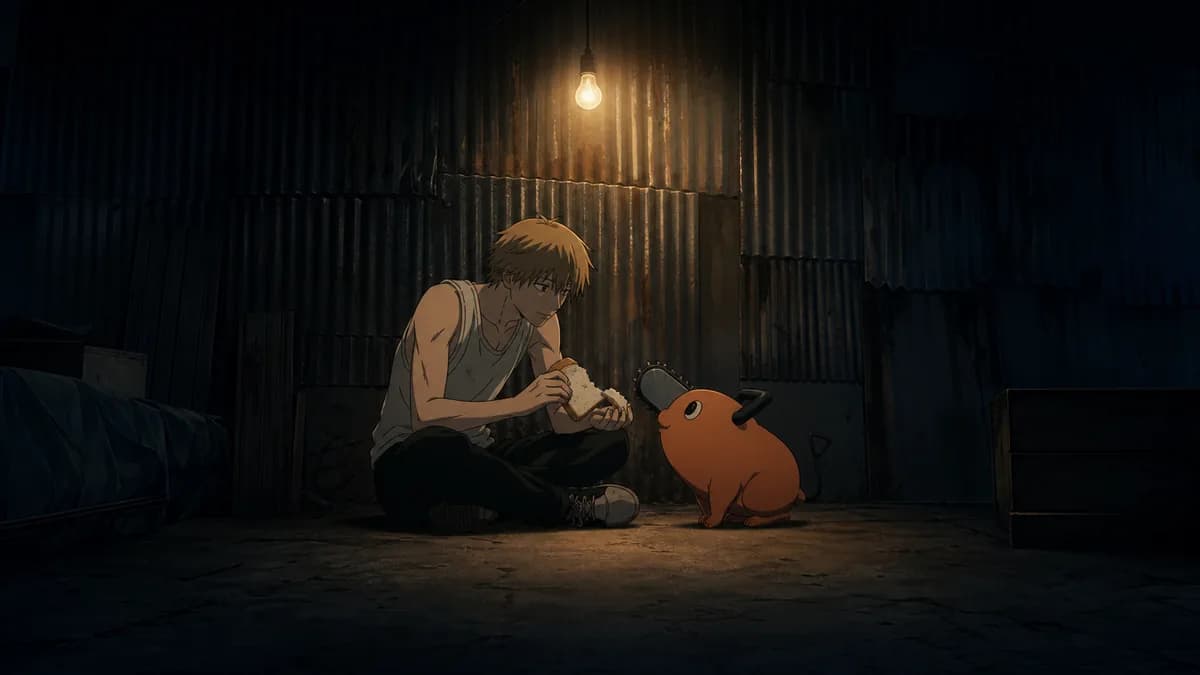
Most anime begin with a prophecy or a chosen hero. Chainsaw Man begins with a starving teenager who sells his own organs to the mob and shares one slice of bread with a dog-shaped devil. Denji's life is hideous, but his wishes could hardly be simpler. He wants decent food, a safe place to sleep, and someone who cares whether he comes home. That tension powers the whole show. MAPPA adapts Tatsuki Fujimoto's cult manga with the visual language of a grimy crime film. Scenes feel heavy and textured, and the direction is comfortable with long silences. The violence is louder than the premise prepares you for, while the emotion is much quieter. Chainsaw Man can look like a gleeful splatter-fest from a distance. Up close, it is a painful story about a boy who has been denied ordinary happiness for so long that he barely knows how to recognize it.
Story and Premise
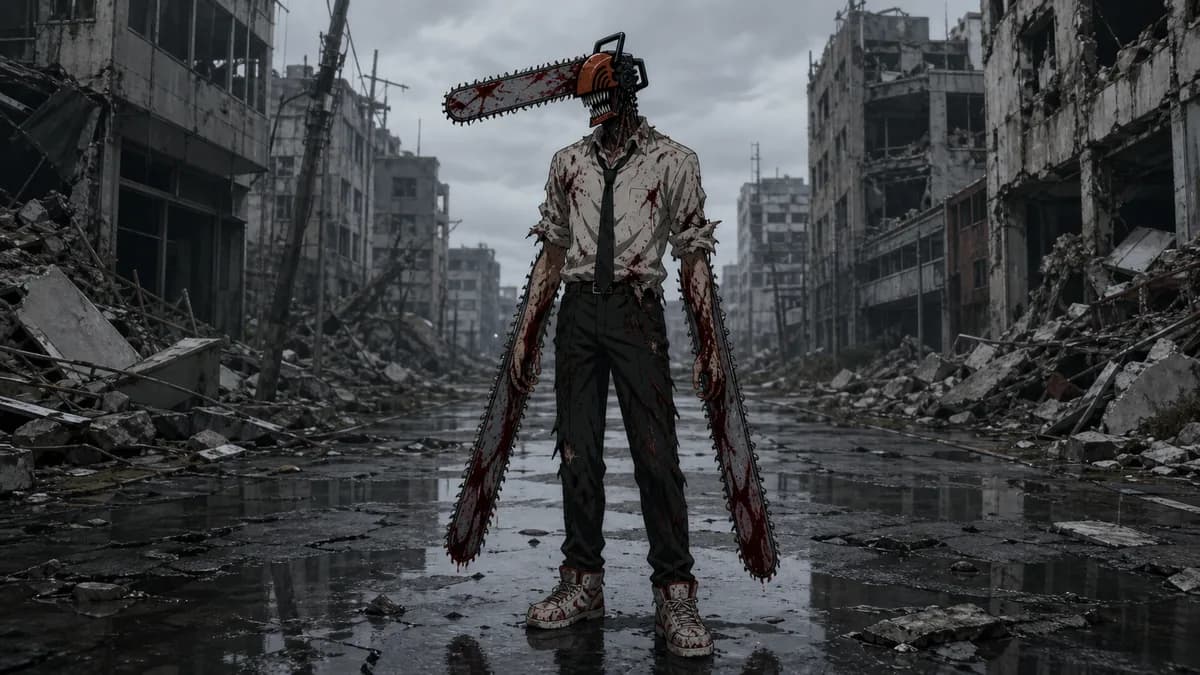
In Chainsaw Man, devils are born from human fear, and hunting them is a grim job with a salary attached. Denji enters this world as a nobody. He is a broke teenager working down the crushing yakuza debt left by his father, scraping together a living as a bootleg devil hunter. His only companion is Pochita, a devil-dog with a chainsaw for a nose. Denji does not dream about glory or saving humanity. He wants a full stomach, a warm bed, and a girl who might hold his hand. Those tiny ambitions tell you exactly how little life has given him. After a betrayal leaves Denji bleeding out in the trash, Pochita fuses with his dying body. Denji comes roaring back as Chainsaw Man, with a pull-cord jutting from his chest. The setup sounds lurid, and the series happily delivers the promised blood. Its treatment of Denji is far more serious. His path resembles a stray dog being offered a home, not a conventional hero setting out on a grand quest. His hunger for food and touch is inseparable from his search for meaning. That hunger supplies the story with its horror, but it also gives the chaos a human pulse.
The People Who Give It a Heart
The cast turns Chainsaw Man from a sharp premise into a show people get attached to. Denji is a rare shonen lead with no interest in pretending to be noble. He is hungry, horny, and openly transactional. Because the series is honest about those qualities, his gradual reach toward something resembling love becomes genuinely moving. Makima, the poised Public Safety officer who takes him in, has an immediate pull and an equally strong air of danger. Every kindness she gives Denji can also be read as another tug on a leash. The show wisely refuses to settle that tension too soon. Power is a self-obsessed Blood Fiend who lies as naturally as she breathes. She becomes Denji's unlikely roommate, as well as one of anime's great characters to balance comedy with tragedy. Aki Hayakawa is the weary senior hunter carrying a personal vendetta against the Gun Devil. His decency and grief give the group a moral center without making him dull. Even Pochita, who is nearly silent, keeps the emotional stakes grounded. These damaged people gradually become a prickly, violent found family in one crowded apartment. They irritate each other, depend on each other, and eventually begin to matter to one another. That bond is the beating heart promised by the title, and the pain it causes feels earned.
Animation, Direction, and Sound
MAPPA made a deliberate choice that split viewers: Chainsaw Man is shot like a live-action film instead of a typical shonen adaptation. Its colors are desaturated and grounded. The camera often favors handheld framing, while ordinary scenes unfold in long, patient shots. Devils are designed with an eye for genuine body horror rather than clean spectacle. Once a fight starts, the restraint gives way to action with real weight and gristle. The best cuts reduce Denji to a rushing blur of blades, and the sound design makes every chainsaw rev and wet impact feel physical. The score remains moody and restrained for much of the series, then hits hard when a scene needs it. The music also makes two memorable choices. The opening became a chart-topping, instantly iconic track. Nearly every week brought a fresh ending sequence from a different artist and in a different style, a clear love letter to Japanese music. The production is lavish and assured, with a level of finish that is obvious in quiet domestic scenes as well as major battles. Whether that cool, filmic distance belongs with the manga's manic energy remains the question that divided the fanbase. I understand both reactions. The approach gives the anime its own identity, but it also changes the speed and comic bite of Fujimoto's work.
Control, Desire, and the Show's Identity
Behind all the gore, Chainsaw Man keeps returning to control and desire. Denji has been used for his entire life. His father's debt traps him, the yakuza exploits him, and then the state puts a weapon in his hands in exchange for a paycheck. Whenever affection is offered, the story leaves room to wonder whether it is genuine care or a more comfortable cage. Tatsuki Fujimoto places that idea inside a shonen power fantasy, then gives us a hero whose dreams are painfully modest. Denji's wishes quietly expose how little the world has ever allowed him to expect. Poverty and loneliness shape every choice he makes. Wanting anything becomes frightening because desire gives other people a handle they can grab. The series also has unusual tonal nerve. A scene can begin as slapstick, curdle into a nightmare, and arrive at heartbreak without warning. Those turns do not always feel smooth, but smoothness would be wrong for this character and this world. Very few shows are willing to be this gross while taking sadness so seriously. Fewer still would trust a chainsaw-headed teenager to carry both impulses. Chainsaw Man keeps changing its emotional temperature, and that restless quality is the clearest mark of its identity.
What Works and What Falls Short
Chainsaw Man's strengths are easy to see. The character writing is fearless, the visual identity is unmistakable, and the voice work is top-tier. An emotional current runs under the action in a way many shows in the genre never attempt. The immaculate finish does come with a cost. MAPPA's muted, cinematic direction works beautifully for some viewers, but others find that it drains away the manga's raw, manic energy. Jokes that snapped on the page sometimes arrive softly and slowly on screen. The measured pacing can feel flat when it means to feel controlled, which helps explain why purists missed the unhinged momentum of Fujimoto's paneling. Visible CG also appears in places, and it does not always sit comfortably beside the hand-drawn work. There is a larger structural issue too. This run serves as a prologue, adapting only the opening stretch of a much bigger story. It closes on setup instead of completing a satisfying arc. A newcomer may feel the series stops at the exact moment it has found its footing. The abrupt swings in tone are another dividing line. I find that instability exciting, but anyone looking for one consistent mood may find it exhausting. This is an excellent adaptation with a strong point of view. It is not the flawless knockout promised by the hype, and its most interesting choices are also the source of its clearest weaknesses.
The Verdict
Chainsaw Man ranks among the boldest and best-looking action series of the current wave. Its grimy emotional life separates it from a genre crowded with interchangeable power fantasies. My score is 85. The craft is elite and distinctive, and these are characters I would follow anywhere. Denji's longing for an ordinary life genuinely got to me because the series never treats that wish as small or foolish. The reasons it misses the top tier are just as clear. The cool cinematic direction strips some of the source manga's feral comedy and momentum, while the season functions as an opening chapter instead of a complete story. It ends in the middle of a breath. Watch it if dark, strange action appeals to you and a little gore does not scare you off. Viewers who need tidy resolution or prefer a lighter touch should look elsewhere. For everyone else, this battered stray dog deserves a home.
FAQ
Yes, provided you can handle the gore. The action is spectacular, but the affecting character work and underdog spirit are what separate it from the crowd. Expect something grim and strange, and remember that this season covers only the opening chapter of a larger story.