Bungo Stray Dogs Review: Dead Authors, Live Ammunition, and Bones at Full Swagger
 By Mika Tanabe · Editor
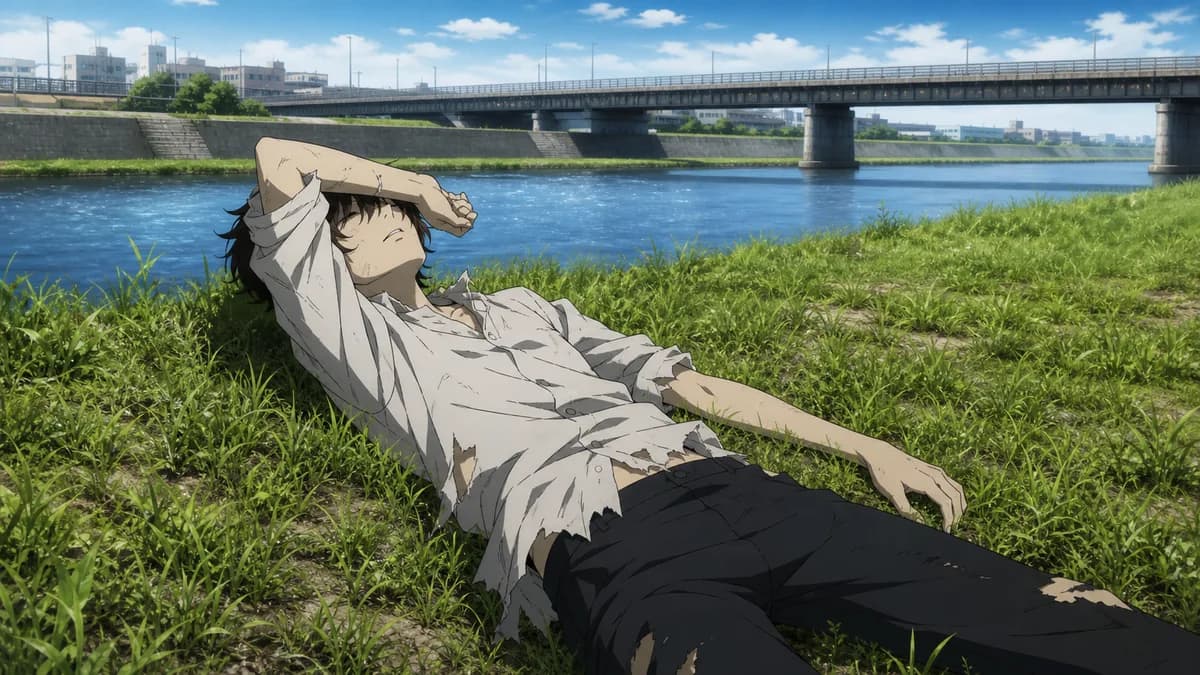
Bungo Stray Dogs opens with a starving orphan being fished out of a river by a suicidal detective, and somehow that's the calmest scene in its opening run. Studio Bones takes a deceptively silly premise, superpowered fighters named after famous authors whose abilities are lifted from those authors' most celebrated works, and plays it with total conviction. Set in a stylized Yokohama, it follows the Armed Detective Agency, a crew of gifted eccentrics who take the cases ordinary police can't touch. The result is loud, funny, occasionally brutal, and far more confident than its premise suggests. If you can roll with abrupt shifts from slapstick to real menace, this is one of the most purely entertaining action shows in the Bones catalog.
Story & Premise
The engine here is simple: a hidden world of 'gifted' individuals, each wielding a supernatural ability, quietly shapes the underworld of Yokohama. Our entry point is Atsushi Nakajima, a homeless teenager haunted, literally, by a monstrous white tiger he can't control. When the eccentric detective Osamu Dazai fishes him out of a river, Atsushi is pulled into the Armed Detective Agency, a boutique outfit that takes the jobs police and military won't. The hook that gives the series its identity is the naming conceit: every ability user shares a name with a real literary figure, and their powers riff on those authors' signature works. The early going leans episodic, introducing the agency's roster one quirky case at a time, before a bounty on Atsushi's head drags the darker, rival Port Mafia into frame. It's a setup that could collapse into pure gimmick, yet the show grounds it in a surprisingly tactile city and a steady drip of escalating stakes that pays off as the threads knot together.
Characters
Atsushi is a familiar shape, the timid orphan learning he's worth something, but the writing keeps his self-loathing specific enough to sting, and his tiger ability doubles as a neat metaphor for the survival instinct he's terrified of. He's the audience's anchor, and he needs to be, because the real gravitational force is Dazai. Loosely evoking the author of 'No Longer Human,' Dazai is a grinning enigma: a former mafia executive turned detective who stages elaborate suicide attempts as running gags while hiding a razor mind and a genuinely unsettling past. His ability, which nullifies any power he touches, makes him the room's most dangerous man precisely when he seems least serious. Around this pair orbits a deep bench, the deadpan idealist Kunikida, the theatrical genius Ranpo, the quietly lethal Kyouka, and Akutagawa, whose obsessive rivalry with Atsushi becomes the season's emotional spine. Not everyone gets room to breathe, but the leads carry it with ease.
Animation & Sound
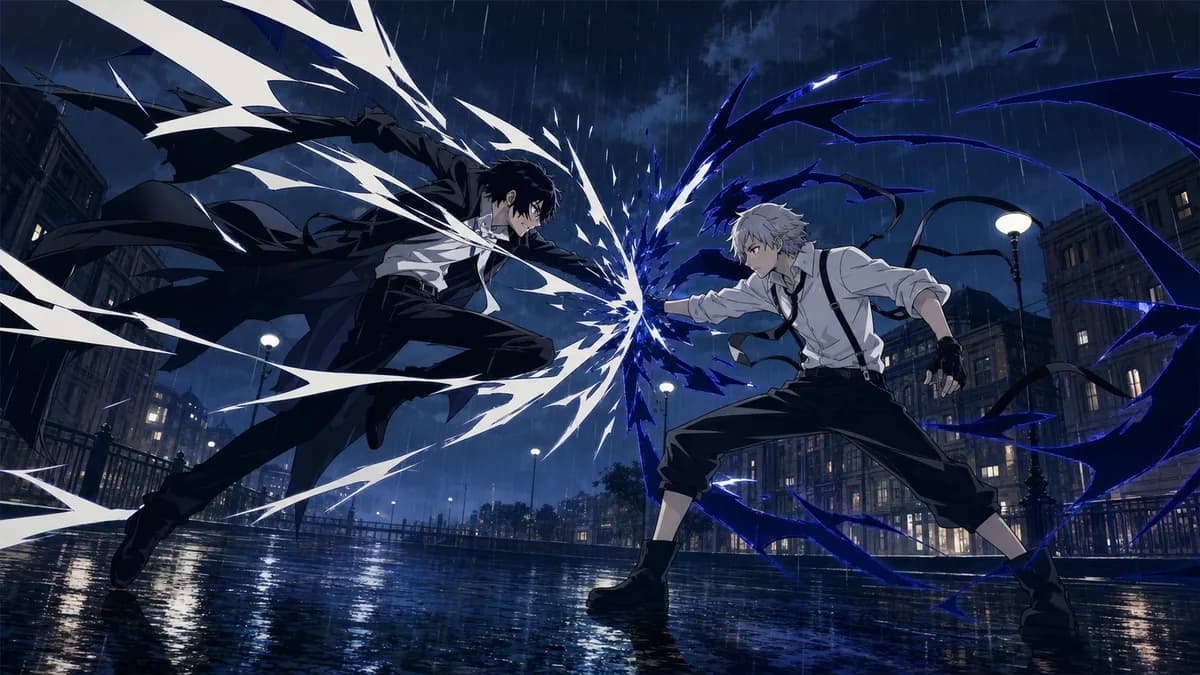
This is Bones doing what Bones does best. The action is elastic and legible, full of confident smears and dramatic negative space, and the abilities are staged for maximum visual punch, from Akutagawa's inky Rashomon coat to Kunikida's materializing notebook. Character designs are sharp and instantly readable, the Yokohama backdrops are detailed and moody, and the show carries an unmistakable house style that leans glossy without feeling sterile. Taku Iwasaki's score swings from jazzy detective cool to full orchestral menace on cue, and GRANRODEO's opening theme is a genuine banger that sets the swaggering tone before the first punch lands. The one recurring blemish is the CG: Atsushi's tiger form occasionally reads as rubbery against the hand-drawn work around it, a seam that's hard to unsee once you've clocked it. It's a minor cost, though, and the sheer craft everywhere else is a large part of why the series lands as hard as it does.
Themes & What Sets It Apart
What separates Bungo Stray Dogs from the crowded supernatural-action shelf is its literary scaffolding. Turning Dazai, Akutagawa, Ranpo, and company into superpowered agents isn't just a naming trick; the abilities function as little critical readings, each power echoing the themes or titles its author is famous for. You don't need a degree in Japanese literature to enjoy it, but the show rewards curiosity, and half the fun is looking up a name afterward and realizing the joke runs deeper than you thought. Just as distinctive is the tonal cocktail. One beat is pure comedy, Dazai mugging for the camera; the next is a knife to the ribs and a genuinely bleak worldview about worth, belonging, and who gets to decide a life has value. When it clicks, that whiplash feels like the point, a story insisting that gallows humor and real despair share a room. It's a specific flavor, and the series commits to it harder than most of its peers dare.
Strengths & Shortcomings
The strengths are loud and easy to love: magnetic leads, gorgeous fights, a premise with real texture, and a confidence that carries you past the rough patches. But honesty demands the flip side. That celebrated tonal blend is a double-edged sword; for every scene where comedy and tragedy fuse beautifully, there's one where a slapstick gag deflates a moment that should have hurt, or a sudden lurch into darkness feels unearned. The sprawling cast is another cost of the concept, since new gifted characters arrive faster than the runtime can develop them, and several intriguing figures get reduced to a cool ability and a catchphrase. This opening stretch is also clearly a foundation, ending on threads it has no intention of resolving on its own: satisfying as an appetizer, frustrating if you wanted a full meal. Pacing wobbles between the episodic early going and the more serialized back half. None of it is fatal, but it keeps a very good show from being a great one.
The Verdict
Bungo Stray Dogs is a stylish, funny, surprisingly dark action series that turns a bookish gimmick into one of the more distinctive supernatural shows around. It isn't flawless, as the tone can whiplash, the cast outgrows its runtime, and the story stops rather than concludes, but the highs are high enough that the seams rarely matter in the moment. Dazai alone is worth the price of admission, and Bones' production keeps every fight feeling like an event. Treat this run as the first act of a larger story, because that's exactly what it is, and the rewards compound in everything that follows. If you want a self-contained masterpiece, look elsewhere. If you want a charismatic, confidently weird ride that's happy to make you laugh and then twist the knife, the Armed Detective Agency is hiring. It earns its cult following, warts and all.
FAQ
Yes, especially if you like stylish supernatural action with personality. It isn't a flawless masterpiece, and you should expect some tonal swings plus a story that's clearly building toward more, but the charismatic cast, sharp Studio Bones animation, and genuinely clever premise make this opening run an easy recommendation for action and mystery fans.