
Your Name Review: A Radiant Body-Swap Romance About People We Almost Remember
 By Mika Tanabe · Editor
Some films invite admiration. Your Name stays lodged in your chest for days. Makoto Shinkai's supernatural romance begins as an airy comedy about a country girl and a Tokyo boy who inexplicably wake up in each other's bodies. Then the story gradually tightens into something like a prayer for half-lost memories, impossible distances, and connections that nearly slip away. The animation is among the most beautiful ever put on screen, while the music gives the film the sweep of a rock opera and the pacing creates the tension of a held breath. There are flaws. During the second half, the rules become harder to question without weakening the plot, so the film asks the audience to give itself over to the emotion. Most viewers are happy to accept that bargain. Your Name made Makoto Shinkai a global name because it works both as an accessible crowd-pleaser and as an exceptional piece of filmmaking craft.
The Story and Its Body-Swap Setup
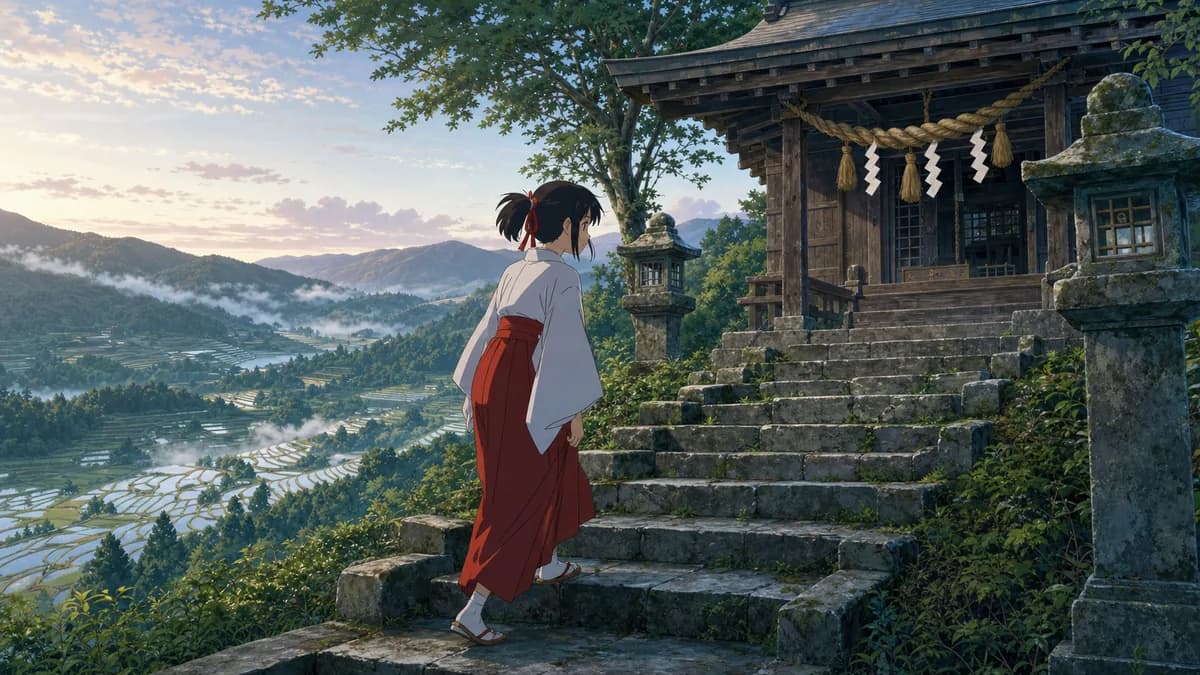
The setup could have come straight from a romantic comedy, and that is how the film treats it at first. Mitsuha Miyamizu is the granddaughter of a shrine maiden, stuck in the fictional mountain town of Itomori and praying that she will be reborn as a Tokyo boy. Taki Tachibana is fairly close to the person she imagines: a city high-schooler trying to balance his dream of architecture with a restaurant job. With no warning or explanation, each starts waking in the other's body on scattered mornings. They stumble through unfamiliar routines, cause trouble in lives they barely understand, and try to contain the damage with frantic phone notes and scrawled reminders. Shinkai gets plenty of disarming comedy from their confusion. Midway through the film, however, the story turns and gives everything that came before it a new meaning. Explaining further would ruin the discovery. The important part is that the body swapping never exists only as a clever hook. It carries the film toward its real fascination with musubi, the idea that threads, time, and people can be tied and untied through the same unseen knots. The structure takes much bigger chances than the cute premise suggests, and attentive viewers are rewarded for keeping track of the details.
Characters and a Romance Built Apart
Your Name pulls off a difficult romantic trick. Mitsuha and Taki spend most of the running time separated, and sometimes one of them is not even occupying the expected body, yet their connection remains the most persuasive part of the film. Mitsuha is dryly funny, dissatisfied with her surroundings, and brave in an understated way. Taki starts out prickly, but living through the swaps gradually wears down his harsher edges and makes him gentler. They mostly come to know one another through diary entries and the remnants of days lived on borrowed time. Their closeness grows from those traces: a name that will not quite come back, a familiar habit, or a lingering scent. That indirect intimacy is precisely what gives their relationship its force. The supporting characters have less room to develop, though they bring warmth whenever they appear. Mitsuha's little sister Yotsuha meets the confusion with deadpan reactions. Their grandmother Hitoha, keeper of the family shrine, gives the story its spiritual gravity. Teshigawara and Sayaka make Itomori feel like a home whose survival matters rather than a decorative setting. Miki Okudera, Taki's older coworker, brings in the bittersweet ache of ordinary, unreturned longing. None of these people has the depth of a dense literary portrait. They do feel particular and painfully human, which is exactly enough for the story being told.
Animation, Light, and the RADWIMPS Score
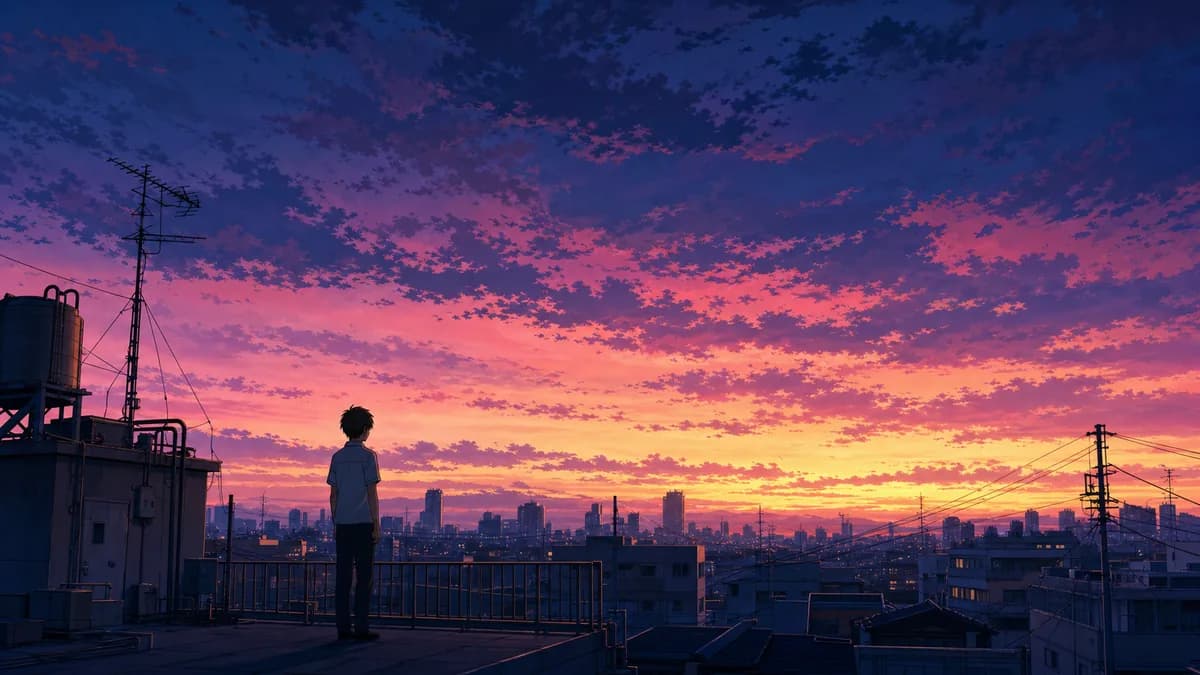
The presentation lifts an already strong film into emotionally overpowering territory. CoMix Wave Films creates a Japan that looks brighter and richer than reality. Sunlight bends through train windows. Tokyo pavement gleams after rain. A comet opens across the evening sky in colors so vivid they almost feel improper. Shinkai also serves as his own director of photography, and he uses light with the presence usually given to a character. Every lens flare and drifting speck of dust has been placed with intent. Masayoshi Tanaka's character designs are warmer and rounder, which keeps the people distinct against Shinkai's famously photoreal backgrounds. That balance addresses a problem that had followed some of Shinkai's earlier work, where the human figures could disappear into the scenery. RADWIMPS supplies the other half of the impact. The rock band does far more than provide background music and feels like a creative partner in the finished film. Its driving vocal tracks, including 'Zenzenzense,' 'Sparkle,' and 'Nandemonaiya,' arrive at the largest emotional peaks with the force of showstoppers in a musical. Some purists find these musical cues too insistent. Seen with the images and matched to the cut, they hit with devastating force. The film's technical achievement raised the commercial standard for anime features, and one glance at almost any frame explains how it managed that.
Memory, Disaster, and the Meaning of Musubi
Beneath the central romance, Your Name considers catastrophe and the people who can vanish in its aftermath. Shinkai wrote the film in the long shadow of Japan's collective disaster trauma. Its main danger, a celestial event headed toward a small town, therefore carries the unmistakable pressure of real grief along with the fantasy that such grief might be undone. This turns the love story into something weightier than a simple question of whether two people will meet. The deeper concern is whether memory can outlast loss, and whether someone can hold on to a person, place, or feeling while time and distance work to dissolve it. Musubi binds these ideas together through braided cords, flowing rivers, offered sake, and a version of the red thread of fate that must be woven, loosened, and woven again. That combination of private longing and mythic scale separates the film from countless other romances about teenagers. Every part of it is presented with complete sincerity. Shinkai has no interest in protecting the audience with irony. He asks viewers to accept that a name hovering just beyond recall could be the most important thing in the universe. For two hours, the film makes that belief feel entirely natural.
What Works and Where the Film Falters
The film's achievements are considerable. Its structure pays back close attention, its score feels inseparable from the images, and its climax has been built with extraordinary precision. The famous near-miss sequence remains one of modern animation's great sustained emotional blows. Before the story breaks your heart, it is also genuinely funny, a balance that is much harder to achieve than it appears. The weaknesses are real as well. The mechanics governing time and memory cannot withstand much scrutiny. Push at the rules behind the swaps and their consequences, and the logic begins to wobble. The third act also relies on convenient timing and on a plot device that is dropped and then restored, which requires substantial goodwill from the audience. Shinkai's sentimentality is extremely effective while the film is playing, but several moments tip into manipulation. At times, the music nearly instructs the viewer when to cry. Momentum takes priority over character depth, and most of the supporting cast fades away as soon as the plot begins to race. These faults do not sink the film. They will still be obvious to anyone who dislikes earnest melodrama or expects airtight internal rules. Such viewers are likely to notice the joins that the story's emotional pull wants to carry them past.
The Verdict
Your Name deserves its reputation as a modern classic and comes close to being a perfect example of what animation can accomplish beyond live action. It looks magnificent, gives freely of its emotions, and never apologizes for feeling everything at full volume. Its closing stretch can reliably leave even stoic viewers in pieces. I score it 92, which places it among the elite without pretending it is untouchable. Its brilliance comes from emotion and imagery rather than flawless construction. The plot mechanics serve the intended feeling, and close interrogation weakens the spell because Shinkai wants surrender from the audience rather than analysis. Accept those terms and the medium offers few experiences that are as rewarding. This is a rare popular hit made with unmistakable craft. It transformed Makoto Shinkai from a cult miniaturist into a global phenomenon, and it remains the easiest single anime film to hand to a skeptic. Watch it once for the rush, then return to see how carefully that rush was assembled.
FAQ
Yes, absolutely. It ranks among the most acclaimed anime films ever made, became a genuine cultural phenomenon, and can be recommended to almost anyone with confidence. Viewers who can embrace an earnest romance will also see modern animation working at its most beautiful. It comes close to essential viewing. The film aims directly at emotion instead of intellectual neatness, so its effect is strongest when you accept that intention and go with it.