Weathering With You Review: Makoto Shinkai's Rain-Soaked Gamble on Love Over the World
 By Mika Tanabe · Editor
Weathering With You earns its place beside Your Name through an ending that risks upsetting the audience. Makoto Shinkai's contemporary-fantasy romance follows runaway teenager Hodaka Morishima into a Tokyo stuck under endless gray rain. There he meets Hina Amano, whose prayers can open the clouds and bring back the sun. The yearning will be familiar to anyone who saw Your Name, as will the extraordinary skies and the RADWIMPS songs arriving at the height of an emotional scene. Shinkai still wants you to feel everything, and the downpour makes that invitation almost physical. But there's more anger in this film, and a willingness to let its characters make choices that won't satisfy everyone watching. Your Name worked its way toward a carefully arranged release of emotion. Weathering With You asks you to accept a decision with consequences that cannot be wished away. Its argument that one person might matter more than a city gives an uneven romance an ending with real force.
Story & Premise
Hodaka leaves an island home where he feels trapped, only to find that Tokyo has no room for him either. He runs out of money and sleeps rough, meeting rejection until Keisuke Suga offers him somewhere to stay. A chain-smoking magazine editor, Suga gives him a cot and work reporting on occult rumors. Outside, the rain keeps falling. Hina is trying to get by while raising her younger brother Nagi, and her ability to clear the sky gives her and Hodaka a way to earn money. Their little 'sunshine girl' business supplies good weather for weddings and flea markets, with rooftop parties among the bookings too. These jobs give the film a lovely stretch of modest pleasures: for a while, the teenagers have found something they can do well and people willing to pay for it. Hina's confidence helps make their arrangement feel plausible even when the service itself is impossible. Then the cost of her power becomes clear, and the comfort of those early jobs disappears. A stray handgun and a police manhunt bring danger into Hodaka's life, while a supernatural bargain puts Hina's survival against the future of Tokyo. The fairy-tale premise has consequences far beyond the little business that first made it seem so appealing.
Characters
Hodaka takes more patience than Taki in Your Name. He's moody and acts before thinking, sometimes badly enough that it's easy to get angry with him. That behavior also makes sense for a teenager who feels unheard and is desperate to keep the first good thing Tokyo has given him. The film asks you to understand his recklessness even when you don't like it. Hina makes that easier. Masayoshi Tanaka's character design gives her an approachable warmth, with enough expression to show both her composure and the fear she tries to keep hidden. Her commitment to Nagi gives the romance a life beyond the couple. He's a tiny ladies' man who comes close to taking over the movie, but their affection also makes this improvised family worth caring about. Suga's gruff manner covers grief, and his sharp-tongued niece Natsumi helps make the adults feel like people with lives of their own. Ame, the stray cat found on a rainy day, adds to the company. There are also brief cameos from the body-swapping pair that Your Name fans will recognize; missing them costs you nothing in this story. Some supporting characters get limited depth, but Hodaka, Hina and Nagi have a convincing bond. By the finale, the cost of losing one of them feels specific to this family.
Animation & Sound
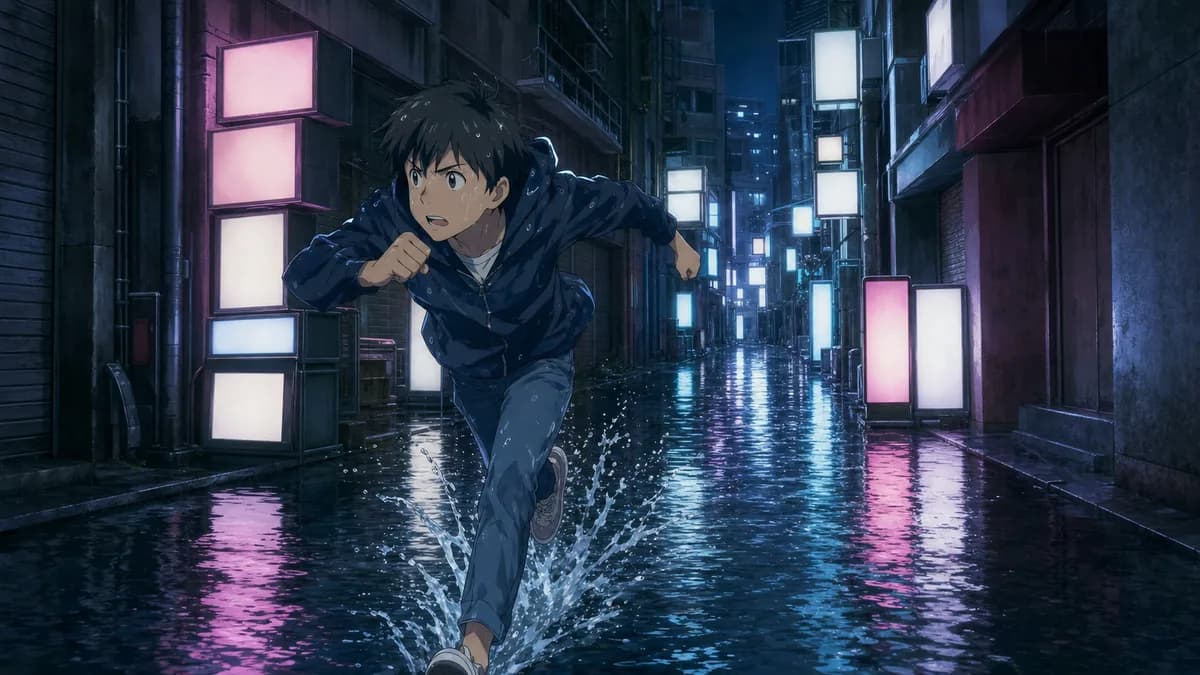
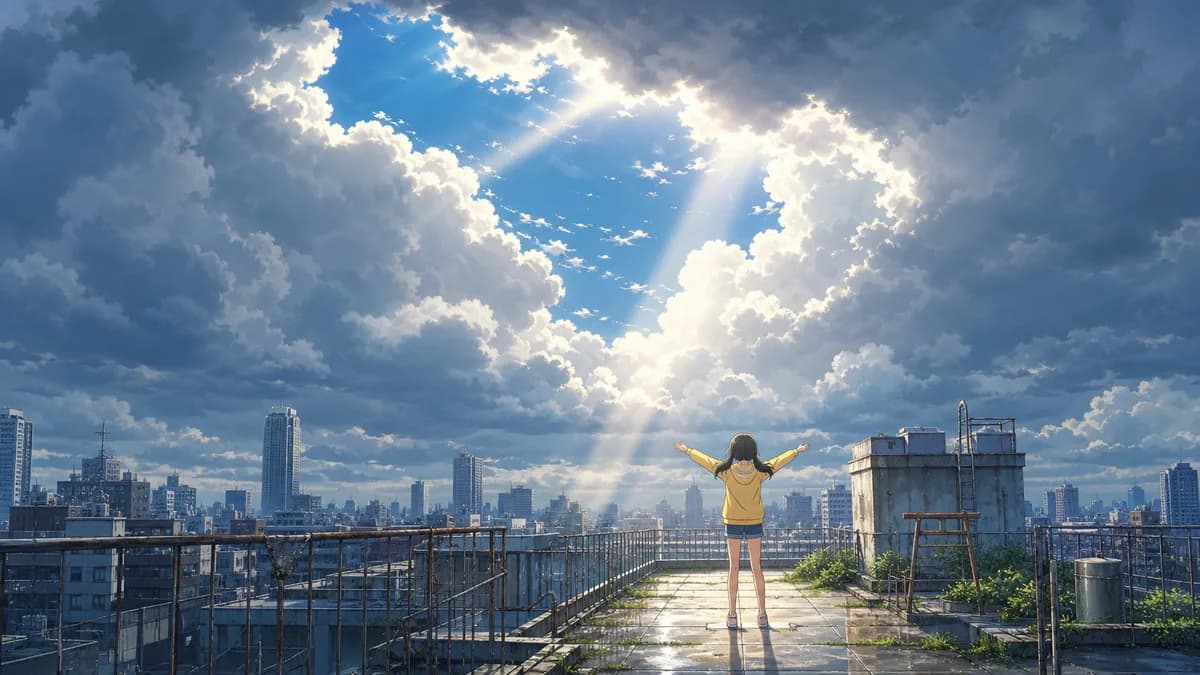
See this on the biggest screen available. CoMix Wave Films gives Tokyo a near-photographic solidity, then uses the rain to change how every part of it looks and feels. Neon smears across wet asphalt, and individual drops gather on train windows. Sodium light spreads through low cloud. The water never feels like decoration laid over a finished background: it strikes surfaces and collects in pools, eventually rising enough to change the city itself. Few studios make rain feel this heavy or this tangible. When Hina opens a patch of sky, the sunlight provides relief that you can almost feel from your seat. Frame by frame, the animation is among the most beautiful I've seen, and its command of light gives the weather an emotional role before anyone explains its supernatural meaning. RADWIMPS return after Your Name with pop-rock songs built for enormous emotional peaks. Shinkai puts them over repeated montages, sometimes with wonderful results. The early scenes of Hina exploring her power have an excitement that the music amplifies perfectly. Elsewhere, the same approach overwhelms moments that would work better with some quiet. A song can insist on a feeling before the scene has had enough time to develop it. Even when that insistence becomes tiring, the quality of the animation and the scale of the music are hard to deny.
Themes & What Sets It Apart
Hina is expected to give up her happiness, and ultimately her life, so that everyone else can have normal weather again. That demand makes the flooded Tokyo read as an expression of climate anxiety: the world is getting warmer and stranger, while children are asked to repair an order that adults have already damaged. Shinkai puts that unfairness directly into the romance. Loving Hina means refusing a sacrifice that would benefit an entire city, so Hodaka cannot protect her without accepting harm beyond their own lives. The film understands the scale of that choice and still takes his side. For a mainstream blockbuster, this is an unusually stubborn position. It favors a selfish act of love over collective duty, then lets the decision stand without punishing the couple or supplying a neat act of redemption to cancel the damage. Personal happiness remains something the teenagers are allowed to want even with disaster around them. The ending is braver for refusing to make their choice morally comfortable. You can understand Hodaka completely and still reject what he does. Shinkai gives that disagreement room to exist, which makes the romance harder to settle than one where saving a loved person also conveniently saves everyone else.
Strengths & Shortcomings
The comparison with Your Name is unavoidable, and Weathering With You comes off worse when it comes to plotting. Shinkai again builds a romance around star-crossed teenagers and a supernatural premise, using RADWIMPS montages to carry major feelings. Weather once again shapes the characters' fate. The middle loses some momentum, and the soundtrack pushes a few emotional turns further than the scenes have earned. If Hodaka irritates you early, his later impulsiveness may make it difficult to stay invested. Plot logic also gives way to feeling often enough that close scrutiny exposes weaknesses. Those problems don't disappear because the ending is bold. But the ending does give the film a reason to exist beside its predecessor. Your Name offered a reset and a perfect reunion; this film leaves its characters to live with what they chose. That refusal to erase the fallout makes the romance riskier, and the emotional swings are larger as a result. The animation is arguably even more impressive, too. I still find Your Name the more accomplished film overall, with a tighter construction that Weathering With You cannot match. This one is less controlled and more willing to upset its audience. Approach it as a companion piece rather than a sequel, and its rougher choices become easier to appreciate without pretending the roughness isn't there.
The Verdict
Weathering With You falls short of Your Name's precision, but its messier romance takes a risk that pays off. The animation alone deserves a large screen, especially when Hina's sunlight cuts through the rain, and the affection within the makeshift family gives the final decision weight. Shinkai's excesses remain very much in evidence. Anyone who found his earlier work overwrought is unlikely to be persuaded by stronger melodrama and a soundtrack that keeps telling you how much to feel. For viewers who enjoy his approach, those big feelings have an ending strong enough to provoke disagreement among fans. It is a companion to Your Name with a different conviction about what love permits, and it doesn't need to replace that film to succeed. I'd recommend it to Shinkai fans and anyone drawn to sweeping romance, particularly viewers willing to disagree with a film's choice while feeling why its characters make it. Give the images room on a big screen and expect the family scenes to hurt as much as the spectacle impresses.
FAQ
Yes, especially if you enjoy Makoto Shinkai's romances and animation that makes a city's weather feel physical. The affection between Hodaka, Hina and Nagi gives the spectacle emotional weight. Uneven plotting and an ending that favors a difficult personal choice will divide viewers, but the film commits to both its romance and the consequences. It's particularly rewarding on a big screen.