The Seven Deadly Sins Review: A Terrific Fantasy Opening That Later Seasons Failed to Match
 By Mika Tanabe · Editor
The Seven Deadly Sins arrives with the confidence of a shonen series that knows how to win an audience quickly. A-1 Pictures gives its first season the glow of an illustrated fantasy book, while Hiroyuki Sawano supplies a score with enough force to make every clash feel important. The cast clicks almost immediately. Princess Elizabeth is on the run, Meliodas is the smiling tavern keeper hiding a frightening secret, and Hawk is a talking pig whose job is mostly to keep everyone laughing. The adventure moves lightly, the jokes usually work, and the presentation has real personality. It is easy to see why newcomers can burn through several episodes before noticing the time. The show's reputation now carries a much less flattering association, however. Later seasons were handed to a new studio and suffered one of the most infamous production collapses in recent anime memory. Any honest review has to account for the pleasure of this opening season as well as the trouble waiting further into the series.
The Story and Its Starting Point
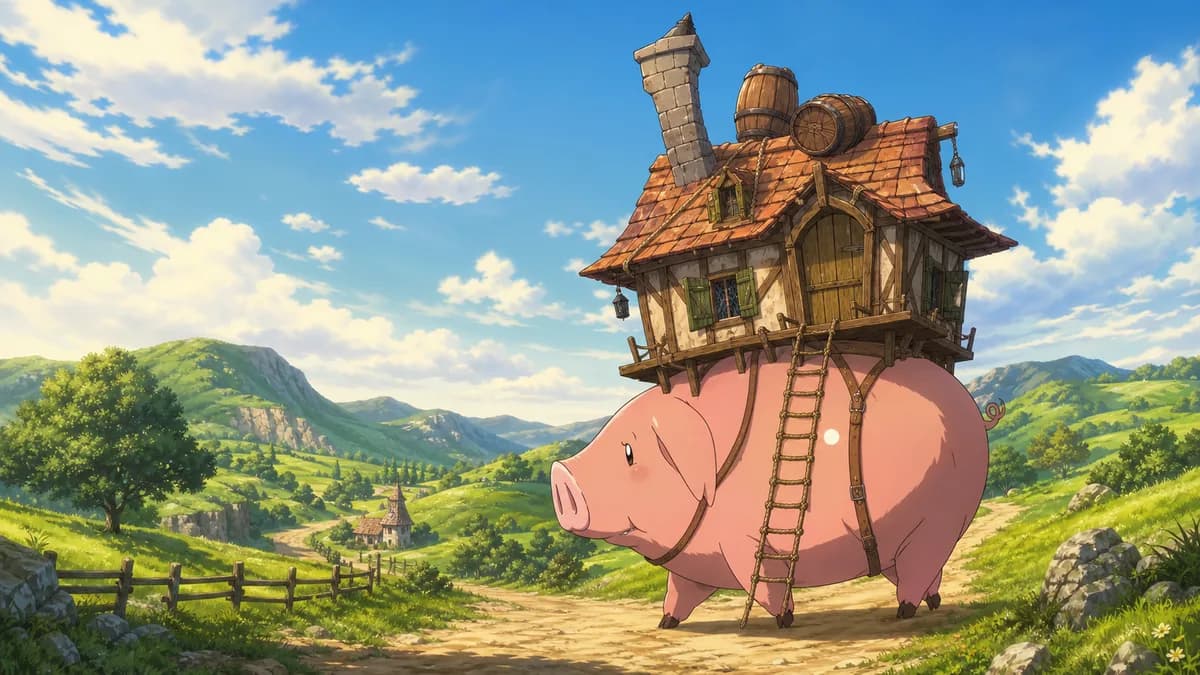
Something is badly wrong in the kingdom of Liones. Years before the series begins, the order of knights known as the Seven Deadly Sins was accused of plotting to burn the kingdom from within. Branded as traitors, its members scattered into exile. The Holy Knights took their place and now maintain control through fear. Princess Elizabeth leaves home in disguise, travelling alone in the hope of finding the missing Sins and taking back her country. The season gets its best early joke from the first legendary fighter she meets. Meliodas looks like a cheerful little innkeeper serving ale in a rickety travelling tavern. His only obvious companions are a broken sword hilt and Hawk, a pig who never runs out of commentary. Nothing about him seems to fit the fearsome stories, until it becomes clear that the modest appearance is hiding exactly the power those stories promised. The plot then settles into a road adventure as Elizabeth and Meliodas search for the other Sins one at a time, with their enemies drawing closer behind them. It is an old quest format, but the show handles it with skill. Each new destination brings a character, a conflict, or another piece of the group's past, so the journey rarely loses momentum. The setup is simple and proudly so. What matters is how confidently the season keeps turning that setup into another reason to watch the next episode.
A Cast That Makes the Journey Work
The characters are the main reason the first season lasts in the memory. Meliodas holds the group together. On the surface, he is an easygoing barkeep who treats danger like an inconvenience and meets most problems with a grin. Underneath that manner is someone much older and far more dangerous than his young face suggests. He is enormously likeable, apart from the repeated joke in which he gropes Elizabeth. That material is a genuine stain on the character and the season. Elizabeth initially appears to be a gentle damsel who cries often, and the early episodes use her too readily as a target for fanservice. Her persistent kindness gradually shows its strength, though, and she develops beyond that narrow introduction. The other Sins are often the ones who walk away with a scene. Ban, the immortal Fox's Sin of Greed, is lanky and reckless, but his loyalty and grief give the latter half of the season much of its emotional weight. King is a sleepy Fairy King who floats around on a cushion. Behind that comic image sits a painful history and a hopeless, tender crush. Diane, the emotionless Gowther, and the commanding mage Merlin complete a group whose arguments feel like those of a found family. Each character begins from an obvious archetype, yet their personalities spark against one another in ways that keep the familiar roles alive. Their shared chemistry does more for the season than any individual battle, because spending time with them is the pleasure that holds the entire quest together.
How the Picture and Music Hold Up
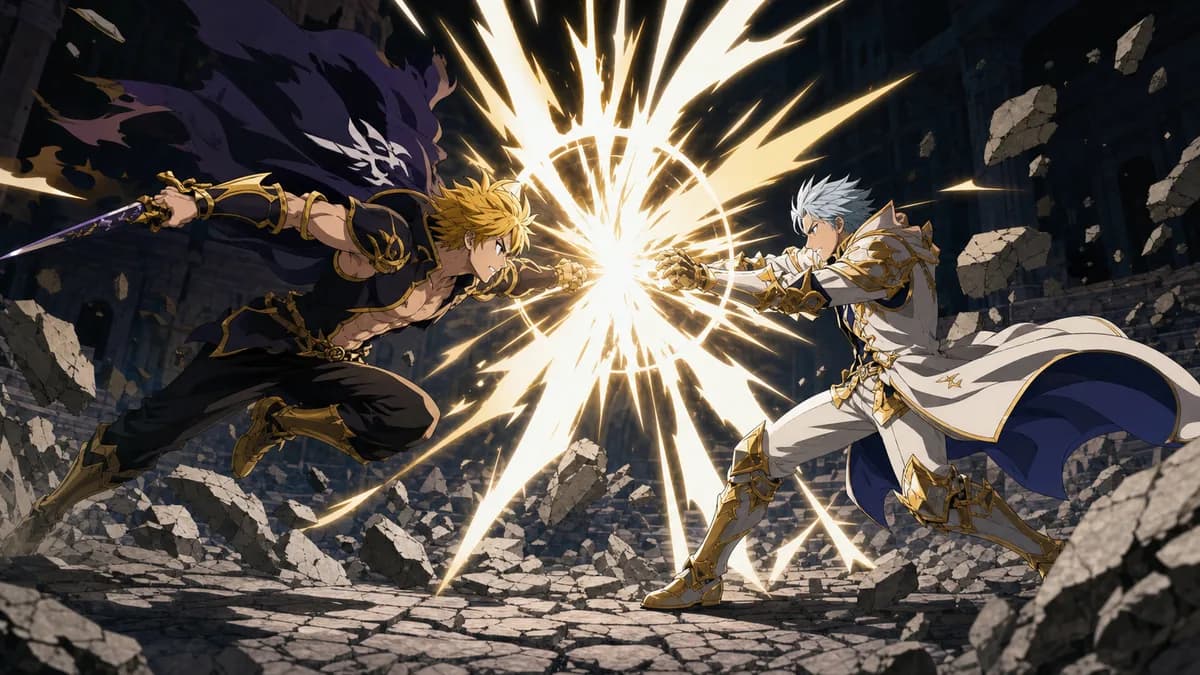
The franchise has two very different production stories. Under A-1 Pictures, the first season is handsome throughout. The fights move fluidly and carry convincing weight, while the character acting gives reactions and jokes plenty of expression. Painted backgrounds lend Britannia the inviting texture of a storybook without making it feel lifeless. Signature attacks hit with real force. Just as importantly, the direction knows when a fight should give way to a quieter moment with careful lighting and room to breathe. Hiroyuki Sawano's music is the season's great advantage. His soaring, percussion-heavy score can turn a fairly routine skirmish into something that feels fit for event television, and some cues still raise goosebumps. The opening and ending songs include acts such as Ikimono-gakari and FLOW, and their melodies are difficult to shake. Everything about this first run suggests a production in firm control of its material. The later seasons tell a different story. Once the series moved to Studio Deen, its animation deteriorated badly enough to become an ongoing joke online. Movement became stiff, characters slipped off-model, and some shots appeared barely finished. The collapse remains one of the examples most often cited when anime fans discuss a production going wrong. None of those later problems changes the quality of the A-1 Pictures season itself, which still looks genuinely good. They do affect the legacy of the full franchise, and a new viewer deserves to know that the same visual standard will not continue for the entire journey.
Familiar Fantasy Given Real Warmth
The Seven Deadly Sins does not separate itself from other fantasy adventures by inventing a new formula. It succeeds because it performs familiar ideas with unusual warmth. This is comfort-food fantasy built around a found family and a band of underdogs trying to clear their names. Their sense of honour puts them against a corrupt authority, while the gradual return of each legendary hero reveals a person who can be damaged, ridiculous, and deeply flawed. The Arthurian decoration gives the series a flavour that many battle shonen lack. Holy Knights stand beside sacred relics, and a young Arthur Pendragon enters the story, giving Britannia its fairy-tale character. The show also understands that this material benefits from a light touch. Comedy remains a regular part of the journey, and the pattern of tavern stops and travel keeps the mood relaxed even as the danger grows. The escalating stakes never push the whole production into joyless gloom. Beneath the slapstick, the story keeps returning to guilt and redemption. Every Sin takes a name from a vice and carries the memory of the deed that earned it. As a result, many fights are also encounters with the worst parts of a character's history. This is not the kind of thematic study expected from a prestige drama, nor does it pretend to be. Its feelings are sincere, and the show gives viewers enough time with those feelings for them to matter. A series this determined to entertain can easily become desperate or mechanical. The first season avoids that trap and makes its generosity feel natural.
Where the Series Excels and Where It Falters
The strongest parts of the season are easy to identify. Its premise gives the story immediate direction, and the cast becomes lovable with very little delay. Sawano's score supplies an extra burst of grandeur, while the season moves with almost none of the drag caused by filler. For someone looking for an entry point into fantasy anime, this is close to ideal. Its faults are equally difficult to dismiss. The fanservice is the first obstacle. Meliodas repeatedly gropes Elizabeth, and the show presents the behaviour as a joke. It becomes tiresome at best and gross at worst. The ecchi framing is especially uncomfortable because Elizabeth is otherwise written as demure. Some viewers can brush these scenes aside, but others will quit because of them, which is an entirely fair response. The much larger problem belongs to the franchise beyond this season. Its infamous animation collapse after the studio change damages the latter half of the story just as the plot reaches for its most ambitious material. The writing continues to move ahead, but the visual execution no longer supports it with the same care. A fantasy adventure with this much charm deserved consistent craftsmanship across its whole run, and it did not receive it. Viewed by itself, the A-1 Pictures season flies. Viewed as the beginning of the complete series, it leads into a level of inconsistency that no review should hide.
The Verdict
The final score is 78 because the whole history of the series has to count. On its own, the first season easily clears an 8. It is one of fantasy anime's most inviting starting points, carried by characters who are fun to follow and a soundtrack that gives the material far greater force. The wider reputation of The Seven Deadly Sins includes its decline as surely as its early success. The uncomfortable fanservice weighs on these episodes, and the later production collapse places an even heavier burden on the franchise. A 78 reflects both sides: this is a brilliant beginning attached to a troubled legacy. It is high enough to recommend the early run without reservation about its basic quality, but it also warns viewers that the experience becomes rougher later. Anyone after a warm fantasy with quick pacing and plenty of comedy should begin here, provided the dated ecchi material is not a dealbreaker. The legend is at its brightest in this first season.
FAQ
Yes, especially for the first season. A-1 Pictures makes it warm and funny, with beautiful animation supporting Hiroyuki Sawano's most rousing work. Viewers who enjoy found-family fantasy adventures will find it easy to recommend, and the opening run is exceptionally friendly to binge-watching. Expectations should be adjusted for the later seasons, where a well-documented collapse in animation quality makes the experience increasingly uneven. Watch it for an excellent beginning, but do not assume every season will maintain the same standard.