
Planetes Review: Anime's Best Science Fiction Story Stars Garbage Collectors
 By Mika Tanabe · Editor
Planetes is one of the best science fiction anime ever made because it cares about plausibility as much as drama. Makoto Yukimura's manga was adapted at Sunrise by director Gorou Taniguchi, who places us in the year 2075. Travel between Earth, the Moon, and orbital stations has become routine, and all that traffic has filled low orbit with deadly junk. The people assigned to clear it are debris collectors, an overlooked cleanup crew who rarely receive any thanks. On paper, that job hardly sounds like the basis for gripping television. The series proves otherwise. It is patient and funny, then unexpectedly painful, while showing a degree of scientific honesty that anime seldom attempts. This is a story about work, ambition, and love. Space is treated as a dangerous and indifferent workplace, yet the risks still feel worth taking.
A Story About Cleaning Up Orbit
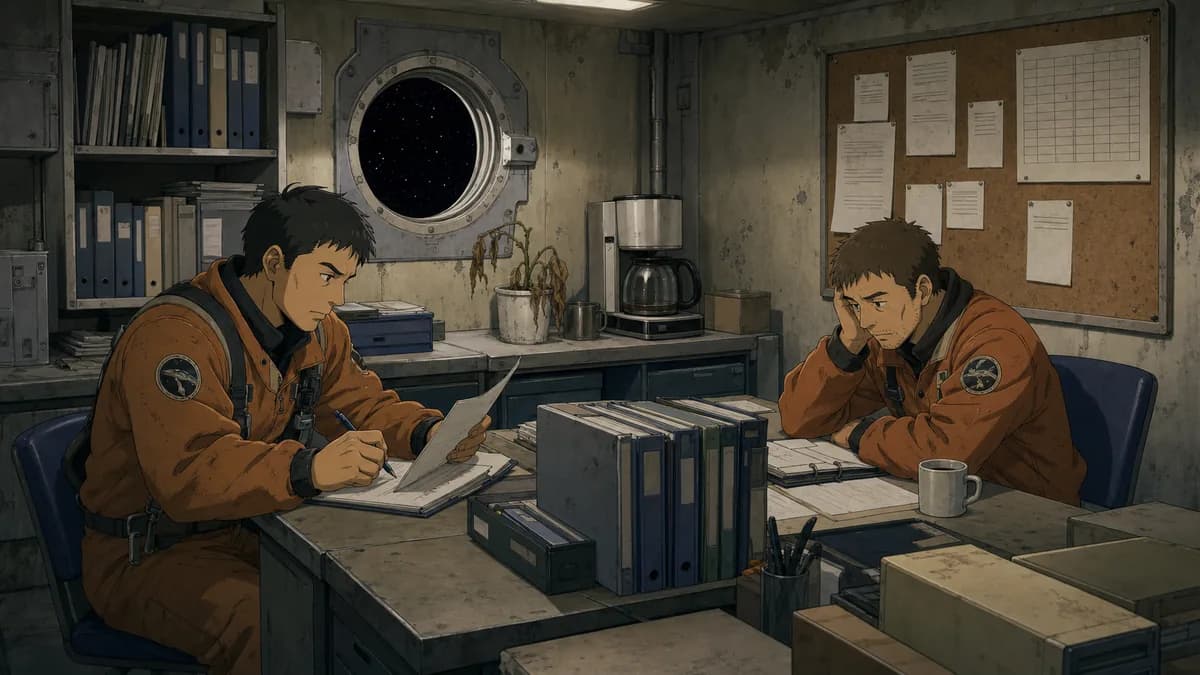
Planetes begins with an intentionally unheroic job. The Debris Section at Technora Corporation is derisively called the 'Half Section' because it has a skeleton crew and a reputation as a career dead end. Its staff collects the remains of humanity's move into orbit. Lost bolts, dead satellites, and jettisoned tanks can all tear through a hull at orbital velocity. Nobody is waiting for a villain to appear. Physics creates enough danger, and paperwork takes care of the rest. The opening stretch uses an episodic format, with ordinary collection runs becoming small character studies. The crew deals with a spent fuel tank and a derelict craft. They also find a coffin drifting in the place where a memorial should have been. Yukimura's manga presented life in space as an extension of blue-collar work, and the anime understands that approach. Insurance costs and corporate politics produce real conflict because the employees know a single mistake could expose them to vacuum. A bigger plot gradually comes into view: the crewed voyage to Jupiter on the Von Braun. The story moves from the Debris Section's cramped break room toward the edge of the solar system, but its attention stays fixed on the people doing the work. That steady expansion gives the later episodes their weight. We understand the small routines before the characters start reaching for something far larger.
Difficult People Who Feel Real
Hachirota 'Hachimaki' Hoshino drives the story, though the series never tries to make him effortlessly lovable. He is talented and self-absorbed, with an intense desire to earn enough money for his own ship and secure a berth on a proper deep-space mission. His ambition keeps him moving, but it also damages him. During the back half, isolation and obsession strip away parts of his identity, pushing him into psychological territory that is often uncomfortable to watch. Ai Tanabe stands opposite him. She is a wide-eyed new recruit whose sincere conviction that 'love' should guide human behavior initially sounds naive. The series takes that belief seriously and slowly makes a persuasive case that she is partly right. Their conflict sets practicality against idealism and personal ambition against human connection. It gives the series its emotional structure without turning their relationship into a predictable romance. The people around them have just as much texture. Fee is the chain-smoking captain, and her fight against a smoking ban leads to one of the show's best episodes. Yuri carries the damage of his past, while engineer Werner Locksmith approaches everything with cold reason. Even coworkers with very little screen time seem to have private concerns and lives beyond the immediate scene. They come across as people who happen to share a difficult job, which is exactly what the story needs.
Animation Built Around Real Movement
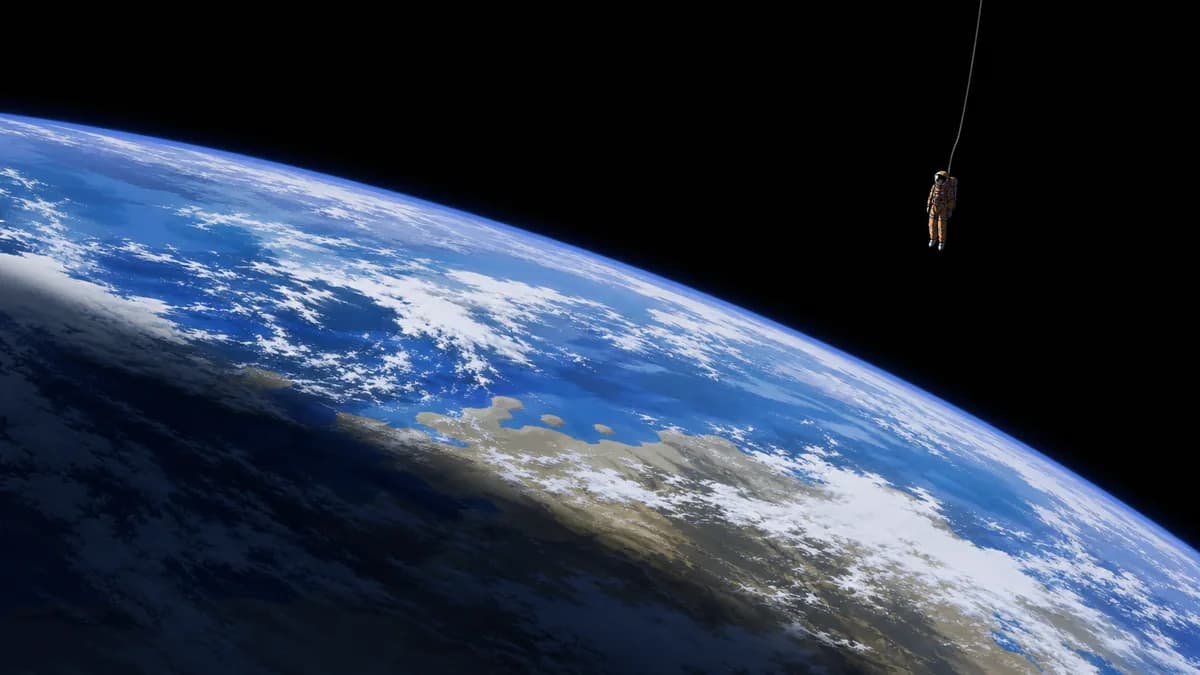
Planetes comes from the early 2000s, and its visuals remain impressive whenever physical detail matters most. Its hand-drawn zero-gravity work is the main attraction. Tethers have a purpose, momentum continues after a push, and a released tool floats away instead of dropping. Every spacewalk follows Newtonian motion instead of bending the rules for an easy dramatic shot. Sunrise and Gorou Taniguchi, who later directed Code Geass, commit to that physical logic. The EVA scenes still belong among anime's most convincing portrayals of people working in a vacuum. The computer-generated spacecraft have aged much less gracefully. They do the job, but nobody will mistake them for the show's best-looking material. Sound is handled with greater care. Planetes accepts that space is silent, so action can unfold without the roaring effects that Hollywood has taught audiences to expect. Removing that familiar noise makes an accident feel colder and much more credible. The score is warm but restrained. It rises during major emotional scenes without instructing the audience to feel something the script has not supported. Quiet scenes are allowed to remain quiet, and pauses are given enough time to register. The series knows that stillness can make danger feel immediate. That confidence matters more than glossy effects, which is one reason its best sequences continue to hold up.
Why the Realism Matters
Scientific accuracy makes Planetes convincing, but the series uses it to examine the people and systems behind space travel. Once space becomes a workplace, familiar labor questions follow. Who is allowed to leave Earth? Who handles the mess afterward, and who has to pay for it? Orbital debris functions as pollution, with each discarded object carrying consequences that people would rather postpone. The growing divide between nations able to operate in space and those left behind becomes central in the second half. It feeds a terrorism plot that declines to divide everyone into easy heroes and villains. The political conflict is tied to Hachimaki's personal one. He has to confront what his dream is worth when pursuing it threatens every relationship that gave the dream meaning in the first place. Tanabe's faith in love is not decorative sentiment. It presents a direct challenge that the show keeps testing through their choices. Planetes lets ambition remain admirable while showing how ugly it can become when separated from other people. It also respects connection without pretending affection solves every material problem. Very few anime keep those ideas in such honest conflict, and fewer reach a satisfying conclusion without taking an easy shortcut. The philosophy works because it grows from character decisions and their consequences. Nobody needs to stop the story for a grand speech explaining what it all means.
Its Patience Comes With Costs
Planetes is a slow burn, especially during the half where many viewers give up on it. The early episodes are pleasant and episodic, with relatively low stakes. Anyone waiting for an immediate plot hook may get frustrated because the show deliberately delays it. The effect depends on accumulation, as routine jobs and minor interactions prepare the ground for the later story. Its change in tone can also be startling. A warm workplace comedy gradually grows darker and much more political. Viewers who arrived for a comfortable space slice-of-life series may feel blindsided by Hachimaki's bleak turn. Some production choices show their age as well. The computer graphics look dated, and the digital coloring can be flat. A few plots introduced late in the run are larger than the available time can comfortably support. The terrorism thread is the clearest example, since its resolution is somewhat too neat for the conflict it raises. These problems do not ruin the series, though several come from how much it tries to accomplish. They do explain why patience is a requirement rather than a casual recommendation. I would send an impatient viewer toward a faster show first. Anyone willing to accept the opening rhythm will find that those modest early episodes make the second half hit much harder. The investment pays back many times over once the separate pieces finally join.
The Verdict
Planetes is a rare anime that improves as you learn how closely its fictional world reflects the real one. It combines hard science fiction with a character drama and the everyday detail of a workplace story. It also moves with the patience of a novel. When the larger design becomes clear, usually during the back half, the result is almost painfully moving. Some viewers will never get past the slow opening. The sharp tonal change and early-2000s appearance are genuine obstacles, and pretending otherwise would do the series no favors. For an audience that wants science fiction to respect physics and people equally, though, there is no close substitute. Planetes gives orbital debris the same serious attention it gives unrequited love, and neither subject feels out of place. It stands among the medium's high points. A series about garbage collectors ends up making a persuasive case that space is worth its price. Give the quiet early material enough time to do its work, and the later view is spectacular.
FAQ
Yes, provided its patient pace suits you. Planetes is one of anime's most rewarding hard science fiction dramas, with grounded depictions of work in space and a genuinely moving account of ambition and love. Its story builds slowly, and most of the payoff arrives in the back half. Give it time and it becomes a top-tier watch.