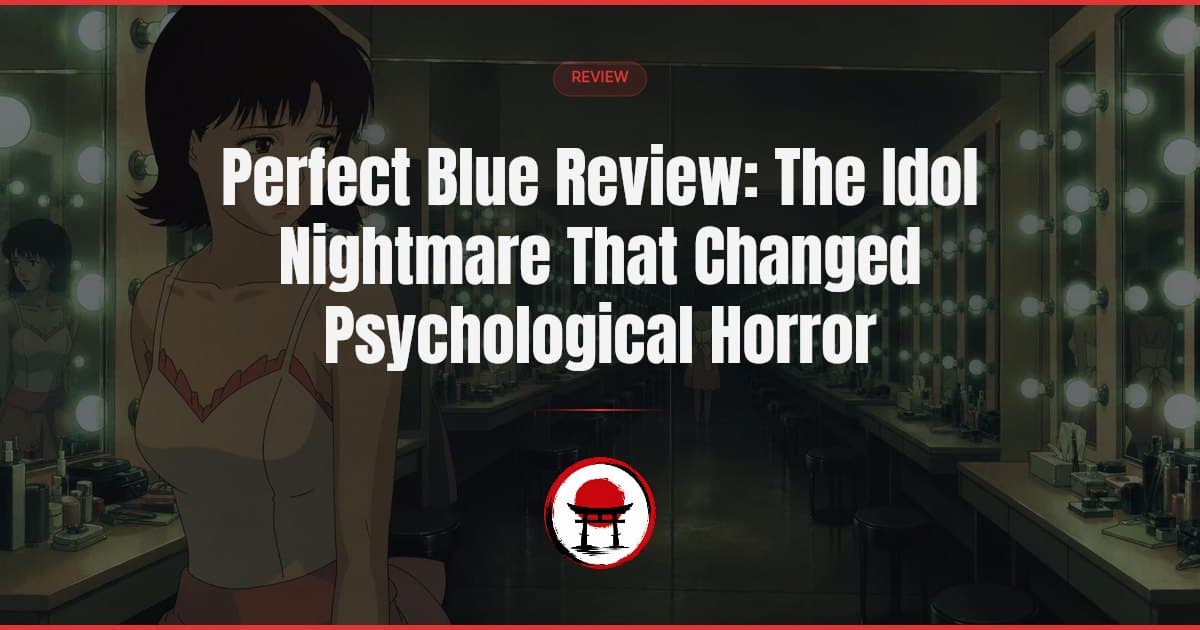
Perfect Blue Review: The Idol Nightmare That Changed Psychological Horror
 By Mika Tanabe · Editor
Perfect Blue unsettles you while it is playing, then hangs around for days and makes you reconsider what you thought you saw. Satoshi Kon's debut feature follows Mima Kirigoe, a pop idol who leaves her singing group for the colder world of acting. The version of herself she abandoned does not stay politely in the past. A showbiz drama gradually turns into a thriller constructed with such care that reality and delusion become impossible to tell apart. This late-'90s landmark is still ranked among the most important animated films ever made. It showed that animation could portray interior terror better than live action ever had. Nearly three decades later, almost nothing in psychological horror has matched it.
The Story and Its Setup
Mima Kirigoe is a mid-tier pop idol who announces that she is leaving her group to become a serious actress. Her fans react badly, especially one fixated admirer. He runs a website that records Mima's daily life in unnervingly accurate first person, as though the 'real' Mima still belongs to him. Meanwhile, her managers push her into a grimy crime-drama role designed to strip away her wholesome image. Mima goes along with it, but her sense of solid ground begins to slip. Then people connected to her production start turning up dead. Kon gives this setup an almost documentary patience. He spends time on the drudgery of photo shoots and the small humiliations faced by a young woman who is expected to smile through anything. Only after that routine feels familiar does he pull it out from under her. The body count is disturbing, but it is not what holds the film together. The real pressure comes from the growing suspicion that Mima cannot reliably narrate her own life. By the midpoint, the images on screen no longer feel trustworthy. Kon has put the viewer in exactly the same unstable position as Mima, with no safe distance from her confusion.
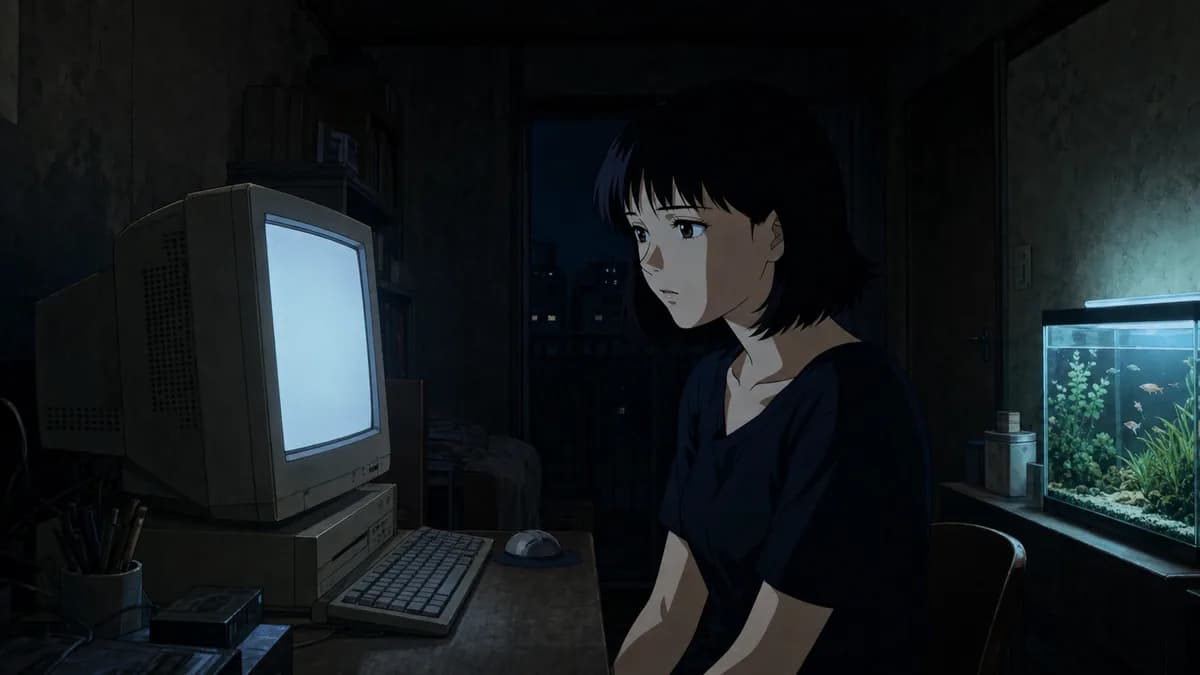
Mima and the People Around Her
The film stays almost entirely inside Mima's experience, so her unraveling carries the story. She is neither a fighter nor a genius. She is an ordinary, agreeable young woman whose career has trained her to accept other people's ideas about who she should be. That history makes her painfully suited to a story about a self coming apart. The idol version of Mima appears in a pink dress with a frozen smile, taunting her through mirrors and reflections. She becomes the movie's most frightening presence, like the ghost of the life Mima chose to leave. Rumi Hidaka, Mima's devoted manager and a former idol herself, supplies the quiet heartbreak around that haunting. Rumi understands exactly what Mima is giving up because she once lost the same thing. The men surrounding Mima include producers, writers, and a stalker who believes he owns her. Kon presents them with an unglamorous honesty that fits an industry willing to treat young women as products. They are recognizable people rather than cartoons assembled to make a point. That grounded humanity gives the horror its force. Mima's agreeable nature never reads as weakness invented for the plot. It feels like the result of years spent being rewarded for staying pleasant while other people make decisions about her body, work, and identity.
Animation, Editing, and Sound
Madhouse animates Perfect Blue with deliberately unglamorous realism. Its flat TV studios, cramped apartments, and rainy streets look ordinary enough to make every surreal break hit twice as hard. Kon also designed the characters, and he was already displaying the editing genius that would make him famous. He can move between reality, television, dream, and memory through one matched gesture. A rehearsal dissolves into 'real' life, which then slips into a fan's fantasy without showing the join. The viewer can rarely be certain which layer is playing out, and Kon turns that uncertainty into a source of fear one frame at a time. Akira creator Katsuhiro Otomo lent planning assistance. The confidence of the imagery makes that pedigree easy to feel without overwhelming Kon's own voice. The sound design is equally calculated. Ambient dread sits beneath a scene, sudden silence cuts through it, and the tinny loop of an idol song keeps returning until something cheerful starts to sound wrong. All of it sustains a low hum of unease. Perfect Blue runs a lean 82 minutes and carries no spare material. Every cut contributes to Mima's state of mind or changes the viewer's understanding of what came before. The film makes a convincing case for why people describe Kon as a filmmaker first and an animator second.
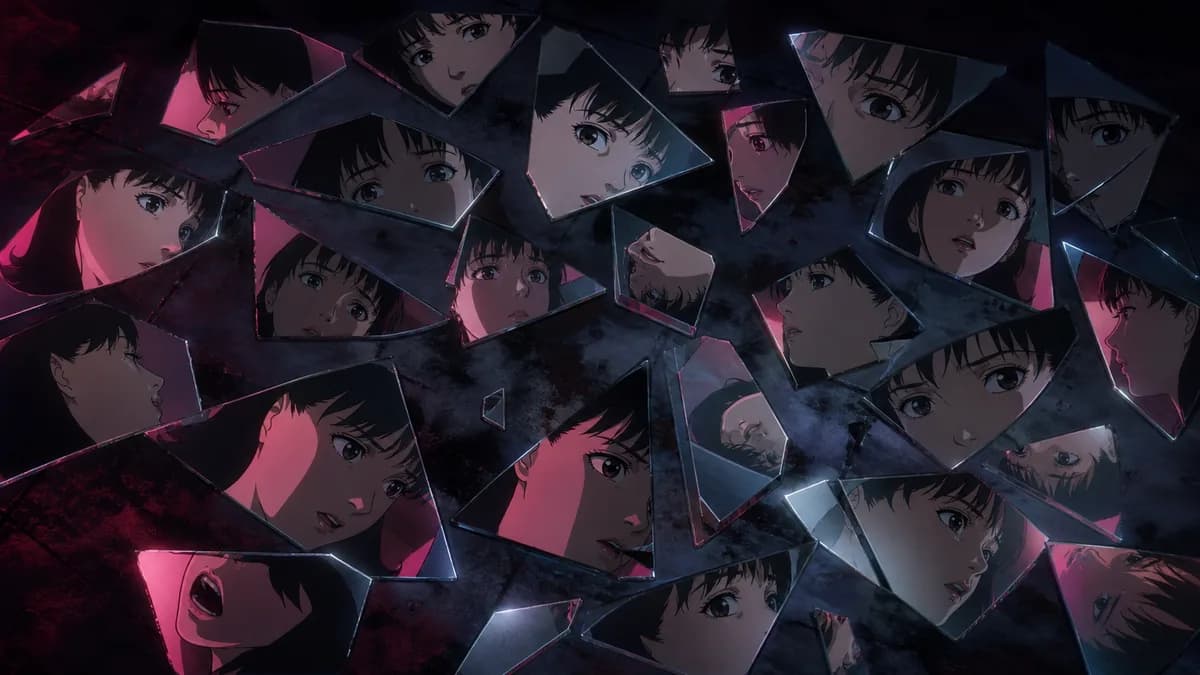
Identity, Celebrity, and Lasting Influence
Perfect Blue is fundamentally concerned with the fear of no longer knowing which version of yourself is real. It reached that idea by anticipating the future with uncomfortable accuracy. Long before social media, Kon portrayed an online public identity taking on a life of its own. Mima's carefully presented persona becomes something strangers believe they have the right to monitor, correct, and possess. The story uses idols and acting, but its anxiety applies to anyone who has performed a version of themselves and later felt the mask begin to fuse with the face underneath. The film also delivers an unblinking criticism of an entertainment machine that manufactures young women, sexualizes them, and discards them. It does not allow the audience to observe that machine innocently. The viewer's own gaze becomes part of what the movie is examining, especially when Mima's professional exploitation is packaged as entertainment inside the story. This density explains why the film has endured. It functions as a slasher, a media satire, or a study of dissociation, and each reading remains present without canceling out the others. Its DNA also runs directly through Western cinema. Darren Aronofsky has openly cited Perfect Blue, and both Requiem for a Dream and Black Swan owe it an obvious debt. The movie's influence is easy to recognize, but its handling of identity still feels sharper than most of the work that followed it.
What Works and What May Put Viewers Off
Perfect Blue is neither easy viewing nor a flawless film. It is genuinely disturbing, with sexual violence, real gore, and a persistent atmosphere of dread. Some viewers will experience that material as punishing instead of thrilling. This is not something to put on casually, and it earns every one of its content warnings. Kon's deliberate refusal to label what is real can also move from exhilarating to frustrating. Plenty of first-time viewers reach the ending without being sure exactly what happened, then need a second viewing before the pieces fit together. That confusion is arguably part of the design, though it remains a genuine barrier for some people. The film also has to contend with its own enormous influence. After decades of imitation, a modern viewer raised on its descendants may predict turns that floored the original audience. Perfect Blue is a victim of the techniques it helped popularize. Those limitations still feel minor beside the movie's staggering control. Even the apparent rough edges contribute to the experience. The grain, dated technology, and ambiguity have aged into the atmosphere instead of making the film irrelevant. Its discomfort has purpose, and its disorientation follows a precise internal logic even when the viewer cannot see that logic on a first pass.
The Verdict
Perfect Blue is essential viewing and one of the defining works of psychological horror in any medium. It also introduced Satoshi Kon as a once-in-a-generation talent. Watching it does not make for a comfortable evening. The film is tense and upsetting, and it is built to make you question your own eyes. It is also endlessly rewarding. Once the reveals are in place, an immediate rewatch becomes tempting because earlier scenes take on different meanings. It is the sort of movie people press on the friends whose taste they trust. Anyone interested in what animation can accomplish when it turns away from spectacle and looks inside the mind should treat Perfect Blue as a foundational text. Nearly every ambitious work that followed has entered into a conversation with it. Watch it unspoiled, be ready for the material, and give it your full attention. It remains one of the greats, and it has not lost a step.
FAQ
Absolutely. It is widely considered one of the greatest psychological thrillers ever animated, and it has aged remarkably well. Viewers who enjoy films that play with perception and become richer on a rewatch should consider it essential.