
Oshi no Ko Review: An Idol Anime with a Devastating Sting
 By Mika Tanabe · Editor
Most idol anime ask you to cheer for the performance. [Oshi no Ko] asks you to study it: the machinery behind the smile, the lie beneath the sparkle, and the price of keeping the fantasy intact. The premise initially sounds like a playful supernatural hook. A jaded country doctor is reborn as the infant son of the idol he adored. Then the feature-length opening chapter delivers such a complete gut-punch that it changes your understanding of the entire series. Watch it without spoilers if you can. This is a cutting examination of fame and the lies that sustain it, launched by one of modern anime's boldest openings. The rest of the season remains very good, but it cannot consistently reach the same height.
Story and Premise
Aka Akasaka, coming off the rom-com juggernaut Kaguya-sama, makes a hard turn into harsher and stranger territory. The change suits him. The setup looks straightforward on paper: beloved idol Ai Hoshino secretly gives birth, and her newborn son carries the memories of an adult who once worshipped her from afar. That uncanny idea grows into a genuine hybrid of supernatural mystery, industry exposé, and revenge drama. The reborn child grows up within the glittering, cutthroat business that turned his mother into a star, so he sees its appeal and its ugliness at uncomfortably close range. The reincarnation device works because the series refuses to treat it as a power fantasy. It gives the story an unusual perspective, placing an adult's cynicism inside a child's body and letting him observe show business from within. An early event hits with enough force to recast the entire narrative as a patient search for the truth. The story then spreads into auditions, reality TV, and the stage. Through each setting, fame remains the central mystery: bright, seductive, and poisonous to the touch.
Characters
The Hoshino twins pull the series in two emotional directions. Aquamarine, the reborn son, is a cool and calculating protagonist driven by revenge. He has a child's face, a guarded heart, and a habit of keeping everyone at arm's length. His refusal to reveal much of himself is intentional, though it sometimes makes him difficult to connect with. Ruby supplies the warmth he withholds. She is a starry-eyed believer who wants to pursue the same spotlight that shaped her family, and her hope gives the story much of its pulse. Ai Hoshino hangs over both of them. She is one of anime's most quietly painful creations, radiant yet unknowable, built around the belief that a beautiful lie might become a form of love. The supporting cast makes the series hard to put down. Kana Arima, a faded child-acting prodigy with a prickly tsundere streak, steals nearly every scene she enters. Akane Kurokawa grounds a tense reality-TV arc that becomes the season's keenest character study. Internet idol MEM-cho completes an ensemble of people who feel ambitious and calculating, with recognizable wounds beneath the plotting. None of them exist merely to fill space around the stars.
Animation and Sound
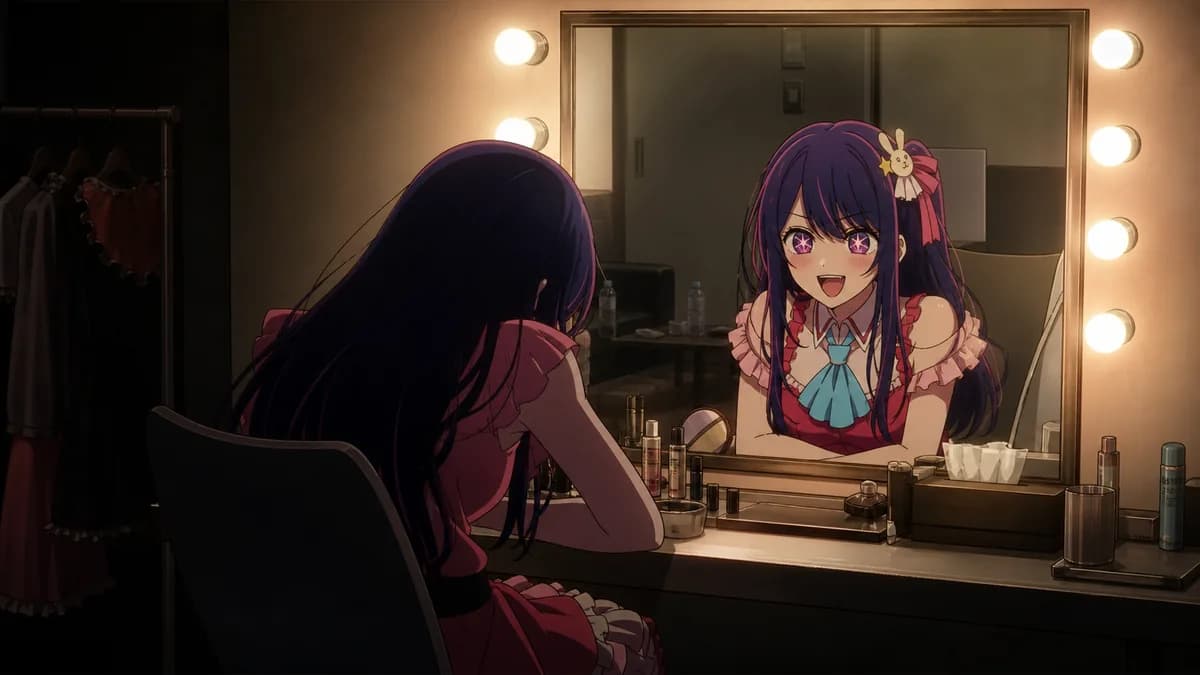
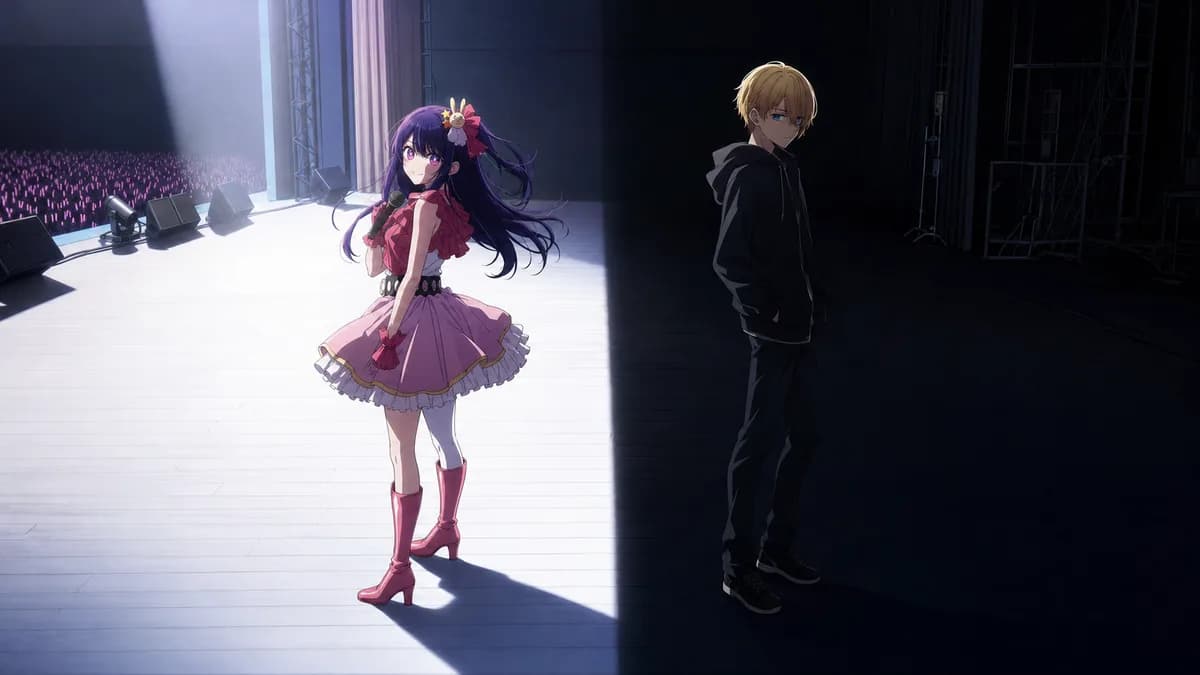
Doga Kobo is better known for cozy comedies, but the studio proves to be an inspired match for this material. Mengo Yokoyari's elegant, sharp-featured designs retain their appeal in motion, glowing beneath stage lights and turning sour in darker scenes. Faces carry much of the drama. The signature visual touch appears when four-pointed stars fill a performer's eyes as the public persona clicks into place. It is a smart, immediate image for the distance between a real person and the product being sold. The idol performances have genuine showmanship. Lighting, choreography, and crowd energy make it easy to understand why someone might surrender a life to this industry. Quieter scenes move in the opposite direction, using cold compositions and uneasy stillness to let the tension sit. The sound is just as forceful. The opening theme became a bona fide global chart-topping phenomenon, one of the rare anime songs to escape the boundaries of fandom altogether. The idol songs performed within the story have enough polish to sound authentic too. The star-filled eyes, confident stagecraft, and music all carry the show's ideas forward rather than serving as pretty decoration.
Themes and Its View of the Idol Business
[Oshi no Ko] stands apart because it treats the idol business with deep suspicion. The idea introduced early and repeated throughout is that a lie can become a kind of love. A performer's work depends on selling a beautiful falsehood that the audience badly wants to accept as truth. The series uses that belief to examine the machinery surrounding its characters. Fans develop parasocial appetites and confuse a constructed persona with the person performing it. The industry treats young talent as disposable, while social media turns a mistake into public punishment at terrifying speed. A mid-season story about a reality-dating program is especially pointed. It shows how a few seconds of edited footage, followed by an online mob, can wreck a person's life. The anger behind the episode feels earned. The creators clearly understand show business and have no interest in polishing away its cruelty. Beneath the revenge mystery and heightened melodrama sits an uncomfortable concern about the people audiences turn into products. The series keeps asking what viewers owe those performers, and what constant public wanting does to the human being behind the image.
Strengths and Shortcomings
The strengths announce themselves quickly. The premise is fearless, the opening chapter is phenomenal, the music hits hard, and the satire has real bite. The season also has clear weaknesses. Its largest problem is structural. The feature-length premiere is so overwhelming that every later arc has to compete with its memory, and nothing else reaches the same peak. Once the initial shock passes, the series moves into slower and more procedural stories about show business, including a stage play and a reality-TV production. These arcs exchange immediate emotional force for careful groundwork. Some viewers will feel the energy drain away. The shifts in tone can also be rough. A stretch of devastating tragedy may suddenly give way to breezy love-triangle comedy, then swing back again. The contrast is deliberate, but it still jars. Aqua presents another obstacle because his chilly reserve makes him a frustrating cipher, even though the writing means him to be that way. Above all, this feels unmistakably like a setup season. The central mystery advances only slightly, and the ending offers a promise of future answers instead of a resolution. Enjoying the season means accepting that the larger story has barely started and committing to whatever comes next.
The Verdict
[Oshi no Ko] earns its reputation by turning a seemingly gimmicky premise into an angry, perceptive story about fame. Its score of 86 captures the unevenness. The opener is untouchable, the ideas are sharply expressed, and the music and character writing belong near the top of the modern field. The ambition and execution are obvious throughout. It falls short of the highest tier because the back half cannot equal that astonishing beginning. Its tonal shifts will alienate some viewers, and the season spends much of its time preparing later developments instead of delivering a full resolution now. Even with those limits, this is essential anime that helped define the conversation around its release. It is smarter and crueler than the sequins suggest, with a clear understanding of how entertainment turns people into desirable images. Start it knowing as little as possible, prepare for the early blow, and remember that this chapter reveals only the first part of its plan. The commitment pays off.
FAQ
Yes, especially if you want an anime with something specific to say. It is one of the sharpest and most discussed dramas of recent years, with a bold critique of the entertainment industry, a phenomenal opening chapter, and music that reached the mainstream. Avoid spoilers before you begin. The first episode works best when its turns arrive without warning.