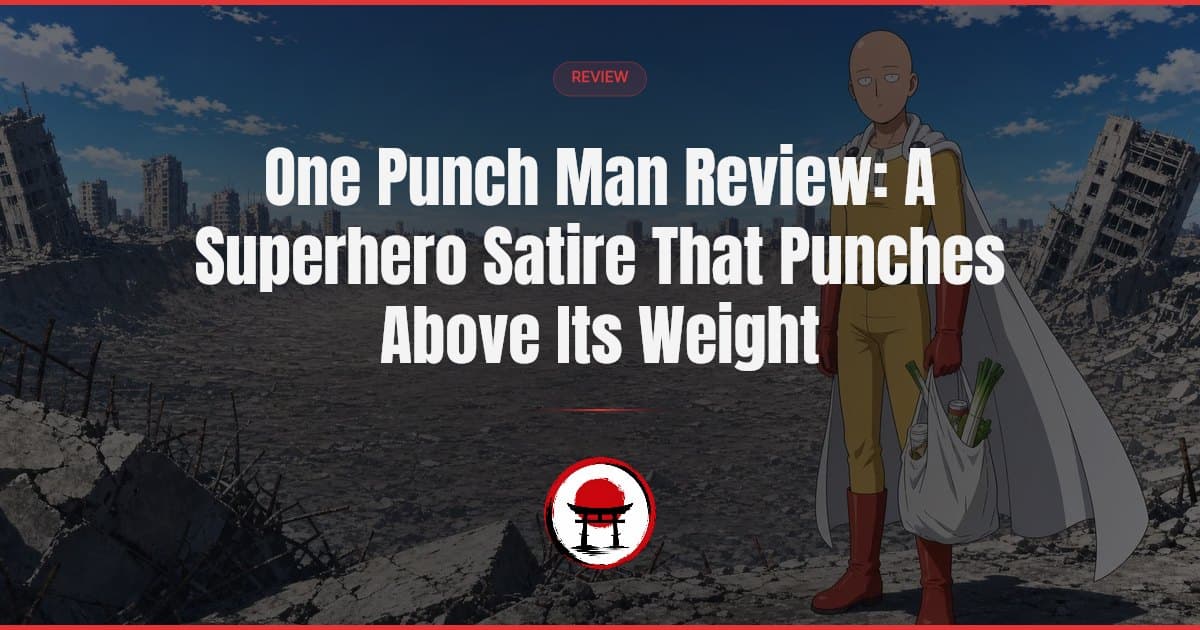
One Punch Man Review: A Superhero Satire That Punches Above Its Weight
 By Mika Tanabe · Editor
Great superhero stories usually sell the climb. There are training montages, close defeats, and victories earned the hard way. One Punch Man gets rid of that climb on page one. Saitama is an unemployed everyman with a shiny bald head and a bargain-bin costume, but he has already trained himself into a god who ends every fight with one casual punch. His strength is not the twist. Being unbeatable has left him bored and gray-souled, with no challenge capable of stirring him. Madhouse builds a lavish, funny, and unexpectedly moving action comedy from that simple joke. The series treats anticlimax as spectacle, using remarkable animation to turn its superhero parody into something with real force. Few shows look this good while being so confident and so consistently funny.
Story and Premise
The premise works like a magic trick. A hero who is so overpowered that no fight has stakes should break a shonen action series, so One Punch Man makes that problem the source of the story. Saitama gained his strength through an absurdly mundane training regimen. Now he drifts through a city plagued by monsters, looking for an opponent who might finally make him feel something. The early episodes use a monster-of-the-week structure. A grotesque threat appears and panic spreads, only for Saitama to finish the problem within seconds, usually without earning anyone's applause. That pattern could easily wear thin, but the arrival of the Hero Association changes the shape of the series. Its bureaucratic ranking system gives Saitama an entire world that can overlook him. Rival heroes and class rankings enter the picture, while the villains begin to operate on a much larger scale. All of it builds to a finale against a planet-hopping alien warlord, where the series gets to show the full extent of what it can do. The tone is the clever part. One Punch Man plays as a gag comedy while committing fully to the pleasures of a sincere action epic, and neither side cancels out the other.
Characters
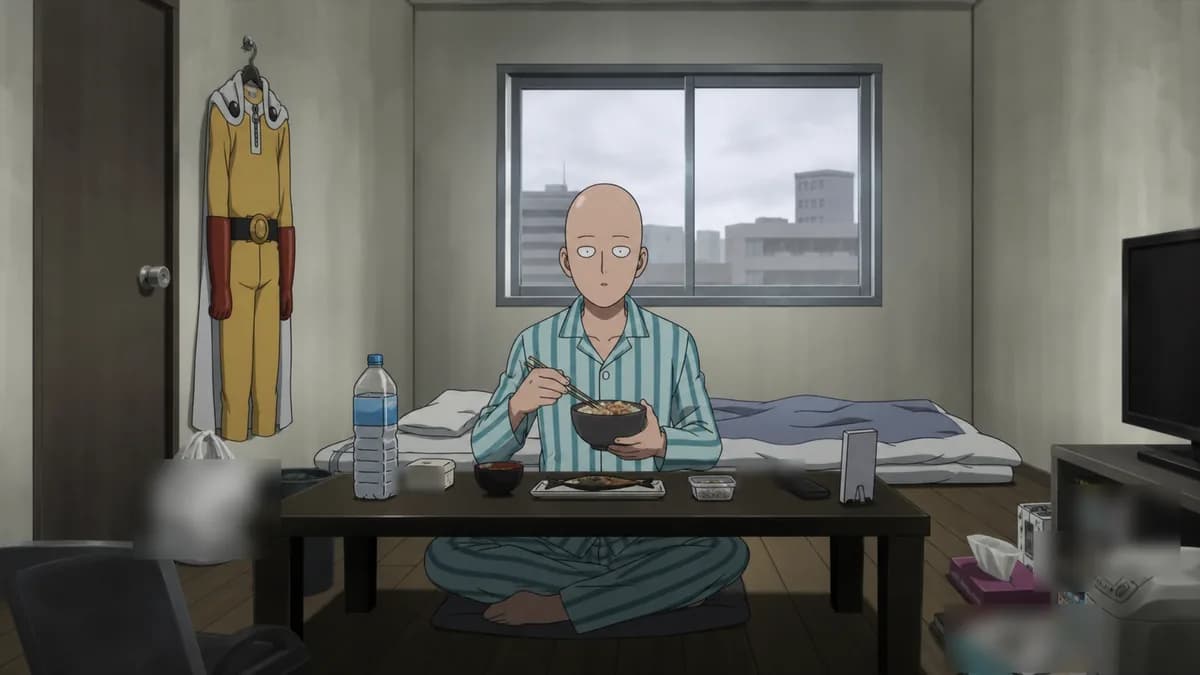
Saitama ranks among anime's best deadpan creations. His blank, bored expression is funny because everyone and everything around him behaves with such feverish intensity. A whole series built only on his apathy would struggle, so the cast is filled with people who care enormously. Genos matters most. He is an earnest cyborg disciple searching for the machine that destroyed his family, and his severe, overwrought attitude makes him an ideal straight man for Saitama. There is also something quietly touching about his devotion to a mentor who barely participates in the relationship. The supporting heroes and rivals carry plenty of the comedy themselves. Amai Mask is a preening S-class idol, Puri-Puri Prisoner is flamboyant, Zombieman seems impossible to kill, and Speed-o'-Sound Sonic is a ninja edgelord nursing a completely one-sided grudge against Saitama. Sonic's obsession produces some of the show's sharpest slapstick. Even heroes who appear briefly tend to reveal a distinct personality in a single beat. Each member of the cast comments on a familiar superhero archetype, yet nearly all of them work as actual characters as well as jokes.
Animation and Sound
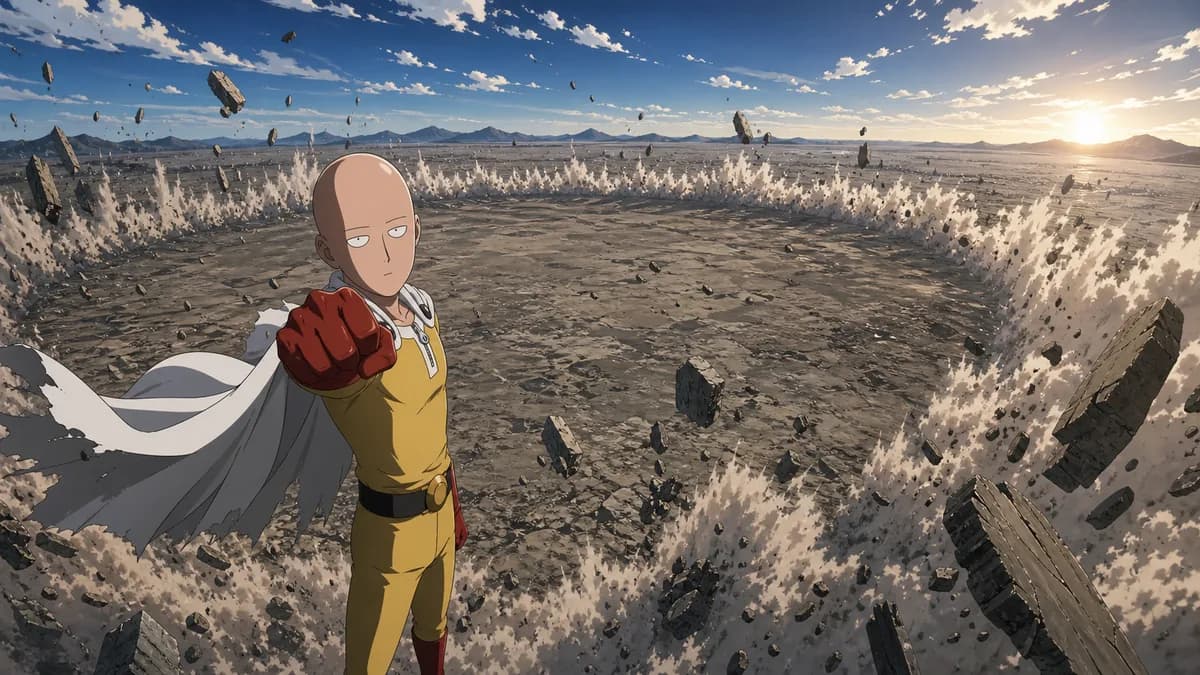
The production is where One Punch Man earned its legendary reputation. Madhouse's run, directed by Shingo Natsume, is a sakuga showcase that later installments never came close to matching. It remains a genuine high-water mark for action animation made for television. The central visual joke is built into the designs. Saitama is drawn with plain lines and can look almost lazy, while his opponents receive the kind of hyper-detailed, hand-drawn excess associated with Yusuke Murata's original designs. Once a fight begins, the contrast pays off in explosive fashion. Yutaka Nakamura's key animation for the climactic battle fills the screen with impossible impacts, collapsing skylines, and motion that feels elastic but still carries weight. Fans continue to study that sequence frame by frame. Yoshiaki Kawajiri's storyboarding makes the spectacle in the back half even sharper. The sound design gives every crunch and boom real physical heft, so each punch lands as hard as it looks. The music has become iconic in its own right. JAM Project's roaring opening theme, 'The Hero!!,' stands among the medium's great anthems, while Hiroko Moriguchi's gentler closing song provides a tender comedown. The finished series looks and sounds like a blockbuster.
Themes and What Makes It Different
Under the gags, One Punch Man pulls apart the power fantasy that drives its genre. Most action stories depend on escalation. A hero suffers, trains, and levels up, with the struggle giving the eventual victory its meaning. Saitama has already reached the end of that path, leaving him to confront what winning means when the result is guaranteed. His story is not about becoming stronger. It follows his boredom and lack of purpose, along with the quiet pain of receiving no recognition for the thing he does better than anyone. The Hero Association makes the satire more pointed by converting heroism into a popularity contest. Its rankings show how readily society rewards an impressive image instead of useful work. Flashy heroes receive adoration, while dutiful people who work without fanfare remain unseen. Genos provides the counterweight to Saitama's weariness. His journey is sincere and old-fashioned, fueled by a clear purpose and an intense desire to improve. The tension between Saitama's cosmic apathy and Genos's burning sense of purpose supplies the show's main thematic conflict. The comedy regularly leaves behind an idea substantial enough to think about after the joke has landed.
Strengths and Shortcomings
One Punch Man's strengths are easy to see. The animation is exceptional, the comic timing is exact, and the central idea feels inspired. It also has the kind of rewatchability that many action shows would love to have. A premise this clean comes with genuine costs, though, and they deserve to be stated plainly. The defining joke is that Saitama wins immediately, which also makes it a deliberate tension killer. His victory is never uncertain, so every bit of suspense must come from the supporting cast. Episodes can feel repetitive when they depend too heavily on the same one-punch payoff. The run is frustratingly brief as well. It ends just when its world begins to open up, making the whole season feel closer to a spectacular prologue than a complete story. Its women receive too little attention; characters who become enormously important later barely register here. There is also an unavoidable qualification attached to the production. This particular run reached such a specific animation peak that everything afterward has seemed like a step down, and knowing that can sour a rewatch in retrospect. These issues do not sink the show, but they keep a great series from being flawless.
The Verdict
One Punch Man turns the apparent liability of an unbeatable hero into its reason for existing. It pulls this off with uncommon wit and heart, backed by visual firepower that few series in the same lane can match. Madhouse's run is a genuine spectacle, full of animation that shows exactly what the form can accomplish. Around that production sits a comedy that is truly funny and a satire with a clear target. The series has real flaws. It is short, the central joke can become one-note, and it puts its highest peak so early that the work that follows cannot quite sustain it. Even so, this self-contained burst of style, humor, and feeling comes close to essential viewing. Its deconstruction of superhero stories never stops it from being a tremendously entertaining superhero show in its own right. If you watch only one send-up of the genre, choose this one. It earns its score of 88.
FAQ
Absolutely. Viewers who do not usually care for action anime can still enjoy the comedy, the intelligent deconstruction, and some of the best animation made for television. The run is short and sharp, and it holds up extremely well on a rewatch. It is one of anime's easiest recommendations.