Medalist Review: A Broken Coach, a Late-Blooming Kid, and the Warmest Ice in Anime
 By Mika Tanabe · Editor
Some sports anime chase the trophy. Medalist chases something rarer: the nerve it takes to start late and want something anyway. It follows Inori Yuitsuka, a timid grade-schooler quietly written off as too old to begin, and Tsukasa Akeuraji, a washed-out skater whose own competitive dream stalled short of the podium, who impulsively agrees to coach her. What could have been a rote underdog tale becomes something warmer and sharper: a story about two wounded people healing each other one jump at a time. Backed by a soaring Yuuki Hayashi score and a real reverence for its sport, it's among the most quietly moving things the medium has produced recently. Here's why it glides, and where the ice cracks.
Story & Premise
The premise sounds almost too simple to carry a series: a girl wants to figure skate, a failed skater agrees to teach her. What Medalist understands is that the stakes aren't the medals, they're the years. Inori is starting the sport long after the age most champions were already competing, and the show never pretends that gap is trivial. Every practice is shadowed by the math of it, the sense that talent alone can't buy back lost time. Tsukasa, meanwhile, is coaching partly to redeem his own stalled career, and the series is honest about how tangled that motive is. The genius is in the framing: this is less a tournament saga than a two-hander about ambition and second chances, told mostly in cramped rinks and quiet car rides rather than grand arenas. Competition arcs do arrive, and they're tense, but the beating heart is the pact between coach and student, two underdogs betting everything on each other. Across its single cour it builds that bond with unusual patience and craft.
Characters
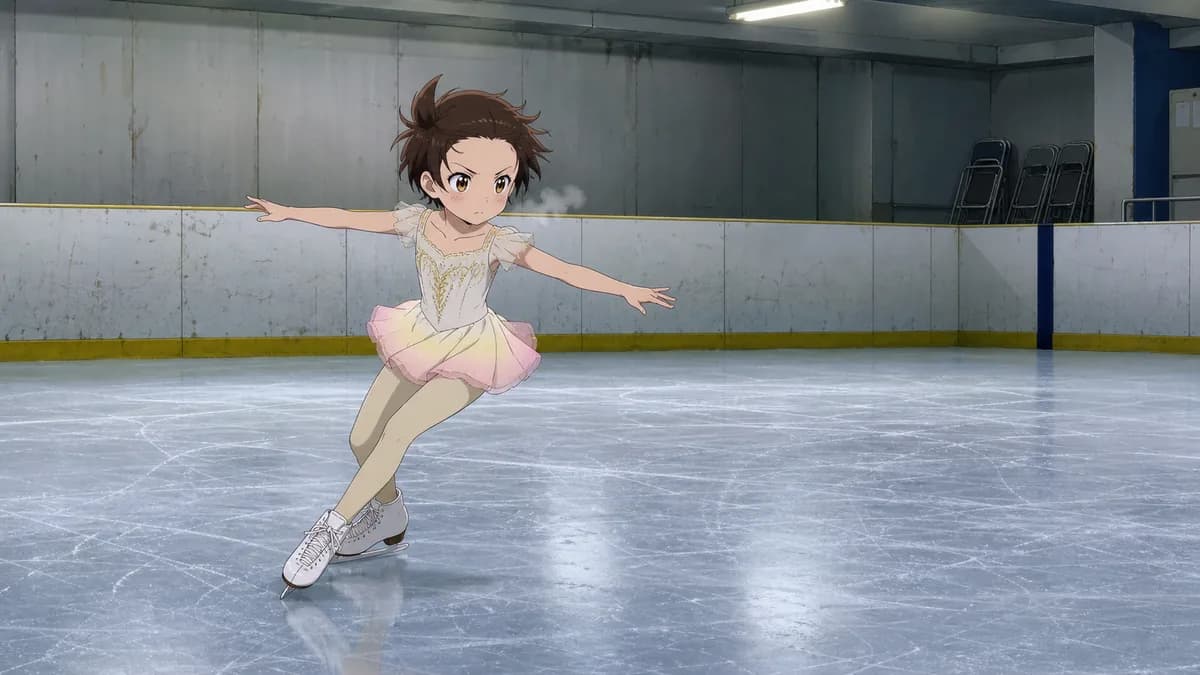
Medalist lives or dies on its central duo, and both are beautifully realized. Inori could have been a generic plucky heroine; instead she's a bundle of raw nerves and stubborn want, a kid whose social anxiety makes even asking for what she desires feel like a leap off a cliff. Watching her fear slowly lose ground to her hunger is the show's core pleasure. Tsukasa is the real revelation, a coach whose sunny encouragement barely conceals the bitterness of his own unfinished story. He's flawed, occasionally in over his head, and all the more moving for it. Their chemistry reads as an unlikely found family, less teacher-and-pupil than two broken people propping each other up. The supporting cast pulls its weight too: rival skaters who aren't cartoon villains, a watchful mother wary of her daughter's dream, fellow coaches with their own agendas. Even the would-be antagonists get real interiority. It's a generous ensemble that refuses to reduce anyone to an obstacle, which keeps the emotional stakes grounded in people rather than scoreboards.
Animation & Sound
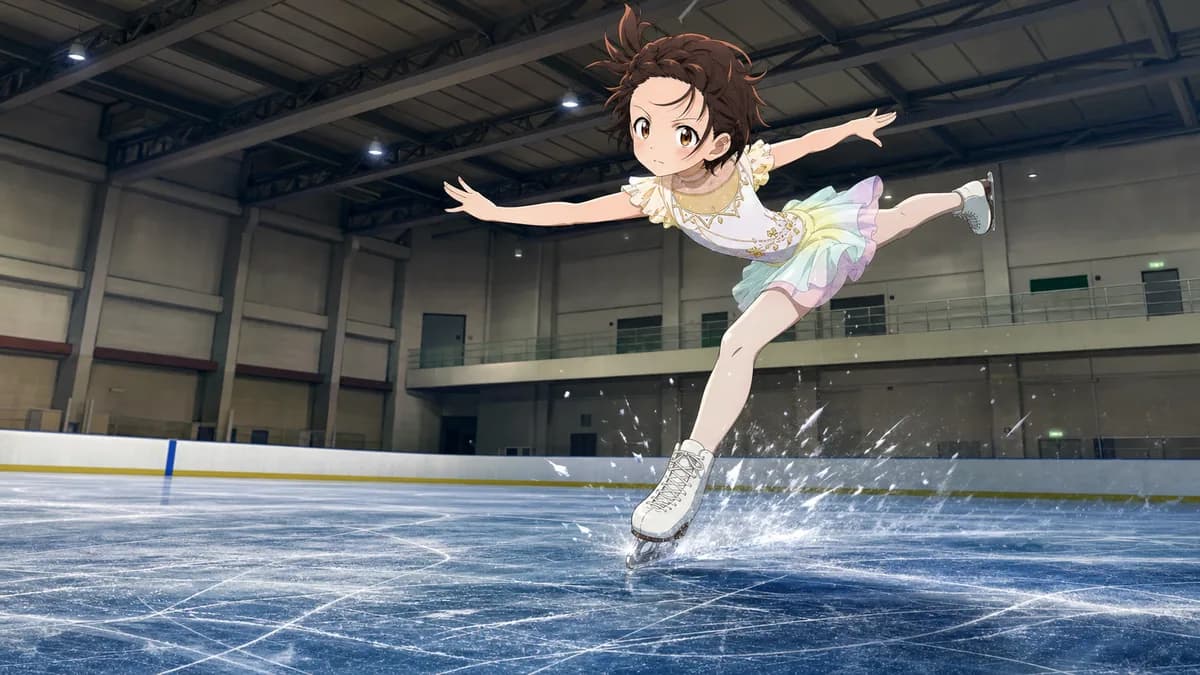
Here's the fault line most viewers notice first: the skating leans on CG. Figure skating is brutally hard to animate, all rotation and edge and momentum, so the studio renders the routines in 3D. When it works, the camera swoops around Inori's jumps with a fluidity hand-drawn frames could never sustain. When it doesn't, the models can look faintly plasticky against the 2D world, and the seam shows; your mileage will depend on your tolerance for the technique. What's beyond dispute is everything around the ice. The character acting is superb, all trembling hands and micro-expressions that sell Inori's nerves, and the direction knows exactly when to hold on a face. And the sound is a triumph: Yuuki Hayashi, of My Hero Academia and Haikyu fame, delivers a score that swells at precisely the right moments without tipping into schmaltz. The insert songs staged during the performances are goosebump-grade. It's a production that pours its finest resources into emotion, and it pays off.
Themes & What Sets It Apart
Plenty of sports anime preach hard work; few interrogate why we chase impossible things at all. Medalist's real subject is the terror and dignity of wanting something you have no guarantee of reaching. It takes social anxiety seriously, not as a quirk to be cured by an episode's end but as a genuine weight Inori carries onto the ice every single time. It's just as interested in the adults: Tsukasa's arc quietly asks whether living your dream through someone else is redemption or projection, and the show is brave enough not to fully resolve it. There's a parenthood thread, too, about how the people who love you can either smother or free your ambitions. What sets it apart is the fusion of crowd-pleasing underdog beats with the psychological honesty of a character study. It earns its inspiration rather than assuming it. The 'ganbatte' spirit is here in full, but it's been given a beating heart and a nervous system, so the triumphs land because you felt every doubt that came before them.
Strengths & Shortcomings
The strengths are obvious by now: a knockout central relationship, real emotional intelligence, a gorgeous score, and a refusal to condescend to its subject. When Medalist wants to move you, it moves you, and it earns those moments cleanly. But honesty demands the caveats. The CG skating, again, will be a genuine dealbreaker for some purists, however forgivable others find it. More structurally, this is a first cour built as foundation, patiently establishing the world and the bond rather than delivering a complete competitive arc. It's building toward payoffs it deliberately withholds, which satisfies if you know more is coming and mildly frustrates if you crave a self-contained epic. The pacing is measured to a fault in a stretch or two, lingering where a tighter edit might have pushed. And its earnest, feelings-forward register won't suit viewers who bristle at sincerity. None of these are fatal; they're the honest cost of a show this committed to the slow burn, and they keep an excellent series just shy of transcendent.
The Verdict
Medalist is that increasingly rare thing: a sports anime with a genuinely full heart, one that makes you care less about who wins than about whether a frightened kid finds the courage to try. Its central duo is among the most affecting mentor-and-student pairings the medium has offered in ages, the score is stellar, and its emotional beats are earned rather than manufactured. It lands at an 89 for real reasons: the CG skating is divisive, and this opening run is more beautiful setup than complete story, a foundation rather than a finished cathedral. But those are the reservations of a critic, not a fan, and the fan in me wants to press this on everyone. If you have any affection for underdog stories, or you simply want to feel something, clear a weekend and lace up. This is a dream worth believing in.
FAQ
Very much so. It's one of the most emotionally rewarding sports anime in recent memory, anchored by a coach-and-student relationship that sneaks up and quietly wrecks you. As long as you don't mind CG skating and a story that's still building toward its bigger payoffs, it's an easy recommendation, especially for anyone who loves a well-earned underdog tale.