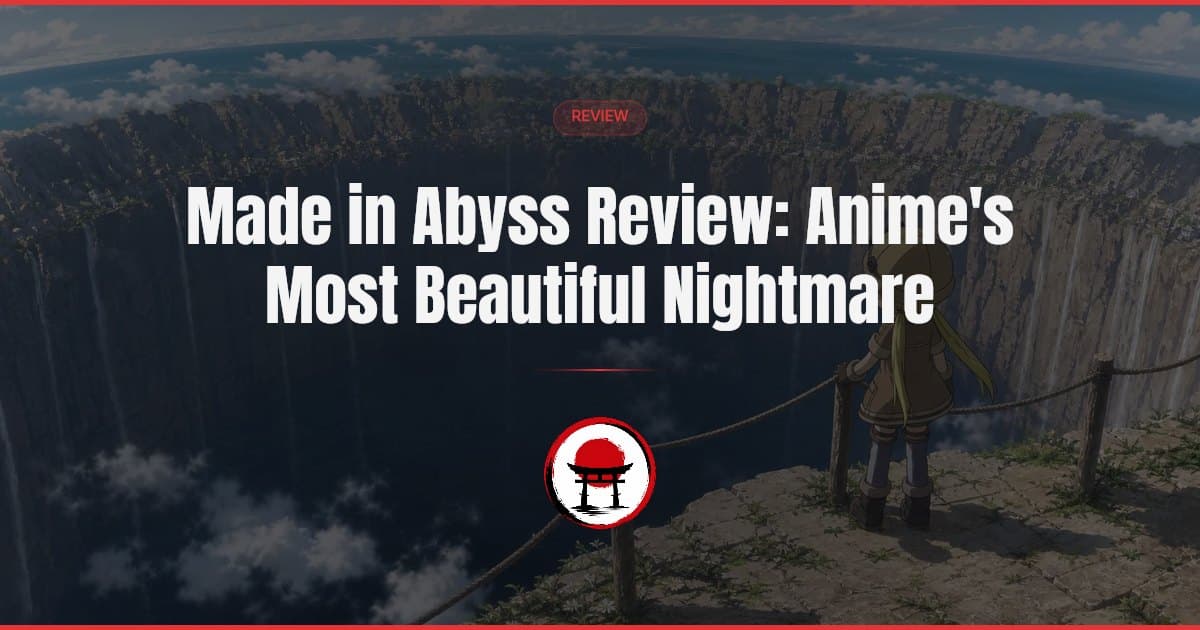
Made in Abyss Review: Anime's Most Beautiful Nightmare
 By Mika Tanabe · Editor
The warning signs are almost invisible at first. Made in Abyss begins in a sun-warmed town built around an enormous pit. Its heroine is a plucky orphan who sketches monsters in her notebook, and the characters are so round and adorable that they would look at home on a lunchbox. Once the journey starts moving downward, though, every new depth comes with a steeper cost. Kinema Citrus presents one of anime's most brutal adventures in the visual style of a children's storybook. The contrast is central to what the series wants to say. Wonder and cruelty come from the same place here, in a world whose beauty offers no guarantee that anyone will survive it. My view is simple: Made in Abyss is a genuine masterpiece of atmosphere and world-building, but it is also among the hardest anime to recommend without knowing exactly who will be watching.
The Story and Its One-Way Journey
The Abyss is a colossal hole in the earth, the world's last unmapped place and a seemingly bottomless source of mystery. Strange creatures roam through its layers, with no resemblance to the animals found on the surface. It also holds relics from a lost civilization that present-day humans have no hope of recreating. Explorers descend by rope to recover those treasures. They are known as Cave Raiders, and the very best receive the rank of White Whistle, becoming near-mythic legends in the process. Riko is an orphan raised in the town at the rim. She dreams of following her mother, a famous White Whistle who disappeared into the depths years earlier. Her plans become real after she rescues a boy-shaped robot from the lower reaches and names him Reg. Then a message arrives from far below with a clear instruction: descend, with no expectation of returning. The Curse of the Abyss gives that invitation its awful weight. Anyone who climbs back up suffers escalating agony and worse consequences, which means that each meter downward may be impossible to undo. A bright adventure is therefore recast as a one-way plunge. Even during the gentler stretches, the series keeps the growing price of the descent in view, and that pressure changes the meaning of every step Riko and Reg take.
Riko, Reg, and the People Below
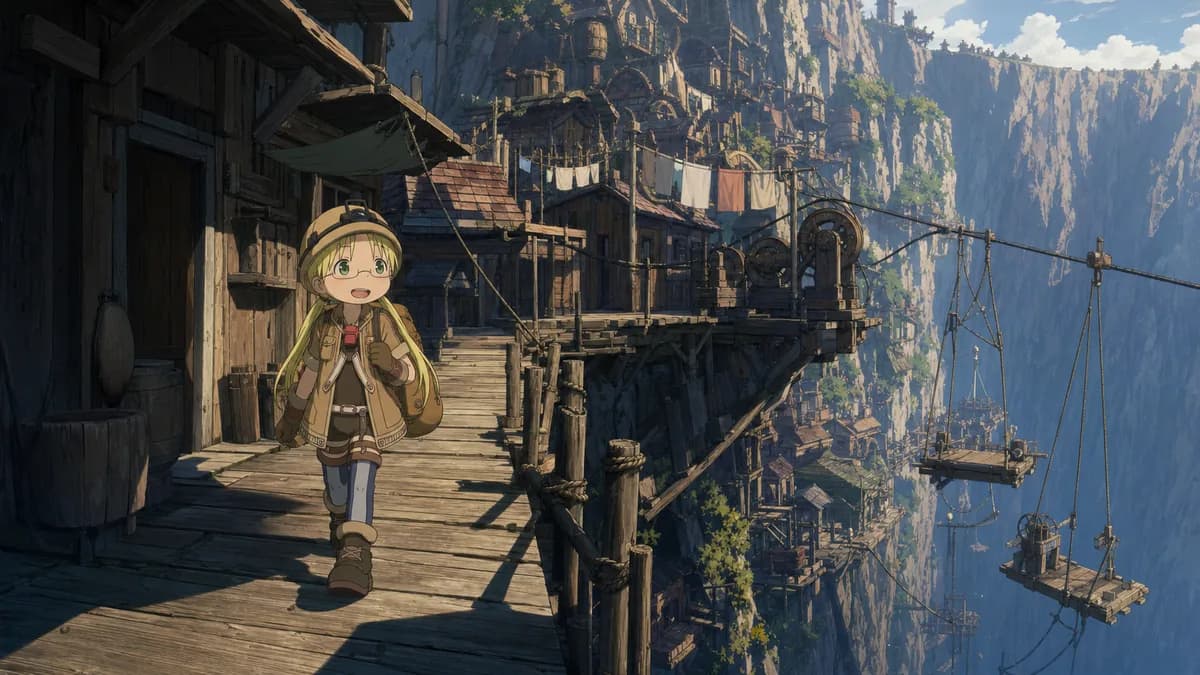
Riko drives the story through sheer appetite for discovery. She is reckless and endlessly curious, yet far tougher than her huge eyes suggest. Her desire to see the Abyss is so complete that it gradually becomes unsettling in its own right. Reg provides the balance. He is anxious and fiercely loyal, with mysterious abilities that he does not understand. One of them is an extending-arm weapon with the impact of artillery. Their bond carries the first part of the descent. The warmth between them feels like a small found family, so the suffering that comes later has something human to tear apart. The supporting cast then raises the stakes considerably. Ozen the Immovable is a White Whistle with terrifying strength. She subjects the children to a harsh test, and what first appears to be cruelty slowly reveals a form of mercy underneath. Nanachi arrives later and promptly takes over the show. This fluffy, world-weary creature carries the saddest history in the series, while the tragedy involving Mitty marks the point where Made in Abyss abandons any remaining gentleness. Bondrewd hangs over the story as one of anime's most disturbing antagonists. His calm, gentle voice makes the atrocities connected to him even harder to bear. There are not many central characters, but none feels disposable or easy to forget. The series makes us care about each of them, then shows no mercy in deciding what they must endure.
A Painted World and Kevin Penkin's Score
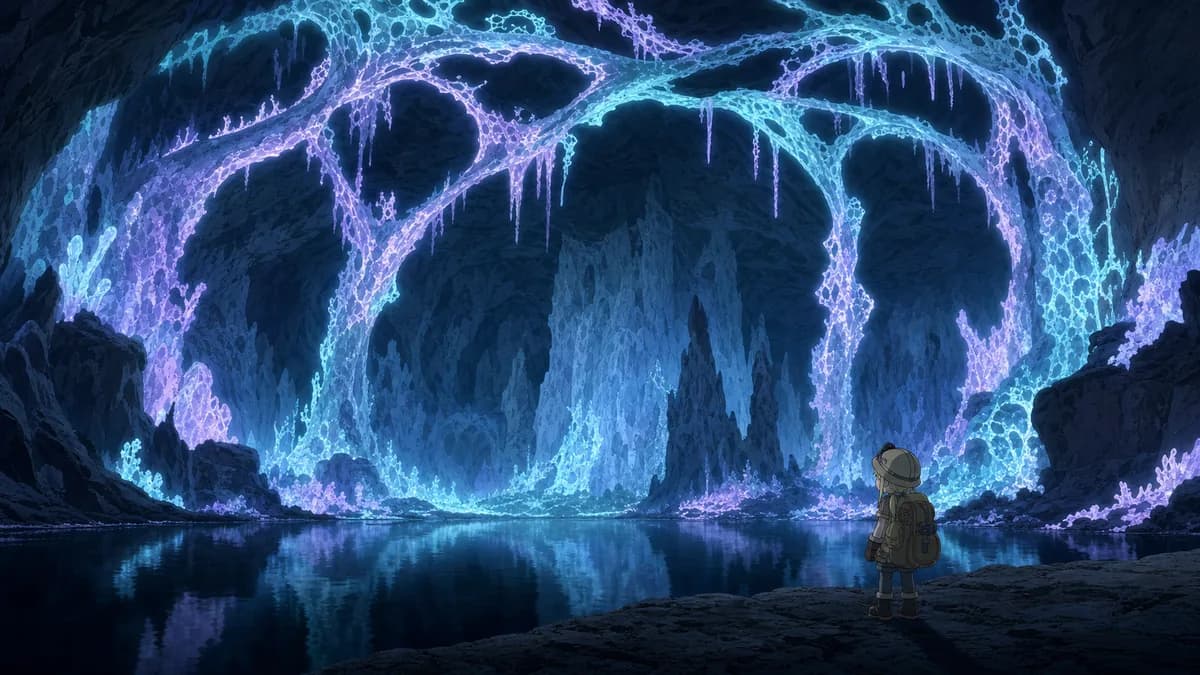
Made in Abyss is impossible to argue with on presentation. Kinema Citrus depicts the Abyss like a painting that happens to be alive. Its forests glow, its cliffs seem physically impossible, and light falls through layers that look and feel like separate ecosystems. The background art uses the soft colors of a storybook while giving the environment a scale that can induce vertigo. It also carries a great deal of the storytelling. The place has to be genuinely inviting for its violence to hurt this much, and the art makes that invitation convincing. The soft character designs, close to chibi in their proportions, are deliberately set against the body horror. The direction knows how disturbing that clash can be and uses it with precision. Kevin Penkin's score is an equally strong reason to watch the series. The music sounds orchestral and otherworldly, built for the immense space of the Abyss. It rises with the wonder of the descent, then turns sour with dread as soon as the depths show their teeth. Pieces centered on wordless vocals make the journey feel sacred and mythic, almost as if Riko and Reg have entered a holy place where they do not belong. Together, the art and soundtrack make the setting feel unusually immediate. Few anime worlds are this immersive or this overwhelming. Watching the series can feel less like observing a setting than being lowered into it, with its scale pressing in from every direction.
Why the Beauty and Horror Belong Together
Made in Abyss gets much of its force from the distance between its appearance and its actions. The art appears to promise a kind, all-ages adventure. What follows includes dismemberment, sickening transformations, and children experiencing real anguish. The mismatch is not empty provocation. It expresses the series' main idea: wonder can be seductive enough to pull people toward their own destruction. The curiosity that makes the Abyss magical is also what sends explorers to their deaths. This world can be gorgeous while remaining completely indifferent to the people inside it, and the story refuses to separate those qualities for the viewer's comfort. Made in Abyss belongs to the tradition of dark fantasy, although it handles its first impression differently from most of its peers. Other stories often announce their grim intentions immediately. This one lowers the audience's guard before beginning the descent. Beneath the horror is a persistent sadness about sacrifice, obsession, and what a dream can demand from the person chasing it. Riko wants to reach her mother, but that desire cannot be pulled apart from the suffering required to continue. The show's identity comes from its commitment to this contradiction. It is deliberately one of anime's loveliest experiences and one of its most upsetting, with neither side allowed to cancel out the other.
Where It Excels and Where Viewers May Stop
The series' strengths are enormous. Its world-building is peerless, Kevin Penkin delivers a career-defining score, and every layer has such a strong sense of place that you can nearly feel its humidity. The pacing takes its time without losing confidence. When the story finally collects on what it has set up, the results are devastating, and the standard of craft holds throughout. The barriers are just as real, so any recommendation needs to account for them. The body horror is extreme and prolonged. The camera remains with wounds and transformations well beyond the point of comfort, and the show's most infamous stretch is genuinely difficult to sit through. There is also a recurring and widely debated problem involving the young cast. The series includes nudity and other discomforting scenes that many viewers consider gratuitous. Walking away for that reason is entirely fair. These moments cannot be brushed aside as harmless edginess, and some people will find that they make the whole series impossible to continue. This run also covers only the opening descent and ends while the journey is still far from complete. Made in Abyss is therefore a sublime achievement with a serious warning attached. Its best qualities are rare, but reaching them requires accepting material that viewers should know about before they begin.
The Verdict
Made in Abyss deserves to be called a masterpiece, and it needs a warning label beside that praise. Almost nothing else in anime creates a world with this combination of beauty, ambition, and dread. Kevin Penkin's score also belongs among the finest in the medium. My score is 91. The world-building and atmosphere are close to flawless, while the craft behind them remains remarkably assured. Its collision between a storybook appearance and nightmare content is a bold artistic decision that works because it informs the entire series. The same content also keeps the show just short of the summit. Its body horror is severe, and the uncomfortable treatment of its young cast presents a legitimate barrier rather than a minor complaint. Those elements will stop some viewers immediately, with good reason. Watch Made in Abyss if you want anime's most immersive and devastating descent, provided you know that you can handle genuinely dark material. If those warnings touch a limit for you, approach it with real caution or leave it alone. For the right viewer, however, very few series linger in the mind with the same force.
FAQ
Yes, as long as you can handle how dark it becomes. The series contains one of anime's best-realized worlds, supported by a soundtrack and atmosphere that few other shows can match. Do not mistake the inviting art for a cozy adventure. This is a masterpiece with serious barriers, and its brutality matters as much as its beauty.