Jujutsu Kaisen Review: The Standard for Modern Shonen
 By Mika Tanabe · Editor
Jujutsu Kaisen has a strong claim to being the flagship action anime of its generation. Its setup begins with one reckless choice: a good-natured high schooler with monstrous strength swallows a cursed relic to save his friends, then wakes up sharing his body with the King of Curses. MAPPA turns that premise into a supernatural action-drama with a vicious streak, a keen sense of timing, and production values well above the genre's usual standard. The familiar shonen framework is all here, including a school for gifted students, an absurdly powerful mentor, and a hero who refuses to stay down. What matters is how much dread and consequence the series attaches to those pieces. Jujutsu Kaisen sets the modern standard because the formula has consequences here, and those consequences hurt.
Story and Premise
The best piece of worldbuilding in the show is its idea of curses. These malformed spirits grow from the fear, regret, and spite that people release into the world each day, and only another curse can reliably exorcise one. It turns ordinary human misery into a literal source of monsters, which gives every fight an ugly moral weight. Yuji Itadori loses his normal life when he swallows a finger belonging to Sukuna, the legendary Double-Faced Specter, because he needs to protect the people around him. Yuji survives the act, but the King of Curses now lives inside his body and whispers to him. The impossibly strong sorcerer Satoru Gojo recruits him into a hidden high school for jujutsu sorcerers. There, Yuji agrees to a bleak bargain. He will hunt down the rest of Sukuna's scattered remains, and afterward he will die on the sorcerers' terms. The series handles that material with impressive control across its two-cour run. It explains the rules clearly, grows much tenser during a nerve-shredding mid-season stretch, then delivers a major inter-school exchange in which the Tokyo students face a rival sorcery school. Even the quieter setup usually feels purposeful. The story keeps pressing forward as if it knows it has plenty left to prove.
The Characters
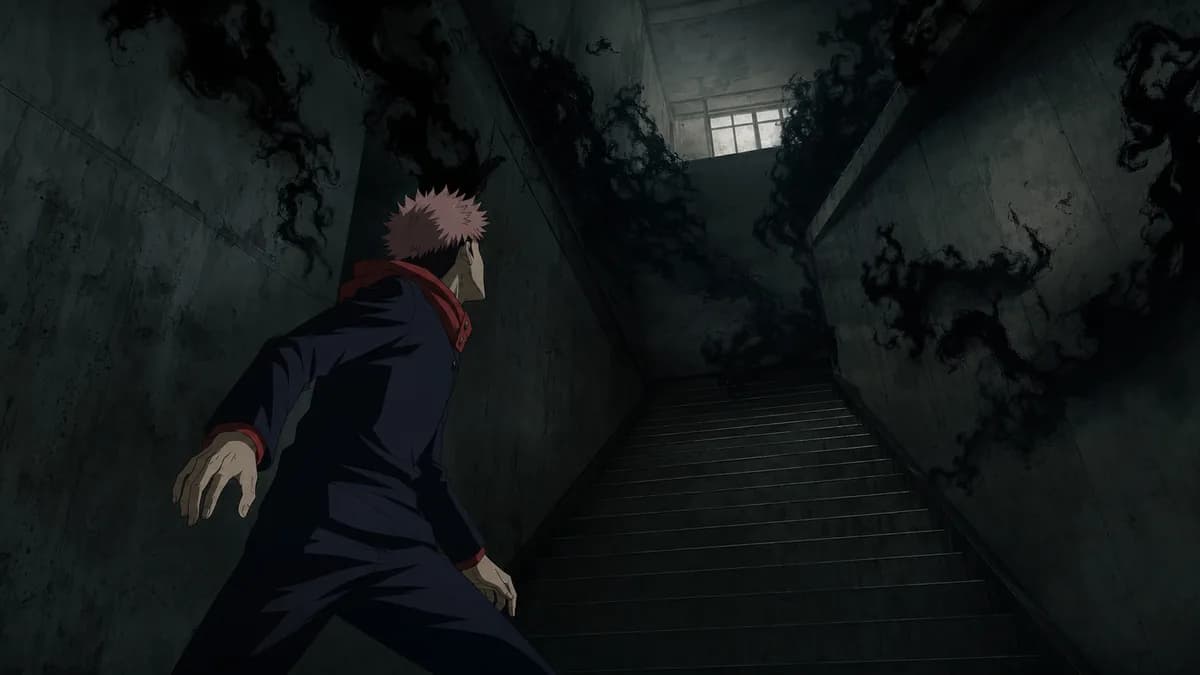
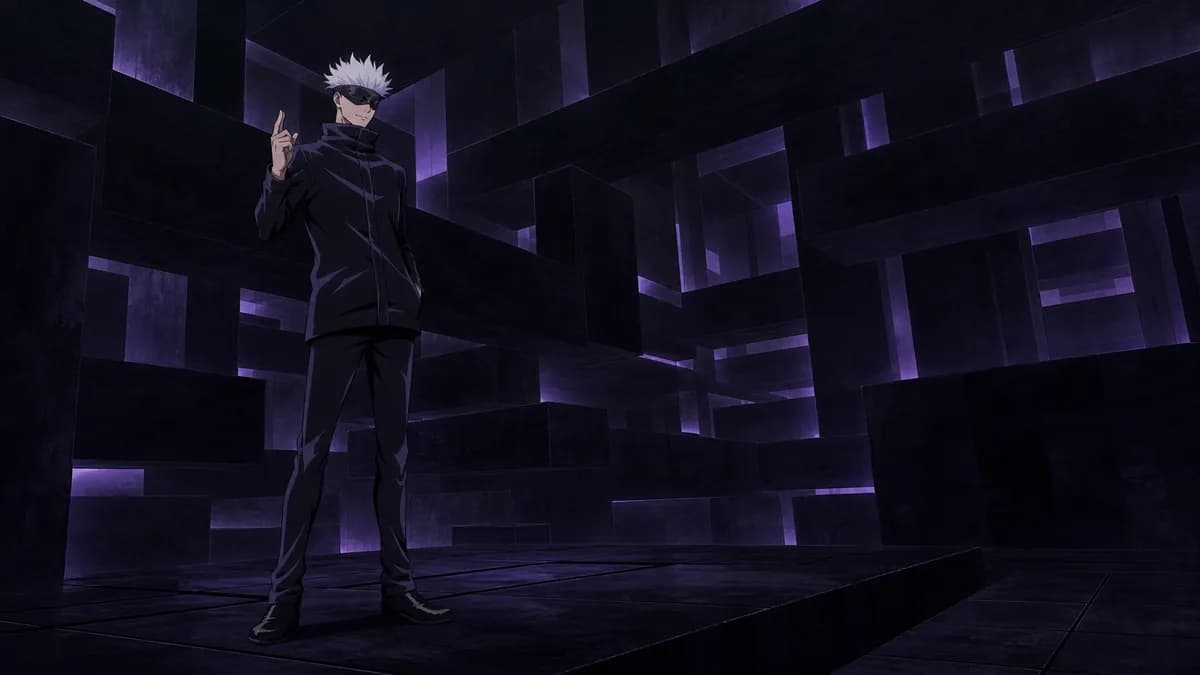
All that cruelty works because the cast gives it someone to hurt. Yuji is unusually easy to like for a shonen lead without becoming bland. He is funny and absurdly strong, but his defining quality is a stubborn, uncomplicated belief about who deserves a proper death. Megumi Fushiguro supplies the group's brooding tactical restraint. Nobara Kugisaki arrives with swagger and a welcome refusal to play anyone's damsel. They settle into a believable unit quickly, so the punishment they endure lands with more force. Satoru Gojo is still the clear breakout character. He is half-hidden behind a blindfold, constantly flippant, and casually the strongest man alive. That combination makes him an instant icon, yet he never becomes unbearable. The writing offsets his enormous power with sincere affection for his students. The supporting cast has unusual depth as well. Kento Nanami, a salaryman-turned-sorcerer who approaches heroism like a joyless day job, quietly takes control of every scene he enters. Among the villains, the body-warping Mahito stands as one of the genre's most unsettling antagonists in years. He embodies the same human cruelty that the story keeps returning to, which makes him feel like the show's ideas given a malicious voice.
Animation and Sound
The production is where Jujutsu Kaisen shows the full extent of its confidence. MAPPA directs the series with enough force to make competing action shows look timid. Cursed techniques follow clear, chess-like rules, which keeps the duels readable even when the animation erupts. Its biggest sequences are built for the kind of close rewatching that fans give them for years. The staff list explains much of that quality. Tadashi Hiramatsu's character designs stay expressive when the cast is under pressure. Series composer Hiroshi Seko, who would later steer Chainsaw Man, keeps the adaptation focused. The storyboards also feature genuine legends, including Ninja Scroll's Yoshiaki Kawajiri, who lends his hand to a couple of early episodes. The most celebrated passage comes in a mid-season showcase storyboarded and directed by sakuga star Hironori Tanaka. Its Gojo fight moves with such fluidity that it briefly became the whole anime internet's screensaver. Sound carries equal force. Every impact has convincing percussive weight, while the stylish rotoscoped ending sequence sets spectacle aside in favor of effortless cool. Television anime rarely looks this assured, and even fewer series match the visuals with sound that feels so carefully judged.
Death, Horror, and What Makes It Different
Underneath the spectacle, Jujutsu Kaisen is preoccupied with death, especially the question of who receives a good one. Its curses are made from human negativity, so an exorcism becomes an acknowledgment that our worst feelings carry weight and impose a cost. The sorcerers understand that their work is a slow-motion route toward dying well. This is a heavier idea than most stories in the genre attempt, and it separates the series from the many shows about super-powered teenagers that resemble it on the surface. Plenty of shonen stories reduce death to a temporary setback. Jujutsu Kaisen treats death as permanent, and often senseless. Its villains are not misunderstood figures waiting for sympathy. They are gleefully and philosophically cruel, while the story offers no guarantee that decent people will be rewarded. Its shifts in tone make it distinctive too. Genuine slapstick can give way to body horror, which may then turn into gut-punch tragedy within the same episode. The series earns most of those changes because each mood grows from the characters and their circumstances. The grounded, present-day Tokyo setting also helps, as does a magic system governed by actual rules. The result feels less like a straightforward power fantasy and closer to a horror-tinged tragedy with exceptionally animated fights.
Where It Excels and Where It Falters
Jujutsu Kaisen's strengths are easy to see. The action operates at an elite level, the cast has real magnetism, and the story is willing to inflict enough pain to make its dangers matter. An 8.7 is still not a 10, though, and the shortcomings deserve attention. The largest problem is structural. The opening stretch is slightly generic and arrives before the series has fully found its identity, so newcomers who leave during those familiar early episodes have a fair complaint. The show can also become too enamored of its own mythology. Dense explanations of cursed-energy mechanics sometimes appear in the middle of fights, slowing the momentum they are meant to intensify. Nobara makes such a strong early impression that her later treatment is particularly disappointing. As the season continues, she receives noticeably less to do than the boys, and the story never completely fixes that imbalance. The same darkness that gives the series its edge can occasionally become misery without enough purpose. A couple of arcs keep adding cruelty until the material reads as shock instead of theme. These weaknesses do not ruin the show, but they mark the distance between a great action series and a flawless one. Jujutsu Kaisen is firmly the former, which still places it ahead of most of its peers.
The Verdict
Jujutsu Kaisen earns its place as the modern shonen benchmark through execution rather than reinvention. Almost no other series handles the established formula at this level. The animation turns major fights into genuine events, while the cast makes the descent into darker material worth following. Most importantly, the show's insistence that death has a cost gives its spectacle a foundation that many battle series lack. The final score is 8.7 because the early episodes rely too much on familiar formulas, exposition can obstruct the action, and the sustained cruelty occasionally favors shock over meaning. Those deductions reflect real problems. They also come from a series reaching for something ambitious and usually getting there. Anyone choosing a single contemporary action anime should make it the show their friends keep discussing, the one that made MAPPA a household name. Jujutsu Kaisen remains the benchmark because its best moments combine technical skill with consequences that stay with you after the fighting stops.
FAQ
Absolutely. It is one of the defining action anime of its era, with elite fight animation and a genuinely lovable cast. Beneath its polished surface sits a much darker emotional center than a first glance might suggest. Anyone with an appetite for supernatural action should consider it close to essential viewing.