
JoJo's Bizarre Adventure Review: Anime's Most Stylish Saga Begins
 By Mika Tanabe · Editor
No long-running franchise reinvents itself as ruthlessly as JoJo's Bizarre Adventure. Every chapter hands the baton to a new protagonist, a new decade, and a new hero whose name shortens to JoJo, and it treats total reinvention as a feature rather than a risk. This first anime entry launches Hirohiko Araki's generational Joestar saga with two of its opening acts: Phantom Blood, a gothic Victorian revenge tale, and Battle Tendency, a globe-trotting pulp adventure against ancient super-beings. It is loud, ripped, operatic, and utterly sincere about its own absurdity. My take: this opener is where the madness first clicks, a wildly stylish launch whose weaker first act is more than redeemed by a second that ranks among the most purely entertaining runs shonen has produced.
Story & Premise
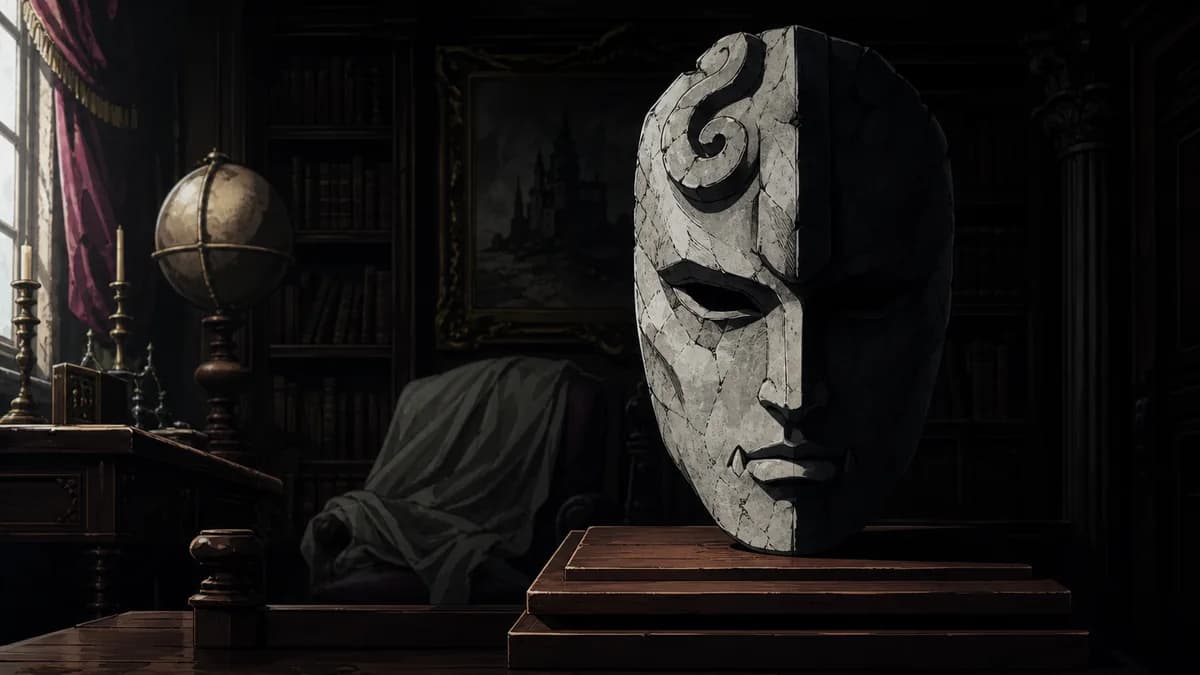
JoJo is built on a structural gamble: instead of following one hero, it follows a bloodline. Phantom Blood opens in 19th-century England, where the noble, earnest Jonathan Joestar is tormented by his adopted brother Dio Brando, a scheming climber whose lust for power leads him to an ancient Aztec stone mask that transforms him into a vampire. Jonathan's answer is Hamon, a martial art that channels sunlight energy through breathing. Battle Tendency then leaps forward, set in 1938, to Jonathan's grandson Joseph Joestar, a wisecracking trickster who must face the Pillar Men, the godlike beings who created the masks in the first place. The generational reset means each part has its own tone, villain, and stakes, so momentum builds by escalation rather than a single climbing plot. It is a bold way to run a saga, and it is the exact quality that would later let the franchise mutate into something new every few years without ever feeling stale.
Characters
The cast is where JoJo earns its cult. Jonathan is honestly the blandest of the Joestars, a stiff paragon of Victorian decency, and the show is noticeably better once his grandson takes over. Joseph Joestar is the star turn, a cocky, improvising con artist whose signature move is predicting his enemy's next words before they say them; he is where the series' comic timing and personality catch fire. Towering over Phantom Blood is Dio Brando, one of anime's all-time great villains, a preening, magnetic monster whose menace never fully leaves the saga even after his arc ends. The supporting bench is loaded with texture: the theatrical mentor Will A. Zeppeli, the ever-hyping Robert E. O. Speedwagon, the smoldering Caesar Zeppeli, and the fierce Lisa Lisa. These are big, loud personalities drawn in bold strokes, and the show trusts them to carry scenes on charisma alone, which they do.
Animation & Sound
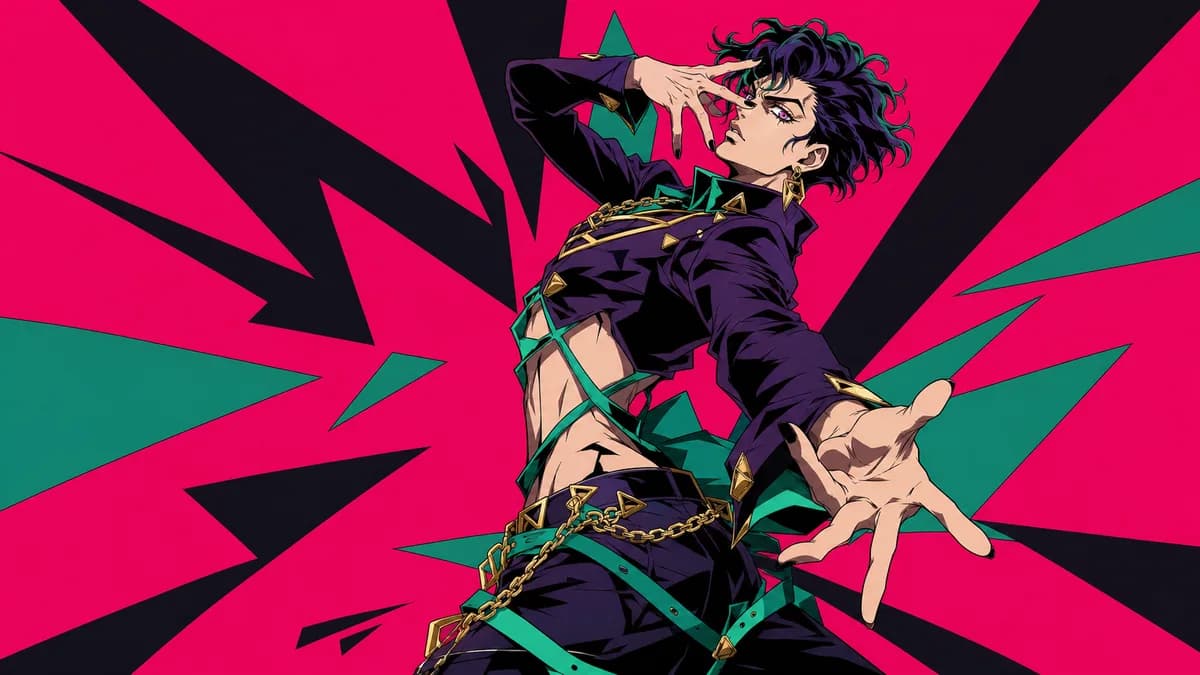
David Production gives JoJo a look no other anime shares. The palette shifts constantly, characters and skies bathed in unnatural, comic-book hues that change with the mood of a scene, and on-screen sound effects like the menacing "ゴゴゴ" rumble turn Araki's manga panels into moving illustrations. It is stylization over realism at every turn, and it fits the material perfectly. The music is a huge part of the appeal: Taku Iwasaki scores the back half with brassy, operatic bombast, and the opening theme "Sono Chi no Sadame" is an instant hype anthem that fans still belt on cue. The sound design of Hamon combat, all crackling energy and dramatic narration, gives the fights a theatrical weight. The honest caveat is that Phantom Blood's animation looks rougher and more rushed than what follows; the show visibly grows into its own confident visual identity once Battle Tendency begins, and never looks back.
Themes & What Sets It Apart
Underneath the poses and the muscles, Araki is fixated on human will. His villains are almost always shortcut-takers, vampires and immortals who cheat their way to power, while his heroes win through discipline, cunning, and sheer refusal to quit. Fights are less about who hits hardest than who out-thinks whom, elaborate puzzles solved under pressure, which keeps the combat inventive even when the power levels are ridiculous. What truly sets JoJo apart is its fearless embrace of camp. It is operatic, fashion-obsessed, unashamed of melodrama, and completely sincere about all of it, a tonal cocktail no other shonen attempts. That confidence is why it later became a phenomenon: this opener is the Hamon era, but its continuation, Stardust Crusaders, would introduce the manifested "Stand" powers that define the franchise's reputation. The seeds of that reinvention, a saga that mutates while keeping its soul, are all planted here.
Strengths & Shortcomings
The strengths are personality and confidence. Battle Tendency in particular is a near-perfect adventure serial, brilliantly paced, funny, tense, and bursting with the kind of creative combat that made JoJo legendary. Dio alone is worth the price of entry. But the honesty this deserves is real. Phantom Blood is short, rushed, and dated, a necessary prologue that plays like the weakest stretch of the whole franchise, and plenty of newcomers bounce off before things improve. Araki's art style, all towering physiques and severe angles, is a genuine barrier; it is an acquired taste that some viewers simply never acquire. The relentless narration and over-explained mechanics can feel clunky, and cramming two distinct parts into one adaptation means the quality visibly seesaws within a single run. This is a show that asks you to trust it through a rocky start, and not everyone will want to extend that credit before the payoff arrives.
The Verdict
This opening entry earns its 83 on the strength of Battle Tendency, one of the most entertaining pure-adventure runs in shonen, and on the outrageous confidence that makes JoJo unlike anything around it. Dio is an all-timer, the style is intoxicating once you sync with it, and Joseph Joestar is the moment the whole saga comes alive. The score gives points back for Phantom Blood, a rough and rushed prologue, and for an art style and tonal extremity that will lose a chunk of the audience at the door. But if you make it through the first act, you are rewarded with a series that only grows stranger, bolder, and more beloved from here. Treat this as the on-ramp to a franchise that reinvents itself every few years, and start where it starts. The blood of the Joestars is worth following.
FAQ
Yes, particularly if you crave a series with a personality all its own. The first act is a slow-ish start, but Battle Tendency wins most viewers over completely, and the franchise it launches is one of anime's most rewarding long-haul commitments.