Girls Band Cry Review: Frayed Nerves, Convincing Rock, and 3DCG That Feels Alive
 By Mika Tanabe · Editor
Most band anime are designed to leave you feeling comfortable. Girls Band Cry goes after messier emotions: humiliation, fury, and the stubborn streak required to keep building something after the world has told you to sit down. This fully 3DCG original from Toei Animation follows Nina Iseri, a runaway who leaves her suffocating hometown for Tokyo and promptly collides with Momoka Kawaragi, the disgraced guitarist she idolizes. Their meeting grows into a rock drama that bares its teeth instead of settling into a cozy club routine. The computer-generated animation will split the audience, especially during quieter scenes, and the reasons for that reaction are easy to see. Once the characters move and the music starts, though, the visual approach finds its purpose. Raw performances, sharply observed writing, and a genuinely great soundtrack make Girls Band Cry feel unusually alive. It earns the right to turn up the volume.
A Band Built Out of Bad Days
Nina Iseri knows she does not fit in her stifling hometown, so she leaves school behind and runs to Tokyo in pursuit of something she cannot fully name. Her first day goes horribly. After a string of humiliations, she even gets shut out of her own apartment. Then she happens to meet Momoka Kawaragi, the guitarist she worships, and that encounter gives all of Nina's frustration somewhere to go. The pair stage an impromptu curbside performance and begin pulling together a band made up of fellow outsiders. Girls Band Cry could have turned this premise into another comfortable story about friends finding a hobby. Instead, music is treated as a fight for these characters. They are pushing back against families that do not understand them, an industry willing to chew people up, and instincts that often make their own lives worse. The series is frank about how closely the pursuit of a dream can resemble self-destruction. It also allows its heroines to be genuinely difficult rather than softening every outburst into an endearing quirk. Keeping spoilers light, the story is less concerned with winning a big contest than with learning to stand tall in a world that keeps trying to make you smaller. The coming-of-age story has its fists raised, and its stakes remain bracingly personal because success never matters as much as the girls' ability to live with themselves.
Five People Who Do Not Fit Neatly Together
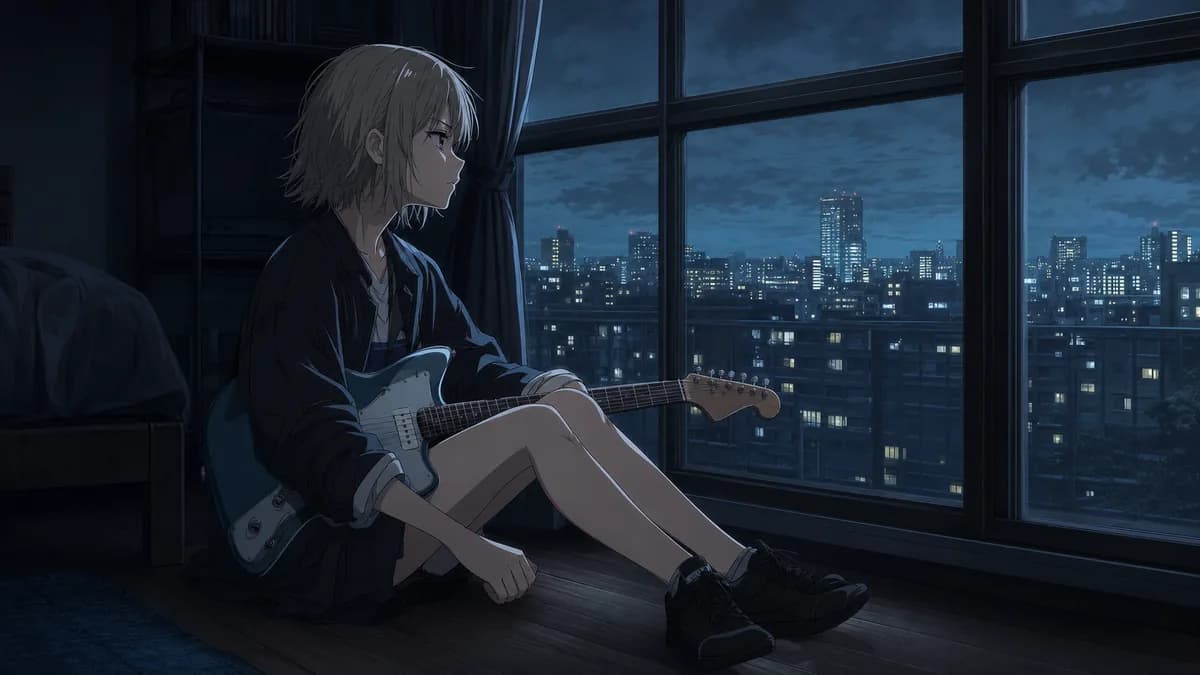
The band depends on its five leads, and their relationships are built from friction rather than easy affection. Nina is its engine, a raw nerve driven by equal amounts of need and defiance. She is tsundere in the truest sense, capable of being inspiring in one moment and exhausting in the next. Momoka Kawaragi, the fallen guitarist Nina chases after, carries a weary guardedness that takes time to crack. Subaru Awa, Tomo Ebizuka, and Rupa join them, each bringing private damage into the practice room. Their burdens include estranged families, aborted dreams, and the quieter harm caused by hearing that they are too much. The writing does not hurry to turn any of them into a lovable mascot. They stay prickly and can be plainly unlikable, which makes their eventual closeness feel earned. Early chemistry comes through repeated collisions. Only gradually do those clashes fuse into something resembling a family, giving the familiar found-family idea some actual grit. Even the supporting cast keeps the emotions connected to ordinary life. Nina's fractured household matters because the series understands that rebellion does not erase the people left at home or the hurt carried away. There is no idol fantasy protecting these girls from consequences. They seem like people who have run out of acceptable places to put their anger, so they pour it into a song. That is why their worst arguments still feel tied to the band rather than inserted to manufacture drama.
Why the 3DCG Works When the Music Starts
The fully 3DCG presentation is the obvious dividing line. In still frames, the models can appear plasticky and the faces sometimes sit close to the uncanny look that CGI skeptics already dread. Quiet scenes expose that artificial quality most clearly. Motion changes the case for the animation. Toei's team takes advantage of 3D staging in ways that hand-drawn productions rarely attempt, with a camera that can roam freely and physical acting that gives the characters convincing weight. During performances, fingers actually meet the frets while bodies pitch forward with the beat. Expressiveness is where the technique proves itself. Faces twist without staying pretty, shoulders collapse under disappointment, and a character's fury or elation can be read from the other side of a room. The sound is even stronger. Music producer Kenji Tamai oversees songs performed by the real rock band Togenashi Togeari, whose voice cast also plays the material live for real crowds. That distinction is audible. The tracks work as legitimate rock songs rather than disposable jingles written only to fill a scene. When a live-wire number and the animation lock together, the visual style stops feeling like something the viewer has to excuse. It becomes an effective way to carry the sweat and physical charge of a band playing at full force. Viewers who dislike 3DCG may never warm to every shot, but the full performances show exactly why Girls Band Cry committed to it.
Anger, Ambition, and the Need to Be Heard
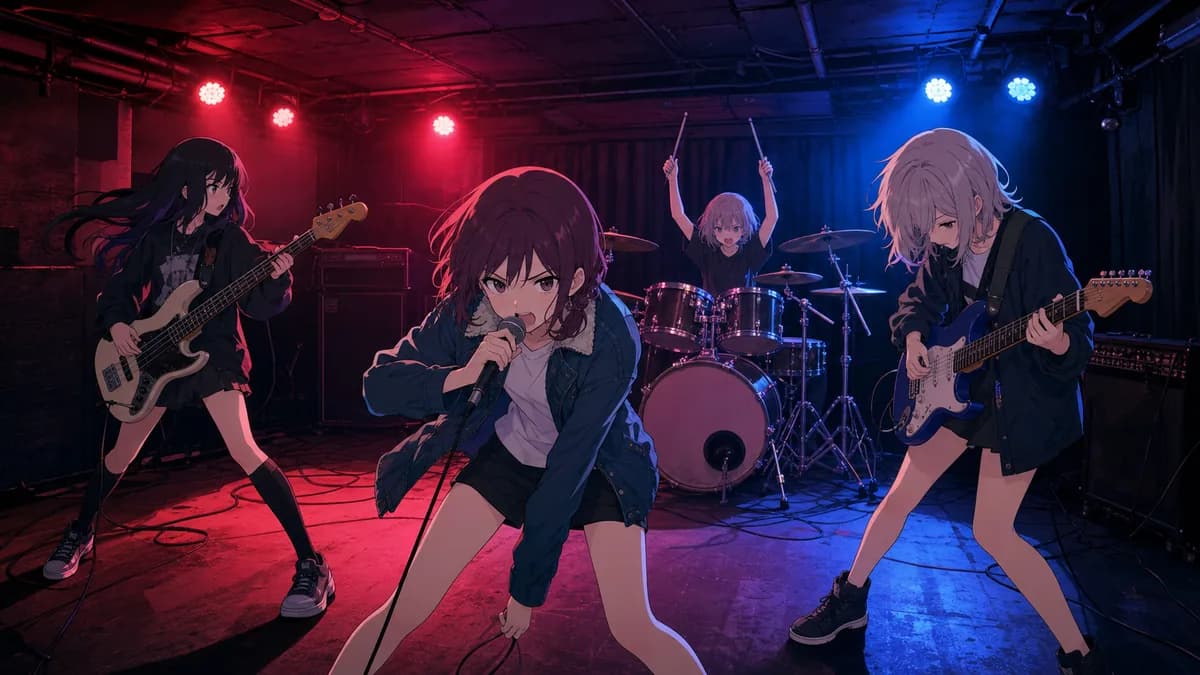
Girls Band Cry separates itself from tidier music-club series by refusing to make ambition pleasant. Its central emotion is anger, especially the anger felt by young women who have been bullied, dismissed, or forced into boxes that do not fit. They discover that a distortion pedal does more for them than politeness ever did. The series spends time on belonging and found family while keeping sight of subjects the genre often avoids. Class friction shapes what the girls can risk. Industry exploitation puts pressure on their art, and pursuing that art can rupture the family someone was born into. Its coming-of-age thread is jagged, with warmth arriving in brief patches rather than smoothing out the conflict. The bonds among the girls are treated tenderly as well. At times, that closeness shades quietly into something beyond friendship, without being turned into spectacle. Through all of this, the show keeps returning to the idea that making noise can be a means of survival. Fame is not the real goal. What matters is claiming the right to exist loudly and on one's own terms. Plenty of band anime offer low-stakes comfort, and there is nothing wrong with that mode. Girls Band Cry wants the scrape of a grievance left unresolved. Its sincerity has a chip on its shoulder, which is precisely why the story lingers after the last song ends.
Where It Hits and Where It Overreaches
The best parts of Girls Band Cry are easy to hear and feel. Its emotional center is fierce, the characters retain their rough edges, and the music is integrated into the drama as well as it is in almost any recent anime. When a scene connects, it lands hard. Allowing the heroines to remain abrasive also feels bolder than the safer characterization favored by many of the show's peers. The weaknesses are just as visible. Although the 3DCG is expressive in motion, calm scenes leave the models standing still long enough for their artificiality to show. Some viewers will not clear that hurdle, and admiration for the performances can only compensate so much. The melodrama also runs very hot. Girls Band Cry loves the catharsis of a screaming match, but part of the middle leans on conflict and recrimination until the effect becomes tiring instead of moving. A couple of secondary arcs reach their resolutions faster than the buildup earns. Even the rawness that makes the leads magnetic can begin to feel like misery tourism when the viewer is not in the mood for another emotional collision. These flaws do not sink the series. They do mean it has sharp corners that cannot be separated from its appeal. Some people will love the bruises. Others will wish the show would pause long enough to breathe.
The Verdict
Girls Band Cry has the feel of a punk record that was allowed to keep its rough edges. It can be too loud, and it does not always know when to ease off, but it is defiantly alive. The price of admission is accepting a divisive 3DCG style and spending time with a heroine who is frequently a handful. Viewers who can do that get some of the most electric performance scenes in the genre, backed by the best original soundtrack it has produced in ages. The series falls short of masterpiece status. Its melodrama overheats, the middle sags, and stiffness during calm moments places a real ceiling on the animation. Those limitations put the score at 88 instead of on the top shelf. An 88 still means excellent in this case, with plenty of bite left intact. The show reaches for something emotionally honest and connects far more often than it misses. Anyone looking for a music drama with genuine stakes and a pulse that can be felt in the chest should plug in. Girls Band Cry screams because its characters mean every note.
FAQ
Yes, particularly if you want a music anime with real emotional stakes. It is a fierce underdog drama with a superb score, and its characters feel alive because the writing lets them be unpleasant as well as sympathetic. The main reservation is the fully 3DCG presentation, which remains divisive. If that visual style concerns you, try one episode before committing to the full series. Otherwise, it deserves a place on your list.