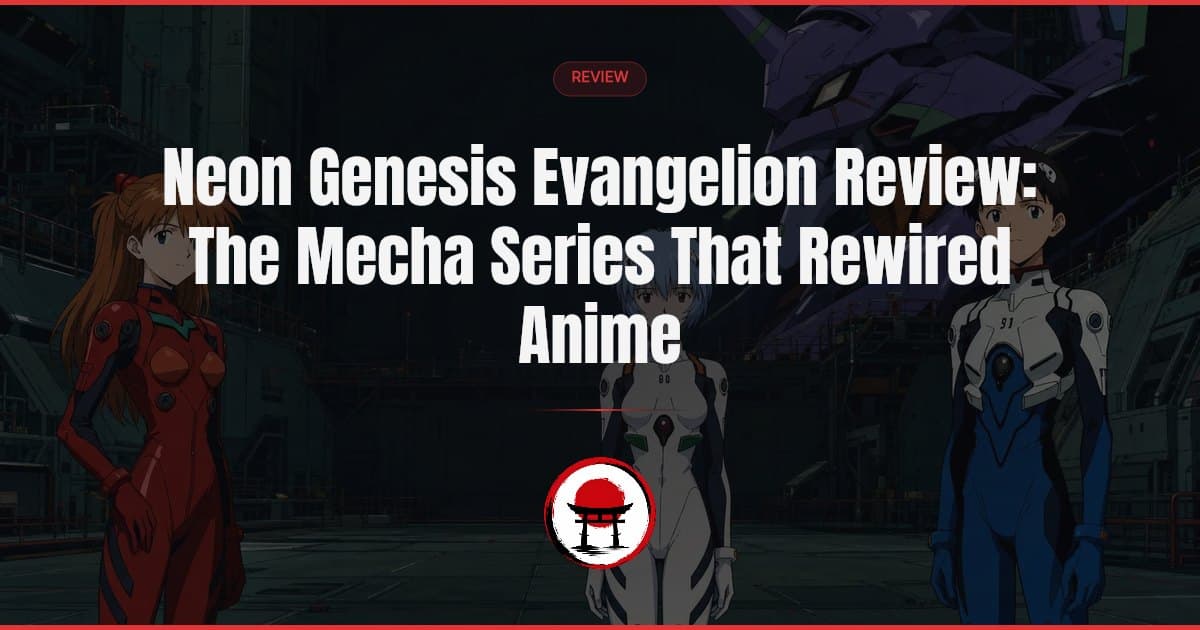
Neon Genesis Evangelion Review: The Mecha Series That Rewired Anime
 By Mika Tanabe · Editor
Neon Genesis Evangelion looks like a show about teenagers piloting giant robots against monsters. It is not that show - or rather, it uses that show as bait. Gainax's mid-'90s landmark takes the super-robot fantasy every kid grew up on and slowly, deliberately turns it inside out, until the real battle isn't against the Angels but inside the skull of a fourteen-year-old who never wanted the cockpit. Few anime are argued about this fiercely: worshipped as the medium's boldest psychological statement, resented for an ending that detonates its own genre. Both camps are right, which is the point. This is a demanding, uneven, frequently astonishing work that rewired what anime could be about, and it has aged into a strange, permanent classic.
Story & Premise
After a global cataclysm devastated the planet, the survivors rebuild under the shadow of the Angels - colossal, unknowable entities whose attacks can only be repelled by the Evangelions, towering bio-machines piloted by children born in the disaster's wake. Shinji Ikari is summoned by the father who abandoned him to climb into one and fight. That's the frame, and on the surface it runs like a monster-of-the-week mecha series: a new Angel, a new battle, a new grotesque way to win. But the show is quietly loading a second magazine. The victories cost more each time, the shadowy organization behind the Evas is hiding an agenda, and the mecha 'action' keeps curdling into body horror and dread. What begins as spectacle becomes an interrogation of why anyone would send traumatized kids to do this at all. The premise is a bait-and-switch executed with total confidence - genre comfort food laced, from the very first episode, with something colder and stranger underneath.
Characters
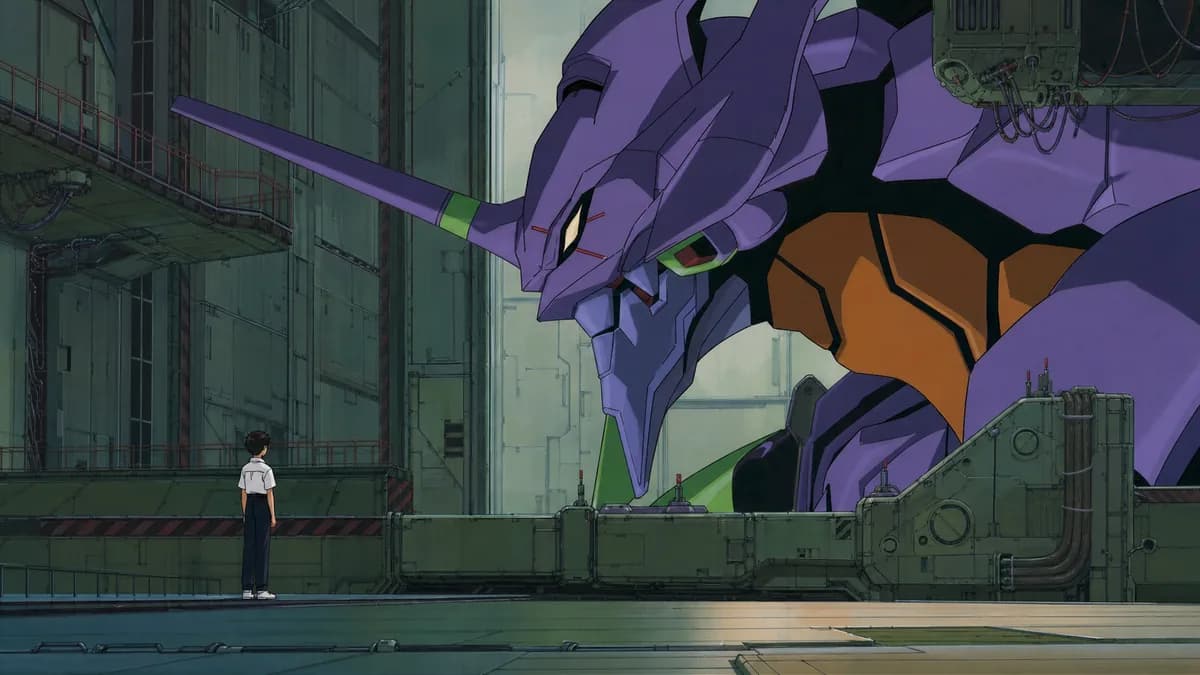
Evangelion lives or dies on Shinji Ikari, and he is one of the most divisive protagonists ever drawn. He's passive, anxious, self-loathing - a boy who flees the cockpit as often as he climbs into it - and the show refuses to flatter him into a hero. That frustrates many viewers and moves others to tears, because his fear reads as real rather than dramatic. Around him orbit two of anime's most iconic figures: Rei Ayanami, the eerily blank pilot who launched a thousand imitators, and Asuka Langley Souryu, whose ferocious confidence masks a wound as deep as Shinji's. Misato Katsuragi, their guardian and commander, is the rare adult in the cast who is just as lost as the kids she's supposed to lead. Even the enigmatic Kaworu Nagisa lands like a thunderclap in limited screen time. Nobody here is well-adjusted; everyone is performing okayness over damage. That's the cast's thesis - a study of lonely people failing to connect - rendered with uncomfortable psychological precision.
Animation & Sound
For a mid-'90s television production, Evangelion's craft is startling, and pointedly uneven - sometimes by budget, sometimes by design. Gainax and Yoshiyuki Sadamoto's character work is clean and expressive, the Eva units move with an unsettling animal wrongness, and the Angel designs range from abstract geometry to nightmare biology. The direction is where it stuns: long held silences, jarring cuts, on-screen text and inner monologue, editing that treats a panic attack with the same weight as a battle. When the budget and schedule visibly buckle in the back stretch, the show leans into it, turning limitation into avant-garde style - a choice that thrills as many viewers as it infuriates. The sound design is equally deliberate, from the industrial hum of the cockpit to sudden, total silence deployed as a weapon. And the opening is one of the most instantly recognizable in the medium, a brassy, propulsive hook that has outlived the show's own era. Craft here is never just decoration; it's argument.
Themes & What Sets It Apart
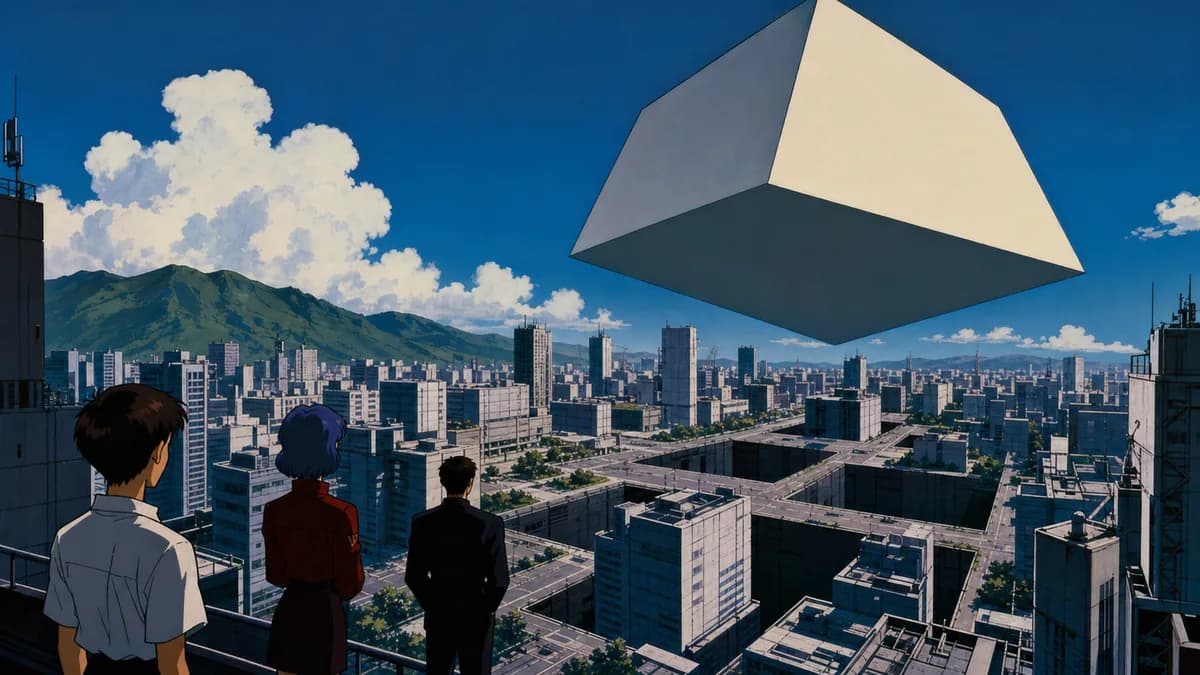
The deconstruction is the headline, but it goes deeper than 'sad robots.' Evangelion is about depression, intimacy, and the terror of being known - its recurring image is people who crave closeness yet flinch from the pain it brings. It drapes that in dense religious iconography, from Angels to crosses to Kabbalistic diagrams, that is half genuine mythology and half deliberate aesthetic provocation; don't expect every symbol to resolve. What set it apart, and still does, is the willingness to point the camera inward at the exact moment a normal mecha show would cue the triumphant finale. Instead of a last stand, it stages a raw psychological reckoning. That move detonated the genre and rewired the medium - you can trace its fingerprints across decades of introspective sci-fi, from RahXephon to Serial Experiments Lain to countless 'the real enemy was inside us' imitators. It also proved anime could be uncomfortably personal art, not just entertainment. Love it or reject it, almost everything ambitious that followed is in conversation with it.
Strengths & Shortcomings
What soars: ambition, psychological honesty, iconic characters, and a craft language so influential it became standard vocabulary. When Evangelion connects, it's overwhelming - there's genuinely nothing else like the feeling of its best episodes. What stumbles is inseparable from what soars. The production strain in the final act is real, and the original ending - an abstract, budget-starved plunge into Shinji's psyche - is one of the most polarizing conclusions in anime, celebrated as a brave interior climax and condemned as an incoherent cop-out in roughly equal measure. The dense symbolism can read as profundity or as noise depending on your patience. Shinji's passivity alienates viewers who want a protagonist to root for. And the whole thing is heavy - this is not comfort viewing, and it can genuinely deepen a bad headspace. It rewards analysis and rewatching more than a casual first pass. Go in expecting a challenging, sometimes frustrating art object rather than a clean mecha thrill ride, and its rough edges become part of why it endures.
The Verdict
Neon Genesis Evangelion is essential and exhausting, a masterpiece you might not enjoy in the ordinary sense - and that's exactly why it matters. It took the most commercial genre in anime and used it to say something bruising and true about loneliness, and the medium never fully went back. Newcomers should brace for a slow burn that turns strange, a protagonist built to unsettle, and an ending that starts fights to this day. But its influence is inescapable and its highs are among the medium's most powerful. An 8.9 reflects a genuine landmark held just short of perfection by its own difficulty and its divisive finish. Watch the series, then watch The End of Evangelion - the theatrical companion that re-stages the conclusion - and decide for yourself which ending you believe. Either way, you'll understand why so much of what came after it changed.
FAQ
Yes, if you value ambition over comfort. It's one of the most influential and psychologically daring anime ever made, but it's demanding and emotionally heavy - approach it as an essential piece of the medium's history rather than a relaxing weekend watch.