
Dragon Ball Review: Where the Legend Actually Begins
 By Mika Tanabe · Editor
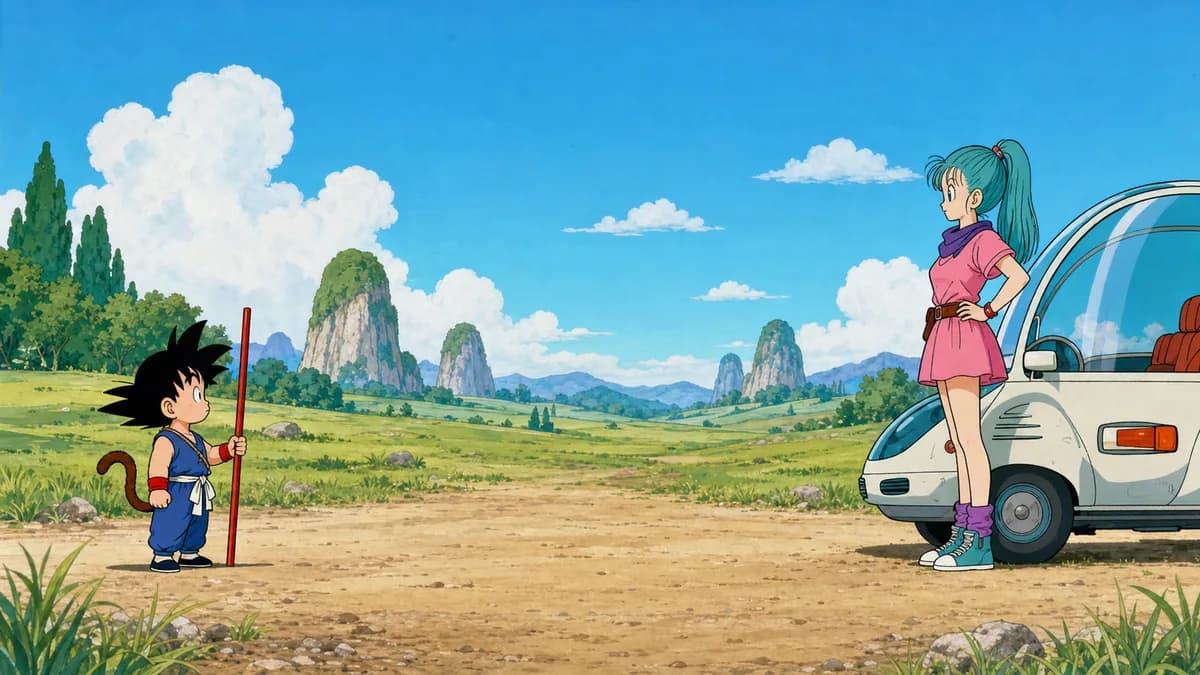
Say 'Dragon Ball' to most people and they picture golden hair, screaming transformations, and exploding planets. That's Z. This is the show that came first, and it's a completely different animal. The original Dragon Ball follows a strange little kid with a monkey tail named Goku, who meets a teenage inventor named Bulma and gets pulled into a treasure hunt for seven wish-granting orbs. What follows is less a superhero saga and more a rowdy martial-arts road trip stitched together with slapstick, kung-fu-movie homage, and Akira Toriyama's gleeful gag sense. If you only know the franchise by its later reputation for power levels and hour-long standoffs, the original will surprise you with how light on its feet it is.
Story & Premise
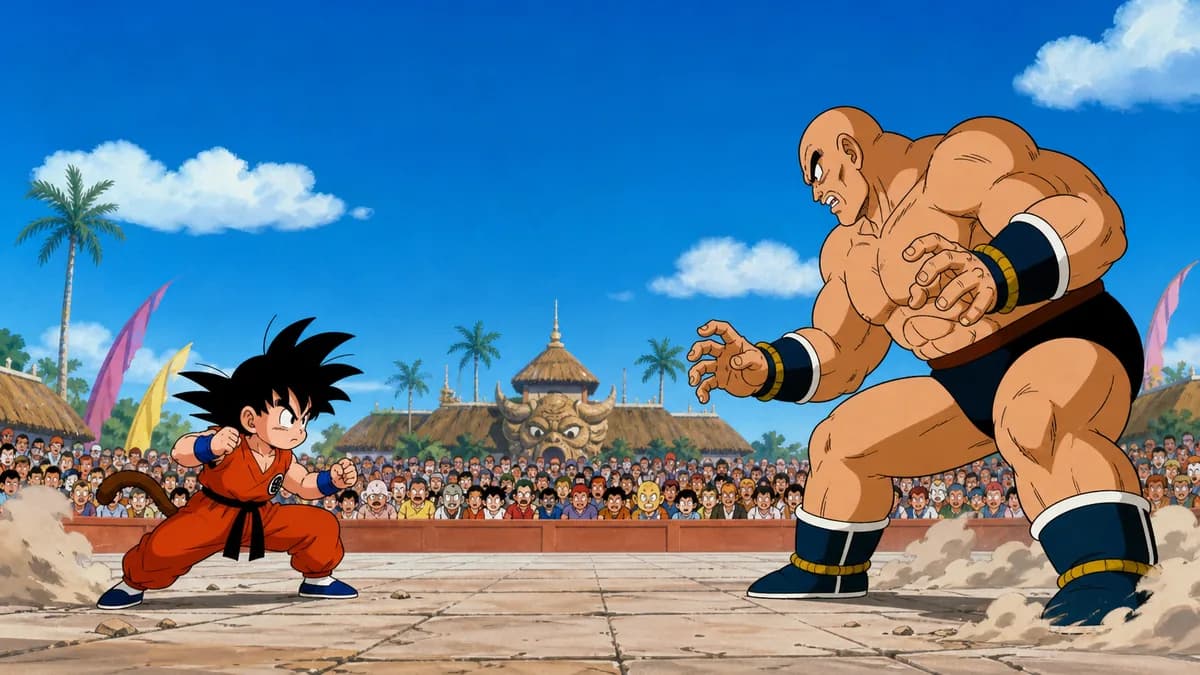
The setup is disarmingly simple: gather seven Dragon Balls scattered across the world, summon the dragon Shenron, and claim a single wish. Bulma wants that wish; Goku just wants to protect the four-star ball his late grandfather left him. That mismatch kicks off a journey that keeps reinventing itself. One stretch plays like a buddy-comedy road trip; another becomes a full martial-arts tournament; later the story hardens into a war against the villainous Red Ribbon Army, then a hunt for a body-swapping demon king. Crucially, this is adventure first and power fantasy a distant second. Goku isn't unbeatable, he loses, gets hurt, and has to out-think opponents as often as out-punch them. The pacing is episodic and wandering by design, closer to a serialized comic strip than a tightly plotted epic. Toriyama borrows the skeleton of Journey to the West, a tailed monkey boy, a magic staff, a flying cloud, and fills it with gags, gadgets, and inventive fights. It's shonen before shonen calcified into a formula.
Characters
Goku is the engine, and he's a wonderful oddity here: feral, food-obsessed, endlessly curious, and so naive about the wider world that half the comedy writes itself. He's a hero with no ego, which makes him easy to root for across a long run. Bulma is arguably the real co-lead, a sharp, vain, tech-genius teenager whose curiosity literally starts the whole saga. She's flawed and funny in ways the franchise slowly forgets later. Master Roshi, the Turtle Hermit, is the series' secret weapon: a legendary martial artist hiding behind the mask of a lecherous old beach bum, and his training arc gives the show real heart. Then there's Krillin, who enters as Goku's pint-sized rival and becomes his closest friend, their bond is the emotional spine beneath all the fighting. Around them orbit Yamcha the reformed desert bandit, the shapeshifter Puar, and a rotating cast of weirdos. The character work is broad and cartoonish, but the core group shares a chemistry the later series never quite recaptured at this scale.
Animation & Sound
Let's be honest about the production: this is an 80s classic, and it looks and sounds like one. The animation is hand-inked cel work on a limited frame budget, so expect held poses, recycled cuts, and the occasional wonky proportion in quieter stretches. By modern standards it's undeniably dated, and viewers raised on crisp digital sakuga may need an adjustment period. But Toriyama's design language carries it: clean, readable silhouettes, expressive faces, and a knack for making a punch land with weight even on a budget. The fight choreography is often genuinely clever, leaning on tricks and terrain over raw spectacle. The sound is pure vintage charm, a bright, bouncy opening theme that doubles as a nostalgia trigger, chunky sound effects, and a distinctive, high-energy voice for young Goku that's iconic in the original Japanese. It's not a technical showcase and never pretends to be. Approach it as an animated artifact of its era with enormous personality, and the rough edges become part of the appeal rather than a dealbreaker.
Themes & What Sets It Apart
What sets the original apart is that it isn't really about getting stronger, it's about growing up. The throughline is a boy leaving the isolation of his mountain home and discovering the world one strange encounter at a time. Its DNA is martial-arts cinema and Chinese adventure lore, not the sci-fi arms race Z would become. Where the sequel runs on escalation, every villain a new galactic threat, every fight a longer transformation, the original runs on variety and wit. A tournament arc rewards discipline and clever technique over brute force. Villains are schemers and eccentrics before they're world-enders. There's a coming-of-age warmth here, and a comedic looseness, that the franchise deliberately traded away for operatic stakes. That's the real value proposition: the original Dragon Ball preserves a tone the series abandoned. It's proof that this world began as a playful martial-arts fairy tale about a weird little kid, long before it became the template every battle-shonen would chase for decades.
Strengths & Shortcomings
The strengths are real: bottomless charm, a loose inventive imagination, and a version of these characters at their funniest and most human. The comedy still lands, the tournament arcs are legitimately gripping, and there's a lightness here the franchise never got back. But the shortcomings are just as real, and worth naming plainly. This is a long-running series, and it shows, the pacing wanders, and stretches of anime-original filler pad out the source material with detours that go nowhere. By modern binge standards it's slow; individual chapters breathe in a way that can test viewers used to tighter storytelling. The humor is very much of its time, including some ecchi gags and dated slapstick that don't all age gracefully. And the animation, as noted, is a product of a leaner era. None of this sinks the show, but walk in expecting a vintage, meandering adventure rather than a lean modern thriller. Manage those expectations and the rough patches are easy to forgive; ignore them and the slow parts may frustrate.
The Verdict
The original Dragon Ball is the rare foundation story that's genuinely worth the trip back. It's rougher, sillier, and slower than the juggernaut it spawned, but it's also warmer, weirder, and more human. This is where the legend actually begins: not with a scream and a power level, but with a curious kid, a treasure hunt, and a martial-arts world full of oddballs. It won't be for everyone. If you need slick animation and relentless pacing, the dated production and wandering plot will test your patience. But if you can meet an 80s classic on its own terms, you'll find one of the most charming adventure comedies the medium has produced, and the essential groundwork for everything that followed. We're scoring it 88, a small triumph of tone that shows its age but never loses its heart. Start here, and Goku's whole story finally makes sense.
FAQ
Yes, with the right expectations. If you love adventure, martial arts, and character-driven comedy, the original Dragon Ball is a delight and a foundational piece of anime history. It's less relentless than its sequels and more of a rambling, good-natured journey. Go in for the charm and the world-building rather than epic battles, and it holds up as one of the genre's formative classics.