Dandadan Review: The Most Unhinged Anime of Its Year, in the Best Way
 By Mika Tanabe · Editor
Most anime settle into a lane. Dandadan stamps on the accelerator and barrels through every lane it can find. Science Saru's adaptation of the hit manga tosses aliens, ghosts, curses, and a fumbling first crush into the same story, then makes the whole ridiculous mixture work. One minute it is loudly crude and proud of its juvenile streak. The next, it catches you with a quiet ache. This supernatural action comedy keeps finding real feeling between the filthy jokes and exploding yokai. My headline take is simple: this is the most purely entertaining show of its year. The chaos lands because every detonation has a beating heart attached to it. You may want to brace yourself before pressing play, but you should press play.
The Story and Its Wild Setup
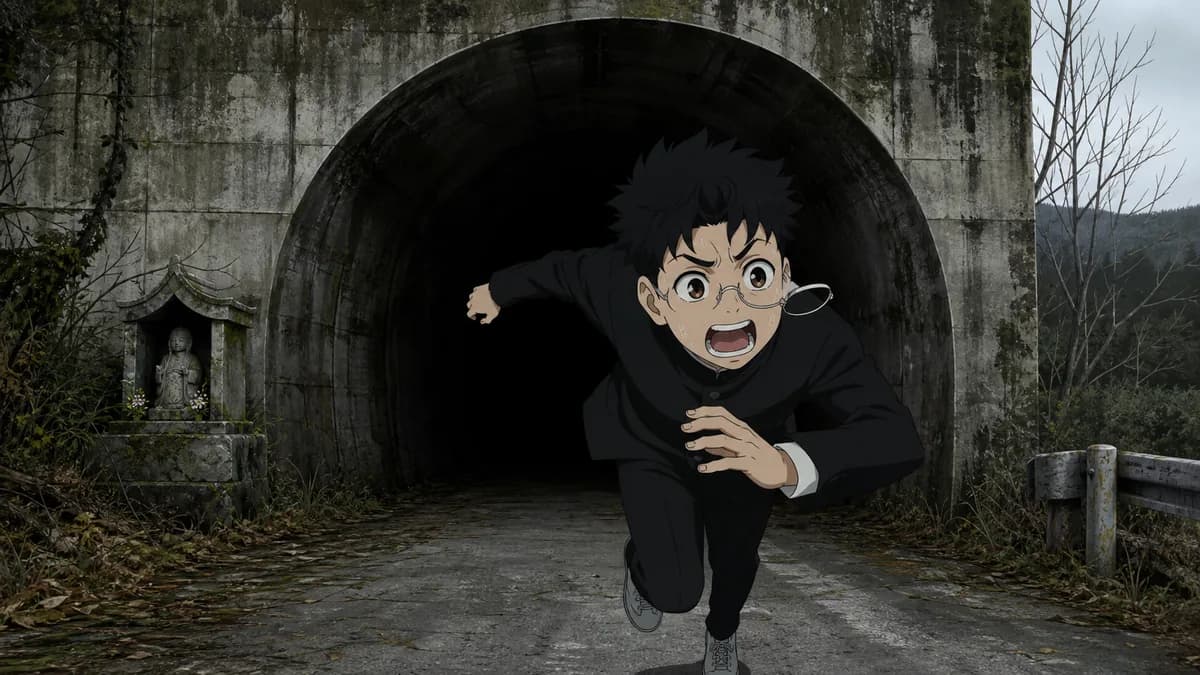
The setup begins with a dare that goes catastrophically right. Momo Ayase is a sharp-tongued gyaru from a bloodline of spirit mediums. She believes in ghosts but thinks aliens are nonsense. Her scrawny, occult-obsessed classmate believes the exact opposite: aliens are real, while ghosts deserve an eye roll. Momo saves him from bullies and promptly nicknames him Okarun. Determined to prove each other wrong, they split up and visit the places most likely to settle the argument. She stakes out an alien hotspot in a derelict hospital, while he enters a tunnel with a nasty haunted reputation. They are both catastrophically correct. Little grey visitors snatch Momo. Okarun crosses paths with Turbo Granny, a vengeful yokai who curses him and steals something a teenage boy would very much like to get back. Momo's latent psychic power erupts in time to save them, welding the pair together for everything that follows. The series then races through a monster-of-the-week gauntlet. Every stretch seems to bring another spook or alien, followed by a fresh escalation, while a slow romance grows between two teenagers who refuse to admit what is happening. On paper, all of this sounds impossible to control. In practice, the story keeps its footing by moving with total conviction. The next threat arrives before the energy can sag, yet Momo and Okarun still get enough room to become people rather than delivery systems for jokes and fights. The plot is chaos with a firm grip on its own momentum.
The Characters Make the Chaos Matter
The romance powers the series, largely because Momo and Okarun feel specific rather than assembled from familiar parts. Momo is loud and brave, with a fierce loyalty that sends her straight into a fight with an eldritch horror to protect the boy she insists she does not like. Okarun is twitchy and sweet. His courage emerges quietly once he finally has something worth being brave for. Their relationship avoids the stale version of will-they-won't-they tension. They plainly adore each other, and the obstacle is believable teenage embarrassment instead of a manufactured misunderstanding that could disappear after one honest conversation. That makes their awkwardness genuinely charming. The supporting cast does not fade behind them. Aira Shiratori enters as a self-styled psychic rival, crashes into their lives, and gradually becomes part of the group. Seiko, Momo's outrageous medium grandmother, takes possession of every frame she is in. Even the creatures have room to change roles. Turbo Granny begins as a terrifying threat and ends up becoming an unexpectedly delightful sidekick. As the roster expands, the ensemble gets warmer rather than busier. Each addition changes the chemistry without pushing the central pair aside. Momo remains the person everyone seems to orbit, and her stubborn compassion gives the group its shape. Okarun, meanwhile, supplies the vulnerability that keeps the growing romance from turning into another gag. Their connection is not a break from the supernatural story. It is the reason the supernatural story has any emotional weight.
Animation and Sound at Full Speed
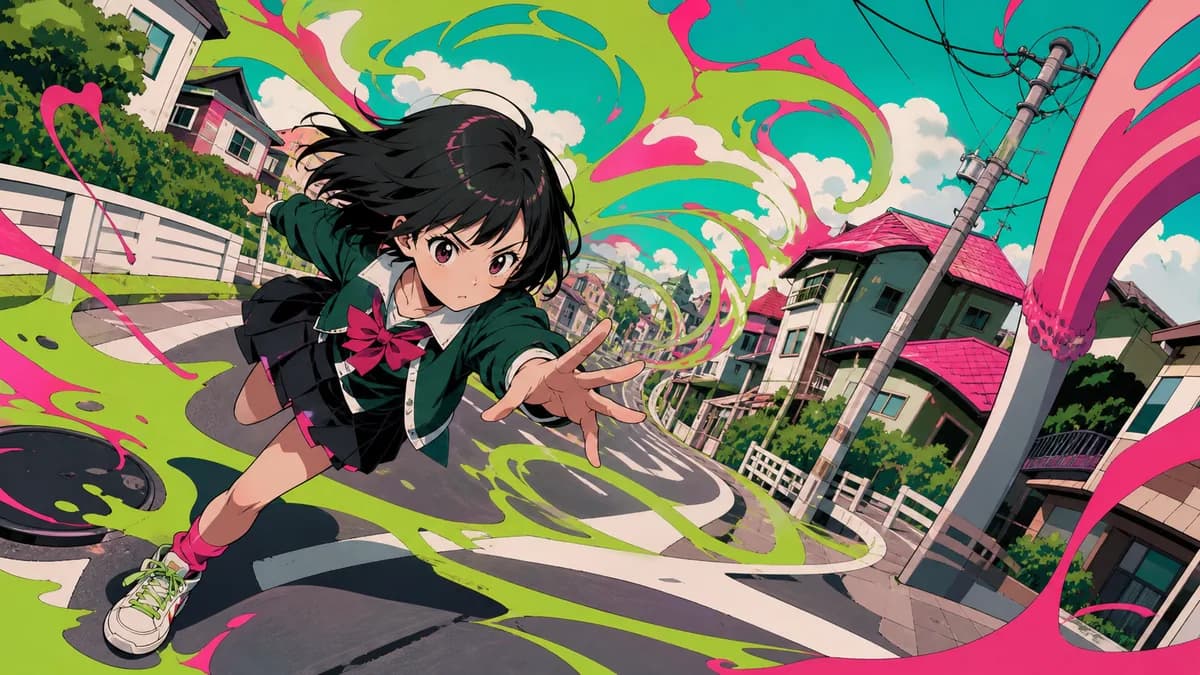
Science Saru pushes its style as far as the material can take it, which turns out to be very far indeed. The studio's fluid, rubbery animation is willing to bend anatomy for a joke and distort it again for a scare. That approach fits this deranged material perfectly, and the adaptation takes advantage of it at every opportunity. Faces stretch into grotesque masks. Backgrounds dissolve into psychedelic fields of color. During fights, the camera lunges forward with the nervous urgency of handheld footage. Naoyuki Onda's character designs give the human cast enough grounding and expression that the madness around them feels even wilder. The monsters and aliens are allowed to look properly unsettling and strange. The action staging might be the production's best trick. It stays kinetic and weighty without losing clarity, even when everyone is moving at full sprint. Occasional stylized flourishes give the animators space to show off, and the results justify the confidence. The opening sequence is an instant classic built on pure momentum, the rare opening I never want to skip. Eriko Kimura's sound design gives physical force to every squelch and thud, then makes the psychic shockwaves feel large enough to rattle the room. The score is just as alert. It knows when to drive a scene and when to fall silent so a quiet, painful beat can breathe. The production is a technical showcase, but it never treats technique as a museum piece. Every warped drawing and ugly little sound is in on the joke, and every sudden hush knows exactly what emotion it is protecting.
Why the Genre Pileup Works
Remove the aliens and exorcisms, and Dandadan remains a startlingly sincere story about being sixteen. It understands the terror of liking someone and the defensive armor people wear to conceal it. The relief of finding people who feel like home matters just as much. The entire show depends on that understanding. Supernatural mayhem becomes the delivery method for recognizably human feelings. The series can move from slapstick into genuine tenderness inside a single scene without making the transition feel mechanical. Its goofball reputation also hides how willing it is to enter darker territory. Beneath the jokes, the story confronts grief and abandonment. It looks at the ugliness people inflict on the vulnerable with far greater care than its crude surface would suggest. This emotional seriousness does not cancel the silliness, and the silliness does not make the painful material disposable. They sit together in the same strange world. That range separates Dandadan from shows that pick one genre and stay there. It handles action alongside comedy, while romance and horror keep pressing in from the edges. No single mode takes control for long. A frightening encounter can become ridiculous, and a ridiculous encounter can expose a wound that the characters had been hiding. The resulting blend feels coherent because the point of view never wavers. Everything is filtered through excitable, embarrassed teenagers trying to protect one another before they understand their own feelings. Maximalism suits this story. The excess is a deliberate expression of who these characters are, not evidence that the series has forgotten what it wants to be.
Where It Excels and Where It Stumbles
Dandadan is at its best when its momentum, animation, humor, and concealed emotional warmth all pull in the same direction. When that happens, very few shows are this much fun. Its weaknesses come from the same refusal to hold back. The crude comedy never really lets up, and the first hook depends on a lewd gag that many viewers will reject outright. Anyone who winces at below-the-belt humor will find the opening stretch littered with reasons to stop. The tonal swings create a more serious problem. The show can jump from broad slapstick to disturbing subject matter, including sexual violence played uncomfortably close to comedy, and some viewers will reasonably decide that the landing has not been earned. Its intensity can also become tiring. There is almost no downshift, so watching many episodes in one sitting can leave you wrung out even when you are enjoying yourself. The structure brings another limitation. This is pure setup, a single cour that finishes as a launchpad instead of a destination. Viewers expecting a self-contained arc need to adjust those expectations. None of these issues sinks the series, but none should be brushed aside either. They explain why someone drawn to the animation or romance could still bounce off it hard. Dandadan asks you to accept its bad taste and sudden darkness along with everything it does brilliantly. It also leaves you with an unfinished story. For the right audience, the trade is easy. For somebody hoping for restraint or closure, it may be the exact opposite.
The Verdict
Dandadan earns its 8.6 because it feels like the most alive anime on the board. The production is a technical marvel with a filthy sense of humor and an improbable tenderness. It made me laugh and wince. Before the same stretch was over, it also caught me getting quietly choked up. I dock it a little for the relentless crudeness that will genuinely repel some viewers. Some tonal swings overreach, and the ending works less as an ending than a door being held open. Those flaws come with a series willing to swing this hard. I would still choose its excess over a safer show with nothing personal to say. This cannot be a polite, easy recommendation for everybody. It is loud and weird, and it knows exactly how confident it can afford to be. Anyone who fell for the manic tenderness of Chainsaw Man or Mob Psycho 100 should feel at home here. If that describes you, Dandadan is essential viewing. Get on board and enjoy the collision.
FAQ
Yes, emphatically, though the crude humor comes with the recommendation. This is one of the most purely entertaining and visually stunning anime of its era, and the romance beneath all that chaos gives it staying power. Viewers who cannot stand raunchy or occasionally dark jokes should treat that as a serious warning. For everyone else, it is essential viewing and an easy show to recommend with real enthusiasm.