Cyberpunk: Edgerunners Review: Trigger's Neon Tragedy
 By Mika Tanabe · Editor
Some adaptations mostly exist to steer you toward the thing they are based on. Cyberpunk: Edgerunners managed that job, sending a wave of players back to the source game, but it also stands on its own with startling confidence. The promotional purpose is easy to see; the surprise is how little the series depends on it. Studio Trigger takes Night City, the neon-choked megalopolis of CD Projekt Red's Cyberpunk 2077, and carves out a self-contained tragedy about David Martinez, a poor kid who wants more than the gutter will ever hand him. The series is loud and gorgeous, and from the opening frame it knows exactly how badly it intends to hurt. Put plainly, this is a near-flawless piece of genre filmmaking and one of the strongest productions ever to carry the Netflix name.
The Story and Its Premise
David is a poor kid scraping by in a city that strips the underclass for parts. When tragedy takes the little he has, he makes the choice Night City rewards: he plugs in military-grade hardware that his body was never built to hold and becomes a merc. He soon falls in with Maine's crew of edgerunners, outlaw mercenaries who handle the jobs corporations will not put their names on. The premise works because the series commits completely to David's rise and fall. It tells you almost at once what kind of story you are watching. Calling it a tragedy gives away less than it confirms the promise made in those early scenes. That early candour also changes the tension. The suspense comes from watching David push onward even after the direction of travel is clear. Across a compact single cour, the plot tears ahead like a getaway car. Each job raises the stakes. Every win takes a heavier payment, while the distance between David's dream and the machinery grinding under him grows wider. The rewards never last long enough to cancel their cost. Few modern anime are built this tightly. Every beat in the run has a purpose, and the speed never feels like an excuse for empty motion.
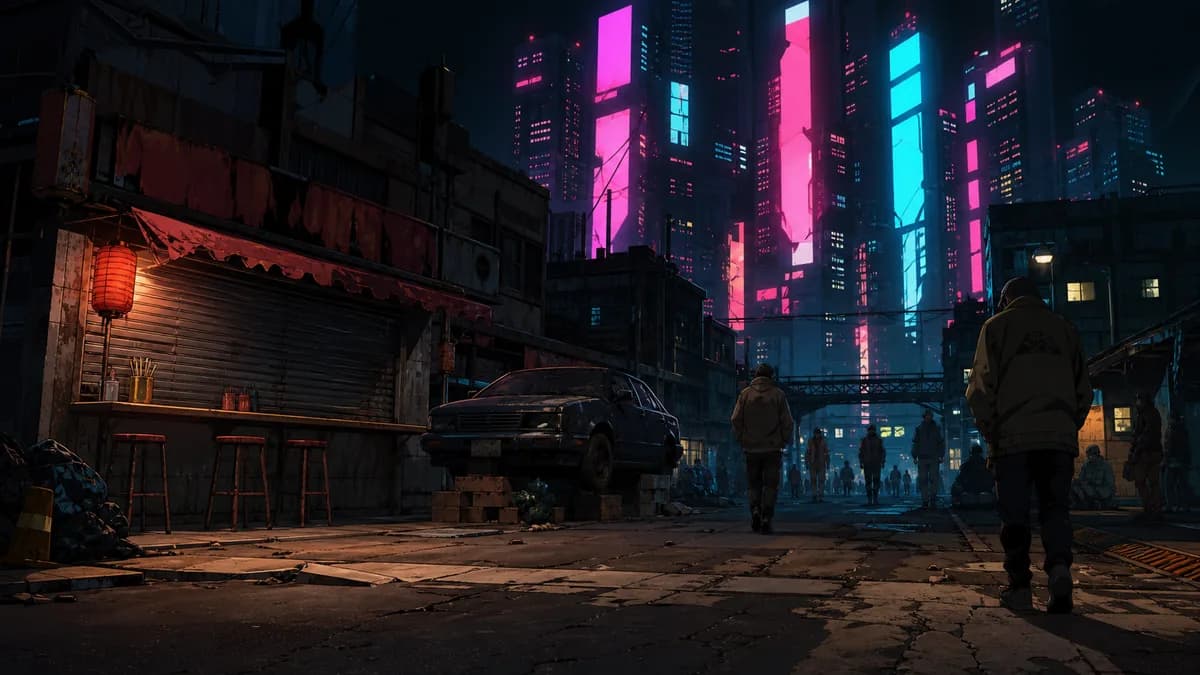
The People Who Make It Hurt
David carries the show, but Lucy is the reason its emotional pull lasts. She is the netrunner who dreams of reaching the moon, and she sees in David a route out of Night City that she had stopped trusting could exist. Their romance supplies the human pulse beneath all the chrome, and the pain it causes feels fully earned. The relationship works because the dream of escape is personal to both of them, even when they do not approach it in the same way. Maine's crew gathers around them as a scruffy found family. Rebecca is the foul-mouthed gremlin who steals nearly every scene she enters. Dorio is steady, Pilar is twitchy, and Kiwi and Falco remain wary. Maine himself fills the mentor role while giving you plenty of reason to distrust mentors. Above everyone hangs Adam Smasher, a wall of murderous metal who can terrify without saying a word. The cast stays small enough for every arc to remain clear. You understand each person and exactly what each could lose. That clarity gives even the smaller roles a firm place in the crew. When the losses come, they register as body blows because the characters never feel like pieces being shifted around for the plot.
Animation and Sound
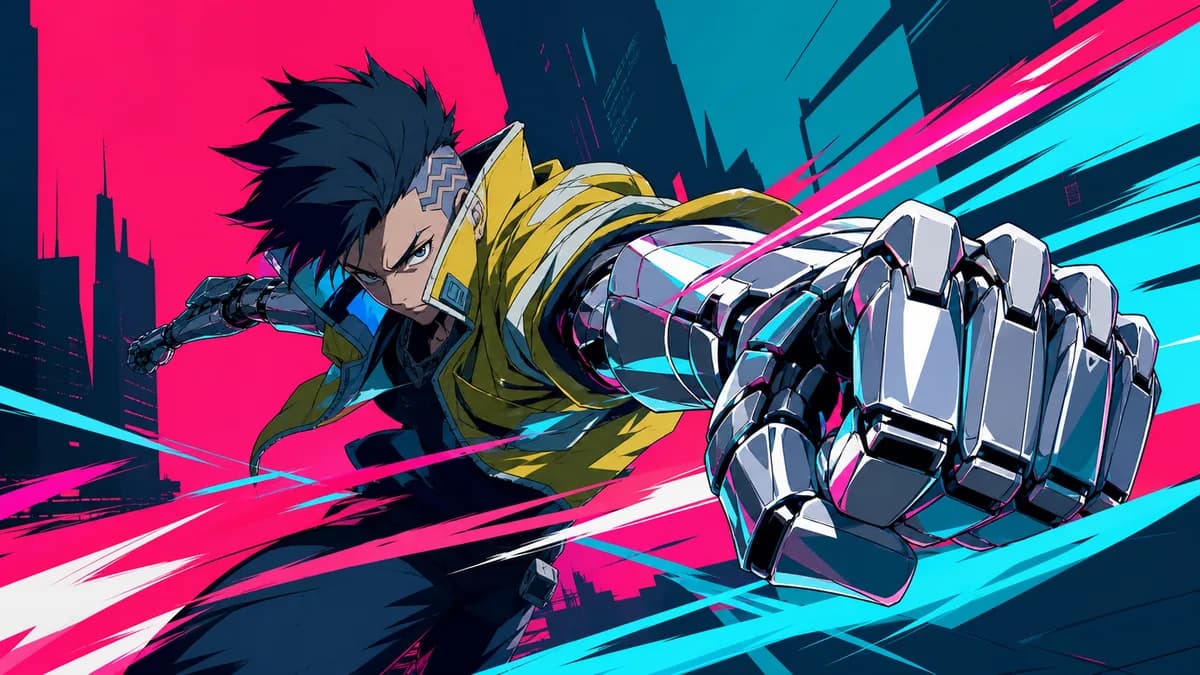
This is Trigger at full throttle. Director Hiroyuki Imaishi, the kinetic mind behind Gurren Lagann, Kill la Kill, and Promare, treats Night City as permission to push every sensation to its limit. Bodies stretch and snap in the studio's unmistakable rubber-limbed house style. Fights burst into tracer fire, arterial spray, and camera moves that seem physically impossible. You Yoshinari's character designs give each person a silhouette that reads instantly. That readability matters when the action moves this quickly; the screen can erupt without turning the characters into visual clutter. Yet the craft has more to say than simple noise. As David's grip on himself starts to fray, the animation buries him in overstimulating neon. The images express his deterioration instead of leaving that work entirely to the script, something most action shows never try. The excess follows his state of mind, so the spectacle and the character arc keep pulling in the same direction. The soundtrack cuts just as sharply. Franz Ferdinand's opening theme brings the swagger, while a wall of licensed synth-pop and carefully placed needle-drops turns important sequences into something closer to music videos than television. Night City is ugly by design, but the series makes that ugliness astonishingly beautiful without sanding away any of its filth.
The Ideas Beneath the Chrome
Take away the guns and Edgerunners becomes a story about the cost of upgrading yourself in a society that values only what you can bolt onto your body. Each implant David installs gives him a little more power while using up a little more of the person he once was. His progress and his destruction are therefore bound together. Cyberpsychosis, which haunts this setting, turns the price of chasing status through your own flesh into a literal condition. The class commentary is furious and clear-eyed even when dressed up as action spectacle. Corporations function as gods. The poor become raw material, and ambition serves as the trap that persuades people to enter the grinder willingly. The system does not have to conceal what it does because hope keeps supplying it with willing victims. Edgerunners plainly reveres cyberpunk classics such as the Akiras and Ghost in the Shells, but its tenderness gives it a different temperature. Much of the genre runs cold. This story holds onto warmth until it no longer can, which makes the downward spiral so difficult to watch. Its tragedy does not settle for edgy nihilism. It argues that a world built this way will always consume certain people first.
Where It Excels and Where It Stumbles
The series excels because its momentum is backed by real feeling and exceptionally strong craft. It hits with the force of a freight train, then closes on an ending that earns every bit of its devastation. Rebecca alone comes close to justifying the price of admission. Its weaknesses grow from the same speed that makes it thrilling. The breakneck pace keeps the story driving forward, but a few members of the crew remain sketches instead of fully developed people. By the finish, you may wish the show had spent one more arc with them before taking them away. More time would have made those departures richer without changing where the plot was headed. It also uses gratuitous nudity and gore with enough frequency that they sometimes feel like tonal habits instead of deliberate choices. The occasional ecchi wink sits uneasily beside the story's sincere emotion, especially when the surrounding material is asking to be taken seriously. The brutality is real as well; its body horror cannot be dismissed as decorative set dressing. Anyone looking for a slow character study, or anyone unable to stomach splatter, may reject it outright. Those problems still feel minor beside a work made with this much control and conviction.
The Verdict
Cyberpunk: Edgerunners is a rare tie-in that escapes the limits of its marketing assignment and becomes essential on its own terms. It delivers a complete, self-contained tragedy with greater visual invention and emotional force than most original productions achieve in three times the runtime. You do not need to have touched the game for it to flatten you, and familiarity with Night City is no requirement for understanding David's story. My score is 9.0. The missing point reflects a pace that sometimes outruns its own feelings and a streak of fanservice the series never needed. Both are small costs beside a genuine high point for the medium. If you have any tolerance for this level of violence, few modern Netflix anime are easier to call unmissable. Go in prepared for pain and give the story room to do its work.
FAQ
Absolutely. It is a tight, self-contained tragedy with elite-tier animation and a romance that carries real weight. Viewers who can handle heavy violence will find one of the easiest recommendations in the modern Netflix catalog.