Cowboy Bebop Review: Still the Coolest Anime Ever Made
 By Mika Tanabe · Editor
Cowboy Bebop still earns its swagger, even when its bounty hunters can barely earn a living. Shinichiro Watanabe's space-western noir follows the broke crew of the Bebop, a battered spaceship traveling through a solar system that feels thoroughly lived in. The gunfights have the loose rhythm of the jazz on the soundtrack, but the appeal goes deeper than watching cool people shoot their way out of trouble. These people are lonely, and their regrets keep pulling them toward lives they claim to have left behind. Their moods often do more to carry a story than the job they're chasing. Yoko Kanno's music moves freely between genres, while Sunrise's animation still puts plenty of newer productions to shame. The bounty-hunting premise gives Watanabe room to make something unusually sad out of pulp material. Decades later, it's easy to understand why viewers still use this series to persuade anime skeptics that the medium can be art. A few wandering episodes haven't dulled that argument.
Story & Premise
Spike and Jet take bounty-hunting jobs from their ship, the Bebop, across a colonized solar system. A catastrophe has left Earth barely livable. Their operation acquires some unlikely company: Faye is a con artist with heavy debts and no memory of her past, while Edward is a feral kid hacker. Ein, a suspiciously clever corgi, joins them too. Most installments, which the show calls 'sessions', tell a standalone story. The crew might chase a bounty or get caught up in a heist, and cons have a habit of going wrong. That freedom gives the series time to spend with its cast between the scattered revelations about Spike's past. Everyone aboard has something following them, even when the immediate problem looks like another job. Bebop leaves much of that history unspoken. A glance can suggest what a speech would spell out, and the show expects you to pay attention. By the time those ongoing stories demand an answer, you've spent enough ordinary time with the crew to care about what they stand to lose. The loose structure makes those later payoffs hurt.
Characters
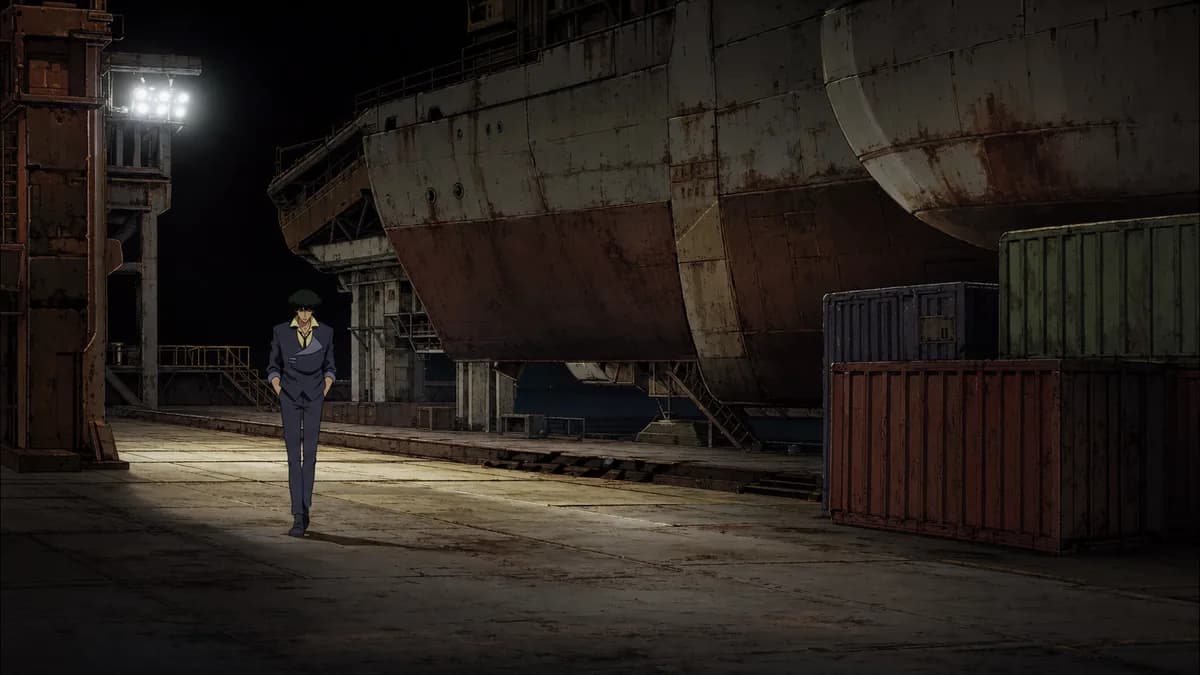
The action gets your attention, but the crew gives Cowboy Bebop its staying power. Spike Spiegel makes martial arts look almost casual, moving with loose limbs and the expression of someone who would rather be elsewhere. His sleepy jokes and lazy smirk conceal grief that the series gradually lets you see. Jet Black, an ex-cop with a mechanical arm, takes the group's fatherly role. His practical gruffness comes with a loyalty he rarely needs to announce. Faye Valentine has the presentation of a fan-service character, yet her missing memories give her defensiveness a painful reason. Her bravado protects someone who doesn't know where she came from. Edward supplies manic comic relief, and Ein is the data dog, but both become emotionally important as well. You believe in this crew through the way they bicker and sit through meals without speaking. They have become a family, however unlikely they are to admit it. The adults remain funny and capable of sabotaging themselves; the show doesn't hand them neat redemption stories. Their wounds don't disappear just because they've found people to share a ship with. That makes the affection between them feel earned.
Animation & Sound
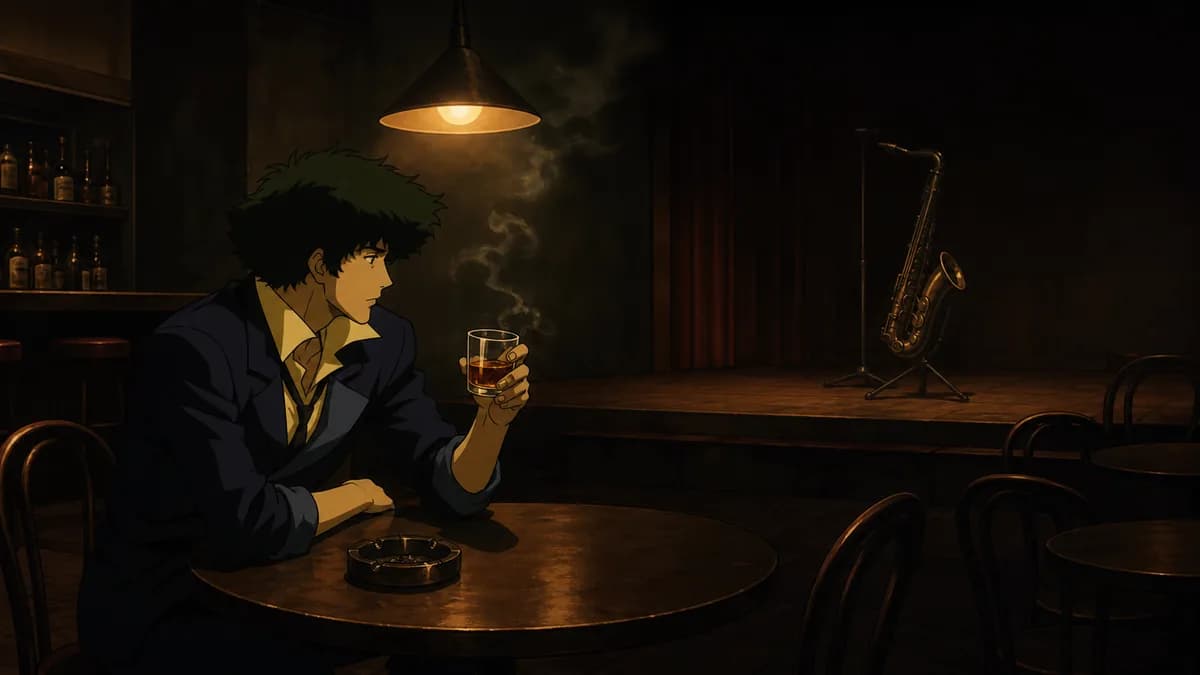
Cowboy Bebop makes an unusually strong case for treating the music as a lead character. Yoko Kanno and her band, the Seatbelts, can move from frantic big-band bebop into a bluesy ballad, then bring in snarling hard rock when a session calls for it. The editing follows the music closely enough that some action plays like a lethal music video. 'Tank!' remains my pick for the most electric ninety seconds of opening animation in anime. Sunrise matches that soundtrack with fights whose movement has real martial-arts logic. You can feel the weight of a hit because the choreography shows how it happens instead of substituting speed lines. The ship dogfights still compare favorably with almost anything produced since. The quieter animation deserves equal attention. Cigarette smoke curls through a scene, and neon spreads across wet streets. A raised eyebrow or a slumped shoulder can carry the feeling without dialogue. The compositions invite the same attention you'd give a carefully framed film still. Watanabe's direction and Kanno's music meet Sunrise's work at an exceptional level; individual cuts show how closely those contributions fit together.
Themes & What Sets It Apart
All that cool has a sad purpose. Cowboy Bebop keeps returning to people who want to escape their past and cannot manage it. Every major character is trying to leave behind some version of themselves, and the series gives those attempts the melancholy of noir with the larger, almost mythic feeling of a Western. Watanabe resisted being confined to a single genre. A session can begin with slapstick and pass through horror before arriving at hardboiled tragedy, with the changes feeling like part of the same story. That flexibility lets the show be funny without making its characters' despair feel less serious. Beneath their poses is the fear that they're already living like ghosts, unable to imagine much beyond what they've lost. Bebop asks whether someone in that state can still dream of a different life. The finale answers clearly and painfully, without needing its ending spoiled here. Its closing line is remarkably restrained for the force it carries. The entertainment matters, but Watanabe also makes room for hurt that a cleaner adventure might have brushed aside. That's why the sadness feels inseparable from the style.
Strengths & Shortcomings
The episodic format gives Cowboy Bebop room for its best work, and it also leaves room for sessions that coast. The hallucinatory mushroom trip and the convenience-store misadventure can feel like filler when their atmosphere offers more than their stories. A viewer expecting a tightly plotted, serialized epic will have to adjust to the recurring bounty jobs and stretches that seem to wander. The central mythology is deliberately sparse, with information arriving in fragments; wanting a fuller explanation can make that restraint frustrating. Edward presents a different obstacle. The manic-child comedy will delight some viewers and wear on others, and the show commits to it. A couple of moments involving Faye also depend on tropes that the era hadn't moved beyond. These weaknesses deserve to count even when the surrounding work is this good. I forgive the detours because the strongest sessions make such effective use of the same freedom, though I wouldn't call every episode equally rewarding. Bebop is an uneven masterpiece, and returning to it doesn't require pretending the weaker sessions have somehow improved.
The Verdict
I'd recommend Cowboy Bebop to a first-time anime viewer as readily as to someone who's been watching for a decade. The appeal is there in Spike's casual movement and in the discomfort of a shared meal aboard the ship, long before his past takes over. Kanno's music makes returning to those scenes a pleasure, even with the ending's sadness waiting ahead. The series helped expand people's expectations of what anime could do, and its age hasn't taken away its confidence. Some sessions drift, and the plot leaves much of the work to atmosphere. Those limits matter if you want an intricate ongoing story, but they don't outweigh how closely the music and character work fit together. Few anime make grief feel so present beneath such an inviting surface. I keep wanting to spend time aboard the Bebop despite knowing how hard the goodbye will be.
FAQ
Yes, especially if you enjoy noir or space westerns and want characters whose jokes conceal real hurt. It tells a complete story, with enough humor to make the sad stretches sharper and music that deserves attention of its own. Even if you only plan to watch a handful of anime, its combination of bounty-hunting action and time spent with the crew makes it a strong choice.