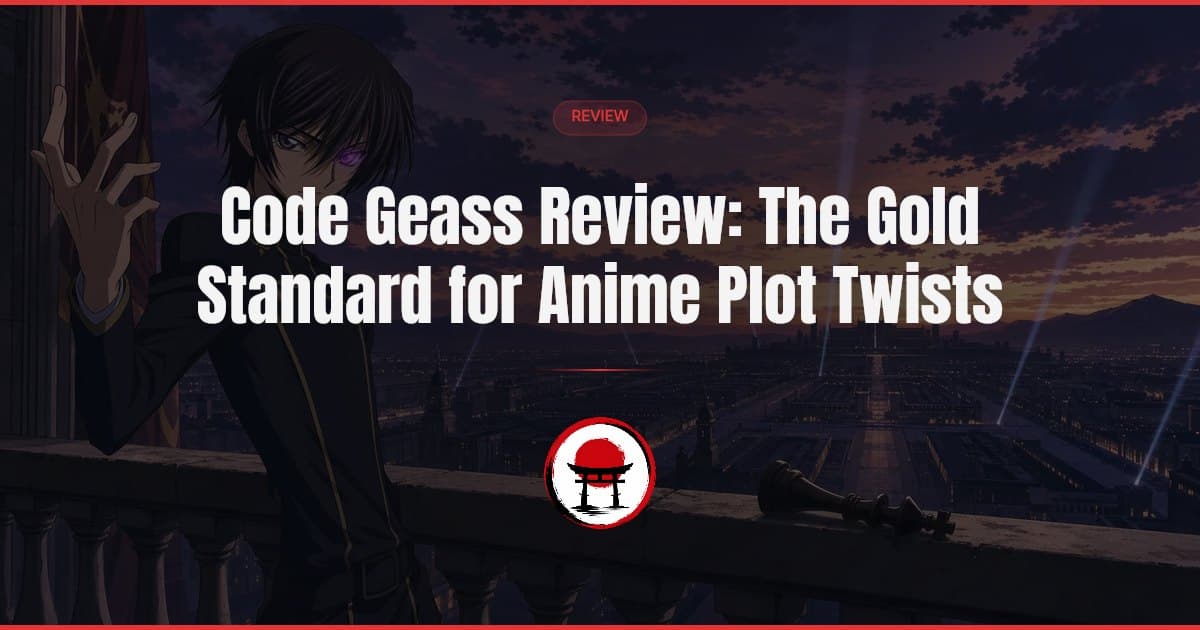
Code Geass Review: The Gold Standard for Anime Plot Twists
 By Mika Tanabe · Editor
Some anime ease you into their worlds. Code Geass catches you off guard. It begins as a sleek mecha story about an occupied Japan, then turns into a stranger, more charged kind of thriller. At its center is a brilliant and furious young man who has gained the power to make anyone obey one command. Sunrise's late-2000s landmark packs political intrigue, high-school comedy and giant-robot spectacle into the same volatile story, then keeps pushing until something breaks. The show can be melodramatic and occasionally absurd, but it never backs away from a dangerous storytelling choice. Nearly two decades on, fans still bring it up whenever the conversation turns to anime's best plot twists. That reputation is deserved, although the series sometimes strains under the scale of its own ambitions.
The Story and Its Setup
The premise is ready to explode from the opening episode. The Holy Empire of Britannia has crushed and annexed Japan, taken away its name and reduced it to a numbered colony. Its people are treated as second-class 'Elevens.' Lelouch is an exiled Britannian prince who lives in disguise as an ordinary student, all while holding onto a private vow to burn the empire down. A chance meeting with the mysterious C.C. gives him Geass, the 'power of the king.' Anyone who meets his eye can be made to obey one absolute command. Lelouch responds by taking on a mask, a new name and a rebellion. From there, the plot advances through a series of escalating gambits. Every scheme is riskier than the one before it, and each apparent victory conceals another trap. Geass has strict rules, so Lelouch cannot force his way through every problem. He has to think past his opponents. The show often keeps the full shape of his plan hidden until it goes off, giving each confrontation the snap of a thriller and the pressure of a countdown. Even when the situation becomes wildly complicated, his next move gives the story a clear source of momentum.
Characters Who Carry the Conflict
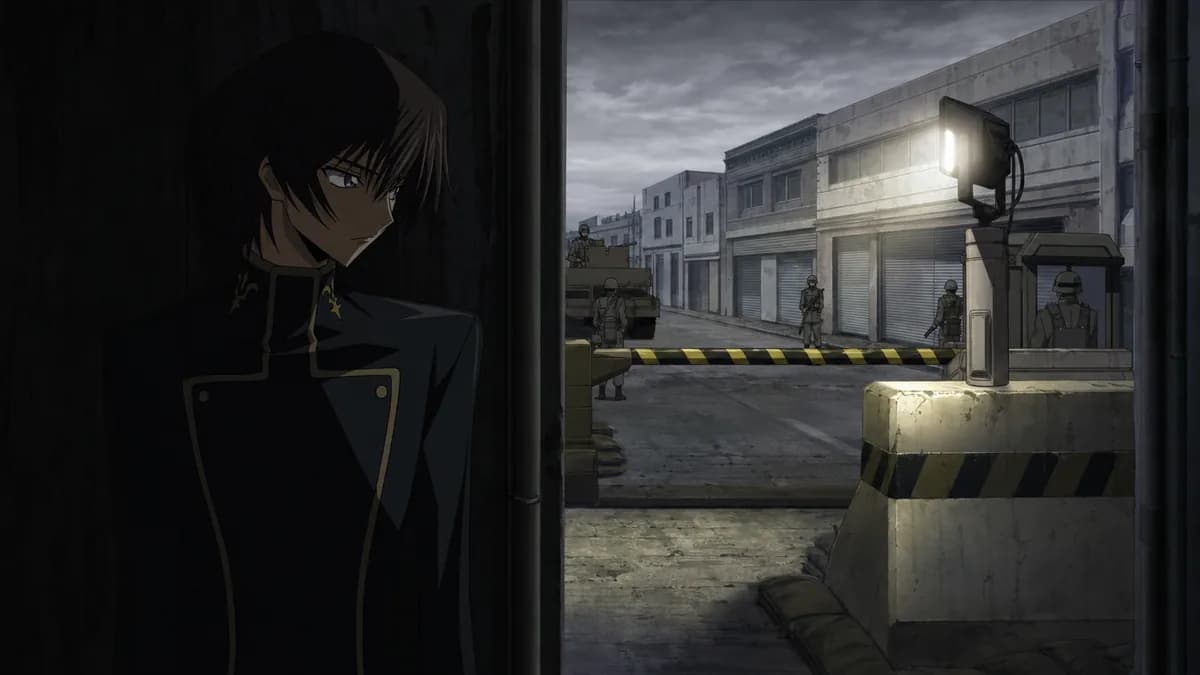
Under the mecha armor, this is a character drama. Lelouch remains one of anime's defining anti-heroes. He is dazzlingly intelligent and theatrically arrogant, yet his tenderness toward his younger sister, Nunnally, keeps his cruelty recognizably human. Suzaku Kururugi, his childhood friend, serves as his mirror. Suzaku believes that a corrupt system can only be changed honestly from within. They are two good men pursuing the same dream by opposite and incompatible routes, and their damaged friendship gives the series its emotional spine. The people around them are memorable in their own right. C.C. is a deadpan immortal whose motives remain teasingly opaque. Kallen is a fierce resistance ace trying to maintain a double life. The large student-council cast keeps the war connected to ordinary teenage life, even when those lighter scenes sit awkwardly beside the conflict. Some supporting characters get much less depth and mainly exist to move a scheme into place. The central quartet still carries enormous weight. Lelouch, in particular, is magnetic enough to power the entire show. It is easy to want him to win while also being frightened by what winning turns him into.
Animation, Design and Sound
Sunrise built its reputation on giant robots, and that experience is obvious here. The Knightmare Frames are nimble war machines that skitter across battlefields on rollerblade-like landspinners. Their movement has speed and weight that still hold up. Director Gorou Taniguchi treats combat as strategy made visible, so battles rarely collapse into empty noise. CLAMP defines the broader look of the series with famously tall, willowy character designs that give the cast an almost operatic elegance. People pose and gesture with complete commitment, which suits the show's heightened theatrical style. The soundtrack works on the same scale. A swelling dramatic score supports the confrontations, while memorable opening and ending themes by popular rock acts give the series much of its identity. Soaring insert songs also appear at precisely chosen emotional peaks. Both language tracks have strong performances. The Japanese cast is excellent, and the English dub is genuinely among the better dubs of its era. Viewers who prefer not to use subtitles should seek it out. Code Geass understands how much of its drama has to come through the ear as well as the eye, and its sound rarely feels like an afterthought.
Ideas Behind the Spectacle
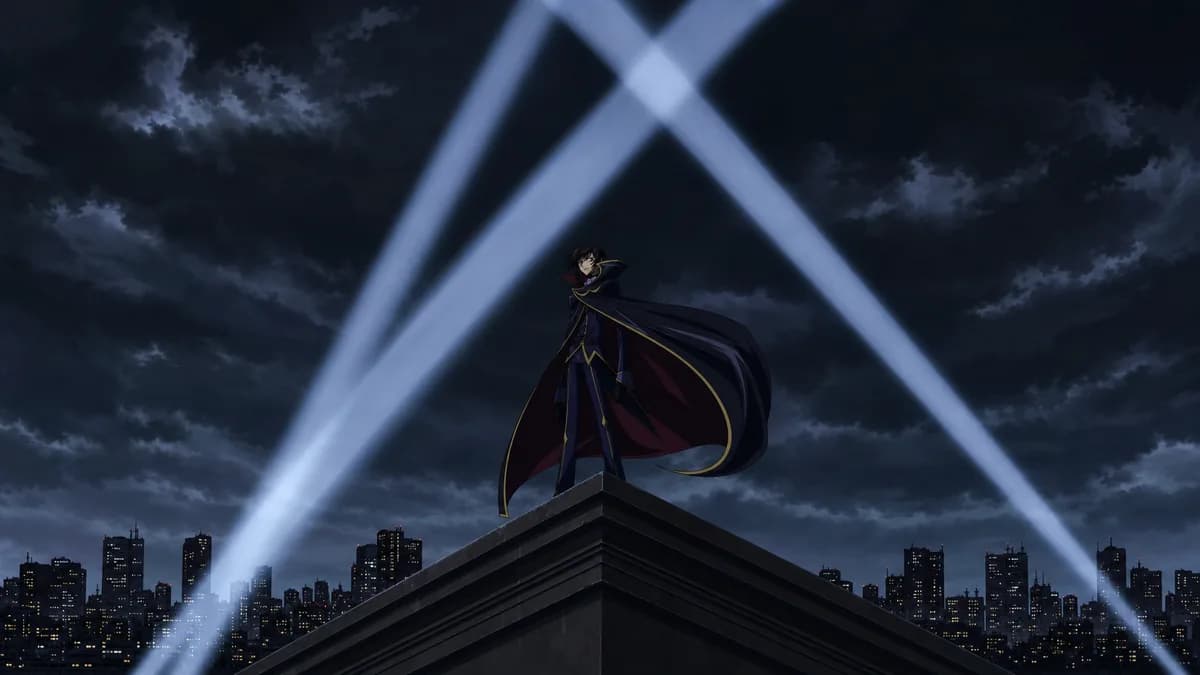
Code Geass has serious ideas beneath all the spectacle. Its alternate history examines imperialism and occupation, including the way an empire deliberately manufactures an underclass. The 'Elevens' are a pointed metaphor, and the human cost of conquest never disappears from the story. The series is even more preoccupied with the ethics of revolution. It asks whether a just world can be created through unjust means, then follows the damage done when a liberator starts to resemble the enemy he opposes. Geass makes that conflict personal because its power removes another person's free will. The series takes the implications of that ability somewhere genuinely dark. It also refuses to provide a clean hero who can settle the moral argument for the audience. Lelouch can behave monstrously without becoming impossible to sympathize with, so his ends and his methods must constantly be weighed against each other. The famous twists are not separate from these ideas. Many of the biggest turns come directly from a choice, a compromise or an abuse of power. For all its appetite for entertainment, the show keeps putting its audience under moral pressure.
Where It Excels and Where It Falters
The best qualities of Code Geass are hard to miss. It moves relentlessly, gives its lead immense presence and treats its themes seriously. Its plot repeatedly pulls the ground out from under the viewer without making every surprise feel like a cheat. The show has real faults, though, and ignoring them would give the wrong impression. Its thrilling melodrama sometimes tips fully into camp. Characters deliver monologues in the middle of battle, and the emotional dial is frequently cranked to eleven. Some developments depend on convenient timing. The rules of Geass also bend on occasion to accommodate what a scene needs. Light school-life material and fan-service interludes can produce harsh tonal whiplash when they appear near episodes about atrocity. Some of that fan service amounts to gratuitous cheesecake. A few supporting characters never become much beyond the job they perform in the plot. The direct continuation gives up some of the first run's tight control in favor of larger and messier swings, a change that does not work for everyone. None of these problems destroys the series, but viewers do have to meet it on its operatic terms. Anyone who cannot stand overwrought grandeur is likely to have their patience tested.
The Verdict
Code Geass has no interest in subtlety, and it never pretends otherwise. It is a loud, brilliant and gloriously theatrical thriller about a young man determined to remake the world by any means necessary. The series commits to that idea with a conviction that most anime would never risk. Viewers looking for grounded realism or understated character work should look elsewhere. Those who want a ruthless chessmaster, a plot designed to keep breaking open beneath them and a genuine moral argument inside the spectacle should consider it close to essential. The show has earned its place as a modern classic and a favorite gateway into anime despite its faults. Our score reflects a series that reaches for greatness and gets hold of it more often than not. Its excess is part of the experience, sometimes exhilarating and sometimes frustrating. Go in without spoilers if you can, because every major turn lands harder when you do not see it coming.
FAQ
Absolutely. It is widely regarded as one of anime's essential titles. Anyone who enjoys morally grey protagonists, high-stakes strategy and political intrigue will find plenty here, especially in a story that regularly stays ahead of audience expectations. Be prepared for large-scale, operatic melodrama rather than quiet realism.