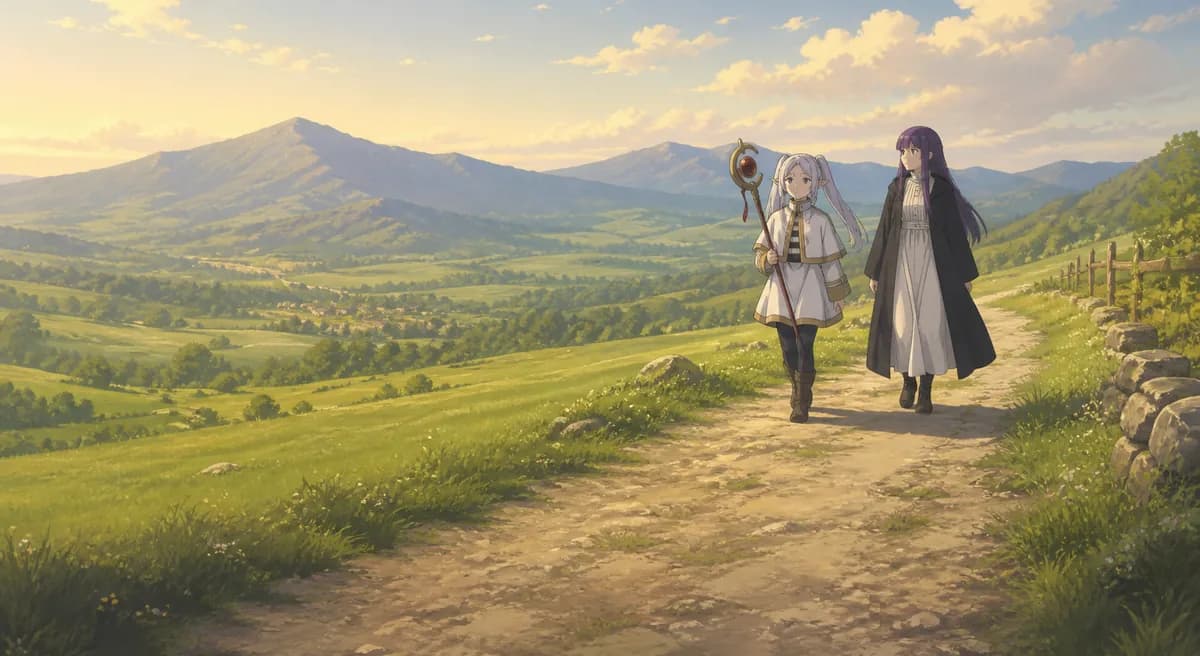
The hard part about recommending anime like Frieren is that most people do not actually miss the elves or the mage duels. They miss the register: a story patient enough to let decades pass between scenes, that trusts a small gesture to carry more weight than a speech, and that treats memory itself as the real magic system. So this list is built around that feeling rather than around genre tags. You will not find loud isekai power fantasies here, even though several of them share Frieren's map, because volume is precisely the thing Frieren refuses. What you get instead are works that understand time as a subject: a craft learned slowly and badly before it is learned well, a life rebuilt after the fighting stops, a child moving through a world that never once pauses to explain itself. Some are fantasy, one is a Viking saga, and one is a film your parents may well have seen. The through-line is texture, not setting. The order starts with the closest emotional match and drifts outward in form, so the further you read, the more you are trusting us on mood rather than on surface resemblance.
- 01
Listed first because it is the reference point, and because a surprising number of people arrive here having only ever seen clips. An elf mage outlives the hero's party she travelled with and, far too late, starts trying to understand the humans she never bothered to know. It works because it is structured like memory rather than like a quest, with flashbacks that quietly reframe scenes you thought were finished. The fights, when they come, are precise and tense rather than explosive. If you need constant forward motion its rhythm will feel like a hammock. Everyone else should simply start here.
Where to Watch → - 02
The closest thing to Frieren's sensibility on this list, and the first one to reach for. It follows a girl who discovers that magic is drawn rather than cast, which makes the whole story about learning a craft badly before learning it well: shaky lines, ruined attempts, teachers carrying their own scars. The artwork is extraordinarily detailed and the world is governed by ethics rather than power levels, so the tension comes from what magic is permitted to do to people. Perfect for anyone who loved Frieren's apprenticeship thread most. Less suited to anyone who wants a war.
Where to Watch → - 03
The patience pick. A book lover reincarnated into a world with almost no books sets about manufacturing paper, ink and literacy from scratch, and by this stage of the story her small workshop schemes have grown into politics, patronage and genuine danger. It shares Frieren's faith that competence quietly demonstrated beats power announced, and its world is built out of supply chains and social rules instead of lore dumps. Begin with the earlier parts to feel the payoff. Anyone waiting for a fight scene will be waiting a long and largely fruitless while.
Where to Watch → - 04
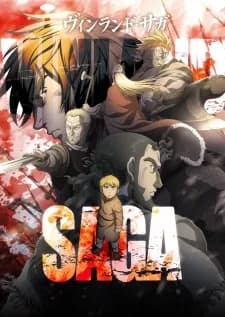
Vinland Saga
8.7Here for one reason: it is the other great anime about what you do with the life that comes after the fighting. It opens as a brutal revenge story in a Viking winter and then deliberately dismantles that story, stranding its hero in the wreckage of who he chose to become. Where Frieren's melancholy is gentle and observational, this one is bought with blood, which makes it by some distance the hardest watch here. For viewers who want the same reckoning with time and regret, delivered with the volume up and a much heavier hand.
Where to Watch → - 05
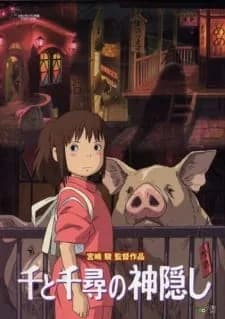
The ancestor of everything else on this list. A sulky child slips into a bathhouse for spirits and is put to work, and the film never once stops to explain its own rules, which is exactly why the world feels genuinely old and inhabited rather than designed. That refusal to over-explain runs in a straight line to what makes Frieren's setting feel lived in. It is also the shortest commitment here and the easiest to share with people who do not watch anime. If you want tight plotting and clean answers, its dream logic will frustrate you.
Where to Watch →
FAQ
Almost never the plot. It is the pacing and the perspective: a protagonist who experiences an entire human lifetime as a short chapter, which makes ordinary kindnesses land like tragedies. Anything that reproduces that sense of scale will scratch the itch, whether or not it has magic in it.