Why We Root for the Villain: The Rise of the Anime Antihero
 By Mika Tanabe · Editor
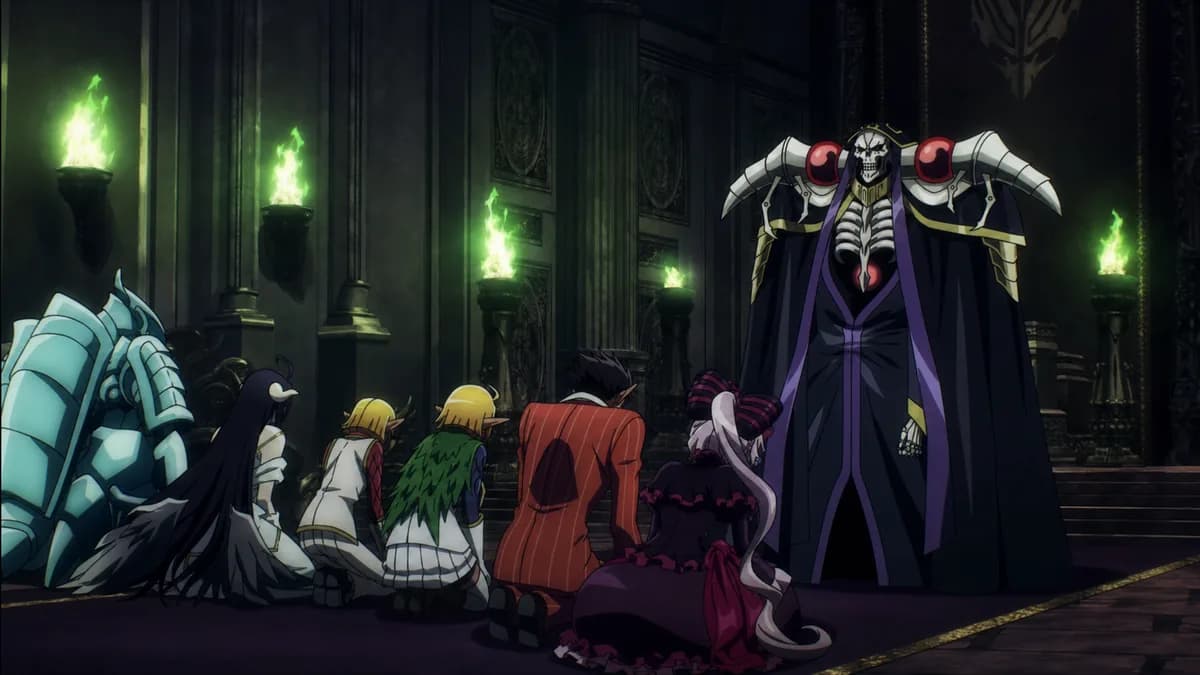
Momonga does not choose to become a dark lord. That small distinction is the reason Overlord works as well as it does. He is a player who stays logged into a game after the rest of the world has stopped playing. Then he finds himself trapped in the body of a skeletal sorcerer, surrounded by the guardians of his old guild's tomb. They treat every casual comment he makes as holy instruction. Faced with their absolute faith, he begins acting like the god they already think he is. Anime's antihero boom makes much more sense through that lens than it does as a trend built on edginess or raw power levels. The strongest examples are not inviting us to dream about evil. They follow people who put on a role and slowly lose the ability to take it off. We keep watching because traces of the person underneath still show through the performance. In Overlord, that remaining human part of Momonga is faint, inconsistent and increasingly expensive for everyone around him.
Momonga Bluffs, and Nazarick Sees a Master Plan
Overlord becomes much easier to read once you treat it as a comedy about impostor syndrome. Madhouse returns to the same basic setup throughout the early stretch. Momonga makes a decision while privately unsure whether it is sensible, and Demiurge or Albedo instantly explains it as one step in a plan beyond everybody else's understanding. He creates a cover identity because the moment calls for one. The tomb assumes the disguise was part of a strategy. He lets somebody live on impulse, only for the guardians to praise his foresight and interpret the mercy as a calculated investment. The joke depends on the distance between his intention and their understanding of it, but the consequences stop being funny for the people caught outside Nazarick. Kugane Maruyama's light novels preserve that distance and keep making it larger. They cannot close it without collapsing the story. Momonga is unable to admit out loud that he does not know what he is doing. If he did, the guardians who have become the only family he has left would suddenly be subordinates looking at a disappointing boss. Their devotion gives him comfort, but it also demands a constant performance. He bluffs to protect his place among them, each successful bluff raises their expectations, and other people keep paying with their lives for the decisions that follow.
Villainy Becomes a Job With No Way Out
Once role capture becomes visible in Overlord, the same pattern appears across the villain-protagonist stories that handle the archetype well. Lelouch adopts a mask in Code Geass because he wants to win a war. He then discovers that Zero has constituents. People are prepared to die for the symbol, so the private person behind it is no longer free to hesitate whenever he wants. Light Yagami creates Kira as an instrument, but his relationship with that identity reverses over time. The notebook begins as something he uses. Eventually, Kira is what he is, and Light is serving the identity he invented. These stories repeat the pattern because power often works that way. A mask attracts believers, those believers build their hopes around it, and walking away starts to look like betrayal. Conventional heroes usually retain a freedom that these characters surrender. Deku in My Hero Academia and Tanjiro in Demon Slayer can renew their choice from one arc to the next. Their repeated decision to remain heroic is part of what defines them. An antihero moves in the opposite direction, using up a moral budget that cannot be restored. Every atrocity removes another possible life in which he could return to the person he once was. The role does not excuse his choices. It explains why each choice makes the next retreat harder.
Competence Sets the Trap
A common explanation for the popularity of these characters is that audiences enjoy watching a genius win. That reverses the cause and the effect. Competence porn is a genuine pleasure, but a story does not need a villain to provide it. Kakegurui delivers the thrill of watching a plan click into place with almost no moral weight attached. Classroom of the Elite builds an entire school around a lead who can out-think everyone, even while the show declines to explain his motives. If clever execution were the full attraction, those series would mark the genre's ceiling. They do not. In a villain-protagonist story, competence is usually the mechanism that locks the lead inside his public identity. Momonga must appear omniscient to Nazarick, which means nobody can catch him guessing. Lelouch has built Zero around victory, so the image cannot survive an ordinary defeat. Light presents Kira as righteous, leaving no room for him to be openly wrong. Their brilliance gives them authority while quietly reducing their available choices. Every impressive success strengthens the standard they will have to meet next time. The audience gets the immediate satisfaction of watching them pull off the impossible, then sees that success close another exit. These men look freer as their influence grows, but their range of honest action keeps shrinking. Intelligence is the cage they have built around themselves, not the reward waiting at the end.
Where the Power Fantasy Argument Fits
There is a serious objection to this reading: a large part of the antihero wave has little interest in role capture. Some of it is grievance fiction presented with better lighting. The Rising of the Shield Hero starts with a real injustice, then spends its runtime drawing against the moral blank cheque created by that injustice. Later cruelty arrives with forgiveness already assumed because the protagonist was harmed first. That Time I Got Reincarnated as a Slime is warm and generous, with roughly the villainous temperament of a well-run city council. Saga of Tanya the Evil is sharper than either of them, although a good portion of its audience is plainly watching for the ruthlessness rather than the satire. Calling a protagonist an antihero means very little if the story never allows that character to be genuinely wrong. In that case, the audience has been sold a conventional hero in darker colours. A useful test is whether the show can place its protagonist in the wrong and fully commit to the judgment. Having another character voice disapproval is not enough. The story itself has to show the cost through the eyes of the person forced to pay it. This distinction matters because surface details can make almost any powerful lead look dangerous. Cruel methods and a severe expression do not create a villain protagonist when the narrative keeps arranging proof that every choice was justified.
We Root for the Person Still Visible Underneath
Overlord meets that test without softening what it shows. When Nazarick advances on a village, the story introduces the villagers before the attack. Gazef Stronoff rides out to defend people he genuinely wants to save, and the show treats his courage seriously instead of reducing him to an obstacle in Momonga's path. Clementine's cruelty is presented so that the faces of the people receiving it remain part of the scene. Even Momonga's occasional kindness refuses to become a comforting moral rule. His mercy is arbitrary, a brief movement from the man he used to be rather than a principle anyone else can trust. A story concerned only with the pleasure of his power would make that mercy reliable. Overlord makes it another source of unease. The best works in this genre keep an account of who pays for a magnetic character's choices. Vinland Saga makes Askeladd compelling, then forces the audience to read the ledger. Its follow-up season responds by removing the sword from Thorfinn's hands entirely. In Berserk, Griffith becomes his own dream and sends the bill to the people who loved him. Monster offers the revealing refusal of the pattern. Johan has no visible seam, with no man showing beneath the role. Everyone else still tries to explain him, and the queasiness produced by those attempts is part of the design. That contrast clarifies the appeal of Momonga, Lelouch and Light. Their villainy itself was never the part we wanted to succeed. We were following the gap between the person and the performance, hoping to glimpse someone who might still recognise what the role has made him do.
FAQ
Overlord is listed on Crunchyroll, Netflix, Hulu and Tubi, although availability on each service depends on your region. Crunchyroll is the safest place to check first. Where it carries the series, Tubi provides the free option with advertisements.