Why Sports Anime Feels Different
 By Mika Tanabe · Editor
Every genre talks about character growth. Sports anime makes a character demonstrate that growth in front of everybody, under a time limit, against another person who wants the opposite result and has earned the right to want it. That setup explains why a rally in Haikyu!! can hit harder than a world-ending fight built across three seasons. Look closely at the genre and its dramatic machinery is remarkably clear. The audience can follow the rules, nobody can argue with the scoreboard, and the opponent is usually a decent person who happens to be better on that day. Sports anime removed the villain while preserving the pressure. Other genres rarely pull off that exchange without softening one side of it.
The Scoreboard Will Not Let the Story Bluff
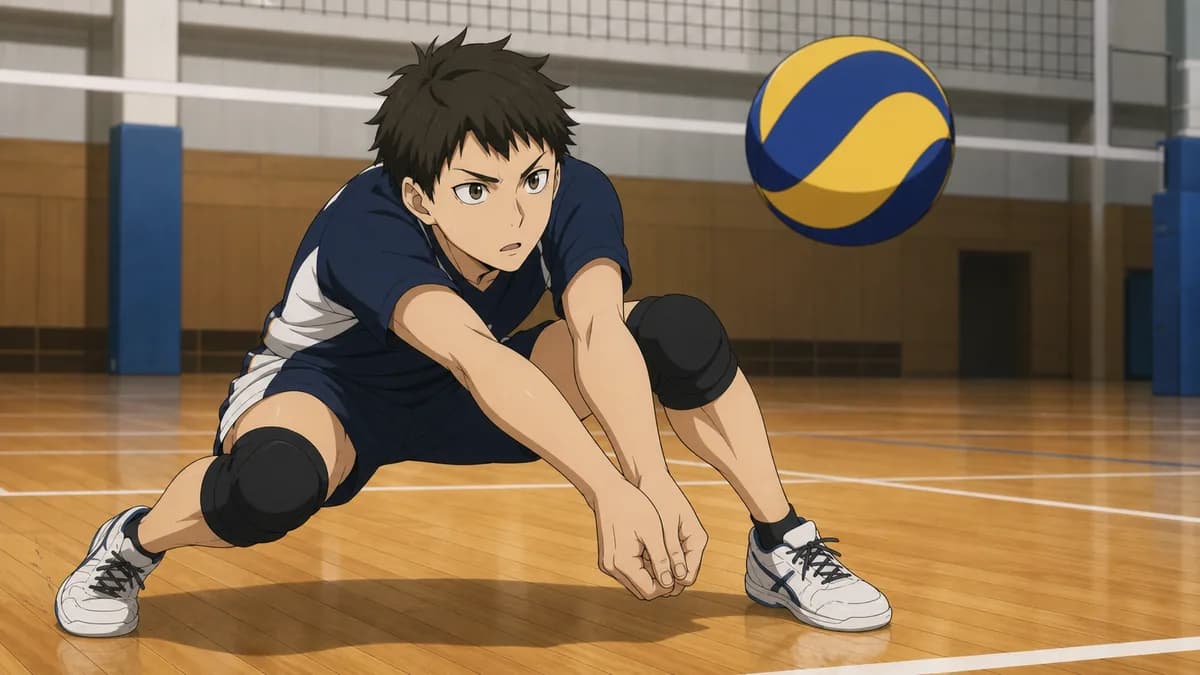
A battle shonen can announce that somebody has grown stronger. The proof might be a new form, a power that was sealed away, or a training arc followed by a larger number. Sports anime has less room to bluff because improvement must hold up under rules the viewer already understands. That restriction is harsh, but it also gives the genre unusual clarity. When Shouyou Hinata jumps, his lack of height is right there on the screen. We can see what the net demands, and we can see why one extraordinary physical gift cannot guarantee a point. His speed and leap matter, yet volleyball still requires timing, placement, and another player who can use those qualities. When Hinata and Tobio Kageyama finally coordinate a quick attack that should not work, the result explains its own importance. The ball reaches the floor. The score changes. Haruichi Furudate's manga treats each rally as an argument unfolding in real time. Production I.G's adaptation knows that the argument falls apart unless the court is staged honestly. The blockers need to occupy a clear position. The setter's gaze has to lead somewhere. A player who is half a step late must actually look half a step late. Sports anime has to put the evidence on screen, and very little else in anime is held to that standard so consistently. The scoreboard is final, but the action leading to it has to persuade us first.
What Changes When There Is No Villain
Sports anime makes a structural choice that other anime rarely sustain. A shonen antagonist is generally wrong in a way the story can condemn. He may be cruel, driven by an ideology, or pursuing something the hero has to prevent. A sports opponent cannot work by the same logic. This is another high schooler who trained just as hard and wants the same victory. Tooru Oikawa is not evil. He is a better player than the story sometimes seems willing to admit, and his skill makes the match difficult without turning him into a monster. Kenma Kozume barely appears to enjoy competition. Somehow, that makes him more dangerous. Removing the moral imbalance leaves desire exposed, and watching two legitimate desires collide can be much less comfortable than watching good confront evil. There is no honest reason to root against the other side, even while hoping it loses. Haikyu!! embraces that tension by giving the players across the net their own attention. Rival schools have inner lives, personal habits, and grief that belongs to them. Those parts of them continue to matter after defeat. They are never reduced to court furniture for the protagonists to run past. Ping Pong the Animation takes the same idea further. Eventually, who wins becomes less revealing than what each player expected victory to repair. Without a villain, the competition has nowhere to hide its emotional cost.
A Loss Has to Stay Lost
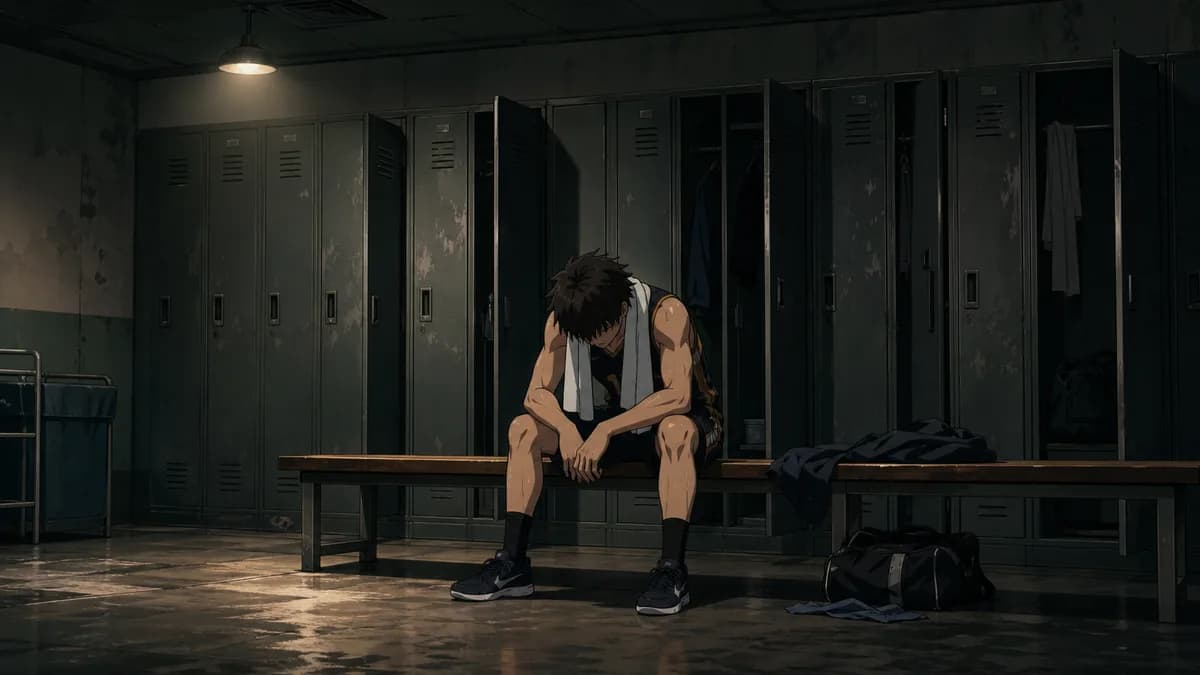
Many genres use defeat as the short delay before a comeback montage. Sports anime is governed by the arithmetic of a bracket. Every team except one must go home, and the genre cannot forget it without breaking its own logic. Haikyu!! introduces its protagonist through an annihilating loss. His story begins with a beating rather than a triumphant invitation to adventure. The series carries that result forward because there is no clean way to erase it. This honesty is what gives the later highs their force. Run with the Wind and Ping Pong the Animation spend meaningful time with people who can feel the limit of what they may achieve. Neither story acts as though effort unlocks any result a person wants. March Comes in Like a Lion uses shogi rather than sport, but it follows every law of a sports story. Much of the series studies what repeated loss can do to someone over the course of years. The genre allows a defeat to remain permanent. It is not overturned later, rewritten out of the story, or dismissed once the next match begins. A player has to carry it, learn what can be learned, and compete again with no guarantee that the next outcome will be kinder. Victory feels earned because failure was always allowed to count. If the audience knows that a bracket can genuinely end a season, every point before that ending acquires weight.
Why Sports Anime Demands Great Animation
Sport is exceptionally difficult to fake in animation. A battle series can sell a punch with three frames and a smear. A jump serve still has to respect the body performing it, the floor beneath it, and gravity. Even viewers who have never touched a volleyball can sense when the movement is wrong. This difficulty helps explain why sports anime attracts such a high level of craft. Haikyu!! includes key-animation names of the kind usually associated with prestige film work, including Toshiyuki Inoue. Takahiro Kishida's character designs solve another practical problem. The cast is enormous, yet the players have silhouettes that remain readable at a glance. That matters during a rally, when recognition cannot wait for a close-up or a line of dialogue. Yuuki Hayashi's score supplies a different kind of control. It holds tension during the dead seconds between rallies, when the court is technically still but every possibility remains active. Sound direction carries an unusually large share of the drama as well. A shoe squeaks, the ball lands with a slap, and the crowd noise suddenly drops away. Each sound establishes space and makes the physical exchange believable. Put The First Slam Dunk or Ping Pong the Animation beside an average action show and the difference in physical literacy is embarrassing. The best work in this genre understands how weight shifts, how fatigue changes posture, and how a fraction of mistimed movement can decide the scene. Its animation cannot rely on impact alone. It has to explain the play.
Yes, the Tournament Formula Is Obvious
The strongest criticism of sports anime is easy to recognise. The genre often looks like one template wearing a different uniform: an underdog club, a prodigy rival, training, a tournament, an upset, a montage, then another tournament. That criticism is fair. Sports anime may be the most formulaic material on a season's schedule, and its middle arcs can sag badly. Plenty of long-running series spend too much time on recaps. Some introduce opponents whose only function is to lose. Others devote episodes to training that produces no visible change. The familiar structure still has a real artistic use. Since the audience already understands the broad shape, a show can concentrate on how it alters that shape. Those differences become easy to see because the common form is so stable. Blue Lock uses the same framework and treats cooperation as the enemy. Megalo Box pulls it into grime and prosthetics. Yuri!!! on Ice redirects the structure through a relationship. Chihayafuru builds it around a card game and loses none of the tension. Formula does not automatically mean creative exhaustion. Here, it works as a language shared by the creators and the audience. A small departure registers immediately because everybody knows what would normally happen. The problem comes when a series repeats the form without finding its own pressure points. The good ones use our familiarity against us, letting an expected match or training beat arrive with a different emotional purpose.
The Activity Can Change and the Story Still Works
People who believe they dislike sports anime may be sorting the genre by the activity on screen. Athletics are only the visible framework. The deeper setup involves people choosing to submit themselves to rules so their effort can be measured by something beyond their own thoughts. Replace the rules and the dramatic machine continues to work. Chihayafuru uses competitive karuta. Welcome to the Ballroom uses dance. Medalist uses figure skating. Ao Ashi concentrates on the unglamorous parts of soccer that nobody televises. Sound! Euphonium and Bocchi the Rock! are not categorised as sports shows, but their stories use the same wiring. Auditions function like tryouts, while the concert fills the place of the tournament. Blue Period is a sports story set in art school. This portability offers the clearest support for the argument. Volleyball and soccer are not the elements that travel from one example to the next. What survives is the promise that continued effort will eventually be registered by something outside the person making it. That measurement can be harsh, and it may deliver the answer a character fears. It can also confirm a change that private conviction could never prove. This is why Haikyu!! keeps winning over viewers who once swore they would never watch a sports anime. They do not need to arrive caring about volleyball. They only need to understand what it feels like to work at something and wait for the outside world to show whether the work took.
FAQ
Haikyu!! is the usual starting place for good reason. It is warm, funny, and exceptionally well staged, and it teaches the viewer volleyball without pausing for lectures. If sincere team drama does not appeal to you, begin with Ping Pong the Animation. It is stranger and colder, and it reaches many of the same truths much faster.