Why Slice of Life Works
 By Mika Tanabe · Editor
On paper, slice of life can sound like a dare. Watch some girls pitch tents in the cold. Spend time with a band that mostly drinks tea. There is no villain, ticking clock or grand reveal waiting to justify the quiet stretches. Yet these are often the shows longtime fans return to, and they tend to take over any conversation about what people actually rewatch. Calling them relaxing does not explain much. It may even miss the main source of their appeal. Slice of life moves the stakes out of a large plot and places them inside your attention. Nobody's life is in danger in Laid-Back Camp. The test is whether a lit stove and a good view can matter to you for the length of a scene. Making that work takes extraordinary control. A sword fight arrives with obvious urgency; a hot meal in winter has to earn every bit of yours.
The stakes are small, but they are still there
Drama needs a want and something that gets in its way. Slice of life keeps both, then scales them down until the whole conflict can fit inside an afternoon. Laid-Back Camp builds episode after episode from this modest unit. There is a destination to reach, a chore to finish or a meal to prepare, followed by a payoff that feels proportionate to the effort. Rin Shima wants to reach a site before the light goes. The cold and the timetable complicate that trip, as does her own gear. When she finally settles in, the reward is a view and something hot to eat. The dramatic circuit is complete even though nobody has been defeated. The series finds a fresh version of that circuit nearly every week, which keeps the rhythm familiar without making each outing identical. Hyouka uses curiosity as the want and lets a small mystery supply the resistance. K-On! uses a deadline that the girls keep failing to meet. A battle series makes tension larger and promises a larger prize, but the underlying machinery is not so different. Laid-Back Camp is simply honest about how modest its reward will be. Nobody levels up or saves the day. They get warm. The show pays enough attention to that feeling that getting warm becomes a satisfying conclusion rather than an anticlimax. Small stakes only feel empty when the direction treats them as small in importance too.
Specific detail has to carry the show
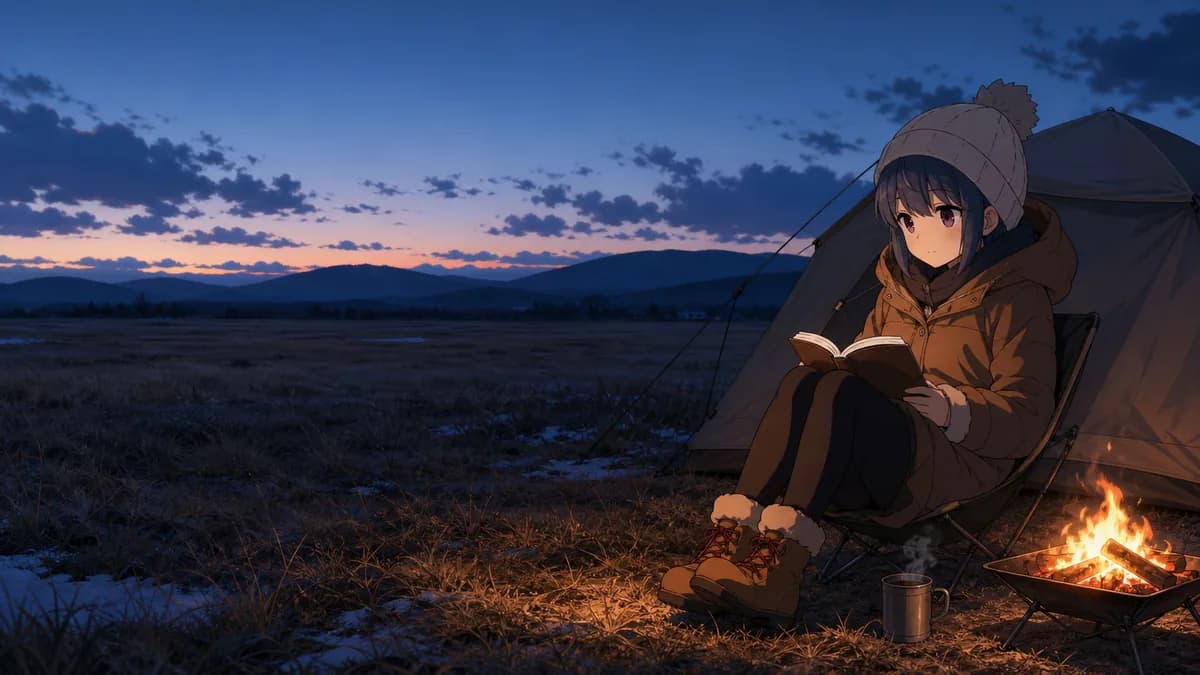
A vague slice of life series becomes unwatchable quickly because the genre leaves its craft exposed. There is no dense lore waiting to be explained and no elaborate choreography available to pull attention away from a thinly observed setting. What remains is a simple test: do the people making the show understand the activity and the place they are depicting? Laid-Back Camp does. It comes from a seinen manga with an obsessive eye for gear, cooking and real places. c-station's adaptation preserves that obsession instead of sanding it down into generic coziness. Yoshimi Umino's art direction and the background work give the countryside documentary weight. The cold blue dusk looks like a particular time in a particular place, not a pleasant color wash laid over an interchangeable backdrop. You could plan a trip from the show because routes, equipment and campsites are treated as material rather than decoration. This is also why the costume-making passages in My Dress-Up Darling connect when a vaguer hobby series might not. The work itself tells us who the characters are. Shirobako can make scheduling gripping for the same reason. In this kind of story, specificity performs several jobs at the same time. It moves the plot, reveals character and establishes the world through things people actually do. A spectacle can sometimes survive a fuzzy setting because motion supplies its own appeal. Slice of life has no such cover. If the meal, hobby or workplace feels secondhand, there is very little left to believe in.
Comfort comes from precise direction
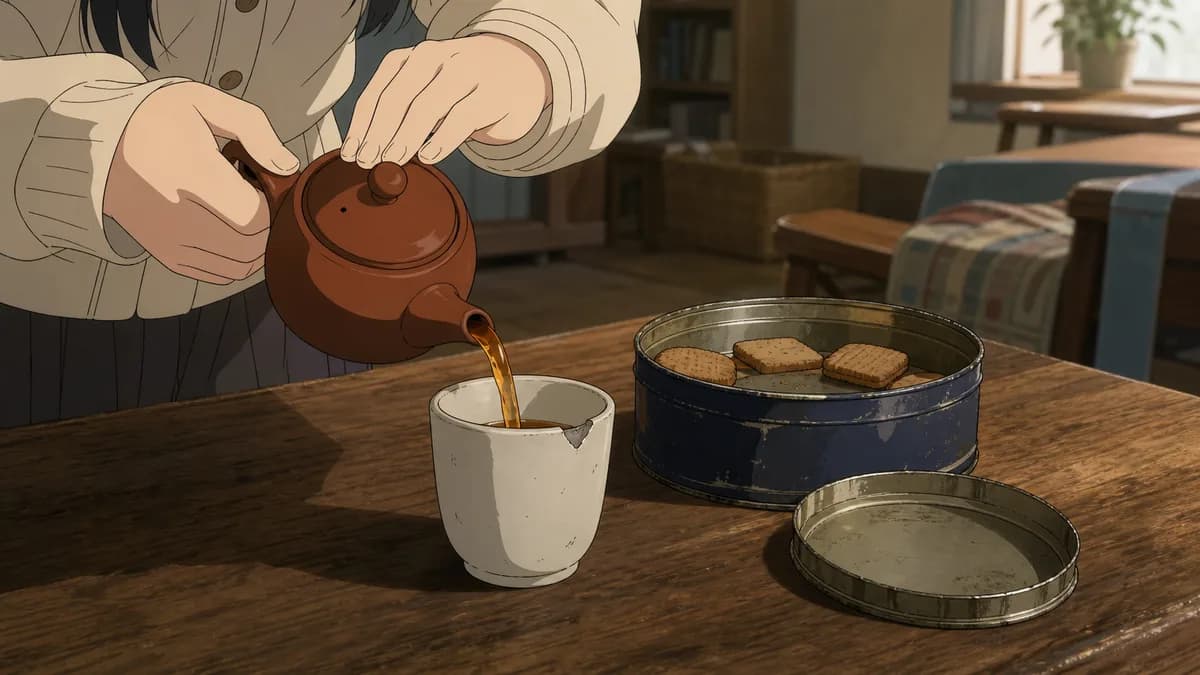
Iyashikei, the healing show, is often discussed as though calm were a setting chosen at the start of production. In practice, calm is constructed shot by shot in the edit and the sound mix. Laid-Back Camp lets an image remain for a beat after a comedy would usually cut away. It allows ambient sound to hold scenes that need no dialogue, then uses narration to connect moments without forcing the characters to explain themselves. Takeshi Takadera's sound direction contributes as much as anything visible on screen. Silence has shape here because the noises around it have been selected carefully. None of this makes the series tonally flat. It can jump into slapstick, distorted faces and super-deformed gags, then return to a quiet campsite without losing its hold on the viewer. Those shifts work because the staff controls the register rather than treating gentleness as a rule that can never be broken. Nichijou proves how wide the category can be. It starts with the identical everyday frame and spends feature-grade animation on utter trivia, producing an almost opposite tempo. Both series look closely at ordinary life; they simply decide that ordinary life should move at different speeds. Slice of life tells you what a show points its camera toward. It does not prescribe the pace or the volume. Aria the Animation claimed the gentle end of that range long ago, and its position there still holds. The comfort in these shows is a result of choices, not the absence of activity.
Solitude is allowed to be a preference
Laid-Back Camp deserves attention beyond a cozy recommendation list because it refuses a familiar character solution. Anime often presents a loner as somebody with a problem that friendship will cure. Bocchi the Rock! and Komi Can't Communicate both tell, with warmth and real skill, stories about a person being drawn out by other people. Laid-Back Camp chooses a different reading. Rin camps alone because she genuinely prefers it. Nadeshiko Kagamihara does not arrive to repair her personality or expose solo camping as a sad substitute for company. She gives Rin a second way to enjoy something she already loves. The series keeps both choices visible and never ranks one above the other. A solo trip is not staged as a warning sign, while a group trip is not presented as compulsory progress. Aoi, Chiaki and Ena supply the louder group energy. Rin holds the quieter side. The show lets those two modes coexist and meet when the characters want them to, rather than turning their difference into a contest. That idea feels unusually adult because it accepts that affection does not erase preference. Rin can value Nadeshiko and still need time by herself. The form makes room for this because a large plot is not pushing every trait toward a final correction. Without an obligatory arc that fixes the character by the finale, the series can observe a genuine difference between people and leave it intact. Her life becomes broader, but her solitude never has to become a symptom she has overcome.
The strongest criticism of the genre
The serious objection to slice of life is not the familiar complaint that it is boring. The harder criticism is that the genre can sell a comforting lie: a world without money trouble, cruelty or boredom, where adults are kind and every difficulty dissolves over a hot meal. Frictionlessness is a real weakness in plenty of lesser entries. They offer soft-focus fantasy while borrowing the appearance of realism, and their gentleness can flatter passivity. That criticism fits some shows. It does not describe the limits of the form itself. The same attention to everyday habits supports March Comes in Like a Lion, a series that sits inside depression and a family that functions like a slow injury. Sound! Euphonium applies it to ambition, ranking and the experience of being told no. A Place Further Than the Universe uses the texture of ordinary teenage life so that grief and a stalled life hit with greater force. Barakamon begins with a public humiliation and an exile. These stories retain the observational grammar of slice of life while allowing pain to remain painful. Even work at the gentlest end of the category contains friction when it is made with care. Laid-Back Camp's real subject is winter. Cold hands, difficult travel and the practical work of camping are not interruptions to the premise; the discomfort is the premise. Warmth matters because the show first makes the cold tangible. Escapism becomes a problem when it refuses to observe anything inconvenient. Observation itself can face comfort or hardship, depending on what the creators decide to see.
Why these shows stay rewatchable
The genre's place on so many rewatch lists follows from a practical difference between information and texture. Plot-driven shows often run on information, and that information loses some force once it is known. After you learn who the traitor is, the mechanism that pulled you through the mystery cannot perform its original job in quite the same way. Texture does not wear out like a secret. Returning to Laid-Back Camp is not a diminished copy of the first viewing. The same pleasure is available on demand, which is why people play it the way they play a familiar record. The route is known, but recognition is part of the experience. You notice how long a shot waits, how a campsite sounds or how naturally one character settles beside another. That durability also helps explain why this lane keeps producing new work. Laid-Back Camp grew a second season and a run of shorter side stories. Kindred work such as Mono and Skip and Loafer continues to arrive. Only Yesterday can still feel as if it was finished last month because its human observations did not depend on a surprise that could expire. Natsume's Book of Friends keeps finding new people for much the same reason. Slice of life gives its makers very few places to conceal weak work. The characters, setting and timing have to reward direct attention because there is no larger machine to drag the audience past them. When the craft holds up, repeated viewing does not consume the appeal. It makes the details easier to enjoy. That is why the genre can look slight on a synopsis and prove unusually durable on the shelf.
FAQ
A show counts when everyday texture supplies the main engine instead of plot momentum. School clubs, hobbies, small towns and quiet friendships are common subjects, but none of them defines a required tone. Slice of life is a frame, not a mood. Nichijou and Laid-Back Camp both belong to the category even though they move at completely opposite speeds.