Why Shonen Never Dies
 By Mika Tanabe · Editor
Every few years, somebody declares shonen exhausted. The tournaments have supposedly been recycled beyond saving, and all those speeches about friendship have become self-parody. Then a new series arrives, takes over popular culture, and ends up all over the feeds of the same people who announced the category's death. Those predictions fail because they diagnose the wrong problem. Shonen is not a genre working through a finite supply of ideas. It is a promise to a particular readership, supported by a production system that punishes complacency and continually finds a new audience. A genre can use up its conventions. A demographic category has no such limit. One Piece offers the clearest evidence, and the reasons it can keep going also explain the longevity of shonen as a whole.
Shonen Describes the Audience, Not the Story
The term refers to a readership and to the magazines published for that readership. One Piece, for example, has spent its entire run in Weekly Shonen Jump. It does not refer to a mandatory list of plot devices. That difference explains most of shonen's staying power. Genres depend on conventions, and any convention can be worn thin. There are only so many ways to shoot a western. A demographic is a standing place in the market, waiting to be filled by whatever excites a fourteen-year-old at the time. The possibilities remain wide open. That is how the same shonen shelf can hold volleyball stories beside cooking series, courtroom schemes, cosmic horror, and pure slapstick without any contradiction. The classifications attached to One Piece make the flexibility obvious. It contains action, adventure, comedy, drama, and fantasy within a single title. This range does not mean the series lacks direction. The publishing category never demanded that it choose only one mode. When people complain that shonen has gone stale, they are usually reacting to similarities among a few current bestsellers. They are describing a passing fashion as if it were a permanent limit of the form.
Weekly Serialization Keeps the Engine Running
Weekly serialization is often treated as shonen's great burden, but it also gives the category a powerful advantage. Every chapter needs to leave readers with a reason to return. The story lives under constant pressure to raise the stakes, add a complication, or land an emotional blow. That demand never lets up. A prestige drama designed for a weekend binge does not have to win its audience back at the end of every installment in quite the same way. Shonen pacing feels so forceful because its creators work in a system where a weak hook can threaten their livelihood. There is a genuine cost. A weekly schedule produces filler and uneven production, while some arcs continue far beyond their natural stopping point. One Piece has all of those blemishes on its record. Anyone who has followed the voyage knows its flat stretches. In return, serialization creates a kind of momentum that other long-form fiction rarely maintains. Reader reactions arrive quickly, so stories cannot coast on reputation for long. Work that stops holding attention gets cut. The system is harsh and uncomfortable. It also puts stories through a relentless test of whether they can keep people reading.
One Piece Proves the Structure Can Last
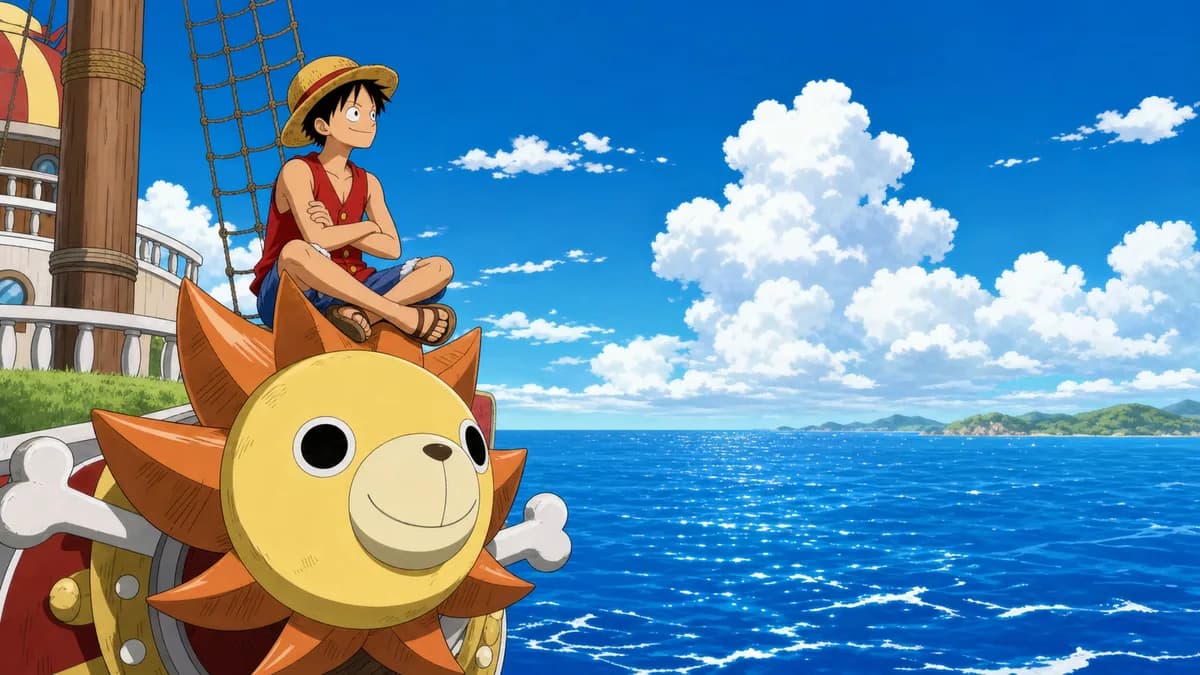
If shonen truly ran out of fuel, its longest-running flagship ought to look like the most exhausted title available. One Piece shows the opposite. Eiichiro Oda's series remains among the most popular works the medium has ever tracked, while Toei has maintained continuous production through the rise and collapse of entire trend cycles. Its durability comes from the structure of the story. A voyage can reach a new island and discover a different kind of genre there. The series can move through a desert kingdom and a lost civilization in the sky. It can stage a war shaped by politics and slavery, then spend time on a running gag involving a reindeer doctor. Its tone covers an enormous range, yet the voyage gives all of those shifts somewhere to belong. The crew provides similar room on the character side. Luffy, Zoro, Nami, Usopp, Sanji, Chopper, Robin, Franky, Brook, and Jinbe make up an ensemble that expands over time. As the map grows, the series gains more emotional ground instead of spreading its original cast thinner and thinner. Many long-running stories weaken after they have used up the interesting corners of their worlds. One Piece avoids that trap by continuing to enlarge its world.
Each Generation Challenges the Previous One
Shonen renews itself because its sharpest critics often work inside the category. Their objections then become the ideas behind a new group of flagships. Hunter x Hunter takes the obsession with elaborate power systems and turns it into a rules-lawyering nightmare, where greater strength can amount to a more precise way of getting killed. Mob Psycho 100 gives overwhelming power to a character who has no interest in winning fights. His meaningful development happens in a school club. My Hero Academia reconstructs the hero fantasy around an institution rotten enough to create its own villains. Chainsaw Man replaces noble aspiration with appetite. Its protagonist wants bread and a girlfriend rather than a grand dream. Demon Slayer tries another approach by paring its story back to grief and craftsmanship, trusting that exact execution can matter more than novelty. These series all conduct arguments about shonen from within shonen itself. That habit is revealing. A category that had hardened completely would protect its old assumptions. Shonen regularly rewards creators who attack those assumptions, then gives their challenge a place on the cover. The rebellion becomes part of the publishing cycle, which keeps the category capable of surprising its own audience.
The Best Argument Against Shonen's Longevity
The strongest objection concerns consolidation in the business, not fatigue in the familiar formula. Adapting a manga with a proven audience is safer than putting money behind an unusual bet, so budgets gather around a smaller set of dependable hits. The biggest current titles really do share a noticeable shape. They may feature a sympathetic monster as an antagonist, surround the lead with a corps of specialists, and present a major spectacle fight like a quarterly event. When the funnel admits only projects a committee can already imagine succeeding, reinvention depends on luck instead of the structure of the industry. That criticism deserves a serious answer, but it focuses on the wrong level of production. Most risk aversion appears during adaptation, because that is where the larger sums of money are committed. Manga remains cheaper to publish, and the selection process there is still brutal. Strange ideas can get an audition at that level. Dandadan's chaotic mixture of genres hardly looks like a safe proposal on paper. Neither does the deadpan absurdity of Sakamoto Days. Both can exist because failure is less expensive at the manga stage. Consolidation can slow the movement of unusual work into major adaptations, but it cannot close the route completely.
The Conditions That Could Actually Kill Shonen
Tournament arcs are a poor measure of whether shonen is dying. The health of the pipeline tells us much more. Strange ideas need an inexpensive place to fail without doing much damage. The selection process must still remove work that nobody reads, and the audience has to renew itself as one age group moves on and another arrives. Losing any part of that system would cause trouble. If distribution reached a point where nothing was ever cancelled, stories would no longer face the same pressure to earn attention. An adaptation economy that burns out the animators supporting it would lose the people required to turn manga into anime. A shrinking population of teenagers would weaken the steady replacement of the readership. Familiar tropes are not responsible for any of those threats, which is why predictions based on tournament arcs keep missing what matters. For viewers, there is a reassuring consequence to this durability. Nobody needs to feel late. You can begin Haikyu!! this week. You can also start One Piece at the beginning and allow the journey to take years. Nostalgia alone is not keeping shonen alive. Its future comes from young viewers who are discovering it without knowing that somebody already declared it finished.
FAQ
Shonen is a publishing category, not a visual or narrative style. The label identifies the magazine that serialized a series and the readership that magazine serves. This is why sports stories, horror titles, and broad comedies can share the category with One Piece. Tournaments and power-ups appear often, but they are conventions rather than requirements.