Why Isekai Took Over Anime
 By Mika Tanabe · Editor
Look through almost any new anime season and you will find at least three isekai series. The usual lead is an ordinary person who dies, wakes in a place full of dragons and stat screens, and gets another shot at a life they never managed to build the first time. Isekai means 'another world' in Japanese. It grew from a niche flavor into a setting the industry produces constantly. Its rise makes sense once you look at where the genre came from, why its fantasy connects so easily, and how the same boom has produced some of the best and worst fantasy anime of the past decade.
The Other World Story Predates the Boom
Isekai may look like a product of the 2010s, but the basic story is ancient and global: an ordinary person gets pulled into a fantastical world. Portal fantasy stretches from folklore to Alice and Narnia, with a century of pulp adventure along the way. Anime was telling these stories for decades before the current surge. The Vision of Escaflowne and Fushigi Yugi sent ordinary girls into war-torn other worlds in the '90s. Around the turn of the millennium, Inuyasha had a schoolgirl fall down a well and arrive in feudal Japan. Spirited Away sent a sulky ten-year-old into a spirit-world bathhouse. It is arguably the most acclaimed 'trapped in another world' film ever made, and it won an Oscar. None of those works needed the modern light-novel formula to make the setup compelling. The premise itself was never the new part. What shifted during the 2010s was the scale. Japan began manufacturing stories about other worlds at an industrial volume that earlier generations of anime never approached.
How Web Novels Fed the Boom
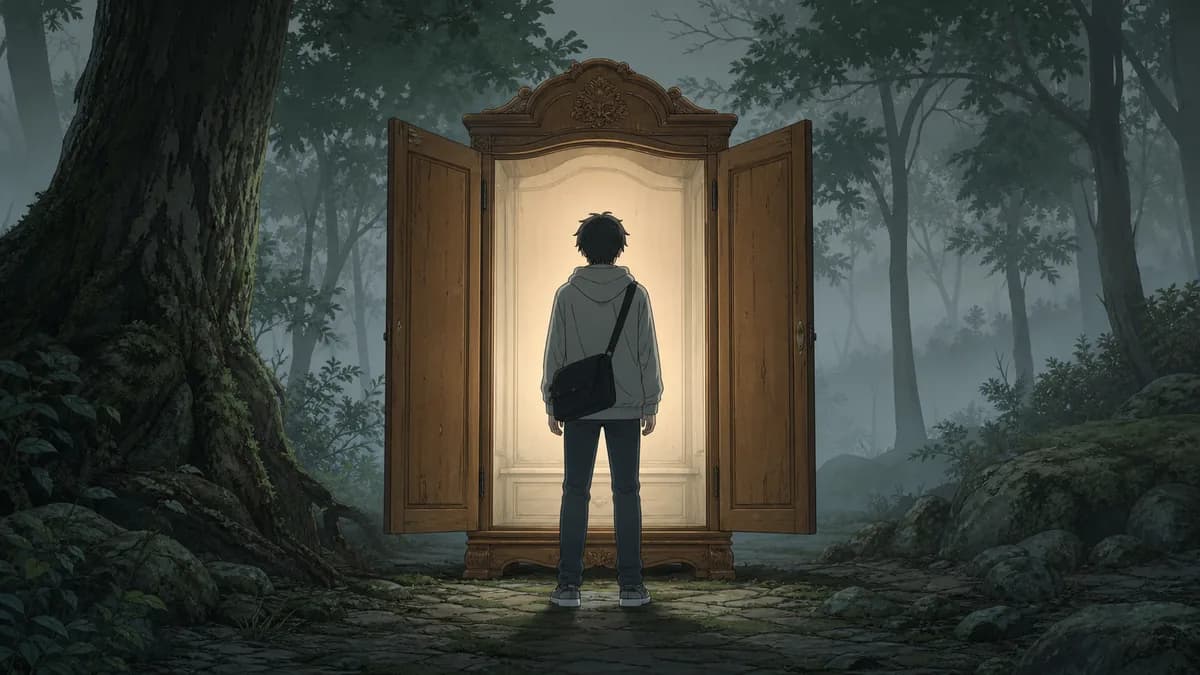
The engine behind the modern boom is a website. Japan's Shousetsuka ni Narou, whose name means 'Let's Become a Novelist,' allowed anyone to publish serialized fiction for free. Readers responded through clicks and rankings, so writers could see which ideas caught attention quickly. That feedback loop favored stories with an immediate hook, and isekai proved unusually good at supplying one. The setup was already familiar, the power fantasy began almost at once, and the template gave each writer room to add a personal variation without building the whole form from scratch. Mushoku Tensei, That Time I Got Reincarnated as a Slime, and Ascendance of a Bookworm all started as amateur web serials. Each later became a light novel, manga, and anime. Publishers and studios saw an unusually attractive pipeline in that progression. A web novel with a large existing readership made an adaptation less of a gamble because the audience was already there. By the late 2010s, isekai had become so dominant that at least one major web-novel contest reportedly stopped accepting entries in the genre. The restriction was meant to force some variety back into the slush pile. Being barred from a contest because one type of story keeps winning is a fairly direct sign that the form has taken over.
Why the Fantasy Connected
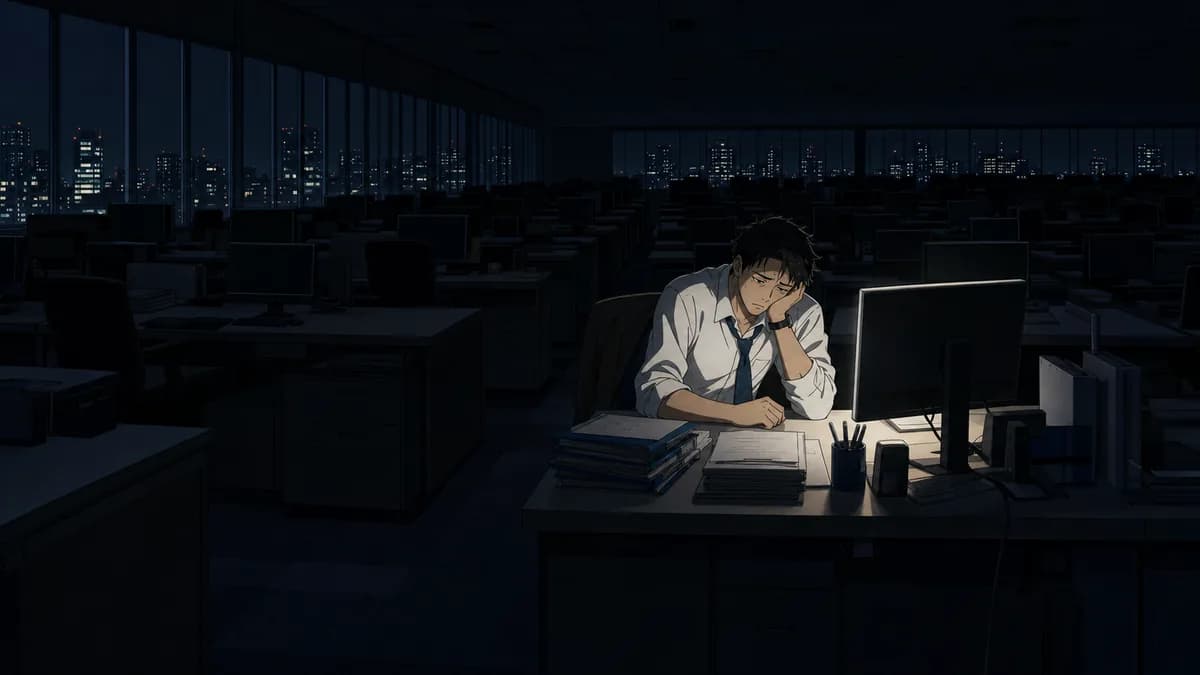
Remove the dragons and an isekai story is usually a fantasy about getting a second chance. Few wishes are as widely understood. In the standard version, an overworked or emotionally checked-out person from the modern world dies and wakes somewhere that finally values them. That idea speaks directly to an exhausted audience that would gladly take a do-over. The genre also found this particular generation at exactly the right cultural moment because it understands the language of video games. People raised on RPGs recognize stat screens, levels, skills, and party mechanics as soon as they appear. Isekai did not have to teach that audience how those systems worked, so creators leaned into them completely. Sword Art Online, a 'trapped in a game' cousin of isekai that helped prepare viewers for the larger wave, made a world governed by game logic literal. That Time I Got Reincarnated as a Slime turned the phrase 'skill acquired' into a recurring little dose of dopamine. Familiar game rules make an unfamiliar fantasy world easy to enter. A viewer does not need to study a lore bible before watching. Having held a controller is usually enough.
What the Formula Gets Wrong and Right
The flood carries a real cost, and fans who feel burned out have good reason. Lazy isekai often reads like a checklist. The hero is flattened by the obligatory truck, which became a meme for a reason. He returns as an overpowered protagonist who faces no real stakes because nothing can hurt him. A harem gathers around him with almost no effort, while a paragraph-long title handles the marketing. If the other world serves only as a platform for wish fulfillment without friction, it fades into wallpaper. Yet a writer who puts the setup to work can turn that identical premise into a genuinely great vehicle. Re:Zero uses its 'die and restart' device for a brutal study of trauma and helplessness. The result is the opposite of a power fantasy. Mushoku Tensei treats reincarnation as an uncomfortable and earnest redemption arc about a broken man trying not to squander his second life. It also refuses to soften how far its hero has to climb. That Time I Got Reincarnated as a Slime redirects the power fantasy toward patient nation-building and found family. Ascendance of a Bookworm moves slowly and obsessively through literacy, class, and craft while wearing an isekai coat. Saga of Tanya the Evil converts the formula into cynical war satire. Another-world fiction can hold all of those approaches because the premise has no fixed moral or emotional value on its own. The quality depends entirely on what the writer does with it.
The Directions Isekai Is Taking
Overexposure rarely kills a genre. It usually pushes the genre to change, and isekai has already started mutating into recognizable branches. One branch is self-aware comedy built to mock the form's familiar cliches. Another is the cozy 'slow life' story, where turnips replace demon lords. Farming Life in Another World is exactly what its title promises, and it is lovely. There is also a villainess corner of the genre. Its reincarnated lead typically finds herself inside the plot of her own dating sim and has to avoid the exile waiting for her there. The template has spread beyond Japan as well. The Beginning After the End began as an English-language web serial before becoming a webtoon and anime, showing that the format now travels in both directions. There is no sign that the overall volume is slowing down, but the upper limit of what isekai can achieve keeps moving higher. Every year, a couple of standouts show what skilled writers can still find in the premise. I expect the assembly-line series to continue filling the middle tier, while parodies keep exposing the genre's tired habits. Its future belongs to writers who see 'another world' as a question they need to answer. For them, the setup is a tool for tackling the hard parts of storytelling rather than an excuse to skip them.
FAQ
The Japanese word means 'another world' or 'different world.' As a genre, isekai covers stories in which a person from an ordinary world arrives in a fantastical one. The move usually happens when the character dies and is reincarnated, or when someone summons or transports them. The dominant version in the modern wave has a reincarnated protagonist who still carries memories from a past life.