From Webtoon to Anime: How Manhwa Became an Adaptation Mainstay
 By Mika Tanabe · Editor
Solo Leveling won its season, then proved that a new supply line works. For most of anime's history, the seasonal chart drew from one main pipeline: Japanese print serialization, along with the light-novel and web-novel lane that grew beside it. Korean webtoons now provide a second pipeline. Their economics are different, their reading format is different, and they found a global readership before an adaptation was ever pitched. "Webtoon adaptation" describes a supply chain, not a genre. Two titles arriving through it need have no more in common than two Jump manga. Whether manhwa deserves to be adapted was never an interesting question. What matters is the work a studio must invent when turning a silent, full-color vertical comic into moving animation.
Two Pipelines Feed the Same Chart
An adaptation from the print lane comes with baggage that lowers the risk. It has a domestic readership, sales figures for collected volumes and an editorial department that has already spent time arguing the story into shape. Demon Slayer, Jujutsu Kaisen and Chainsaw Man all made their way into animation through that system. Webtoons run on a different kind of fuel. Readers unlock chapters one at a time on a platform, while engagement is measured worldwide and in real time. By the time anyone draws a storyboard, an audience may already exist across several languages. Solo Leveling arrived at A-1 Pictures with that audience in place and Crunchyroll attached as a co-production partner. It then launched on Crunchyroll, Netflix and Amazon Prime Video at once. A mid-card fantasy title did not used to appear on three legal surfaces at launch. This changes how projects are assessed. A committee studying domestic print sales sees one kind of risk; a streamer tracking global chapter unlocks sees another. Those two sets of evidence can lead to completely different shows getting the green light. The seasonal chart may look like one crowded list, but the material entering it now comes through two distinct systems.
A Vertical Scroll Has Its Own Grammar
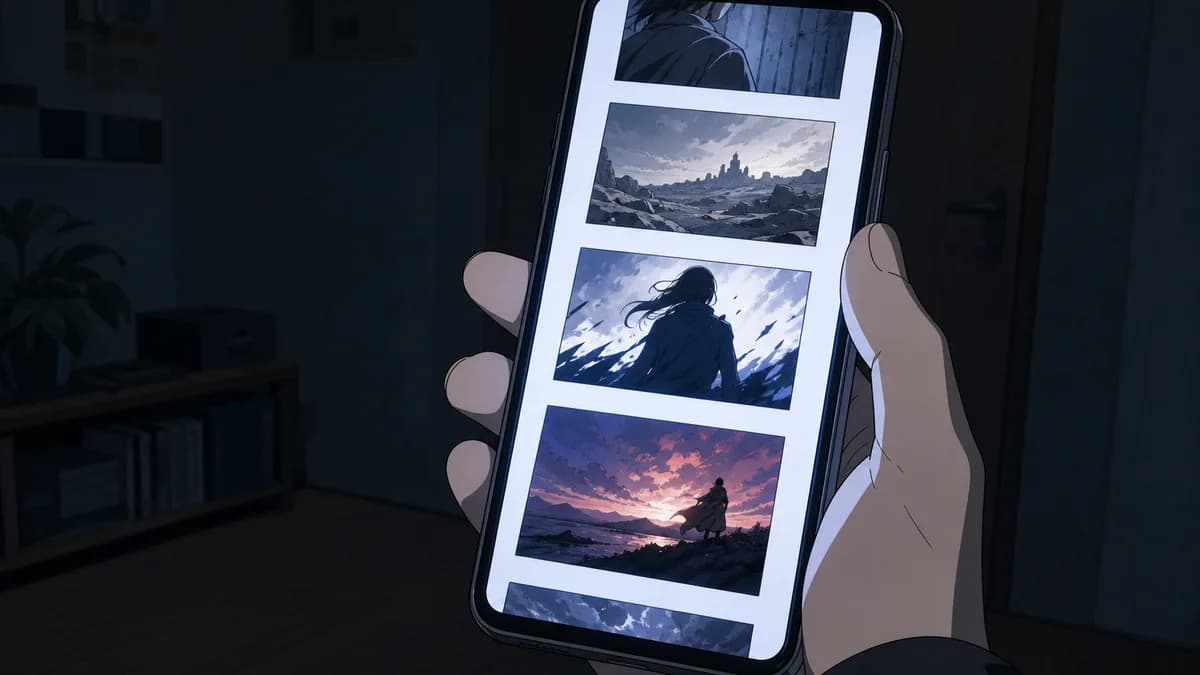
The reading format is not a minor delivery detail. It has a grammar of its own. In a vertical scroll, the reader's thumb controls the tempo, while the artist places empty space to shape each beat. A long blank stretch before a reveal holds the moment until the reader swipes. The source art is already in full color, so the comic itself settles many of the arguments about palette. That differs from a black-and-white manga, where color becomes an entire department's interpretation during production. Webtoons are also designed around individual images that make the reader stop scrolling and linger. An adaptation inherits quite a lot from that design. The mood and color logic are already visible, and the major showcase images can transfer almost intact. The problem is the shape of the page. A tall column does not fit a widescreen frame. Empty space that builds tension on a phone can look like a frozen cel when copied directly to television. Solo Leveling works because A-1 Pictures does not treat those gaps as literal instructions. It translates the vertical negative space into camera movement and light. That choice lets scenes breathe without leaving them stalled on screen. The scroll supplies a strong visual plan, but the studio still has to rebuild its timing for a format in which the viewer is no longer moving the page by hand.
Sound and Motion Must Be Built From Scratch
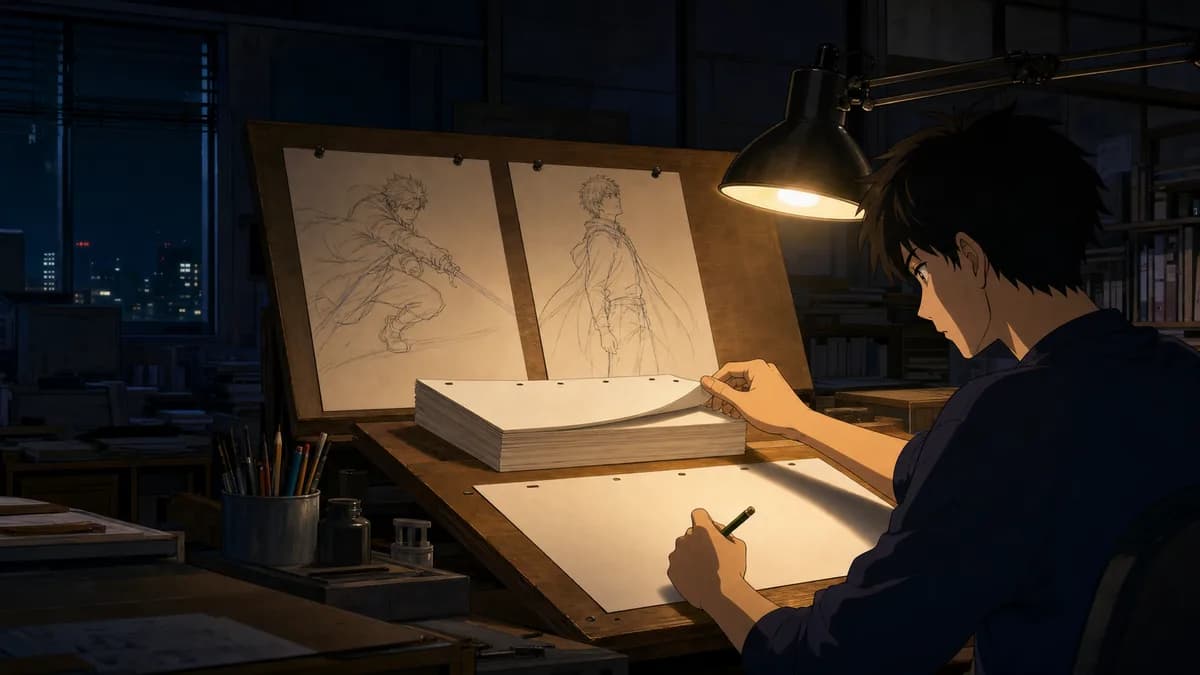
A large part of the adaptation work gets little credit. A webtoon contains no sound, and its art gives you the pose rather than every stage of the movement. The anime must invent everything the audience hears. Hiroyuki Sawano's work on the score, opening theme and insert songs does not sit around the action as decoration. It gives the show its pulse and tells the viewer when a hit has truly landed. The interface creates another problem. Floating status windows feel natural in a comic that each reader scrolls through at a personal pace. In animation, those windows need to become a visual language that can be understood in a second without stopping a fight. A print adaptation such as Frieren: Beyond Journey's End or Delicious in Dungeon starts from paneling that already suggests where an editor might cut. Manhwa offers gorgeous still images but leaves the movement connecting them for the animation team to solve. That missing middle is where a great deal of labor and money goes. When viewers describe one of these adaptations as looking expensive, they are often responding to the cost of creating what never existed on the page. The source supplies the poses and the spectacle. The studio has to make the body travel from one pose to the next, then add a complete audible world around it.
The Best Objection: Familiar Fantasy With a Larger Budget
The strongest criticism deserves a proper hearing. Fantasy built around game rules is not new. Sword Art Online, Overlord, That Time I Got Reincarnated as a Slime, The Eminence in Shadow and Shangri-La Frontier have used the numbers-go-up engine for a long time. From that angle, manhwa offers the same wish fulfillment under better lighting. Digital serialization, measured one chapter at a time, can intensify familiar incentives. It encourages regular cliffhangers and protagonist worship, along with supporting characters whose main purpose is to stand around being impressed. That is a fair account of the median title. It does not describe how high this pipeline can reach. A pipeline should be judged by its ceiling because the median print serial is forgettable as well. Audiences rarely notice that comparison since most of those print titles never receive anime adaptations. The webtoon lane already contains stories beyond power fantasy. Tower of God is slow, distrustful and genuinely mean in the way it handles its climb. The claim that Solo Leveling succeeded only because of its budget also gives away something important. The budget itself is the news. Producers saw enough value in this supply line to fund all the difficult connective work that its source format demands. Familiar genre machinery does not erase the industrial change that put such resources behind it.
What the New Pipeline Means for Coming Seasons
Once a lane proves itself, it can become permanent. Continuations start to look like plans instead of bets. That is how Solo Leveling Season 2: Arise from the Shadow exists. The Beginning After the End Season 2 shows the same web-serial route being taken by a very different kind of story. Light novels no longer own the fantasy slot on the seasonal chart by default. Viewers need a better filter than asking whether a show came from a webtoon. They should look at whether the studio solved the translation. Color ought to feel like direction, not like a filter placed over every shot. A fight needs animation through the middle of each movement instead of showing only the two ends of a swing. The score should have a recognizable personality and do real work within a scene. Solo Leveling passes those tests loudly. Plenty of later adaptations will fail them. When they do, people will be tempted to blame the source format even though the failures belong to the adaptation. A vertical comic cannot be transferred to television by tracing attractive panels and calling the job finished. It needs new timing and connective motion, with sound designed for material that was completely silent. The origin tells you how a title entered production. The quality depends on what the studio did during that translation.
FAQ
Manhwa is the Korean comics tradition. The titles currently feeding anime are webtoons in particular: digital-native comics published in full color and designed to be read as a single vertical scroll on a phone. For adaptation, that difference in format matters far more than the source's country of origin.