
The Ufotable Look: How One Studio Changed Anime Action
 By Mika Tanabe · Editor
Put on almost any Ufotable fight with the sound muted and an experienced anime fan can usually name the studio before the title card. That recognition is no accident. It comes from an unusually consistent house style, one built around digital light and movement with enough conviction that it changed what viewers expect action anime to look like.
A studio you can recognise from one frame
Most casual viewers do not think much about the studio behind an anime. They remember the series and its characters, while the production house stays out of sight. Ufotable is a rare exception. Founded in 2000, the studio spent its first decade developing a look instead of chasing a hit. That look depends on three elements working together: meticulous in-house digital compositing, effects animation staged as part of the choreography, and a virtual camera capable of movement that no animator could draw by hand in the same way. Ufotable did not invent any of those tools. Its identity comes from giving each one serious attention rather than leaving it for the end of production. Other studios might use lighting to finish a scene; Ufotable treats light almost like paint. Other productions may cut around a complicated effect; Ufotable will build the shot around it. Freeze the result, hide the logo, and turn off the sound. The studio can still be obvious from that single image. Few anime houses have made their production choices so visible to an ordinary viewer, and fewer still have turned those choices into such an immediate signature.
When compositing becomes the attraction
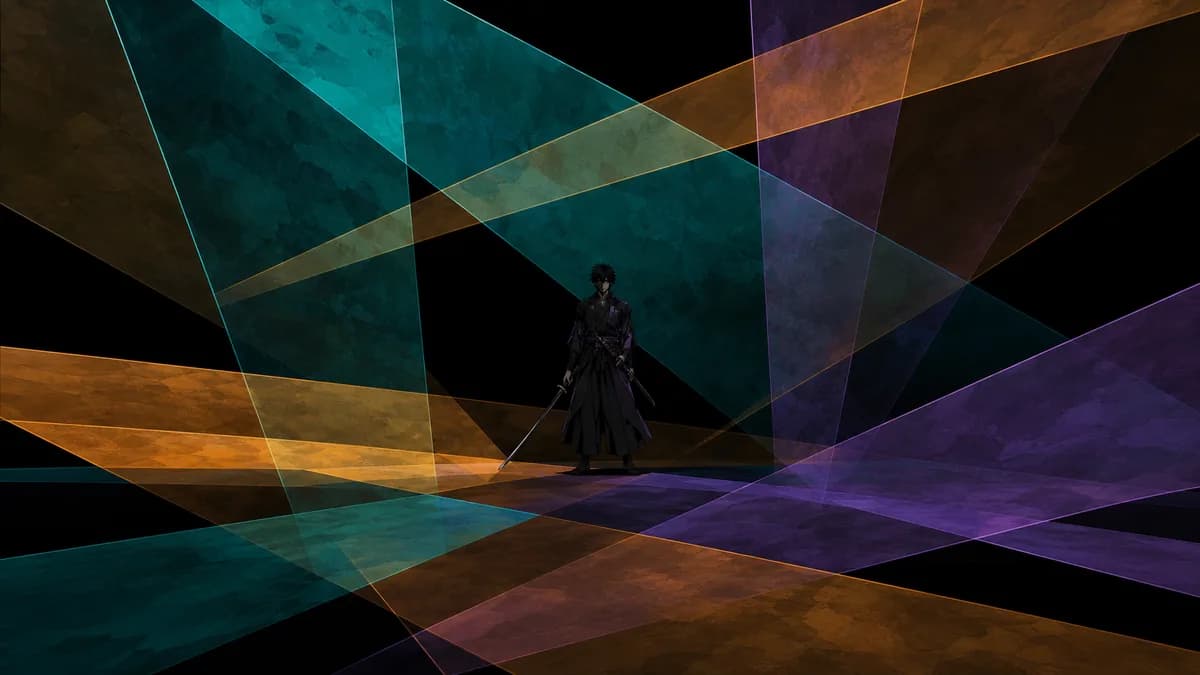
Compositing is where drawn characters, backgrounds, lighting, glow, haze, and lens effects are assembled into the finished image. At most studios, it functions as a quiet final pass. Ufotable puts it right at the front of what the audience notices, and handles it in-house to a degree that few competitors attempt. The resulting frames have a familiar luminosity. Blacks look deep and velvety, bright areas bloom like glass lit from behind, and a layer of atmospheric haze gives even a motionless shot a convincing sense of depth. This approach can be traced straight back to the late-2000s Kara no Kyoukai films and the studio's Type-Moon work on Fate/Zero and the Fate/stay night entries that followed. Those projects gave Ufotable ideal material for the style it was developing. Rain, neon, and magic all became reasons to soak the frame in composited light. The technique was never limited to making individual objects glow. It determined how the entire shot felt, from the darkest part of the background to the brightest magical effect. Once that sensibility reached a mainstream shonen series, audiences read it as spectacle in its purest form.
Fire, water, and lightning take over the fight
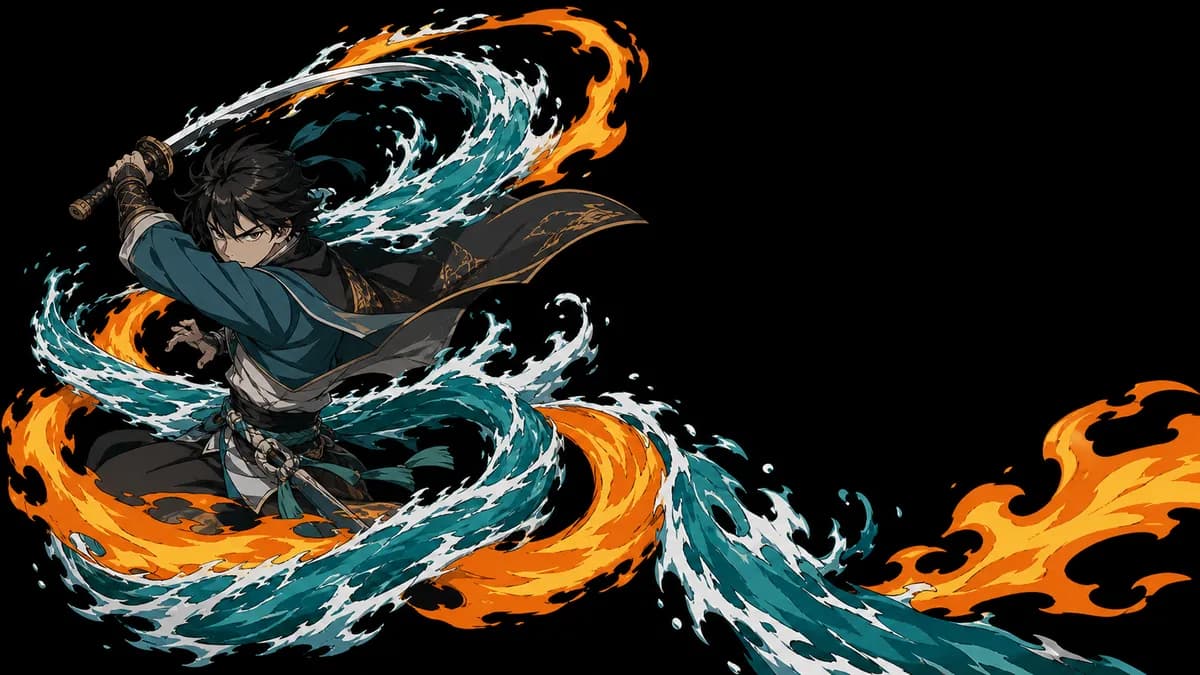
Demon Slayer shows this method at its clearest. The series turned Ufotable from a favourite among connoisseurs into a household name, and its Breathing techniques work as an extended showcase for effects animation. Water Breathing opens into rolling, stylised swells that recall ukiyo-e woodblock prints. Flame Breathing surges across the frame in layered sheets of fire. Thunder Breathing arrives as one white crack of speed. Each effect has a different visual character and a different job within the action. They are not stock particles attached after the fight has already been animated. They combine hand-drawn animation with digital distortion, sparks, and glow, so the images can be beautiful without losing their sense of danger. The effects also carry the force and direction of each attack, which is why they feel integrated with the fighters rather than pasted over them. Episode 19 of the first season remains the canonical example. Tanjiro channels the Hinokami Kagura for the first time, and the episode presents television animation with the finish of a feature film. For many viewers, that sequence was the moment Ufotable's capabilities became fully clear. The studio had taken its established method and delivered it in a scene that a huge audience would remember.
The impossible camera
Movement supplies the third part of the Ufotable style. The studio constructs environments in 3D, sends a virtual camera through those spaces, and combines the footage with 2D character animation. This process produces the spiralling dives and pursuits through corridors that define so many of its action scenes. Pure hand-drawn animation struggles to sustain those camera moves, while pure CG often makes them feel rigid. Ufotable works between the two, using the dimensional space for freedom of movement while keeping the characters rooted in expressive 2D animation. The Fate duels served as the proving ground. Those fights are staged as though the camera has joined the combat, circling the participants and diving around them while exchanges happen at impossible speed. The constant motion could easily make the action confusing, but the staging keeps the important beats legible. There is an obvious risk to the technique. Handled poorly, it resembles a game cutscene and draws attention to the machinery behind the shot. Ufotable's best sequences avoid that stiffness. A swordfight stops feeling like an event viewed safely from outside. It feels as if the viewer is falling through the space along with the blades, sparks, and bodies.
The new standard and its cost
The effect on anime action has been enormous. When the Mugen Train film arrived, it became the highest-grossing movie in Japanese box-office history, taking a record that Spirited Away had held since 2001. Its success proved that a continuation of a TV anime could become a mainstream blockbuster instead of remaining a niche event for existing fans. The longer-lasting change was the visual baseline it established. Saying that an episode looked like a movie used to be an exceptional compliment. It has increasingly become the standard viewers expect, and other studios can be seen working to answer that demand. Ufotable's approach is not universally loved. Critics of its heavy gloss and composited light argue that the digital sheen can flatten the raw, tactile character acting found in work from studios such as MAPPA on Jujutsu Kaisen and Chainsaw Man. That criticism gets at a genuine difference in taste. One approach favours painterly digital spectacle, while the other places greater weight on hand-drawn grit. Their contrast now drives one of the liveliest arguments around modern action anime. Ufotable did not settle that argument, but its success is the reason the argument has become so prominent. The studio changed both the scale of spectacle audiences thought television productions could deliver and the terms people use when judging it.
FAQ
Today, the answer is Demon Slayer by a wide margin, including the TV series and its record-breaking films. Before that success, Ufotable established its reputation through the Kara no Kyoukai film series and its Fate adaptations. Fate/Zero and the Fate/stay night entries that followed were where the studio's signature look first came together in full.