The Sakuga Tradition: When Anime Animation Becomes the Story
 By Mika Tanabe · Editor
There's a specific feeling when an anime fight suddenly 'goes sakuga.' The linework loosens, the motion turns liquid, weight and momentum snap into place, and for thirty seconds the screen is doing something no manga panel and no live-action budget could match. Then your feed fills with clips of exactly that cut. Sakuga is the Japanese fandom's word for these bursts of exceptional animation, and the culture around it is unlike almost anything in Western pop media: fans who track individual animators by name, trade their signature sequences, and argue about key animation the way film buffs argue about cinematographers. My claim is simple. Sakuga is the most honest form of appreciation anime has, and its rise has reshaped the medium itself, for better and at a real cost.
What Sakuga Actually Means
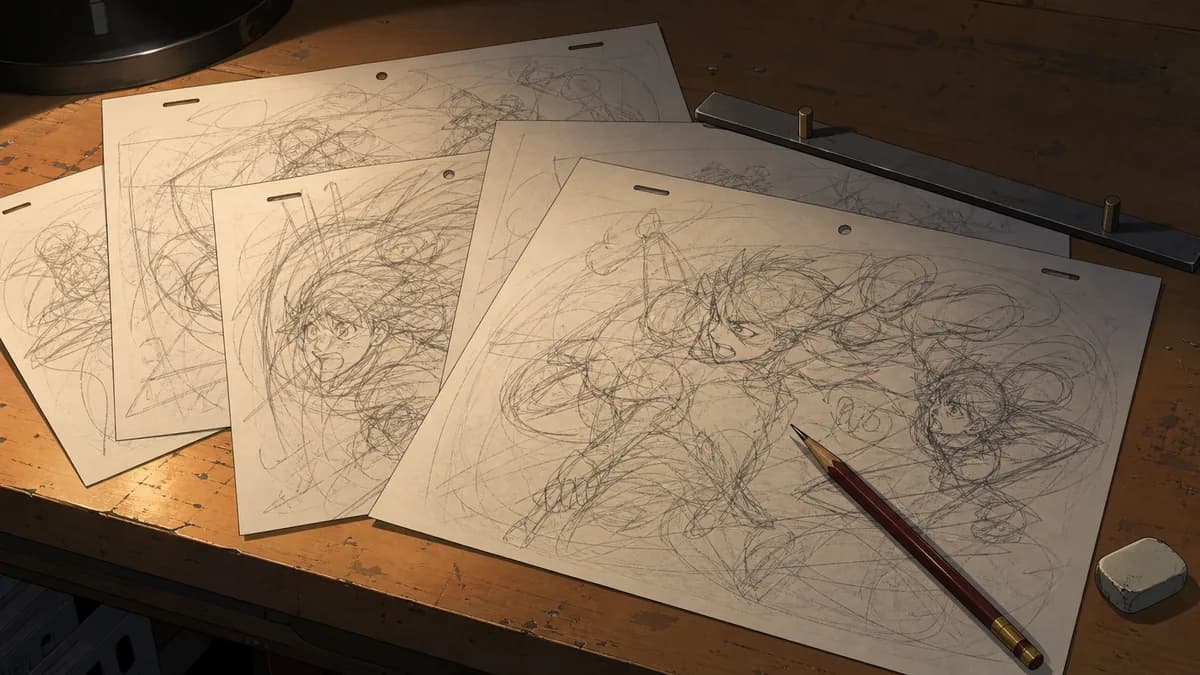
The word literally just means 'drawing pictures,' but fandom has narrowed it to something specific: the standout cuts of expressive key animation that lift a scene above ordinary competence. Crucially, sakuga does not mean 'more frames' or 'smoother motion,' which is the single most common misconception. A brilliant sakuga cut can be drawn on very few frames if the timing, spacing, and posing are inspired, because anime built its entire aesthetic on limited animation, choosing where to spend motion rather than spreading it evenly. What fans are actually responding to is craft: the snap of a well-timed impact, the exaggerated smears and distortions that sell speed, the real weight of a body actually falling. Good sakuga is not about the quantity of drawings; it's about the intelligence behind each one. Once you learn to see that distinction, you stop asking whether animation is 'smooth' and start asking whether it's alive, which is a far better question.
The Cult of the Key Animator
What makes sakuga culture remarkable is that it treats animators as authors. Anime is one of the only popular forms where fans identify individual craftspeople by their fingerprints. It traces back to figures like Yoshinori Kanada, whose bold posing and stylized effects animation became a school unto itself, a whole way of drawing energy and explosions that generations copied. That lineage runs forward to modern stars like Yutaka Nakamura, the Bones animator whose signature debris-and-motion cuts are so distinctive that fans coined a nickname for the geometric fragments he scatters through his action. Then came the so-called webgen, a generation of animators who grew up studying sakuga clips online and broke into the industry through that fan culture directly. Devoted fans build databases, watch the credits, and can often name who animated a given cut on sight. In most media the artisan is invisible, buried under the director and the stars. In sakuga fandom, the artisan is the entire point.
The Canon of Landmark Cuts
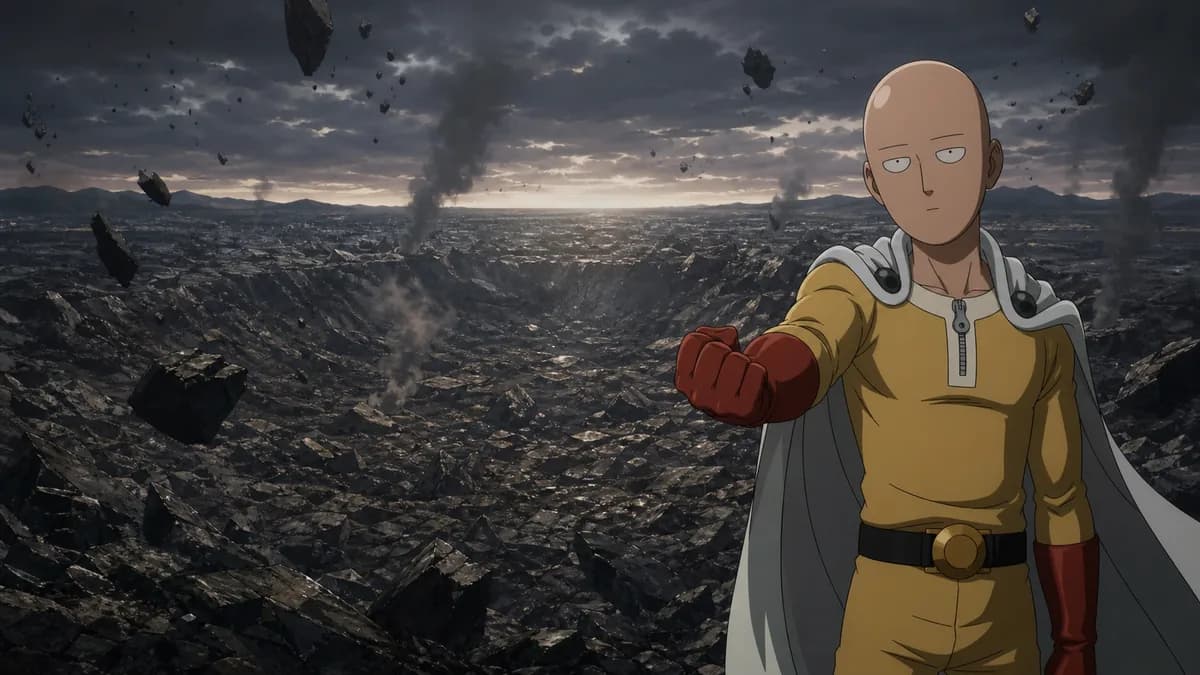
Every sakuga fan has a mental highlight reel, and a few sequences show up on nearly all of them. The Naruto and Naruto Shippuden series produced some of the most-studied fight animation around, and the climactic duels against Pain became touchstones that fans dissected frame by frame. Mob Psycho 100 turned its entire visual identity into a sakuga showcase, blending paint, smoke, and rubber-limbed motion into fights that doubled as emotional eruptions. Demon Slayer's Ufotable-animated set-pieces went viral and helped push the franchise toward record-breaking box office, proving sakuga could move a mass audience and not just a niche. And One-Punch Man's first season became shorthand for spectacle itself, its fluid destruction setting a bar the medium is still measured against. These are not merely 'good episodes.' They are the shared reference points a whole fandom uses to calibrate what elite animation actually looks like, the way film canon uses a handful of famous shots.
The One-Punch Man Test
The clearest proof that star animators matter is what happens when they leave. One-Punch Man's first season, produced at Madhouse, is widely held up as some of the finest action animation of its era, a murderers' row of talent turning a parody of superhero fights into genuinely jaw-dropping ones. When the second season moved to a different studio with a different team, the reception cratered, and the single most common complaint was the animation. Same source manga, same characters, same jokes; the variable that changed was the people drawing it, and audiences felt the drop instantly. It's the closest thing anime has to a controlled experiment, and it settles a real question: sakuga is not interchangeable polish you can order by the yard. It's the specific work of specific artists, and swapping them out is felt immediately by an audience that mostly can't name what changed but knows, unmistakably, that something is missing.
The Case Against: Spectacle Over Story
Here's the honest counter-argument. Sakuga worship, critics say, rewards decontextualized flash, a fandom that clips a fight, ignores the story it serves, and cheers craft as pure spectacle. Push that far enough and studios start chasing 'sakuga bait': flashy, animation-forward moments engineered to trend, in shows that are hollow between the highlights. There's a related snobbery, too, where fans dismiss quieter, dialogue-driven series as lesser simply because nothing explodes in them. It's a fair charge, and the worst of sakuga discourse absolutely earns it. But it misreads what the tradition is at its best. Great sakuga is storytelling. Mob Psycho 100's animation is the emotional text, not decoration draped over it; 86's visual restraint is a deliberate craft choice; a show like Frieren: Beyond Journey's End proves that subtle character acting, a raised eyebrow or a held silence, is sakuga too. The problem was never valuing animation. It's forgetting that the best animation is always in service of something.
Why It Matters Now
Sakuga has become a selling point, and that changes the stakes entirely. Studios like MAPPA and Ufotable have turned animation quality into a brand promise, marketing shows like Jujutsu Kaisen and Chainsaw Man partly on the expectation of show-stopping cuts. That's thrilling for viewers and genuinely dangerous for the people drawing them. The same fan appetite that celebrates a legendary sequence also fuels punishing schedules, because spectacle at that level is extraordinarily labor-intensive, and the industry's working conditions are a long-running scandal in their own right. The healthiest version of the sakuga tradition is the one that keeps the craft literacy, the frame-by-frame appreciation and the crediting of individual artists, while refusing to treat animators as an inexhaustible resource. Sakuga fandom, at its best, is anime finally taking its own artists seriously. The task now is to make sure that respect extends past the highlight reel to the human beings who actually drew it.
FAQ
Sakuga is a Japanese term that literally means 'drawing pictures,' but anime fans use it specifically to mean standout, high-quality key animation, the moments where the craft itself becomes the spectacle. When fans call a scene 'pure sakuga,' they mean the animation in it is exceptional.