Wit Studio and the Art of Taking Risks
 By Mika Tanabe · Editor
Every anime studio takes chances, although those chances are usually matters of style. Wit Studio has repeatedly gambled on what it chooses to make, which is a much less common foundation for a company. After Attack on Titan made its name, Wit could have repeated that formula for the next decade. It chose a different route. The studio backed a Norse historical drama with no magic in it, then made a fantasy about a prince who cannot fight. It also took on a con-artist caper, the sort of proposal an accountant could quietly kill before production began. Those choices reveal what actually distinguishes Wit. Kinetic action and bright color are part of its work, but they are not its signature. The studio keeps adapting stories that deliberately delay their payoff, then assigns some of its best craft to the long wait before the reward arrives. No title makes that case better than Vinland Saga.
A Pitch the Market Did Not Want
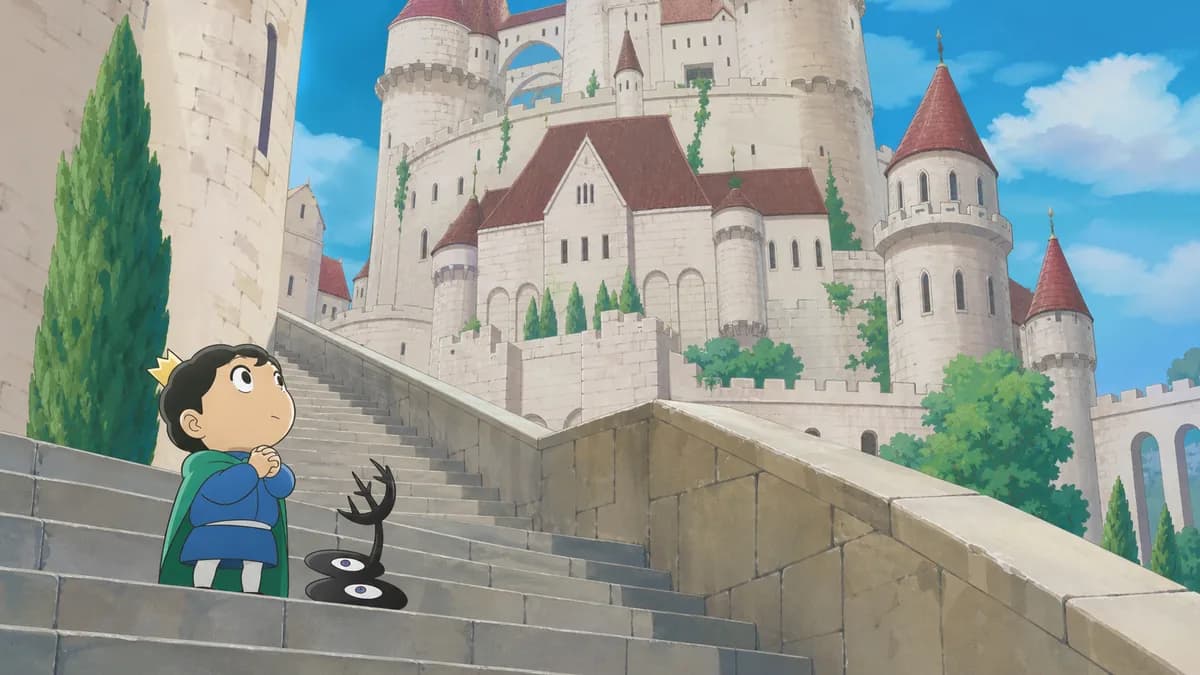
Look at what the market rewarded when Vinland Saga was made. Reincarnation power fantasy was the safest money in the industry. That Time I Got Reincarnated as a Slime, Re:Zero, and Mushoku Tensei: Jobless Reincarnation were built to catch viewers within the first hour and continue escalating from there. Wit chose Makoto Yukimura's seinen manga instead. Its world is medieval England and the cold North Sea, with a primarily adult male cast. The material deals in mud, gore, and politics. There is no romance engine to keep the plot moving, while the lead spends most of his screen time being genuinely unpleasant company. Adapting that story was about as far from trend chasing as a studio could get. Vinland Saga also fits a wider habit rather than standing as a lucky exception. Ranking of Kings puts brutal storytelling beneath picture-book art, and its protagonist cannot win a fight. Great Pretender is a heist caper, a genre anime almost never funds. Vivy: Fluorite Eye's Song is an original with no manga safety net underneath it, as is the film Bubble. The Ancient Magus' Bride is quiet and unhurried because the story wants to be. Across these projects, Wit repeatedly puts time and money behind ideas whose appeal is not obvious from a quick pitch. That pattern says more about the studio than any recurring visual trick could.
Making the Long Wait Pay Off
Vinland Saga puts the name of a place in its title, yet this run barely reaches it. That choice tells you exactly how the show approaches time and expectation. The revenge plot is built to be dismantled rather than fulfilled. For that dismantling to mean anything, the show has to earn it over a full two-cour run. Teasing the idea and paying it off early would gut the argument. Hiroshi Seko handles series composition and the scripts, and the big risk lies in the structure he protects. The adaptation does not compress the moral groundwork, nor does it borrow a later climax to give the middle an artificial lift. It trusts each stage of the story to carry its own weight. Attack on Titan's first run used a related strategy at a very different tempo. It presents itself as a siege story while keeping its real subject out of sight much longer than most shows built around an immediate hook would allow. Ranking of Kings uses the distance between its storybook appearance and its cruelty in a similar way. In each case, the delay is doing real work. It is not a decorative habit that can be removed without changing the story. When the intended payoff is so far away, every hour leading to it must remain compelling on its own terms. That assignment is harder than finding a fresh spectacle to deliver each week, and Wit accepts it without rushing the material toward an easier reward.
Trusting the Cast Instead of Fixing the Hero
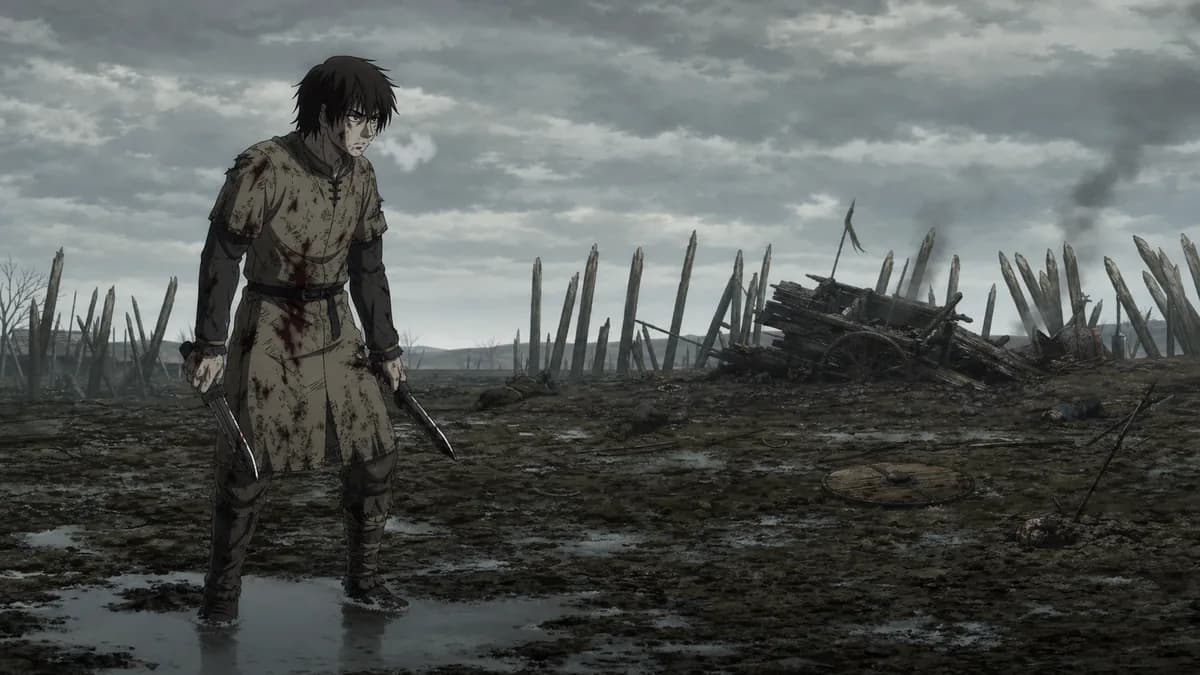
Thorfinn Karlsefni is the protagonist, but he spends most of this run acting as a weapon rather than a person. He is feral and monosyllabic, trapped in the orbit of a duel he cannot win against the mercenary who took his father from him. A commercially cautious adaptation would start sanding down those qualities after a few hours, worried that viewers might lose patience. Wit leaves him difficult and lets the people around him provide much of the show's immediate pleasure. Askeladd supplies the intelligence that drives the plot. He is a father-killer written with enough care that the audience can end up rooting for him against its better judgment. Canute Svenson first appears as a timid prince, then hardens into the most interesting figure in the run. On paper, that transformation belongs to a supporting name. Thors Snorresson states the show's moral thesis early and is then removed from the board. From that point onward, the argument must be earned again through people who never believed it in the first place. Thorkell brings the joy that a story this bleak needs without making the larger conflict feel lighter than it is. The show asks viewers to invest their affection in that surrounding cast while its hero remains deliberately hard to love. This is not a side effect of the adaptation. It is the gamble that gives the ending its force. By refusing to turn Thorfinn into an easier lead ahead of schedule, Wit allows the other characters to become the reason viewers stay, and it preserves the shape of his story.
Weather, Labor, and Violence Without Glamour
Yuusuke Takeda's art direction shows where the production's money goes, and it is not where a hit-chasing series would usually spend it. Snow, sea, mud, and grey daylight establish the physical weather of the North. The environment has more presence than most of the cast, so travel and violence never feel detached from the cold ground beneath them. Combat is presented as labor instead of choreography. It looks heavy and ugly, with an exhaustion closer to farm work than a highlight reel. That approach deliberately rejects the kind of action most likely to sell short clips by itself. The staff choices support the same priority. Shinji Ochi contributes key animation to the opening and to one of the run's standout stretches. Satoshi Kadowaki serves as animation director on several of its heaviest hours, including the closer. Tadahito Matsubayashi storyboards and directs that finale. The production points its talent toward emotional weight instead of treating spectacle as the automatic destination for its strongest artists. There is one honest limitation. CG carries the ships and some of the sea work, and anyone watching for the join can see the seam between those elements and the drawn material. That is the one area where the show's texture becomes less convincing. It does not erase the strength of Takeda's direction, but it keeps the production from feeling completely unified whenever the ships have to carry a scene.
The Strongest Criticism: Wit Does Not Finish
The strongest case against this view has little to do with personal taste. It concerns follow-through. Wit establishes landmark adaptations, then other studios bring them to the finish. Attack on Titan's endgame went to MAPPA, and Vinland Saga's continuation went there too. Fullmetal Alchemist: Brotherhood remains the gold standard for adaptation loyalty because one studio returned and handled the entire story properly through the last page. Against that example, calling Wit a risk-taker can sound like generous language for a company that leaves once it has warmed up the audience and the hardest part of continuation begins. The visible CG seams add another weakness to the case. Prestige can also become a comfort zone of its own, especially once viewers learn to treat difficult source material as part of a studio's brand. This criticism has real weight, but there are two solid answers. First, proving that an unfashionable pitch can work is rarer than completing a project that has already found an audience. The continuations people now enjoy only exist because Wit first showed that Vikings and withheld catharsis could hold viewers when nobody knew whether the idea would succeed. The studio assumed the uncertainty at the stage when failure was easiest to imagine. Second, Spy x Family proves that Wit can print money whenever it decides to do so. The harder selections are therefore a choice, not evidence of a ceiling. Wit may not always remain for the full journey, but its willingness to begin these projects still changes which stories get the chance to continue at all.
FAQ
Yes. It packages the studio's patience and brutality into a story whose long-delayed payoff has to be earned. Anyone looking for Wit's crowd-pleasing side should begin with Spy x Family instead. Ranking of Kings is the better starting point for viewers who want the studio at its strangest.