Studio Trigger's Signature Style: Go Beyond the Impossible
 By Mika Tanabe · Editor
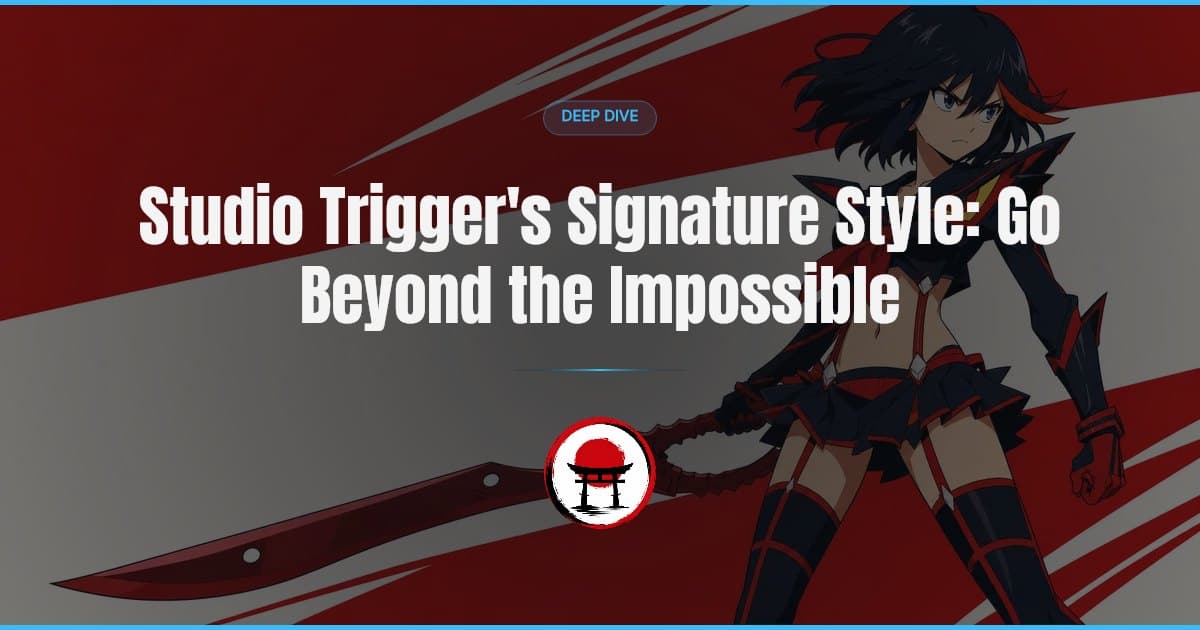
Trigger gets described the same way every time: loud, over-the-top, colors turned past eleven. That's a description of the symptom, not the style. What actually defines the studio is a philosophy it inherited rather than invented, which is that the animator, not the camera, is the author of a scene. Everything people file under "Trigger energy" follows from one rule: when physical truth and emotional truth disagree, draw the emotion. That is why the faces distort, why the mechs outgrow the frame, and why going beyond the impossible functions as a structural principle instead of a slogan. The clearest proof of it isn't a Trigger show at all. It's Gurren Lagann, made at GAINAX, where the method was tested at full series length and won.
The Studio Was a Method Before It Was a Company
Look at how Hiroyuki Imaishi is credited on Gurren Lagann and the whole thesis is already visible. He is the Director, but he is also on storyboards, on key animation, on mecha animation direction, and, almost absurdly, on eyecatches. Directors delegate. Imaishi kept his hands in the drawings. Beside him, Kazuki Nakashima handled series composition and wrote the bulk of the scripts, which matters more than it sounds, because someone had to build a spine strong enough to survive that much animator freedom. When Imaishi and Masahiko Otsuka later left GAINAX to found Trigger, they didn't take a franchise with them. GAINAX kept Gurren Lagann. What they took was the working method. Kill la Kill put Imaishi and Nakashima back in the same room under a new sign, and the result reads as a direct continuation of that approach even though the two shows share no story at all.
Off-Model Is the Grammar, Not the Error
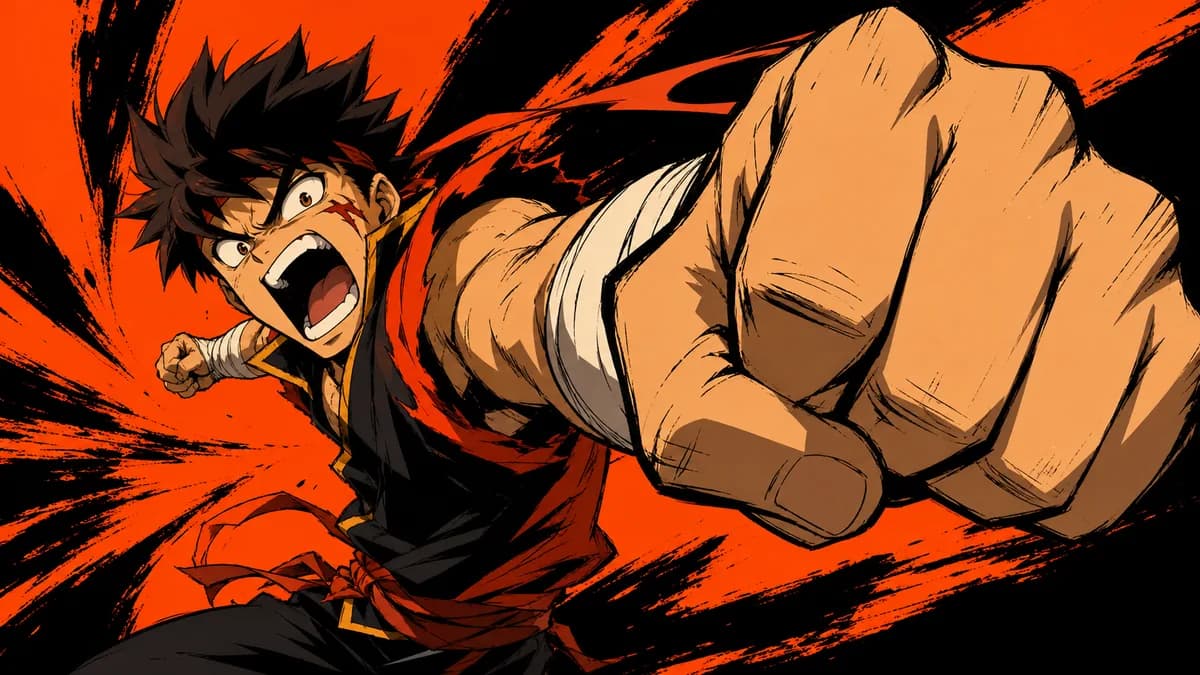
Fan databases tag Gurren Lagann with "off-model animation." On almost any other show that's a complaint, a note that the drawings drifted away from the character sheets. Here it's a declaration. A face stretches because the feeling stretches. A body twists into a pose no spine allows because that pose reads louder than an accurate one would. The industry default is precision: hold the character on-model and let the storyboard carry the drama. This lineage inverts the priority and lets an individual animator's hand deform the frame in service of the beat. The ancestry is visible in GAINAX's earlier swings, with FLCL applying the same permission to adolescence and Gunbuster to melodrama. The cost is real and worth naming. Pause a frame and it can look plainly wrong. In motion, at speed, it lands harder than a cleaner drawing ever would.
Escalation Is Structure, Not Volume
The escalation works because it is load-bearing. Gurren Lagann starts in a buried village and climbs: surface, sky, orbit, then outward until the opposition sits closer to cosmic horror than to a rival pilot. The tags read like a super-robot checklist, all gattai and combining mecha and attacks announced at full volume before they land. What keeps this from collapsing into pure power fantasy is that every rung gets charged for. Each victory manufactures the next crisis. The series takes a hard time skip and spends its back half interrogating whether the front half's triumph was actually good for anyone, with Rossiu existing almost entirely to press that question and Simon forced to answer it as a leader rather than as the boy who dug tunnels. Kill la Kill runs the identical ladder with clothing as the escalating variable. Promare runs it with fire. Same architecture, different fuel.
The Strongest Objection: It's Just Noise
The fair critique, and it is fair, is that this style has a ceiling. Once you know the shape you can call the beats: the setback, the shouted reversal, the jump in scale. Volume flattens nuance, and a register built entirely on conviction has no gear for ambiguity. Darling in the Franxx is the cautionary case, because when the emotional logic underneath wobbles the maximalism stops amplifying anything and simply gets loud. But the objection mistakes legibility for shallowness. Making stakes readable at a glance is a craft decision, not the absence of one, and the best work in this lineage pays for its highs with real loss. Gurren Lagann is filed under Drama and Romance alongside Action and Mecha for a reason. It is genuinely willing to take beloved characters off the board and make the survivors carry that weight forward. Bombast that costs nothing is noise. This costs.
The Range the Reputation Hides
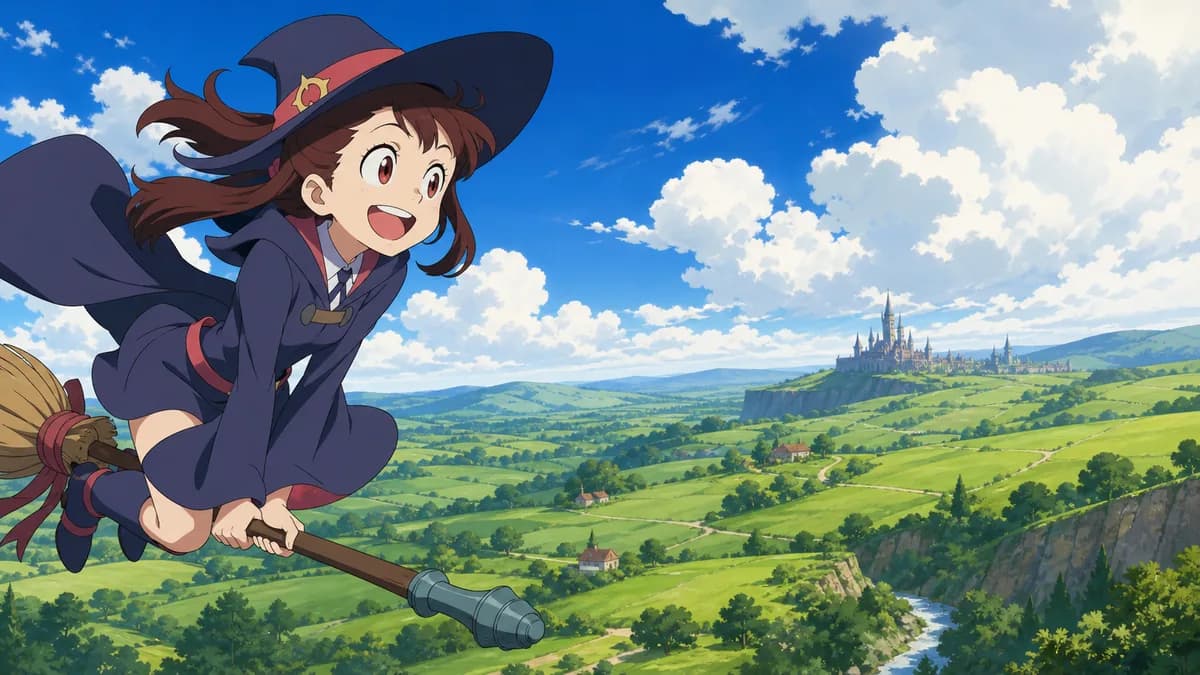
Because the loud shows travel furthest, Trigger gets read as a studio with one setting. It isn't. Little Witch Academia takes the same animator-first instinct and points it at warmth and wonder, with elastic, expressive drawing serving small-scale enthusiasm rather than galactic stakes, and it's the easiest door in for anyone allergic to shouting. Cyberpunk: Edgerunners is the sharpest proof of range: the exact same kinetic grammar, the same willingness to let a frame buckle under feeling, aimed squarely at tragedy instead of triumph. It moves like a victory lap and ends like a wound. Zenshu shifts the register again. What stays constant across all of them isn't tone or scale or genre. It's who holds authority over the shot. That's the actual signature, and it's why "Trigger style" is a poor description of a body of work spanning witch-school comedy and self-contained heartbreak.
What This Lineage Actually Changed
The lasting effect isn't a look for other studios to copy. Plenty try, and the imitations mostly read as cosplay. What it changed is a permission structure. Gurren Lagann helped normalize the idea that an animator's personality is a legitimate authorial voice rather than a deviation to be corrected, and that a director who still draws is an asset instead of a liability. A generation of sakuga-literate viewers now watches for individual hands the way film audiences watch for cinematographers, and studios market that fluency openly. Start where the argument started. Gurren Lagann streams legally on Crunchyroll and Hulu, and it's an original work rather than an adaptation, so nothing about it was hedging against a manga. From there, Kill la Kill and Promare show the method under the Trigger name, and Cyberpunk: Edgerunners shows it grown up. Watch in that order and the excess resolves into a thesis argued in drawings.
FAQ
No. Gurren Lagann was produced at GAINAX. Trigger was founded later by people who had worked on it, most notably director Hiroyuki Imaishi, which is why the two feel like one creative lineage despite being separate companies.