CloverWorks and the Shape of Modern Anime
 By Mika Tanabe · Editor
Most celebrated anime studios come with a promise. Once the logo appears, you can usually guess the flavor. Sometimes that means luminous sword fights. Elsewhere it is a wall of dialogue or sun-soaked melodrama. CloverWorks makes that habit almost useless. Across one run of seasons, it delivered the gothic gut punch of The Promised Neverland, then supplied television with its softest romances in Horimiya and My Dress-Up Darling. It also made the co-produced spy comedy Spy x Family and Bocchi the Rock!, a band dramedy that blew up online with animation nobody expected. CloverWorks stands out because it refuses to settle into one signature. It works like an anti-specialist studio. Its range, rather than any recurring look, is what makes it such an interesting bet in modern anime.
A Studio Without a House Look
Try to pin down the CloverWorks aesthetic and the definition falls apart. Ufotable brings fire and glass to mind, and its style can be summed up in a sentence. CloverWorks will not fit so neatly. The same catalog contains the pastel closeness of Horimiya, the welcoming cosplay-shop atmosphere of My Dress-Up Darling, the chill of the orphanage in The Promised Neverland, the rough delinquent energy of Wind Breaker, and the fractured oddness of the original Wonder Egg Priority. Those shows are not small variations on one idea. Each has its own view of what animation should accomplish, whether the job is comfort, terror, spectacle, or empathy. No shared color palette or repeated character-design habit ties them together. What recurs is the working method. Each project goes to a director with a particular sensibility, then the production is shaped around that director's vision instead of being pressed into a corporate mold. CloverWorks ends up with a catalog that feels closer to an anthology than a conventional brand. The one reliable prediction is that its next title probably will not look much like its last one. That lack of a house look does not leave the work anonymous. It shifts your attention from a fixed studio surface to the choices being made for each individual show.
Romance and Horror on the Same Slate
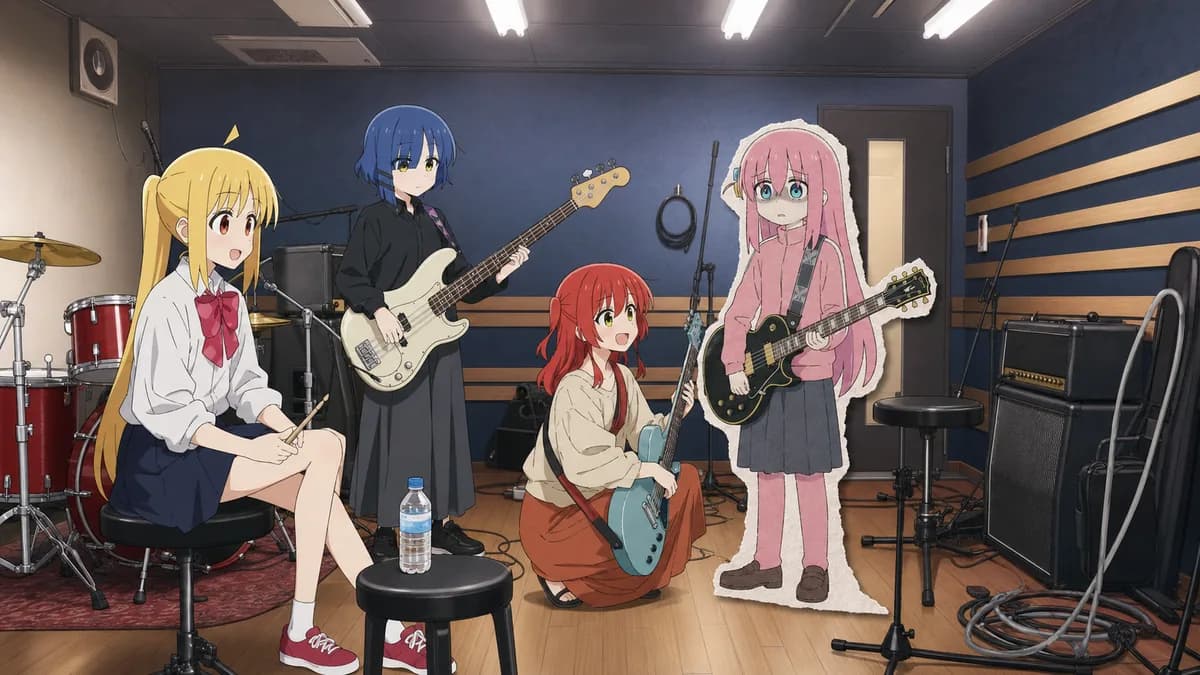
The sharpest evidence is the sudden change in tone from one production to another. CloverWorks can linger on a blush and catch the small beats of embarrassment and tenderness that make Horimiya and My Dress-Up Darling feel like you have overheard a real crush. The same studio can then build the escape-room panic of The Promised Neverland. In that series, every warm image may conceal danger, and the direction turns cuteness into a weapon. Many studios choose one register and stay with it because intimacy and dread demand opposing instincts. Intimacy needs stillness and small gestures placed at exactly the right moment. Dread depends on tension and misdirection. The editing creates fear before anything openly terrible happens. CloverWorks treats each mode as something it can handle, not as an awkward departure from its usual work. Its romances know how much drama can sit in a micro-expression or a pause. Its horror understands that fear begins as a problem of staging before it becomes a problem of plot. A single studio showing real command of both registers, in the same building and across overlapping years, is much less common than a quick look at its credits suggests. Most production houses would be delighted to become great at either one. CloverWorks has repeatedly shown that it can speak both languages without making one feel like an imitation of the other.
Why Bocchi the Rock! Needed the Chaos
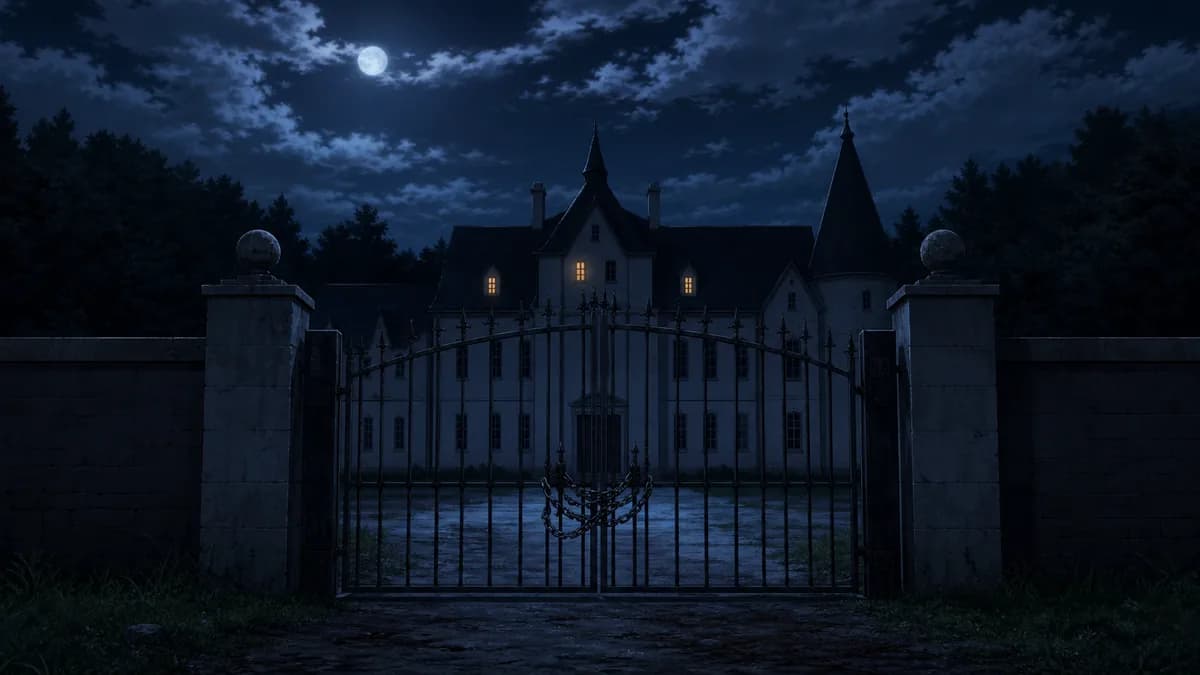
Range would mean less if CloverWorks only moved between safe genre assignments. Bocchi the Rock! makes the stronger case. A mainstream music comedy that could have coasted as a crowd-pleaser became a playground for form. The direction breaks loose inside the show through cutout jokes, claymation detours, sketchbook doodles, and abrupt changes of medium that give shape to one anxious girl's inner weather. On paper, that collection of devices could have produced noise. In practice, it became the soul of the series. Bocchi the Rock! went genuinely viral because of those animation decisions, not only because viewers liked the cast. The experiment works because the production treats each visual interruption as part of the character rather than as decoration laid on top. The same appetite for an unusual gamble can be seen in an original such as Wonder Egg Priority. Its sheer visual density famously outran its own production schedule. CloverWorks does not bring every gamble in for a clean landing, and its record makes that plain. Still, a studio unwilling to risk a strange swing would never make something like Bocchi. CloverWorks keeps taking that shot even with the possibility of a miss. The successes matter because the danger is real, and the weaker outcomes show that the studio's freedom is not a tidy marketing story invented after the fact.
Aniplex Gives the Range an Engine
A studio cannot sustain this breadth on taste alone. CloverWorks grew out of A-1 Pictures near the end of the last decade and works as a subsidiary of Aniplex, the Sony-owned powerhouse that finances and sells a large share of the anime its audience already watches. That support has practical consequences. It provides the pipeline needed to keep several ambitious productions moving at the same time, along with the weight required for major co-productions. Spy x Family, for example, is shared with Wit Studio, which divides a huge hit between two capable production houses. Money by itself does not produce an interesting series. Anime has no shortage of dull work made with substantial funding. It does, however, give CloverWorks room to attempt a horror thriller, a romantic comedy, a band comedy, and a spy caper within the same window without staking the entire company on any single title. The anti-specialist approach only works because a steady industrial base sits beneath it. That base can absorb a miss while funding the next four experiments. The arrangement helps explain why CloverWorks can keep handing different projects to creators with different aims instead of retreating to the safest version of its latest success. Its range rests on creative trust, but that trust is backed by a production system able to carry the cost.
The Case Against a Studio With No Signature
There is a serious objection to this argument. A studio without a house style can look less like a versatile creative company and more like a contractor, a pair of hands adapting other people's manga without a soul of its own. The uneven quality across the catalog gives that criticism some force. The second season of The Promised Neverland remains the obvious example. It was a rushed adaptation that removed beloved arcs and burned through a great deal of goodwill. That is exactly the sort of failure that stronger creative guardrails might have stopped. The objection is fair, but a missing house look does not mean a missing identity. CloverWorks places its identity at another level. It follows a director-led philosophy that takes adaptation seriously and puts faith in individual creators instead of forcing every show through one template. The very same philosophy can produce the high of Bocchi and the low of Neverland. These are not unrelated accidents on opposite sides of the studio's history. They are possible results of one consistent wager, and that wager comes with an unstable return. CloverWorks may lack a dependable visual stamp, but its willingness to build around the needs of a particular production is recognizable. Ambition can remain consistent even when execution does not. That is still an identity, including on the nights when the result gives viewers good reason to wish someone had stepped in sooner.
What Viewers Get From All That Range
For anyone deciding what to watch, the usual studio shortcut stops working here. Following the logo of many production houses gives you a reasonable sense of the tone ahead. A CloverWorks credit says almost nothing about tone and everything about intent. It suggests that someone had the room and resources to pursue a particular idea for this project. The sensible way to approach a CloverWorks show is therefore to look at its director and source material instead of treating the last CloverWorks title you watched as a preview of the next. That asks for more attention than simple brand loyalty. It also explains why the studio remains interesting from season to season. An industry that rewards a recognizable lane gives studios every reason to repeat whatever worked before. CloverWorks keeps choosing another lane on purpose. One release might invite you into a tender romance; another may turn an orphanage into a source of cold dread or let an anxious musician's thoughts tear apart the visual form of the episode. Those changes do not erase the studio's name. They have become the reason to notice it. Building a reputation around range rather than a fixed signature is an unusual choice, and it has quietly put CloverWorks among the studios that define anime's current era.
FAQ
Its best-known work is a strikingly mixed group, which captures the whole argument. The list includes Bocchi the Rock!, My Dress-Up Darling, Horimiya, The Promised Neverland, the delinquent drama Wind Breaker, and Spy x Family, made as a co-production with Wit Studio. Tonally, those titles have very little in common.