Why Studio Bones Keeps Winning
 By Mika Tanabe · Editor
Most studios are easy to identify by sight. ufotable brings a familiar glow, while Kyoto Animation has a particular way of catching light on a face. Bones is harder to pin down from a still frame. That lack of a fixed visual stamp is a big reason it has lasted longer than many of the studios used as its competition. Bones is organised around animators, not a preset aesthetic. Drawn motion remains rare, valuable, and resistant to being replaced by better software. The studio's staying power is no accident, nor is it just fond remembrance of Fullmetal Alchemist: Brotherhood. It comes from the way Bones runs its productions. Gachiakuta, a filthy and kinetic dark fantasy brawler, is the latest proof. Look through its credits and the studio's method becomes obvious.
Bones Has Range Instead of a House Look
Put the Bones catalogue side by side and it hardly looks like the work of one studio. Wolf's Rain is a bleak fable set against snow. Ouran High School Host Club runs on shoujo comedy. Space Dandy is anarchic, episodic science fiction, and it deliberately gives installments to different teams. Carole & Tuesday builds a music drama around performance acting. Snow White with the Red Hair stays warm and patient, rarely lifting its voice. Mob Psycho 100 feels like a sketchbook that suddenly learned how to fight. Gachiakuta covers its world in rust and refuse before letting the fists swing. A single compositing signature could not survive a catalogue with this much variation. Bones never had one in the first place. The common thread appears once the images start moving. You see weight behind a swing, follow-through after contact, and characters acting with their entire bodies instead of leaving all the work to their faces. Any studio that sells a recognisable look risks watching other studios buy the same result as the tools become cheaper each year. Drawn motion depends on gifted people, and those people remain scarce. Bones chose to build around the scarce resource. Its range is what that choice has earned.
The Animators Really Do Define the Studio
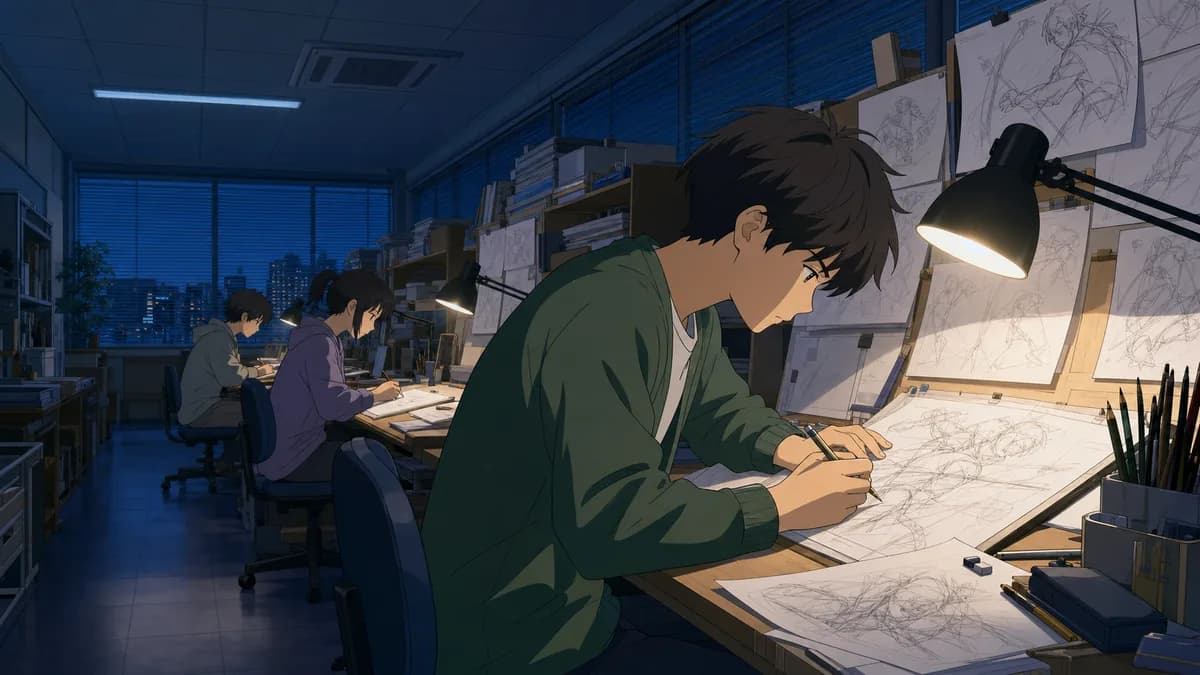
One credit on Gachiakuta's staff list deserves immediate attention: Yutaka Nakamura handles key animation and the storyboard for a late-run episode. Fans clip and trade Nakamura's work. His animation is a large part of the reason "sakuga" became casual vocabulary during My Hero Academia and Mob Psycho 100. Bones did not hire him only to draw individual cuts on Gachiakuta. The studio also trusted him to board the sequence. In practice, that means the person responsible for the motion gets to decide the shot rather than carry out somebody else's layout. It is the Bones production model condensed into one credit. Satoshi Ishino provides the counterweight. He is credited for character design, chief animation direction, and animation direction on both openings. His hand keeps the line consistent, which lets separate episodes pass to distinctive animators without the show breaking into visual incoherence. Bones keeps a firm centre and gives the edges room. Studios built around a pipeline often secure consistency by sanding away the traits of individual artists. Bones puts one design authority above animators whose identities it wants viewers to notice. This choice produces peaks and valleys instead of the same glossy finish every week. The unevenness is a fair criticism, but it is also a known cost of the model.
Planning Carries Half the Work
Bones also earned its reputation through editorial judgement, not only through what ends up on screen. Fullmetal Alchemist: Brotherhood is still the standard example. The studio returned to the manga and adapted it properly instead of settling for the version that already existed. That choice belongs to planning rather than animation. Bungo Stray Dogs and Noragami display the same judgement on a smaller scale. Both show a clear understanding of how much story fits inside a cour and where that story should break. Gachiakuta follows the same habit. Hiroshi Seko is responsible for series composition and wrote the scripts. The industry turns to Seko for its heaviest adaptations, including Attack on Titan and Jujutsu Kaisen, and he previously shaped Mob Psycho 100 for Bones. Masahiko Minami, one of the studio's founders, holds a planning credit on the new series and remains involved decades later. That continuity among the people making decisions is easy to underrate. It gives a studio the confidence to reject a project when the right staff are not available. A good studio protects its standards in large part by refusing work it cannot handle well.
The Nostalgia Argument Against Bones
The best criticism of this case is easy to state. Bones reached its high point with Brotherhood. This decade's widest cultural impact belongs to ufotable through Demon Slayer and MAPPA through Jujutsu Kaisen and Chainsaw Man. Bones has not produced anything with comparable reach. Its television work can sag through the middle, as the visibly tired long stretch of My Hero Academia showed. Even the phrase "legendary Bones sakuga" often refers to one extraordinary episode surrounded by an otherwise ordinary cour. From that angle, calling the studio a winner sounds like fandom pretending to be analysis. The criticism identifies a real weakness, but it uses the wrong measure for long-term quality. A single title's cultural blast radius mainly tells us which studio landed the hottest manga. That is a lottery based on source material, not a clean assessment of craft. A better durability test asks whether the studio can still draw the strongest material and staff. Gachiakuta's credits give a plain answer. The unevenness also has to be accepted rather than explained away. High peaks with weaker stretches are the price Bones knowingly pays for putting animators first. An even gloss eventually hardens into a house style that others can copy. A genuinely great cut of animation keeps its force.
Gachiakuta Puts the Bones Method On Screen
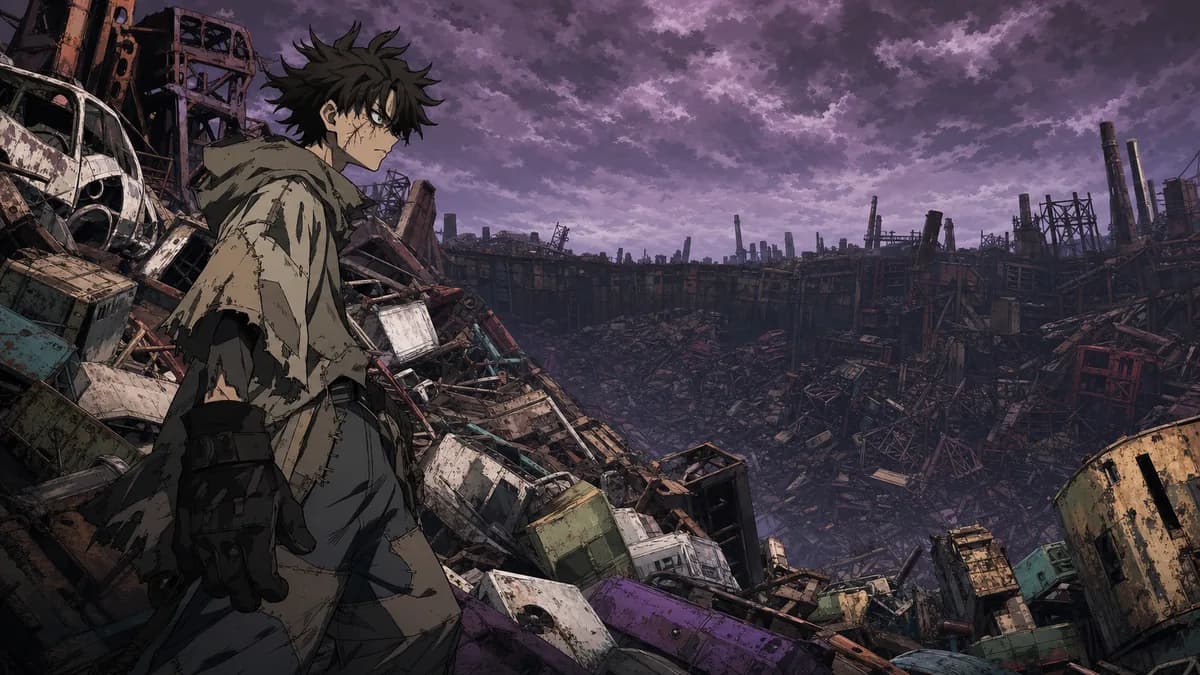
Gachiakuta makes unusually demanding requests of its artists. The series lives in filth: rubbish, rust, junk-covered geography, monsters made from discarded objects, and a class fable about everything society throws away, including the people discarded with it. A clean digital pipeline does not handle grime kindly. Clutter costs money to draw. When debris fills every frame, a lens flare cannot disguise a weak drawing. This material rewards drawn weight over surface polish, which presumably explains why Bones wanted the series. The surrounding production choices fit the same attitude. Taku Iwasaki composed the score. Bones previously relied on him for Noragami and Bungo Stray Dogs, and his taste for swagger suits a story with a hip-hop pulse and a chip on its shoulder. The run has two openings, and Ishino directs both. Crunchyroll carries the series. A second season is already lined up, while the reception has been strong enough to make the studio's judgement look right again. Gachiakuta does not resemble every earlier Bones production, nor should it. Its movement, staffing, planning, and willingness to risk unevenness all belong to the same studio tradition.
FAQ
Crunchyroll carries Gachiakuta. Watching through the platform is also the most direct way to show demand for a series whose continuation is already moving ahead.