Satoshi Kon: Anime's Great Mind-Bender
 By Mika Tanabe · Editor
Calling Satoshi Kon a director of trippy dream movies gets him backwards. His reputation as the anime filmmaker who scrambled reality, and whom Hollywood kept borrowing from, can make his work sound like vague weirdness dressed up as style. Kon was far more exacting than that. He may have been the most disciplined editor animation has produced. He dissolved the border between dreams and waking life because the resulting confusion could reveal something about his characters, not because he wanted to leave viewers lost. Paprika, his last completed feature, gives the clearest account of his method. Its disorienting cuts all do a job. Kon used mind-bending effects with the control of a precision instrument, never as background atmosphere. That control is why his small filmography has aged better than nearly everything that tried to imitate it.
The cut does the work
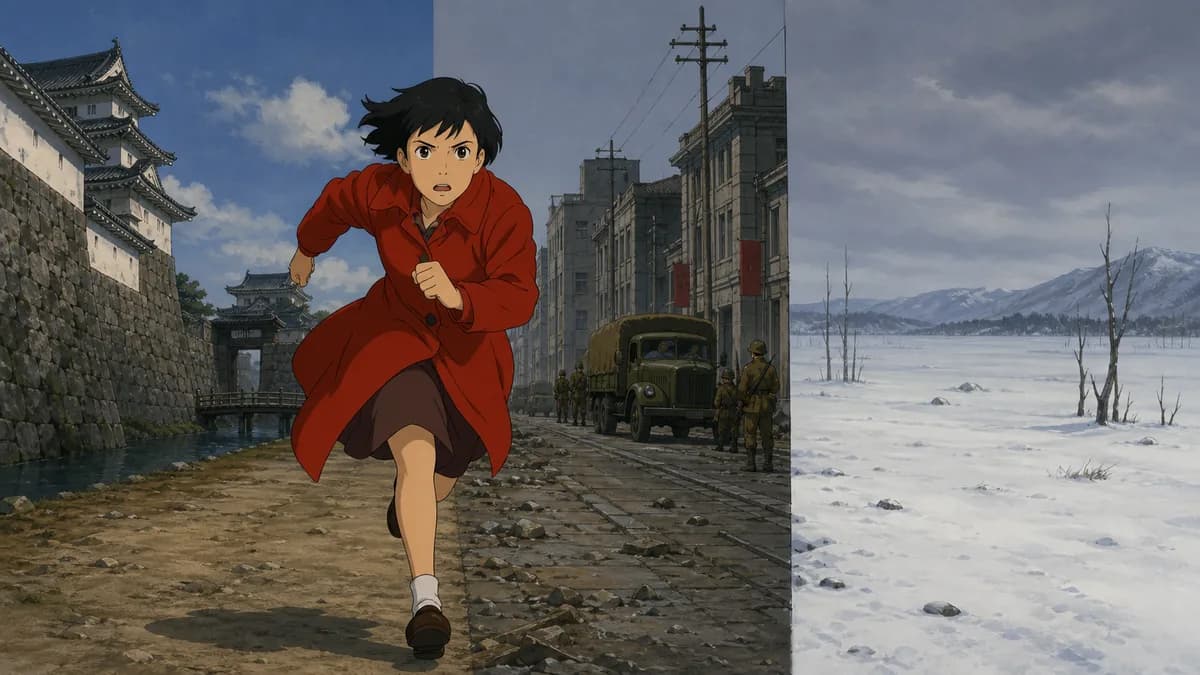
Editing was Kon's real medium. His signature move was the match cut. A scene ends on a gesture, then the next begins with the same gesture in a completely different place. For a moment, your brain joins two unrelated events into one continuous stretch of time before you have a chance to resist. Most directors use that device as an elegant flourish between acts. Kon built entire films around it. In Paprika, the therapy sessions and recorded dreams follow the same visual grammar as the waking investigation. The layers become harder to separate with every transition. Eventually you lose track of where you are, yet the sharper trick is how long it takes to notice that you have lost your bearings. The film does more than bury information. It teaches you to accept confusion on its terms. Kon wrote the script with Seishi Minakami from Yasutaka Tsutsui's novel, and the delirious surface always rests on firm narrative architecture. The weirdness never feels improvised. Every apparent hallucination has been planned like a piece of engineering, even when the finished sequence looks ready to fly apart.
The trick needed animation
Live-action dreams tend to give themselves away. A camera records something that physically existed, so directors often announce the unreal through a filter or a different lens. They may change the color grade or slow the footage down. Once you learn those signals, the deception loses much of its force. Animation has no equivalent baseline. In a drawn film, a kitchen table and a complete hallucination come from the same lines, paint, and labor. There is no photographed world underneath them that the viewer can treat as solid ground. Kon understood that freedom unusually well. He was not drawn to animation only because it could show impossible events. Akira and Ghost in the Shell had already covered that territory. He chose it because the form could remove the audience's usual methods of checking what was real. Madhouse supplied the craft needed to sustain the illusion. The film can change its register without calling attention to the switch. Its key-animation bench was deep enough to include Toshiyuki Inoue and Hiroyuki Okiura, realists whose sense of physical weight makes impossible sights land like observed behavior instead of cartoon exaggeration.
Kon's real subject was the divided self
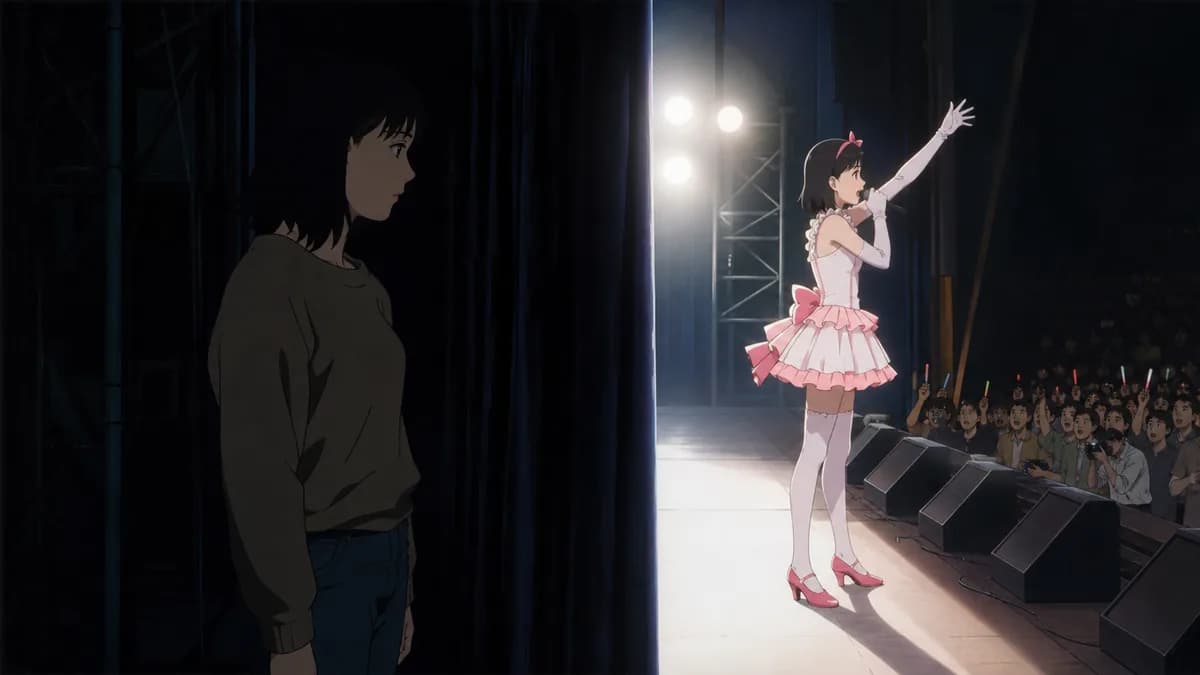
The cast makes Kon's subject plain. Atsuko Chiba is a composed research scientist. Paprika is the impish avatar who travels through other people's dreams. They are two names for the same person, though Paprika has freedoms that Atsuko does not allow herself. This split is not a thriller gimmick placed on top of the story. It is the idea driving it. Kon returned to divided identities so often that his separate films began to look like one sustained body of work. In Perfect Blue, an idol loses custody of herself to the version her audience demands. Millennium Actress remembers a whole life through the roles that contained it. Paprika brings the conflict into its supporting characters as well. Kousaku Tokita and Morio Osanai carry their own parts of the theme, while detective Toshimi Konakawa discovers that his official case keeps leading back to unfinished business of his own. The films can seem prophetic in an era shaped by curated feeds and second accounts, but Kon was not predicting those things. He was paying closer attention to people than most of his peers, especially to the identities they perform and the private selves those performances crowd out.
Hirasawa's music creates another reality
Most film scores support the image. Susumu Hirasawa's music pushes against it. His work on Paprika includes the end theme, for which he composed and arranged the music and wrote the lyrics. Rather than repeat the emotion already visible on screen, the score follows a logic of its own. It sounds synthetic and processed, with an odd euphoria running through it. The pulse keeps moving, and Kon's images have to bargain with that momentum instead of controlling it. This friction gives the largest sequences the force of weather rather than the tidy shape of conventional scenes. Kon fills them with circus figures. Ordinary objects acquire faces, while transformations are presented with total seriousness. A conventional orchestral score could easily have flattened those images into generic spookiness. Hirasawa gives them a different emotional temperature, one that feels inviting and alarming at the same time. Many Paprika fans can hum the music before they can describe a particular shot. Sound is doing part of the film's argument about which layer counts as real, and this is the part that imitators almost always miss when they copy Kon's visual playbook.
The best argument against Kon
The strongest criticism of Kon deserves a proper answer: his plots can buckle under the weight of his images. During its second half, Paprika quietly gives its detective story over to spectacle. Ask someone to explain the resolution and the reply may consist mostly of hand gestures. There is a larger problem too. Mind-bending became a brand, one that congratulates viewers for tolerating incoherence while excusing filmmakers who have not earned it. A later live-action blockbuster used a similar dream-invasion premise but surrounded it with explicit rules about layers and timers. Plenty of viewers found that approach more satisfying. It is fair to admit that Kon's film would rather dazzle its audience than explain every mechanism. Yet full legibility was never his target. A movie about the wall between dreaming and waking collapsing would betray its own premise if the viewer could keep steady footing throughout. Serial Experiments Lain and Texhnolyze are genuinely opaque by comparison because they restrict emotional access along with narrative access. Kon does not. Even when you cannot identify where a Paprika scene is taking place, its emotional direction remains exact. Tokyo Godfathers proves this was a choice rather than a limitation. It is warm, classically structured, and completely legible, made by the same director. Kon used surrealism when a story called for it. He did not need it to prop up his filmmaking.
The grammar he left to other filmmakers
Kon's inheritance appears in editing grammar rather than simple homage. Paranoia Agent, his one television series, carried the same anxieties into a serialized form. It showed that his approach could survive beyond a feature's runtime. Perfect Blue left fingerprints across the psychological territory later occupied by Death Parade and Psycho-Pass. Devilman Crybaby, The Tatami Galaxy, and Ping Pong the Animation all treat a cut as a place where reality is allowed to change. Kon helped normalize that freedom for the filmmakers who followed him. Live-action directors borrowed from his work as well. Darren Aronofsky has spoken openly about the mark Perfect Blue left on his filmmaking. Audiences have argued over the dream-heist resemblance so often that the comparison has become a permanent debate of its own. Kon died young, leaving a short filmography that was never diluted by lesser sequels or franchise extensions. There was no late-career coasting either. The catalog is small, but the grammar it supplied is enormous. Very few directors exert influence at the level Kon did. You see his presence in the shape and movement of other people's scenes, not only when someone offers an obvious tribute.
FAQ
Choose Perfect Blue if you want the psychological thriller that established his name. Pick Paprika for the fullest display of his visual imagination. Tokyo Godfathers is the outlier and the best starting place if you would prefer charm to unease, since it reveals the classical filmmaker beneath Kon's surrealism.