Mamoru Hosoda: The Director Who Turned Family Into Spectacle
 By Mika Tanabe · Editor
Mamoru Hosoda makes the smallest possible story feel like an event movie. Where most directors reserve spectacle for war or apocalypse, he aims it at a single mother in the rain, a jealous four-year-old, a boy with no home. His thesis across two decades is quietly radical: the family is the biggest subject there is, and it deserves the scale of a summer blockbuster. From Wolf Children to Belle, he fuses intimate domestic drama with sprawling digital fantasy, and the collision is his signature. He is routinely called the heir to Ghibli, but that label misses what makes him distinct. Hosoda is not painting Miyazaki's pastoral dreamscapes. He is building the modern family film, and staging it at maximum volume.
From Toei Journeyman to His Own Studio
Hosoda did not arrive fully formed. He spent his early career at Toei Animation, cutting his teeth on television and franchise work, including a beloved Digimon short and a One Piece feature that fans still single out as a stylistic outlier. The pivotal moment came when he was tapped to direct Howl's Moving Castle at Studio Ghibli, then left the project. Rather than absorb him, that near-miss set him free. He regrouped, broke through with The Girl Who Leapt Through Time, and eventually co-founded Studio Chizu, the house that has produced his features ever since. That independence matters. It means his recurring obsessions are authorial choices, not studio mandates. When the same themes surface film after film, family, absence, the digital frontier, you are watching a director with a worldview, not a hired hand executing someone else's house style. His signature is his own, built deliberately and defended.
The Family Is Always the Real Story
Strip away the fantasy and every Hosoda film is about the shape of a household. Wolf Children follows a young mother raising two half-wolf children alone after loss, and it is really about the exhausting, invisible labor of parenting. Mirai turns a toddler's tantrum over a new baby sister into a time-hopping tour of his own family tree. The Boy and the Beast pairs a runaway orphan with a gruff warrior who has no idea how to raise him, building a father from scratch. Even Belle, his most maximalist work, orbits a grieving girl and a hidden victim of family violence. Hosoda is drawn again and again to broken, blended, or improvised families, the single parent, the surrogate, the absent father. He treats these arrangements not as tragedies to be fixed but as the ordinary, load-bearing structures of real life. That empathy for the unconventional household is the beating heart of his filmography.
Digital Worlds as Emotional Amplifiers
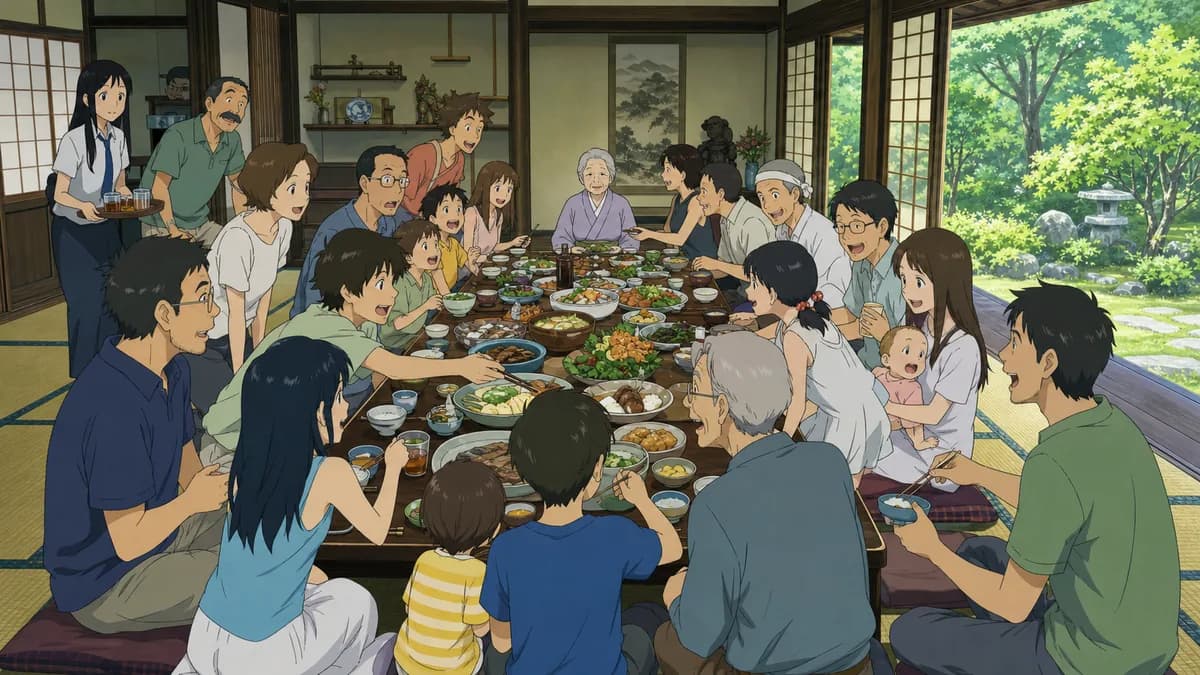
The other half of the Hosoda signature is the network. Summer Wars stages its climax inside a candy-colored global platform where a family's private crisis becomes a planet-wide event. Belle rebuilds that idea for the streaming age with U, a virtual world of billions where a shy teenager becomes a superstar singer. Even his early Digimon work sent kids battling through the wires of the internet. Critics sometimes read this as gimmickry, but the digital worlds are never cold. They are amplifiers. Hosoda uses the network to blow a personal feeling up to enormous scale, so a grandmother rallying relatives online, or a girl finding her voice for a faceless crowd, carries the weight of myth. The real world provides the intimacy; the virtual world provides the spectacle. Fusing the two lets him have the domestic story and the blockbuster set piece at once, which almost no other director even attempts.
Coming-of-Age at Blockbuster Scale
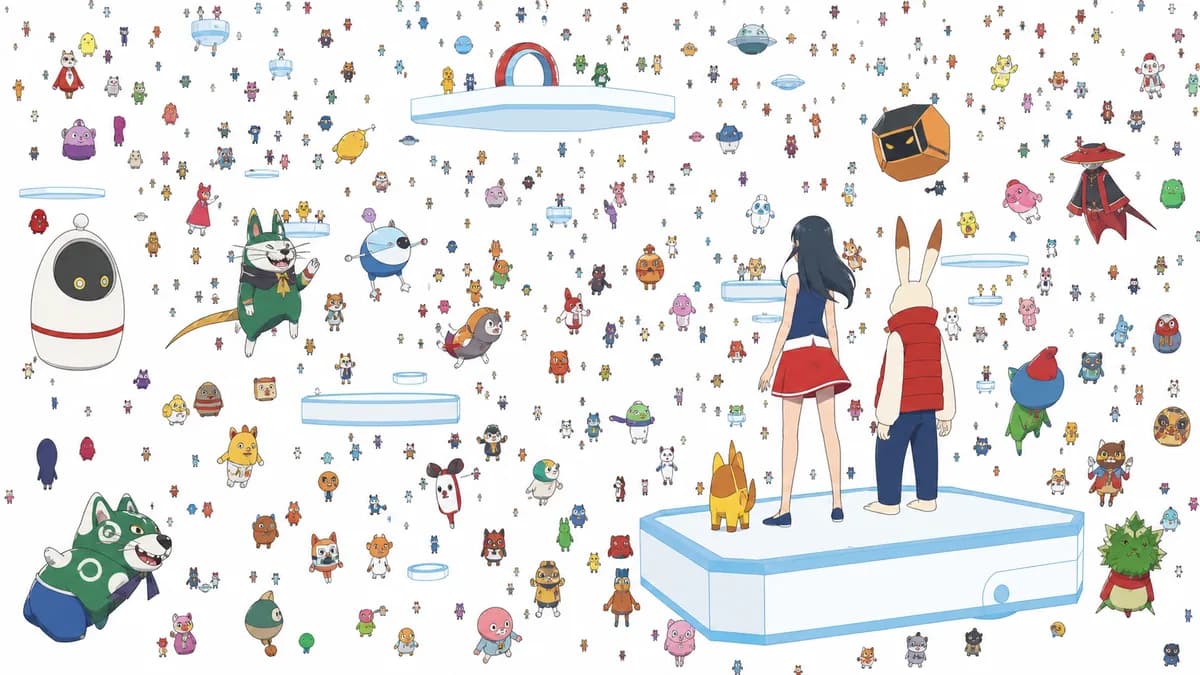
Visually, Hosoda has one of the most recognizable palettes in modern anime. He loves flat, bright, naturalistic daylight, clean character designs against luminous skies, and the specific texture of a Japanese summer, cicadas, rivers, festival crowds. His films breathe in wide, patient shots and then detonate in dense, kinetic set pieces, the online battle in Summer Wars, the concert in Belle. This is coming-of-age storytelling scaled up to event-cinema size. A girl learning to leap through time, a boy learning to fight, a teenager learning to be seen, each small arc gets the full orchestral treatment. It is a deliberate rejection of the idea that intimate stories must be quiet. Hosoda argues that growing up is dramatic enough to fill the largest screen in the building, and his craft, the light, the crowds, the swelling scores, is built to prove it. Few directors make the ordinary feel this grand.
The Counter-Argument: Sentiment and the Shaky Third Act
Hosoda has real detractors, and they are not wrong. His most common flaw is the third act. Belle builds a gorgeous virtual fantasy and then rushes a real-world rescue that many found abrupt and tonally jarring. The Boy and the Beast splits into two halves and stumbles into a chaotic supernatural finale that its grounded first half never needed. Summer Wars keeps escalating the stakes until a family squabble somehow threatens the planet. The charge is sentimentality: that he reaches for a big emotional payoff and papers over plot logic to get there, sometimes sidelining supporting characters or leaning on tidy resolutions. It is a fair hit. But it is inseparable from what he does well. Hosoda chases feeling over neatness, and a filmmaker willing to overreach for emotion will occasionally overreach. The best of his work, Wolf Children especially, lands the swing cleanly. The lesser films miss, but they miss while attempting something most play far too safe to try.
Where He Sits in the Post-Ghibli Landscape
It is tempting to file Hosoda next to Makoto Shinkai as the two directors carrying Japanese feature animation beyond Ghibli, but they occupy different lanes. Shinkai chases yearning, weather, and star-crossed romance. Hosoda chases the family unit and the network that connects it. Where Ghibli often looked backward to pastoral nostalgia, Hosoda looks squarely at the present, single parents, digital identity, blended households, and finds the fantastical inside it. That contemporaneity is why his films feel less like heirlooms and more like dispatches from now. He may never match Miyazaki's painterly perfection, and he does not seem to want to. His project is different: to prove that the family drama, the least flashy genre imaginable, can be the biggest movie in the room. On that count he has largely succeeded, and he did it on his own terms, from his own studio, with the same handful of obsessions he has never stopped exploring.
FAQ
Wolf Children is the ideal entry point, his warmest and most complete film and the clearest statement of his themes. If you want something lighter and more playful, The Girl Who Leapt Through Time is a perfect gateway to his coming-of-age style.