The Long-Runner: Why Some Anime Keep Going
 By Mika Tanabe · Editor
Long-running anime are often judged as if they were ordinary seasonal shows that got away from their editors. They look bloated, padded and badly paced, with no finish line in sight. That comparison uses the wrong standard. A twelve-part show is a product made to be sold and completed. A show that keeps airing is closer to a public utility. It occupies a fixed weekly slot, supports a standing staff and becomes a brand likely to outlive the people who launched it. These formats are made under different conditions, and they succeed by different measures. Most complaints about long-runners come from applying the rules of one format to the other. One Piece is the clearest specimen, not because it is the longest, but because every gear in the machine is exposed and turning where viewers can see it.
A Season Is a Product. A Long-Runner Becomes a Place.
Finite anime is planned backward from an ending. Frieren: Beyond Journey's End and Vinland Saga are constructed much like novels, with every episode using a limited amount of runtime to move toward a destination the creators already possess. Compression is the guiding craft. A scene that survives is expected to earn its place later. The long-runner reverses those instincts. Its aim is continued presence. It needs to be there next week and the week after that, for as long as viewers continue to arrive. Detective Conan has spent so long running cases that describing it as a show feels incomplete. It has become a fixture in the broadcast schedule, as familiar and dependable as a weather segment. Once a title reaches that status, it begins to act less like a self-contained work of fiction and more like infrastructure. Look at everything that has gathered around One Piece: a Tokyo tower attraction, a car-brand collaboration short, a Los Angeles Lakers tie-in, and crossover specials featuring Dragon Ball Z and Toriko. An ordinary story does not produce its own car commercial. A long-runner gives viewers a recurring place to visit, while the surrounding business treats that place as something permanent. Its value depends partly on the story and partly on the habit of returning to it. That is why its age can become an asset instead of evidence that somebody failed to find an ending.
The Scheduling Math Behind Filler
A simple piece of arithmetic governs the entire form. A weekly broadcast slot follows a fixed clock. The manga being adapted follows a slower, variable clock because an adaptation consumes source material faster than any human can draw it. The distance between those clocks grows every week. Producers eventually face three options dictated by that gap. They can stop and give up the slot, invent original material, or stretch the remaining source until the manga moves farther ahead. Naruto, Bleach and Fairy Tail all confronted that calculation and arrived at the same answer. Fans of all three consequently pass around similar arc-skip guides. Hunter x Hunter serves as the control group. When its source went quiet, the adaptation stopped rather than filling time, and some of the tightness viewers praise comes from that refusal to pad the run. One Piece displays the effects without much disguise. It has anime-original stretches, arcs that expand beyond their natural size, and periods when one confrontation seems to breathe for a month. Those choices are not random failures of taste. They are what a weekly scheduling equation looks like on screen. The writers still decide how the extra time is used, and some solutions are plainly better than others, but they did not create the underlying gap. Blaming them for the existence of filler is like blaming a bus driver for the timetable. The vehicle has to remain in motion because stopping carries a cost that seasonal productions never face.
A Permanent Crew in an Impermanent Industry
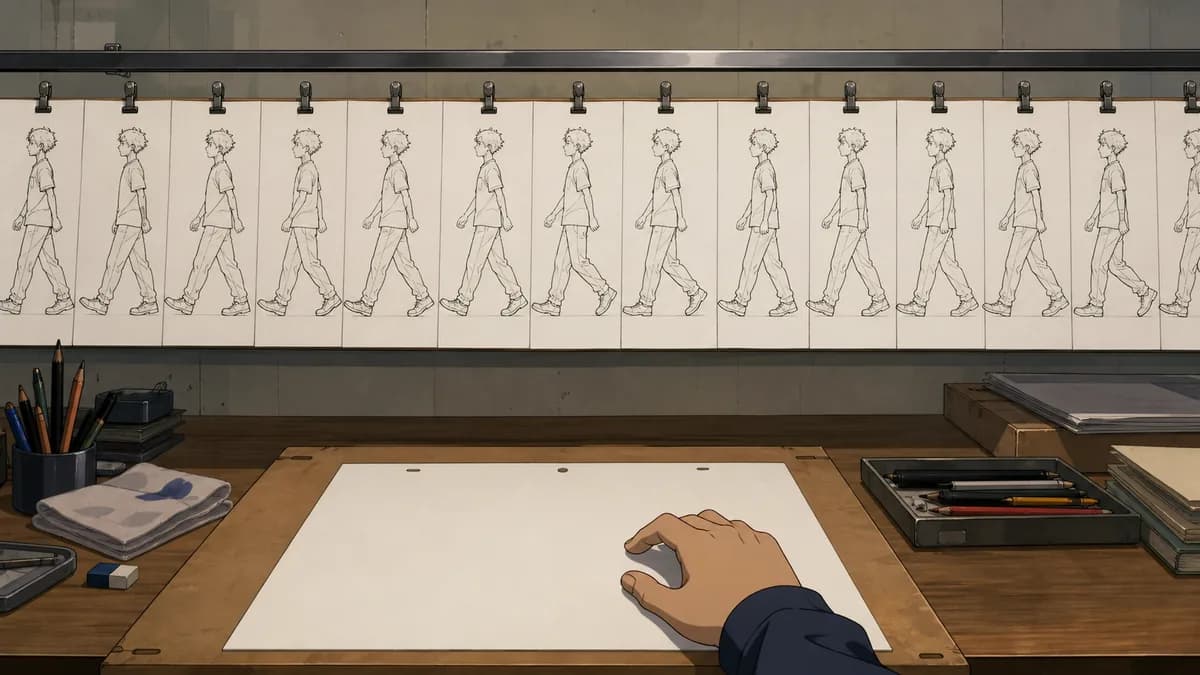
The employment side of the format rarely enters the argument. A series with no planned stopping point is the closest thing the anime industry offers to permanent work. Toei Animation has kept One Piece on the schedule for a quarter-century without a break. That continuity funds an active pipeline of storyboarders, key animators, episode directors and sound staff who know they have somewhere to be next month. A finite prestige production works differently. It assembles a strike team, pushes that team through the project and then disbands it. A long-runner resembles a school that never closes. Its credit history shows people learning the job, carrying institutional knowledge forward and sometimes becoming major figures elsewhere. Kounosuke Uda directed the series through its entire opening era. Mamoru Hosoda, who later became one of the medium's defining film directors, occupied the episode-director chair for an installment long before his name appeared prominently on a poster. The movies operate the same system from the opposite direction. Film: Red, Film: Gold, Film: Z, Strong World and Stampede partly function as a pressure valve. They create a place to spend real money and produce animation beyond what weekly television can sustain, after which the crew returns to the regular production cycle. None of this excuses weak episodes or unhealthy workloads. It does explain why the weekly show cannot be understood only as a stack of installments. It is also a standing workplace with its own memory, training chain and production habits. Remove the uninterrupted schedule and that structure disappears with it.
Designed for Viewers Who Arrive Late
A series that airs for decades has to solve a problem finite anime never encounters. Most of its future audience has yet to begin watching, and some of those viewers have not been born. Long-runners therefore develop specialized tools for bringing people in after the beginning. Recaps restore the immediate context. The arc-as-island structure gives each stretch its own antagonist, supporting cast and tonal register, allowing a newcomer to land midway through the voyage and still get a complete story. A time skip works as a soft reboot, giving the series a chance to present itself again without formally ending. Even the crew in One Piece doubles as an entry system. Zoro, Nami, Usopp, Sanji, Chopper, Robin, Franky, Brook and Jinbe each join with a self-contained backstory arc. Their arrivals let the show teach its emotional stakes again on a rolling schedule instead of placing everything in a premiere that few current viewers clearly remember. Detective Conan uses an extreme version of the same design. It resets close to zero each week so nearly any episode can serve as an entry point. The two shows choose opposite methods, but they are responding to one shared difficulty: a stranger must be able to walk into the story in year eleven. That need changes the storytelling. Repetition can be tiresome for regular viewers, yet it gives later viewers enough orientation to care. The modular arc is not an accidental compromise. It is a survival mechanism for fiction whose audience keeps renewing itself while the series stays put.
The Best Argument Against Endless Anime
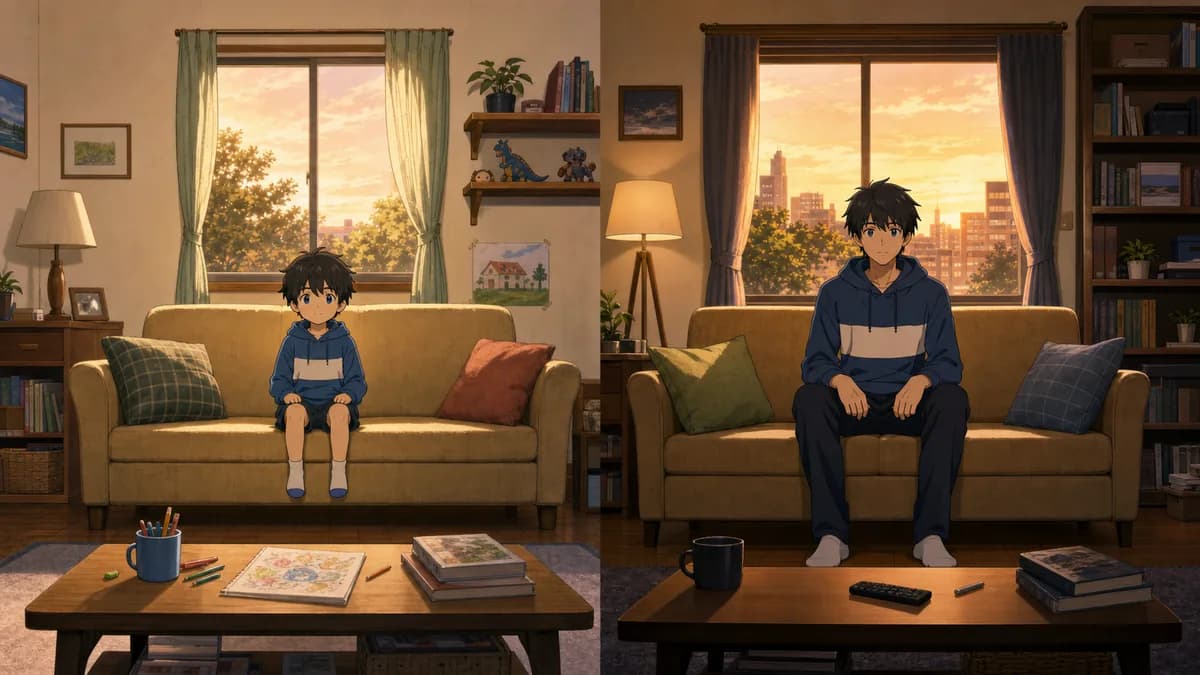
The strongest objection concerns the format itself rather than any single patch of padding. The industry has already built a better production model, yet the long-runner continues as if nothing changed. Seasonal anime waits until the source has accumulated enough material. It is produced in separate blocks with an actual runway, and it can reach a per-cut standard that weekly broadcasting cannot physically maintain forever. Demon Slayer, Jujutsu Kaisen and Attack on Titan look as they do because their staffs were never required to deliver a new episode every seventh day without end. Beside them, a perpetual show can resemble a legacy system kept alive by merchandising inertia. That criticism deserves a serious hearing, but it leaves out the price attached to the seasonal model. Gaps between seasons can last years. Each return requires the audience to be recruited again, and some of that audience inevitably falls away. Production teams scatter between blocks and carry their accumulated craft knowledge with them. One-Punch Man is the cautionary exhibit, a phenomenon that lost its own momentum during the wait. Visual polish matters, but regularity has value too. Consistency gives a series a continuing place in viewers' lives, even when individual episodes cannot compete with the best seasonal animation. It is a quality that rarely looks impressive in a screenshot. Its effect appears over months and years, in the relationship between a show and the people who keep making time for it. The seasonal model wins many direct comparisons, but it does not reproduce that continuity for free.
Watching Without Treating It as Homework
Do not treat the complete episode count as an admission fee. Nobody looks at a decades-old sitcom and asks whether its entire run is worth consuming before tonight's episode can be enjoyed. They ask whether the episode in front of them is any good. Use the same standard for long-runners and the intimidating total loses much of its power. Judge the show by its arcs because the arc, rather than the full series, is the useful unit of measurement. A strong arc supplies a beginning, an antagonist and a payoff, so it can stand as a complete story. A weak arc costs a few weeks, not your faith in everything around it. Pick an entry island instead of worrying about an official start date. Allow the flat stretches to remain flat. A show engineered for continued presence will have troughs, and skimming one does not amount to a moral failure. You should also know what kind of commitment you are making. This is not a story you expect to finish in the usual way. It is a room you plan to revisit. The people who love One Piece are not gritting their teeth through its length. They have accepted that reaching the destination was never the sole source of pleasure. Given what the show is about, that is the joke Oda has been telling from the beginning. Once you stop treating completion as the goal, the scale becomes inviting. There is always another part of the place to visit, and leaving for a while does not lock the door behind you.
FAQ
The adaptation follows a fixed weekly clock, while the manga beneath it moves on a slower and less predictable one. Filler absorbs the difference. It gives the source time to move ahead without forcing the anime to surrender its broadcast slot. The gap comes from scheduling, even when the quality of the material used to fill it depends on the writers.