How Netflix Changed Anime
 By Mika Tanabe · Editor
Ask what Netflix did to anime and the argument usually starts with money: licensing checks, co-production deals and bidding wars. That is only half the story, and it is the less interesting half. Netflix changed what an anime could be allowed to look like. The older system funded shows that had to survive a late-night broadcast slot. They needed to be safe for advertisers, capable of selling discs and merchandise, and shaped into something every company on a committee could approve. Netflix was buying finished work for a global audience instead. That structural change gave a director room to make a series no broadcaster would have touched. Devilman Crybaby remains the clearest evidence. Netflix's lasting contribution was not distribution. It was permission. The higher ceiling remained in place even after Netflix lost the streaming race.
What a Broadcast Slot Demanded
The change makes sense once you look at what the old system was designed to do. A production committee is a coalition that might include a publisher, a broadcaster, a music label, a toy company and a disc distributor. Each member is paying for a different return. This setup works very well for certain kinds of anime. It produces the long-running engines fed by merchandise, including One Piece, Naruto and My Hero Academia. Those shows are built to continue, and the businesses around them benefit when they do. The same system has little appetite for a risky project with no obvious source of money after broadcast. Adult content reduces the available broadcast windows and scares off advertisers. An avant-garde visual style can make character goods harder to sell. If a story ends in total devastation, there may be nothing left to turn into a franchise. No secret agreement is required to explain the result. The numbers are enough. A whole category of anime went unmade because nobody at the committee table was paying for that kind of work, even when creators wanted to make it.
Devilman Crybaby Proved the Model
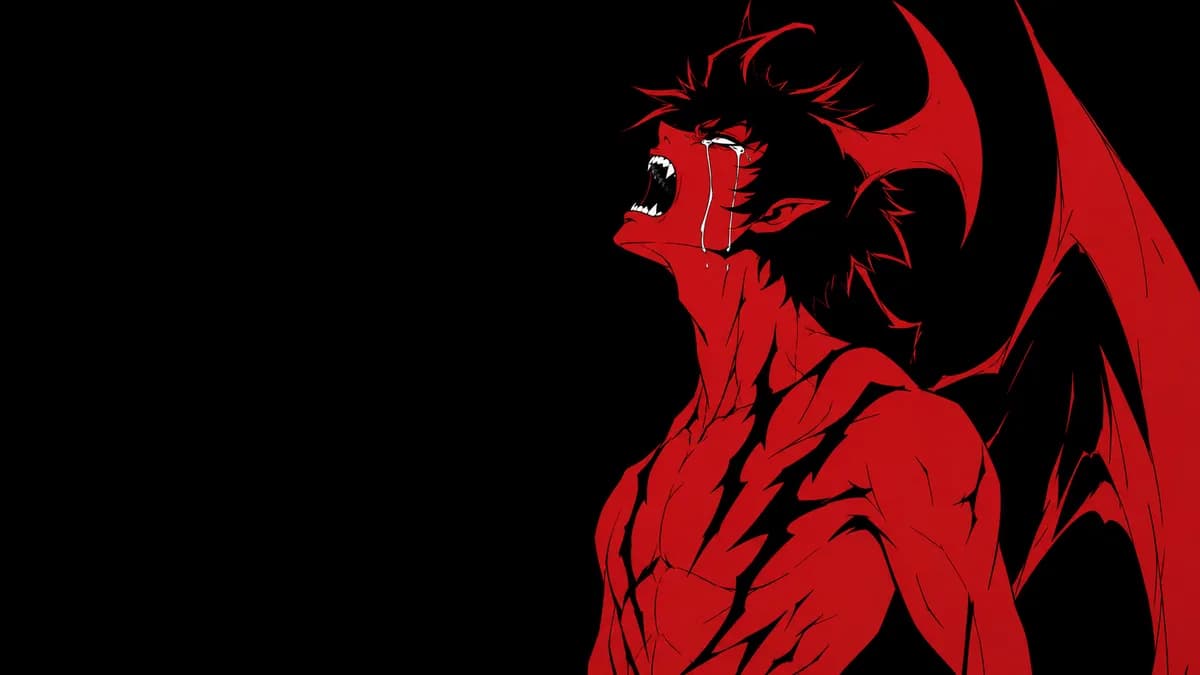
Netflix had no advertisers to satisfy, no disc business to protect and no toy line waiting for product. It could hand Masaaki Yuasa a Go Nagai property and leave him to make it. The result was an adults-only apocalypse steeped in dark fantasy and body horror. Hip-hop and spoken word drive the score. Science SARU animated it in Yuasa's loose, elastic style, far from the polished house look of a standard prestige adaptation. Ichiro Okouchi wrote the entire run himself, so the episodes move like parts of one sustained argument instead of separate assignments stacked together. Akira Fudou and Ryo Asuka begin with a friendship that the story gradually transforms into something else. Miki Makimura, meanwhile, gives the series an ordinary human life against which its apocalypse can be measured. The show combines horror with tragedy and social commentary because all three belong to the story, not because a committee needed a broader sales pitch. It received awards attention, including at the Crunchyroll Anime Awards. That recognition matters less than the conditions that allowed the series to exist in this exact form. It was fundable because nobody needed it to sell another product.
The Director Television Treated as a Risk
Yuasa's career makes the difference especially easy to see. Before Devilman Crybaby, he had already made Kaiba, The Tatami Galaxy, Ping Pong the Animation and The Night Is Short, Walk On Girl. Critics rank that work among the most inventive anime ever drawn. A conventional committee could admire it and still see a beautiful liability. Those projects did get made, but on a small scale, in odd broadcast slots and with tight money. Streaming did not discover Masaaki Yuasa or teach him how to direct. It removed the demand that his artistic taste also function as a retail plan. The same financial logic later supported Studio Trigger's Cyberpunk: Edgerunners. That series was a single, self-contained and blood-soaked run with no duty to set up a sequel. It also supported Pluto, a slow adult adaptation of a manga prized for its restraint. The old committee table would not have paid for either shape. Yuasa later made Inu-Oh, a period piece built as a rock opera, while Ride Your Wave occupies the gentler end of his range. Streaming did not improve his talent. It made the full expression of that talent affordable.
The Unusual Series That Came Next
Devilman Crybaby was followed by a run of projects that television schedules had never known where to put. Aggretsuko turned anger at office life into a death-metal sitcom told in short, sharp installments. Great Pretender used bright poster colors for a con thriller that travels around the world, addressing an audience that does not belong to any single country. Dorohedoro adapted a manga known for grime and gristle without polishing away the qualities that made it distinct. Beastars took a premise that could sound like a joke about appetite and treated it as a genuine story about anxiety. Carole & Tuesday directed its budget toward original songs instead of merchandise that could hang from a keychain. Netflix's model also made room for quieter, low-stakes titles. The Way of the Househusband and Kotaro Lives Alone suit a viewer choosing from a grid, not somebody selecting a channel according to a schedule. Kengan Ashura and Baki reached their audiences through the same kind of browsing. These series did not have to serve as a broadcaster's flagship or hold together a larger sales operation. They only needed to find the viewers interested in their particular ideas. That freedom is the part of the Netflix model that altered what could get made.
Why the Case Against Netflix Still Lands
The strongest objection is also accurate: Netflix lost. Crunchyroll won the simulcast war by a wide margin. Jujutsu Kaisen, Chainsaw Man, Spy x Family and Frieren: Beyond Journey's End all arrive there first, and those are the shows that set the cultural temperature. Netflix also spent years using a release policy fans correctly called jail. It would buy a series, hold it back and then drop a whole season after the surrounding conversation had already moved on. Releasing episodes in batches weakened one of anime's particular pleasures. Viewers lost the weekly discussion, the cycle of theories and the wait shared with everyone else watching. Many Netflix originals were forgettable as well. They seemed to be approved because an algorithm suggested a possible audience, not because the project had a strong reason to exist. Every part of that criticism is fair, but it addresses a different achievement. Winning distribution is not the same thing as expanding the range of series that can be funded. Netflix gave up the first prize while permanently changing the second standard. It eventually dropped the jail model too.
The New Ceiling Became Normal
The clearest measure of Netflix's influence is what the industry now accepts as ordinary. A studio can make one adult, self-contained and visually strange series, then expect it to reach a worldwide audience on day one. Devilman Crybaby established that template, and the template no longer feels unusual. Budgets that once needed disc sales can now be defended by the value of international subscribers. Prestige manga left without adaptations for decades can finally reach the screen because financing does not have to come from a domestic merchandise table. Even after losing the streaming race, Netflix kept pursuing this more interesting version of its strategy. Its slate included Delicious in Dungeon and Sakamoto Days, along with a Ranma ½ aimed at viewers who never owned the original discs. It also brought a landmark such as Neon Genesis Evangelion into global availability. Crunchyroll now holds the leading position, yet it bankrolls the same kind of risk that Netflix helped normalize. Netflix lost the market contest but won the argument about what anime could reasonably be funded to do. Its catalog was never the part that lasted. The permission was, and the rest of the business inherited it.
FAQ
Devilman Crybaby is a Netflix exclusive and has been one from the beginning. The complete run streams there, with no legal second window available elsewhere. In arguments about Netflix anime, it is one of the rare titles for which another legal route simply does not exist.