How Akira and Ghost in the Shell Built Cyberpunk
 By Mika Tanabe · Editor
Cyberpunk existed on the page before anyone settled on what it should look like. The novels already had corporations running the show, console cowboys at their terminals and megacities rotting from within. They did not give filmmakers a reliable way to put those ideas on screen. Two anime films did. Akira made cyberpunk physical by giving it a city and a nervous system that could both come apart in front of us. Ghost in the Shell turned inward and asked whether the self might be nothing but data arranged well enough to believe it is alive. Nearly everything wrapped in neon since then has borrowed from one film or the other. The weaker copies borrow the neon and leave the difficult ideas behind.
The ideas existed before the visual language
Prose science fiction had imagined a wired future well before either film arrived. William Gibson supplied the jargon and the corporate rot. Philip K. Dick had already asked whether a manufactured mind deserves personhood, a connection so closely associated with Ghost in the Shell that Do Androids Dream of Electric Sheep? still appears in its tag list. Blade Runner translated those concerns into weather and light. Even so, having an aesthetic is different from having a grammar that other artists can learn. That grammar lies in repeatable choices: a skyline framed to make the person beneath it look tiny, a lingering shot of a face whose memories may belong to someone else, or a sudden move from spectacle into silence. Blade Runner had such a particular mood that copying it could quickly make another film look like an imitation. Akira and Ghost in the Shell offered methods that could be studied and reused. Together, they established a practical syntax for framing and pacing, along with a set of concerns that suited those techniques. This is why so many later works point back to them. A director cannot lift a paragraph from a novel onto the screen, but a frame can be quoted directly.
Akira gives cyberpunk a body too large to control
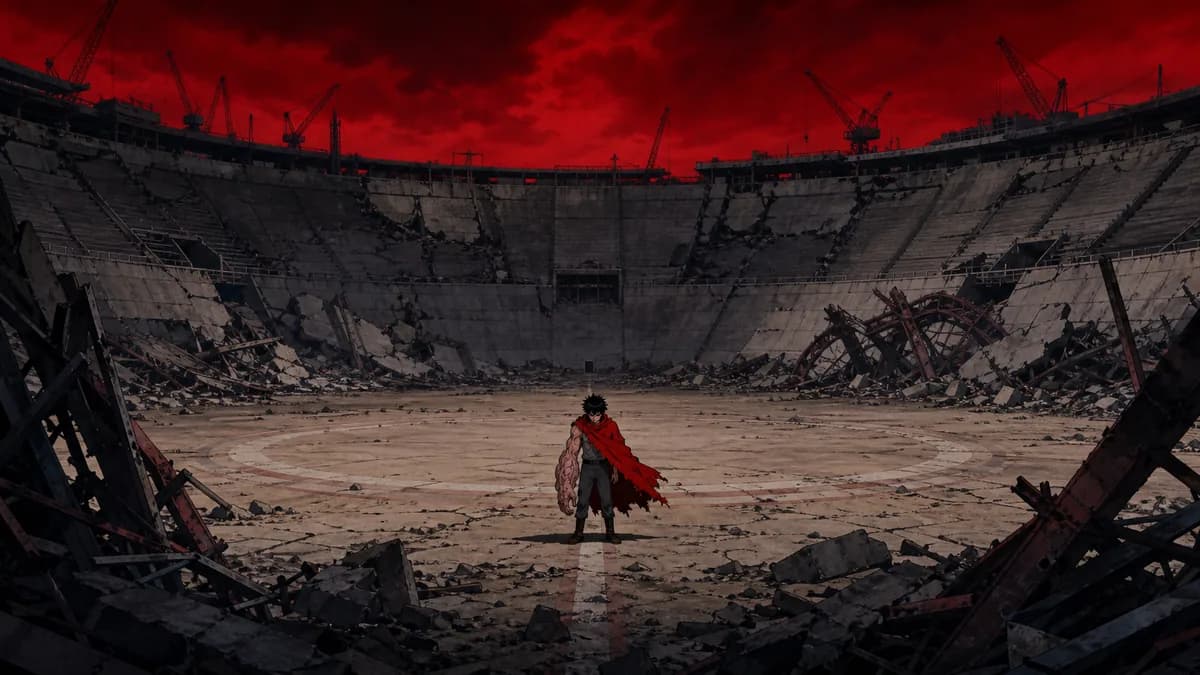
Katsuhiro Otomo adapted his own manga and directed the film himself. That unity of authorship is visible throughout Akira. Neo-Tokyo never feels like scenery placed behind the action. It functions as the second lead, rebuilt after catastrophe and already decaying again. Otomo's great addition to cyberpunk's screen language is kinesis. His future is something the audience feels through speed before it has time to process the politics. Kaneda's bike and its light trail became famous images, but their force comes from the world around them. The gang skirmishes happen beneath a city that has clearly abandoned its young. That combination established the genre's social shape: an exhausted state presides over spectacular infrastructure while the people at the bottom remain the only ones with anything left to lose. Akira then goes somewhere its imitators have been trying to follow ever since. Tetsuo receives power, yet the horror does not come only from what he chooses to do with it. His own body loses any stable sense of where it ends. The central cyberpunk fear of augmentation is right there on the theater screen. An upgrade does not have to liberate its user. It can consume the person who wanted it.
Ghost in the Shell treats the self as data
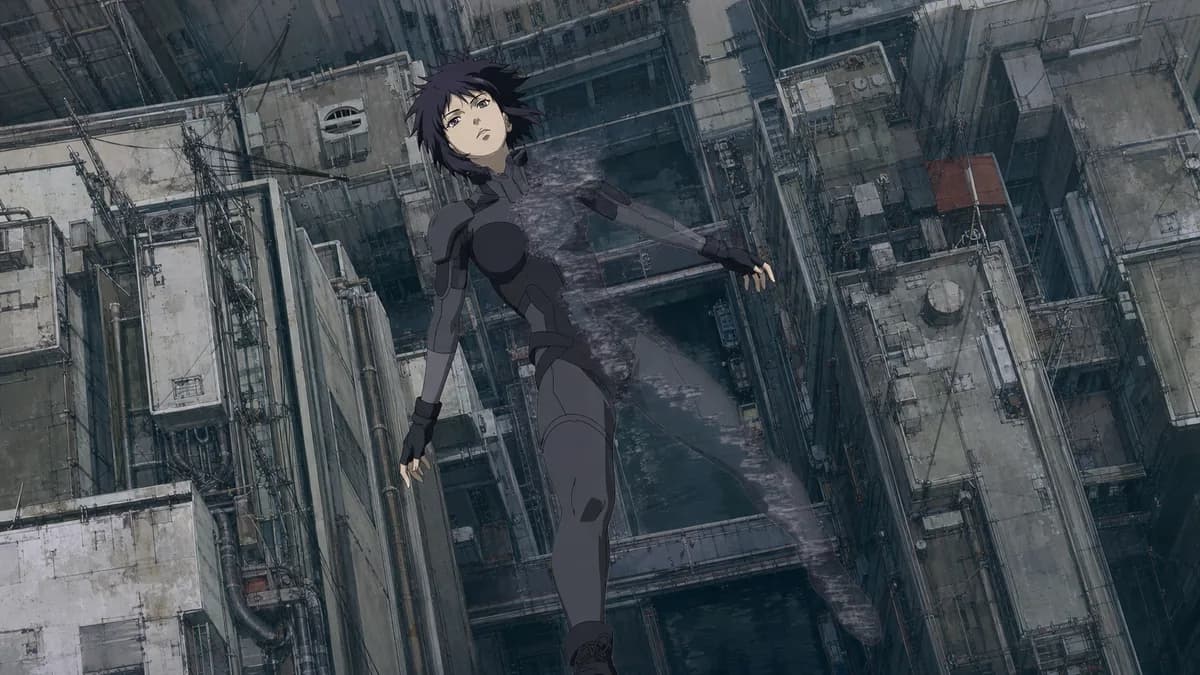
Mamoru Oshii brings almost the opposite temperament to Ghost in the Shell, and the difference between the two films is what gives cyberpunk such breadth. Working at Production I.G from Masamune Shirow's manga, Oshii took material built around action and slowed it down until its underlying question could be heard clearly. Major Motoko Kusanagi leads operations for Section 9. Batou works beside her, Togusa remains the member still mostly made of meat, and Aramaki runs things from the desk. Their target is an entity catalogued as Project 2501 and known on the street as the Puppet Master. It has started to argue that it possesses personhood. The mechanics of the case matter much less than the effect it has on the Major and her understanding of herself. The passages everyone copies are often the ones without a fight. There is the long, wordless movement through the canal city, followed elsewhere by the descent into black water. Kenji Kawai's chant hangs over a city that seems caught in its own dream. Shouji Kawamori's mechanical design gives the machinery an exact, clinical presence. Oshii's fascination with hardware never turns the film into a product showcase, because every component presses on the same question about consciousness. This created cyberpunk's other register: cool and procedural in manner, philosophical in purpose.
The strongest objection is that Western fiction arrived first
The most serious counterargument deserves a proper answer. Every idea credited to these films can be found in print before their release. Western prose had already supplied the corporate dystopia and the hacked mind. It had also imagined an artificial person whose claim to a soul might be stronger than that of the humans policing it. Blade Runner had already put the rain on film. From this perspective, anime did not build cyberpunk at all. It illustrated a genre that already existed, did so beautifully, and received the credit because audiences kept rewatching its version. There is truth in that account, but it misses the distinction between an idea and a form that people can readily transmit. Akira and Ghost in the Shell did not invent the wired mind. They gave later filmmakers a working screen vocabulary for it, one that could be recognized and adapted without reproducing an entire plot. The sources matter here as well. Both films adapt Japanese manga rather than the Western novels that came before them. Their relationship to those novels is not a simple case of borrowing from a single line of descent. Cyberpunk developed along parallel roots. The anime branch is the one that turned many of these anxieties into a reusable visual language.
The two bloodlines are still visible
Most of the anime that followed can be placed in one of two broad families. Akira begins the kinetic line. You can see it in the neon-smeared criminal chaos of Akudama Drive, and its clearest modern destination is Cyberpunk: Edgerunners. The doomed young characters inherit a world that treats augmentation as self-destruction. For them, velocity becomes both a way to live and the way they die. Ghost in the Shell starts the contemplative line with questions about identity and state power. Its own television continuation, Stand Alone Complex, turned the Major's unit into an ongoing procedural. Psycho-Pass picks up that special-unit structure and asks what a state will do once it can read intent. Serial Experiments Lain takes the claim that the self is data to its most disorienting conclusion. Ergo Proxy and Texhnolyze retain the dread while removing much of the cool surface that made their ancestor inviting. There are gentler descendants too. Vivy: Fluorite Eye's Song and Pluto are still responding to the Puppet Master even when their tone and stories differ. Each eventually confronts the same issue: the moment at which a manufactured mind earns the right to call itself I. The styles split, but both families keep returning to a person whose boundaries can no longer be trusted.
Why copying the neon is never enough
Neon is the easy part to reproduce. A production can assemble a wet street, add a flickering hologram and drop a synth cue over the scene. Plenty of modern cyberpunk does exactly that, which explains why so much of it looks accurate while feeling empty. Akira and Ghost in the Shell are concerned with the dissolution of a boundary. Tetsuo can no longer locate the edge of his body. The Major cannot confirm the edge of her mind. Neither film gives the audience the relief of seeing that boundary restored to its old position. This discomfort is harder to imitate than a palette because it requires a director to interrupt the plot and remain with an unstable idea. Otomo reaches it through overwhelming scale. Oshii reaches it through silence. Their best inheritors understand that distinction. Cyberpunk: Edgerunners and Serial Experiments Lain may look and move very differently, but both know that the hardware was never the actual story. What matters is the lost edge between the person and everything acting upon that person. Handle that well and the rain becomes optional. Ignore it and an unlimited neon budget still cannot give the work any weight.
FAQ
Both are stand-alone features, so either order works. Start with Akira if you want the initial shock of seeing cyberpunk operating at full volume. Ghost in the Shell's stillness tends to land even harder after that experience.